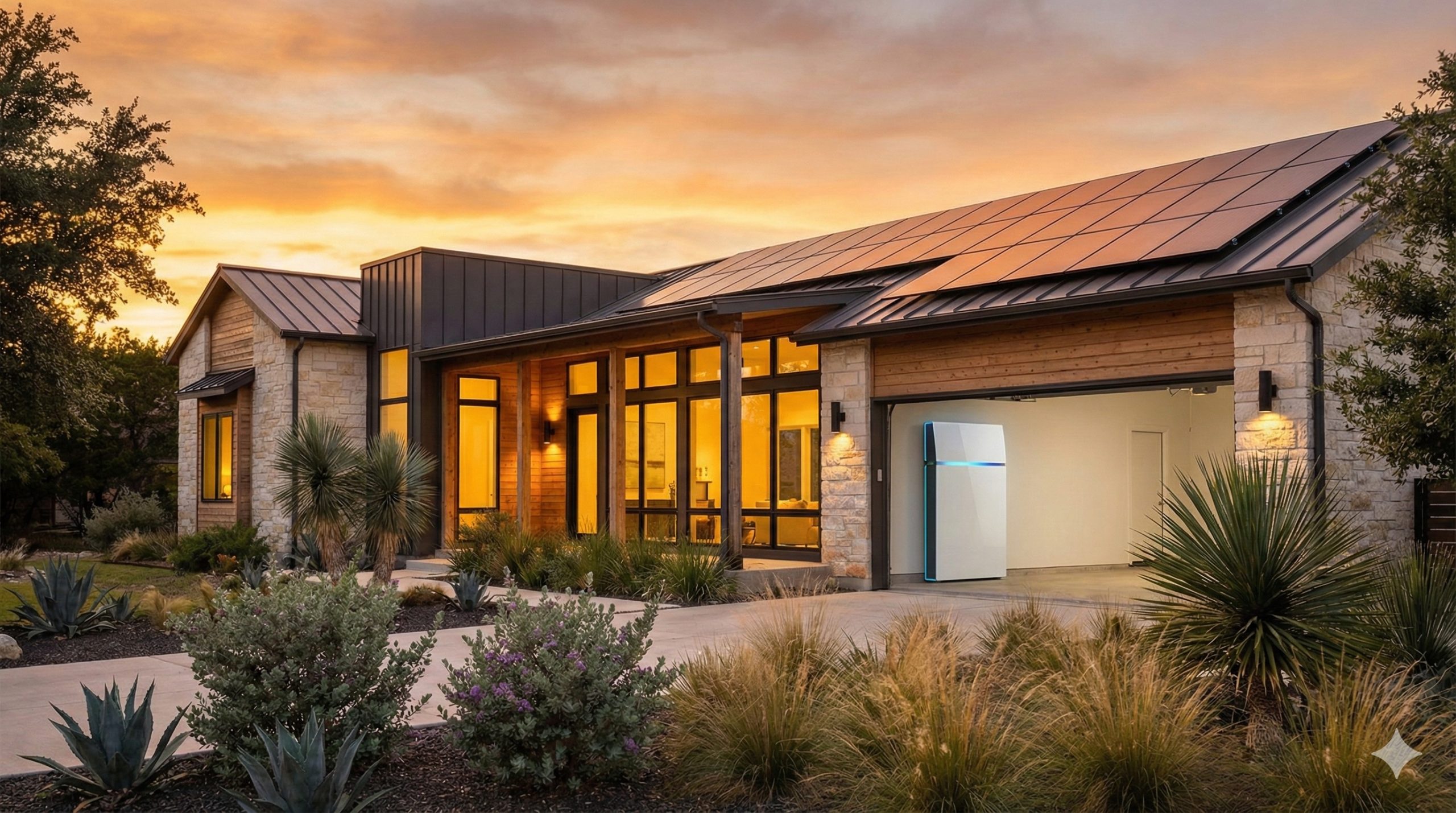
House energy storage refers to battery systems that store electricity in your home for use during power outages, peak rate periods, or when solar panels aren't generating power. Modern lithium-ion home batteries like the Tesla Powerwall, Enphase IQ Battery, and FranklinWH can provide backup power for hours or even days, helping Texas homeowners protect against grid outages while potentially saving money on electricity bills through time-of-use optimization.
House energy storage systems are residential battery solutions that capture and store electricity for later use. These energy storage systems typically consist of three main components: the battery pack that stores energy, an inverter that converts power between DC and AC, and an energy management system that coordinates charging and discharging.
According to Straits Research, the global residential energy storage systems market was valued at $8.78 billion in 2023 and is projected to reach $37.65 billion by 2032, growing at a compound annual growth rate of 17.56%. This explosive growth reflects increasing homeowner interest in backup power and energy independence.
Modern home battery systems primarily use lithium-ion batteries due to their high energy density, long cycle life, and declining costs. These batteries can be charged from multiple sources, including solar panels, the electrical grid, or both. When your home needs power during an outage or during peak electricity rate periods, the stored energy discharges to power your home. Curious about the investment? Our guide to home battery storage cost breaks down everything you need to know about pricing.
House energy storage installations can be configured as whole-home backup systems or critical-loads systems. Whole-home setups provide power to your entire house, while critical-loads systems prioritize essential circuits like refrigerators, medical equipment, and HVAC systems. According to Fact.MR, approximately 70% of residential energy storage deployments are on-grid systems, meaning they remain connected to the utility grid while providing backup capability.
The case for house energy storage has never been stronger. Following Winter Storm Uri in 2021, Texas homeowners experienced firsthand the devastating consequences of prolonged power outages. Frozen pipes, spoiled food, and dangerous indoor temperatures highlighted the need for reliable backup power solutions. As we move into 2026, home battery systems offer protection against these increasingly common grid disruptions.
According to the U.S. Energy Information Administration, large-scale U.S. battery storage capacity grew from 1.5 GW in 2020 to over 16 GW by 2024. This tenfold increase demonstrates the accelerating adoption of energy storage technology across all sectors, including residential applications. Not sure what capacity you need? Check out our guide on how to size a home battery for your specific needs.
Rising electricity costs and complex rate structures make house energy storage financially attractive. Many Texas retail electric providers offer time-of-use rates where electricity costs significantly more during peak demand hours. A home battery system allows you to charge during low-cost periods and discharge during expensive peak times, potentially saving hundreds of dollars annually on your electricity bill.
The connection between solar energy and house energy storage continues to strengthen. Cognitive Market Research reports that the North American residential energy storage market reached $460 million in 2024, with a projected 17.7% compound annual growth rate through 2031. As their research notes, "The North American residential energy storage market is witnessing robust growth driven by increasing demand for reliable power backup and renewable energy integration."
For homeowners already generating solar energy, batteries solve a critical problem: what happens when the sun isn't shining. Energy storage systems capture excess solar energy during the day for use during evening hours when most families consume the most electricity. According to Fact.MR, single-family homes account for approximately 60% of the residential energy storage market.
Understanding how PV and battery systems work together helps you make informed decisions about house energy storage. The process involves three main stages: charging, storage, and discharging.
Charging: Home battery systems can charge from solar panels, the electrical grid, or both. When your solar panels produce more electricity than your home needs, the excess energy flows to your battery instead of being exported to the grid. Grid charging typically occurs during off-peak hours when electricity rates are lowest.
Storage: The battery stores electricity as direct current (DC) in lithium-ion cells. According to the NREL Annual Technology Baseline, a representative residential battery system provides 5 kW of power with 12.5 kWh of storage capacity. This means the battery can deliver 5 kilowatts continuously while storing enough energy to power a home for several hours.
Discharging: When your home needs stored energy, the inverter converts DC power from the battery to AC power that your appliances can use. Modern smart inverters manage this process automatically, prioritizing which loads receive power and switching seamlessly between grid and battery power during outages.
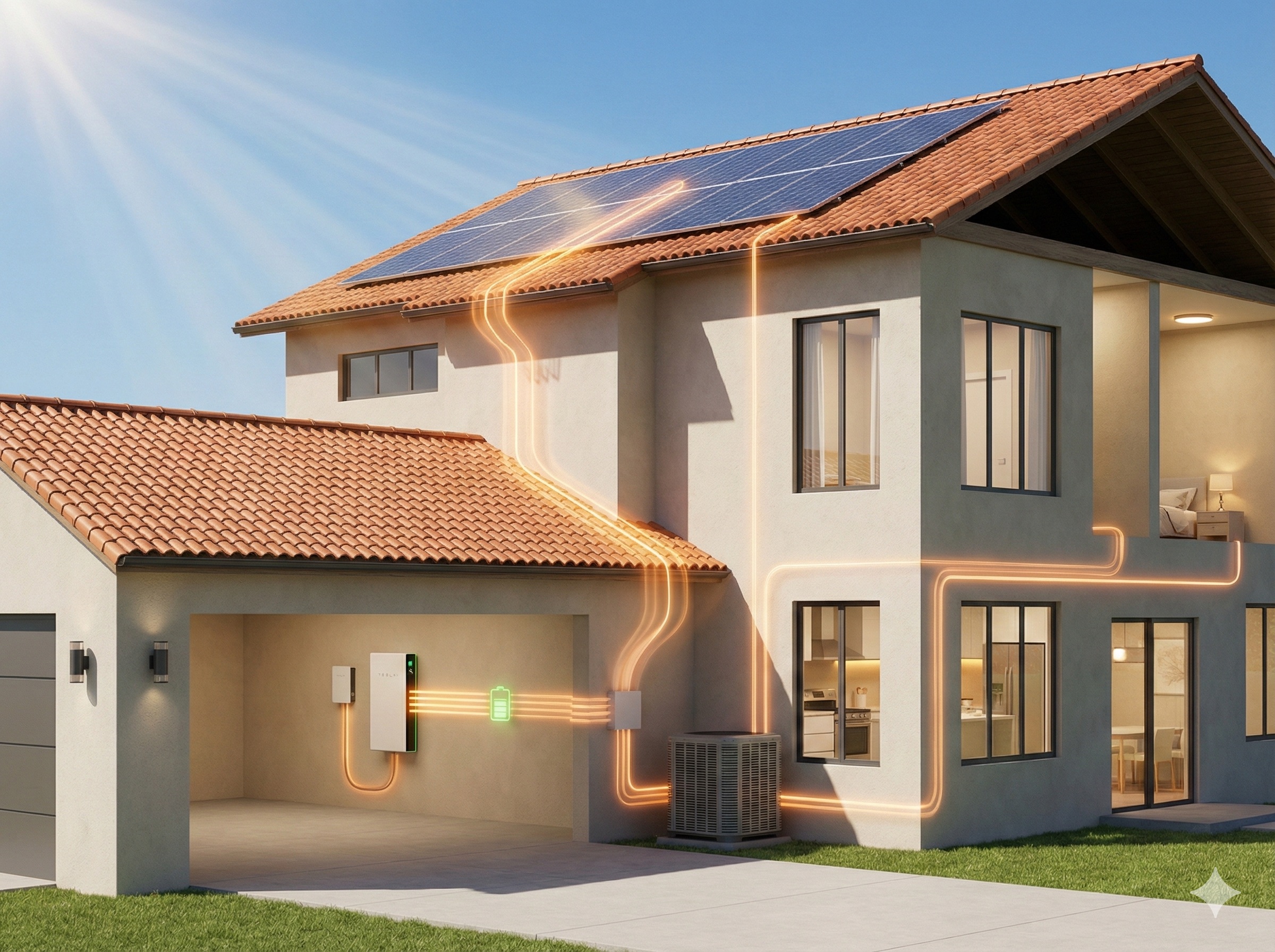
The coupling type affects how your home battery integrates with existing solar installations. AC-coupled systems include their own inverter and connect to your home's AC electrical panel, making them ideal for adding storage to existing solar arrays. DC-coupled systems connect directly to solar panels on the DC side before the inverter, offering higher efficiency for new solar-plus-storage installations.
Energy management systems continuously monitor your home's energy consumption, solar production, and battery state of charge. These intelligent controllers optimize when to charge, when to discharge, and how much power to reserve for backup purposes. The NREL ATB notes that battery costs have fallen rapidly over the past decade, with continued declines projected through 2030 across all scenarios.
Several battery technologies compete in the house energy storage market, each with distinct advantages for different applications. Understanding these options helps you select the right solar battery storage solution for Texas.
Lithium Iron Phosphate (LFP): This lithium-ion chemistry has become the preferred choice for home battery applications. LFP batteries offer exceptional thermal stability, making them safer and more reliable in hot Texas climates. They typically provide 6,000+ charge cycles compared to 2,000-3,000 cycles for other lithium chemistries, translating to 15-20 years of useful life.
Nickel Manganese Cobalt (NMC): These lithium-ion batteries offer higher energy density than LFP, meaning more storage capacity in a smaller package. However, they require more sophisticated thermal management and have shorter cycle life. NMC batteries suit applications where space constraints outweigh longevity concerns.
Lead-Acid: According to KBV Research, the lead-acid segment is growing at 21% CAGR within residential energy storage, though lithium-ion dominates overall market share. Lead-acid batteries cost less upfront but have shorter lifespans, heavier weight, and lower efficiency. They remain an option for budget-conscious homeowners with minimal backup needs.
| Battery Type | Cycle Life | Best Climate | Cost | Recommended For |
|---|---|---|---|---|
| Lithium-ion (LFP) | 6,000+ cycles | Hot climates | Higher upfront | Most Texas homes |
| Lithium-ion (NMC) | 2,000-3,000 cycles | Controlled temps | Moderate | Space-limited installations |
| Lead-acid (AGM) | 500-1,200 cycles | Any | Lower upfront | Budget backup only |
The KBV Research analysis indicates that solar and storage systems are expected to capture more than 55% market share by 2030, while standalone storage currently holds the largest revenue share. This shift reflects growing integration between solar panels and house energy storage systems. For homeowners who are not ready to commit to solar panels, learn about home battery backup without solar options that work independently.
Coupling type represents another key decision point. AC-coupled systems work independently of your solar inverter, making them easier to retrofit. DC-coupled systems integrate with hybrid solar inverters for higher overall system efficiency but require more careful design. The 6-10 kW power rating segment is expected to achieve $1.4 billion by 2030 according to KBV Research, indicating strong demand for mid-sized residential systems.
Selecting the right house energy storage system requires evaluating your specific needs, existing equipment, and budget. Start by sizing a battery for your solar system based on your daily energy consumption and backup requirements.
Calculate Your Needs: Review your electricity bills to determine average daily consumption in kilowatt-hours. A typical Texas home uses 30-40 kWh daily, though this varies significantly based on home size and HVAC usage. For backup purposes, identify which loads you need to keep running during outages and for how long.
As Straits Research notes, "The rapid decline in the cost of lithium-ion batteries has significantly increased market adoption of residential energy storage systems." This cost trend makes larger battery capacities increasingly accessible for Texas homeowners.
Compare Leading Brands: The top solar battery storage companies offer various solutions for different needs:
| Brand | Capacity | Power Output | Best For | Texas Considerations |
|---|---|---|---|---|
| Tesla Powerwall 3 | 13.5 kWh | 11.5 kW | Whole-home backup | Widely available, strong brand recognition |
| Enphase IQ Battery | 5-15 kWh modular | 3.84 kW+ | Microinverter homes | Popular with Texas installers, flexible sizing |
| FranklinWH aPower | 13.6 kWh | 10 kW | Large AC loads | Excellent for Texas heat, smart load management |
| AlphaESS Smile | 5.7-22.9 kWh | Variable | Off-grid/ranch | Price-competitive, suitable for rural properties |
| Sonnen eco | 10-20 kWh | 8-16 kW | VPP participation | Premium quality, grid services ready |
| LG RESU | 9.8-16 kWh | 5-7 kW | Custom installations | Integrates with multiple inverter brands |
Key Specifications to Compare: Pay attention to usable capacity (actual available storage), continuous power output (how many watts the system can deliver), peak power (short-term surge capability for starting motors), round-trip efficiency (typically 85-95% for lithium-ion), and warranty terms (usually 10-12 years).
According to KBV Research, customer-owned systems hold the largest revenue share among ownership models, indicating that most homeowners prefer purchasing their house energy storage systems outright rather than leasing. This ownership model typically provides the best long-term value, especially for homes that already have or plan to add solar panels.
Texas presents unique opportunities and challenges for house energy storage. Understanding whether solar batteries are worth it in your specific situation requires considering the state's distinctive energy market and climate conditions.
ERCOT Grid Considerations: The Electric Reliability Council of Texas operates an isolated grid serving most of the state. Unlike other regions that can import power from neighboring grids during emergencies, Texas must meet its own electricity demands. This independence increases the value of residential backup power, particularly following high-profile reliability events.
Deregulated Market Advantages: Texas's competitive retail electricity market allows homeowners to choose from numerous providers offering different rate structures. Many retail electric providers offer solar buyback programs that credit homeowners for excess energy exported to the grid. However, as these buyback rates become less generous, home battery storage becomes more valuable for maximizing the value of your solar investment.
Storm Resilience: Texas faces extreme weather from multiple directions. Gulf Coast hurricanes, winter ice storms, summer heat waves, and severe thunderstorms all threaten grid reliability. A properly sized house energy storage system keeps critical loads running through extended outages, protecting your family and property.
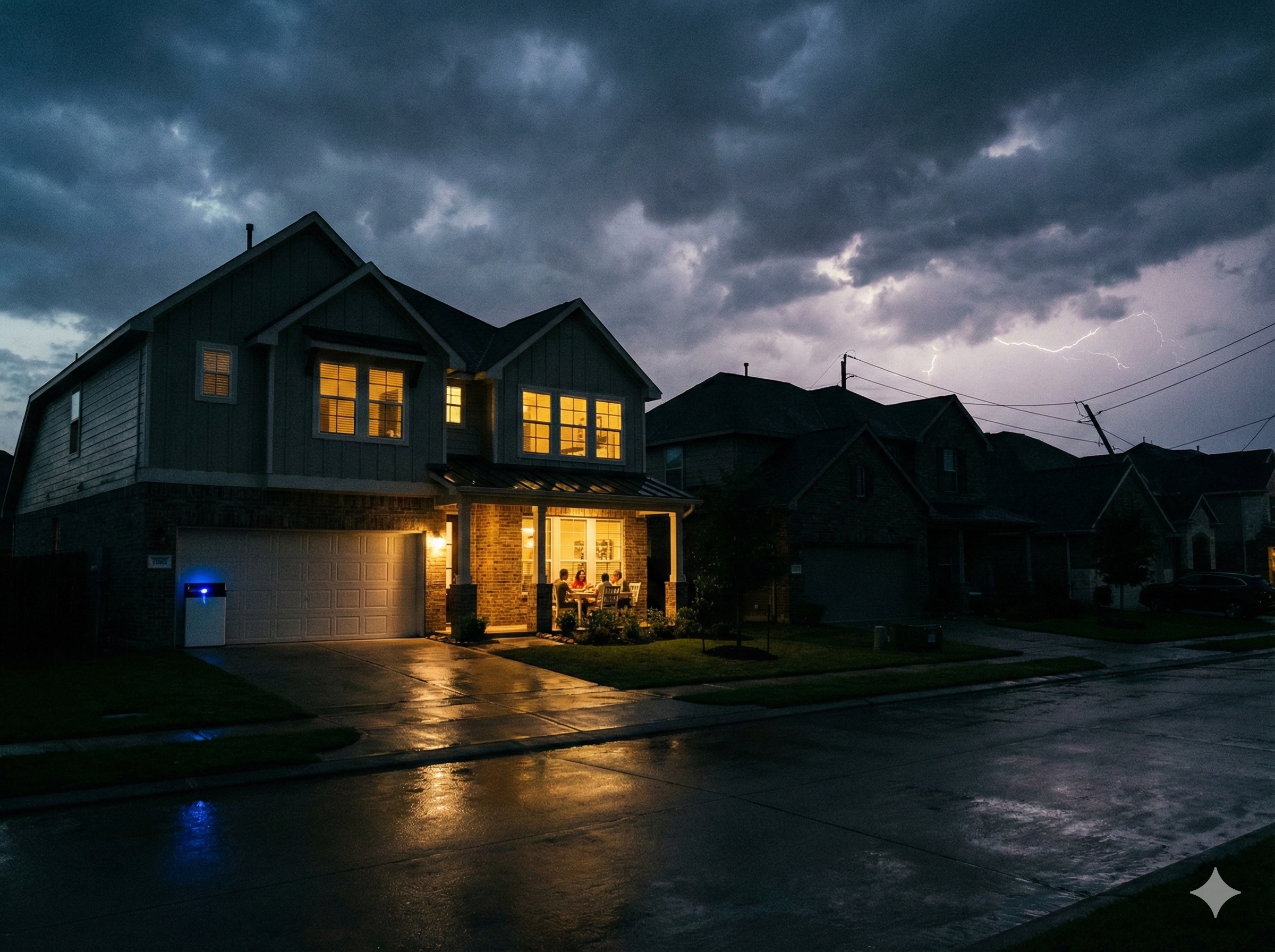
Installation Considerations for Texas Climate: Heat significantly impacts battery performance and longevity. The most common installation location is an attached garage, which provides shade and some temperature moderation. LFP chemistry batteries handle high temperatures better than NMC alternatives, making them preferred for Texas installations.
Critical Load Priorities for Texas Homes:
Texas homes typically have larger cooling loads than the national average, requiring careful system sizing. A FranklinWH or similar system with smart load management can help stretch battery capacity during extended outages by cycling HVAC systems efficiently while maintaining safe indoor temperatures.
The house energy storage landscape continues to evolve rapidly. According to Fact.MR, "Expansion of grid-interactive residential applications, including advanced bidirectional power systems and next-generation battery solutions, will shape the next phase of residential energy storage market development."
Virtual Power Plants (VPPs): Utilities and aggregators are enrolling residential batteries in virtual power plant programs. These programs pay homeowners to allow controlled discharge of their batteries during grid emergencies. ERCOT is exploring distributed energy resource programs that could eventually include residential house energy storage systems.
Bidirectional EV Charging: Vehicle-to-home (V2H) technology transforms electric vehicles into mobile power sources. As this technology matures in 2026, homeowners may be able to use their EV batteries as backup power, potentially reducing the size of dedicated home battery systems needed.
AI-Powered Energy Management: Smart controllers increasingly use artificial intelligence to predict energy consumption patterns, weather conditions, and utility rate changes. These systems automatically optimize when to charge, when to discharge, and how much capacity to reserve for emergencies.
Continued Cost Declines: The NREL Annual Technology Baseline projects continued cost declines for residential battery storage through 2030 across all scenarios. These declining costs, combined with rising grid electricity prices, improve the financial case for house energy storage each year.
According to Straits Research, the residential energy storage market will grow from $10.32 billion in 2024 to $37.65 billion by 2032. This growth trajectory suggests house energy storage will become standard equipment for new construction and an increasingly common retrofit for existing homes.
Ready to explore house energy storage for your Texas home? Follow these steps to move forward with confidence:
Contact VIP Energy Service Today
Our team specializes in helping Texas homeowners optimize their energy setup. Whether you're considering house energy storage, solar panels, or both, we can guide you through the options and connect you with the right resources.
Call (817) 402-2664 or get your free energy quote to start the conversation.
Compare rates and plans to see how your current electricity setup stacks up.










Copyright © 2026 VIPEnergyService.com. All rights reserved | PUCT# 10117