
This guide is written for Texas households and small businesses shopping electricity plans on the Ambit Brand side.
The average Texas residential electricity bill is $186.21 per month as of July 2026, based on U.S. Energy Information Administration (EIA) data compiled by ChooseTexasPower. That figure blends a statewide average rate of 16.99 cents per kilowatt-hour with the typical Texas household consumption of 1,096 kWh per month. Compared to the national average bill of $163 per month reported by ElectricChoice for July 2026, Texans pay about $23 more each month, even though Texas has a lower per-kWh rate than the U.S. average.
But the state average hides a math problem most Texans never see: on the right plan structure, a home using 2,000 kWh a month can end up paying a LOWER effective rate per kWh than a small apartment using 800 kWh a month. That paradox is the entire point of this guide.
The average Texas residential electricity bill is $186.21 per month as of July 2026. That number comes from applying the state average residential rate of 16.99 cents per kWh (EIA Electric Power Monthly, cited by ChooseTexasPower on July 17, 2026) to the state average household consumption of 1,096 kWh per month. A second source, ElectricChoice, reports a slightly lower Texas average of $176 per month at 16.18 cents per kWh and 1,088 kWh of consumption for July 2026. Both figures reflect EIA-derived state averages and should be read as reference benchmarks, not as your ceiling or floor.
Commercial electricity in Texas runs on a different curve. Small businesses average $733.97 per month at 8.35 cents per kWh on typical consumption of 8,790 kWh, according to ChooseTexasPower using EIA data. Bulk pricing pulls the commercial rate below residential even though total consumption is roughly 8x higher.
| Texas benchmark (July 2026) | Value |
|---|---|
| Average residential bill | $186.21 per month |
| Average residential rate | 16.99 cents per kWh |
| Average residential consumption | 1,096 kWh per month |
| Average commercial bill | $733.97 per month |
The bill you actually receive depends on three variables: how many kWh your home consumes, which retail plan you signed, and which transmission and distribution utility (TDU) delivers power to your address.
Texas ranks 5th highest on ElectricChoice's July 2026 state bill table at $176 per month, behind Hawaii ($203), Connecticut ($195), Alabama ($186), and California ($185). But Texans do not pay the highest per-kWh rate. Texas residents pay 16.18 cents per kWh compared to the national average of 18.05 cents per kWh, so the driver of the higher-than-average bill is consumption, not price.
Texas households consume 1,088 kWh per month against the U.S. average of 903 kWh per month, roughly 21% more. Long, humid summers push air conditioning runtime past six months in most of the state, and the U.S. EIA reports that heating and cooling account for approximately 46% of a typical home's electricity use, with hot-climate states like Texas often exceeding 50%.
The U.S. average electric bill has risen 26% in five years, from $129 per month in 2022 to $163 per month in 2026, per ElectricChoice's July 2026 report. The 2025 to 2026 jump alone was 5.4%, driven mostly by rate increases rather than higher consumption. Grid hardening after Winter Storm Uri, natural gas price volatility, and data center demand growth are the primary contributors to that trend.
Home size is the single biggest factor in your monthly bill, because square footage drives both HVAC load and lighting load. ChooseTexasPower analyzed 2020 to 2024 marketplace data and combined it with the state 16.99 cents per kWh average to produce the following breakdown:
| Home type | Estimated square footage | Average monthly kWh | Average monthly bill |
|---|---|---|---|
| One-bedroom apartment | Under 800 sq ft | 873 kWh | $148 |
| Two-bedroom apartment | 800 to 1,500 sq ft | 1,046 kWh | $178 |
| Small home | 1,500 to 2,500 sq ft | 1,177 kWh | $200 |
| Large home | 2,500 to 4,000 sq ft | 1,503 kWh | $255 |

TXU Energy's July 2026 apartment breakdown uses a $0.1547 per kWh all-in rate assumption (December 2025 EIA data) and lands in a similar range: studio units at 500 to 650 kWh run $80 to $103; one-bedroom units at 700 to 900 kWh run $111 to $143; two-bedroom units at 1,000 to 1,300 kWh run $159 to $206; three-bedroom apartments at 1,300+ kWh often exceed $206 per month.
The pattern is consistent: every additional 400 to 500 kWh of monthly usage adds roughly $50 to $75 to the bill at typical Texas rates. That linear relationship is exactly what a well-chosen bill-credit or step-rate plan can BREAK, which is why plan structure matters more than headline rate for many Texas homes.
The single largest driver of city-to-city bill variation in the deregulated ERCOT market is the TDU delivery charge, which is regulated by the Public Utility Commission of Texas (PUCT) and updated on the first of March and September each year. Delivery charges pass through directly to your bill regardless of which retail electric provider you signed with.
Here are the current TDU delivery costs for the five main Texas utilities at 1,000 kWh of monthly usage, per ChooseTexasPower's July 2026 data:
| Texas TDU | Monthly base charge | Per-kWh usage charge | Total delivery at 1,000 kWh |
|---|---|---|---|
| CenterPoint Energy (Houston area) | $4.90 | 4.99 cents | $54.80 |
| AEP Texas Central and North | $3.24 | 5.9 cents | $62.24 |
| Oncor Electric Delivery (Dallas-Fort Worth) | $4.06 | 6.12 cents | $65.26 |
| Texas-New Mexico Power (TNMP) | $7.85 | 7.24 cents | $80.25 |
At 1,000 kWh the gap between the cheapest TDU (CenterPoint at $54.80) and the most expensive (TNMP at $80.25) is $25.45 per month, or roughly $305 per year, from delivery fees alone. Ambit and every other retail electric provider pass those charges through on top of the energy rate.
Two of the largest Texas cities sit OUTSIDE the deregulated ERCOT retail market. San Antonio is served by CPS Energy, a municipally-owned utility, and Austin is served by Austin Energy, also municipal. Residents in those cities cannot shop retail plans and pay the rates their municipal utility sets. Houston (CenterPoint), Dallas and Fort Worth (Oncor), Corpus Christi and the Rio Grande Valley (AEP Texas), and parts of the Panhandle and East Texas (TNMP) are all deregulated. For the deep dive on how delivery charges appear on your monthly statement, see our companion piece on reading every line item on a Texas electricity bill.
Texas electric bills follow a strong summer curve. TXU Energy's July 2026 guidance notes that "cooling alone can account for over half of a summer electric bill in Texas" because HVAC systems run continuously when outdoor temperatures push past 100°F for weeks at a time. Peak billing months typically run June through September.
For Houston-area homes on CenterPoint, summer bills routinely land in the $230 to $300 range, based on cross-referenced data from multiple Texas retail providers. Dallas-Fort Worth homes on Oncor tend to run slightly higher than Houston in the same square footage, because Oncor's per-kWh delivery charge is 6.12 cents versus CenterPoint's 4.99 cents. Winter bills typically fall 30% to 50% below the summer peak in most of Texas, since electric heating loads are much smaller than cooling loads in the state's mostly moderate winters.
TDU delivery charges themselves change twice a year on March 1 and September 1 under PUCT rulemaking, which is why bills can shift even when your rate and usage are unchanged. Our June 2026 breakdown of the TDU delivery rate update walks through how a mid-year adjustment can push a summer bill up 3% to 6% before you even change a thermostat setting.
If your bill is running above $186 per month, one or more of these five factors is usually the cause:
Here is the counterintuitive part. In Texas, a 2,500 sq ft home using 2,000 kWh a month can end up paying a LOWER effective rate per kWh than a 700 sq ft apartment using 800 kWh a month, if the larger home is on the right plan structure. That is not a marketing claim. It falls directly out of how retail plans are priced under PUCT rules.
Every plan in the Texas deregulated market must publish an Electricity Facts Label (EFL) that discloses the AVERAGE PRICE PER KWH at three usage levels: 500 kWh, 1,000 kWh, and 2,000 kWh. That requirement comes from PUCT Substantive Rule §25.475. The three numbers on an EFL tell you the plan's structure. Depending on your monthly kWh, your home lands in one of four zones:

Real EFL data shows how sharp the swings can be. A representative bill-credit plan on the Texas market (Discount Power's Bill Credit Bundle 24 EFL, cited by industry analysts) posts these three prices: 26.9 cents per kWh at 500 kWh, 14.1 cents per kWh at 1,000 kWh, and 20.1 cents per kWh at 2,000 kWh. Read that carefully. A home using exactly 1,000 kWh pays half the effective rate that a home using 500 kWh pays on the SAME plan. Then the rate climbs back up at 2,000 kWh because the flat credit gets diluted across more usage. This is the "cliff and slope" that most electricity shoppers never notice.
A bill-credit plan applies a flat dollar credit (usually $30 to $100) when your monthly usage hits a specific threshold, most often 1,000 or 2,000 kWh. If you finish the billing cycle at 999 kWh, no credit. If you finish at 1,000 kWh, the full credit lands on the bill.
The mechanic matters because the credit is a FLAT SUM, not a per-kWh discount. A $100 credit at the 1,000 kWh threshold effectively reprices your last kWh from about 14 cents to negative 10 cents. Averaged across the whole bill, it drops your all-in per-kWh rate by 10 cents. But if you land at 1,499 kWh, that same $100 credit is now spread across 500 additional un-credited kWh, and your average rate climbs by 3 to 5 cents per kWh from the sweet-spot minimum.
Providers currently offering bill-credit plans in Texas as of July 2026 include Discount Power (Bill Credit Bundle series), Gexa Energy (Usage Credit line), Just Energy (Mega Saver), and several others. Reliant markets a different structure: Truly Free Nights and Truly Free Weekends plans, which give away specific time windows and price the remaining hours higher. Ambit's Lone Star Classic is a fixed-rate structure that trades sweet-spot discounts for price stability across every usage level.
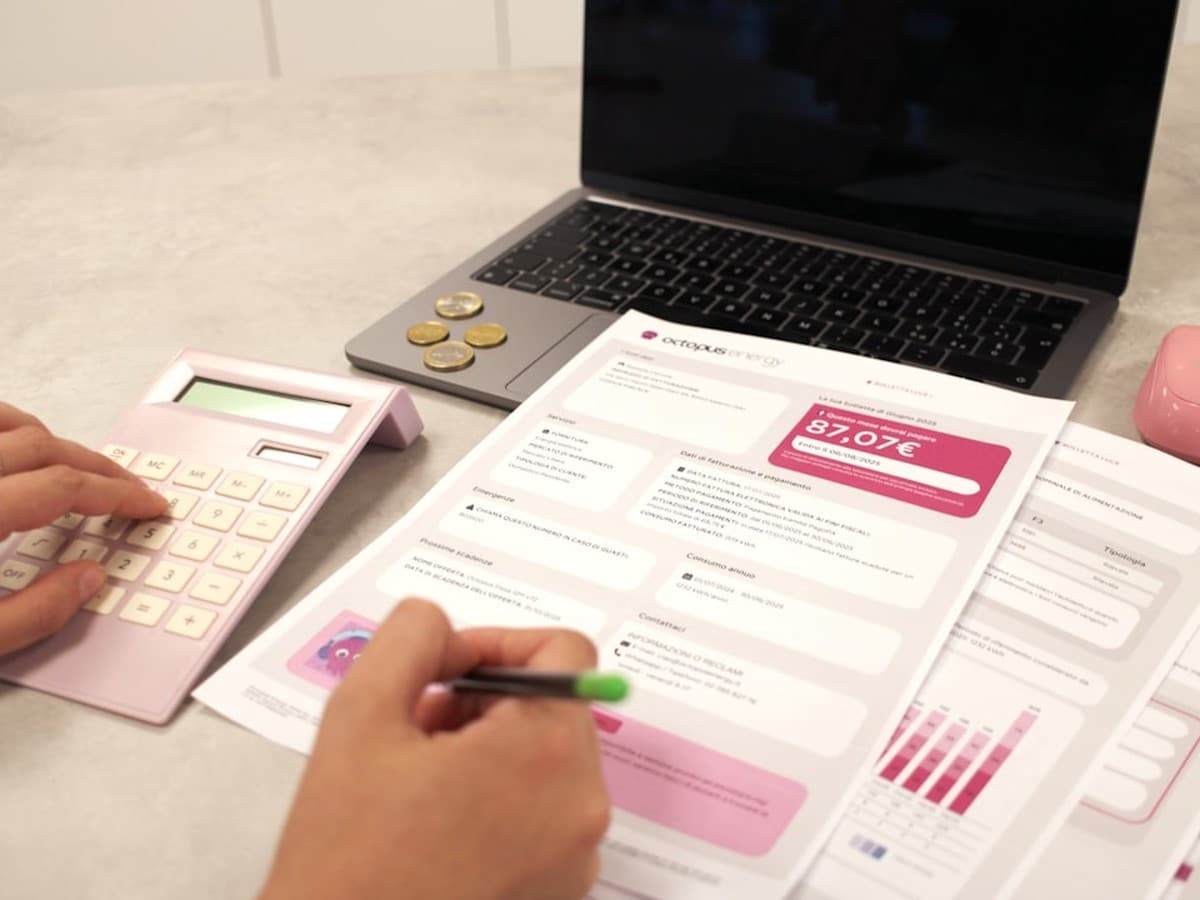
The EFL is a two-page PDF that every REP must give you before you sign, per PUCT Substantive Rule §25.475. Skip to the average price table. The three numbers (500, 1,000, and 2,000 kWh) reveal the plan's structure:
For a deeper walkthrough of exactly how EFL pricing works line by line, our real cost of free nights plans guide deconstructs the EFL for the two most confusing plan types on the Texas market.
Ambit Energy has been serving Texas homes and small businesses since 2006, and offers two main residential structures. Lone Star Classic is a fixed-rate plan that locks the energy charge for the term of the contract, insulating you from the summer rate spikes that variable-rate plans see in ERCOT scarcity events. Lone Star Flex is a month-to-month plan with no early termination fee, priced higher than Classic in exchange for full flexibility.
Neither Ambit plan uses a bill-credit sweet spot. Both are structured for households that want a predictable per-kWh number every month, so the "dead zone" trap does not apply. Our fixed-rate versus variable-rate guide walks through which household usage patterns favor each structure, and our month-to-month plan explainer covers when Lone Star Flex actually makes financial sense despite the higher rate. Plan details and rates subject to change; energy facts label available at vipenergyservice.com; subject to credit approval.
Use this framework once a year, ideally in April or May before summer peak, to make sure your plan structure still matches your household's actual consumption:
A 2,000 sq ft home in Texas averages around 1,177 kWh per month and a bill of $200 based on ChooseTexasPower's marketplace data at the state 16.99 cents per kWh average rate as of July 2026. Summer months in this size home commonly run 30% to 50% higher than the 12-month average.
Houston homes on CenterPoint average around $180 per month across the year, per multiple 2026 Texas retail data sources, with summer bills routinely reaching $230 to $300 for 2,000+ sq ft homes. Houston's lower TDU delivery rate ($54.80 at 1,000 kWh) partially offsets its higher summer consumption compared to other Texas metros.
Air conditioning is the single largest driver. HVAC accounts for approximately 46% of a typical home's electricity use per U.S. EIA data, and can exceed 50% in Texas summers when temperatures push past 100°F for weeks at a time. Longer AC runtime, ceiling fans left on in empty rooms, and heat-generating appliances used during peak-heat afternoons all compound the effect.
Only if your usage reliably matches the credit threshold. If you consistently use 1,000 to 1,200 kWh per month and pick a plan with a $100 credit at 1,000 kWh, the effective rate can drop below 15 cents per kWh. If you swing between 800 and 1,500 kWh, the months you miss the threshold cancel the discount from the months you hit it. Fixed-rate plans are usually the safer choice for high-variance homes.
Two levers: cut kWh or cut per-kWh rate. Programmable thermostats save around $50 per year according to ElectricChoice; LED bulbs use 75% less energy than incandescents; sealing air leaks around windows and doors cuts HVAC waste by 10% to 20%. On the rate side, comparing EFLs at your actual usage level and switching plans is the fastest lever, and it usually beats appliance upgrades for immediate impact.
Knowing that the Texas average is $186 per month does not lower your bill. Knowing your OWN kWh average, comparing plans at that level, and picking a structure that puts you in the Sweet Spot instead of the Dead Zone does. Ambit Energy has offered Texas homes fixed-rate stability and consultant-led service since 2006. If you want help matching a plan to your usage pattern, request a quote with your ZIP code and a copy of your last bill, and we will run the EFL math with you.
Disclosures
Rate figures are as of July 2026 and reflect published EIA and Texas TDU data. Plan details and rates subject to change. Energy facts label available at vipenergyservice.com. Subject to credit approval. Ambit Energy also provides a home-based business opportunity for people interested on the consulting side; income varies, and past results do not guarantee future income. Average earnings information can be found in Ambit's Statement of Independent Contractor Earnings.









Copyright © 2026 VIPEnergyService.com. All rights reserved | PUCT# 10117