How Much Does Home Battery Storage Cost in 2026?

Hero Battery Storage Cost

How Much Does Home Battery Storage Cost in 2026?

March 16, 2026
by
Shawn Cornett

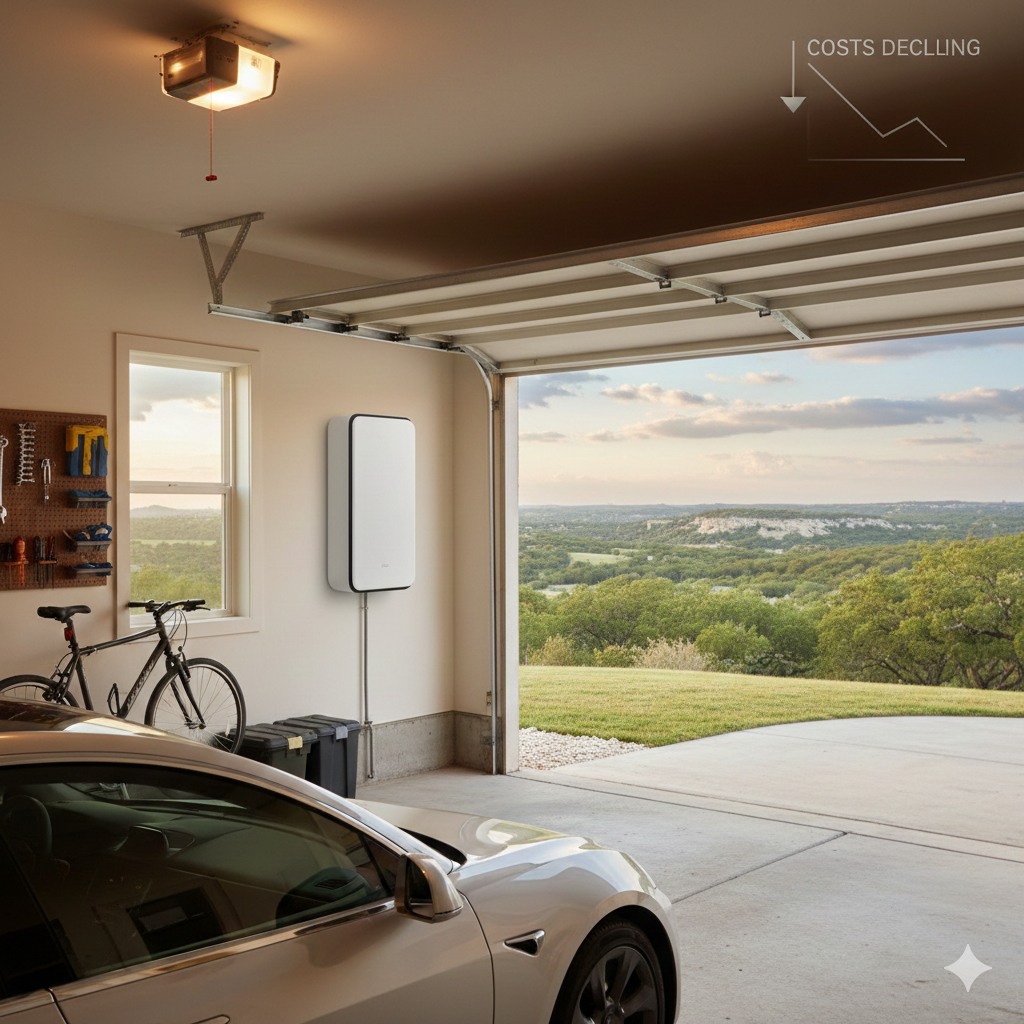
A typical home battery storage system costs $9,000 to $18,000 installed before incentives. In Texas, the average is about $17,472 for a 13 kWh system. Battery pack prices have dropped 93% over the past decade, with further declines projected through 2026. The federal 30% tax credit is no longer available for homeowner-purchased systems in 2026, but Texas incentives like the Oncor rebate (up to $9,000) can significantly reduce costs.

Battery pack prices have dropped 93% over the past decade, but what does a complete home battery storage system actually cost for Texas homeowners in 2026? Between changing federal incentives, falling equipment prices, and Texas-specific rebates, the answer depends on several factors.

Here's a clear breakdown of home battery storage cost in 2026 — including what you'll pay, what's included, and how to maximize your return.

What Does Home Battery Storage Cost?

A typical home battery storage system costs $9,000 to $18,000 installed before incentives, according to EnergySage. In Texas specifically, the average installed price runs higher — about $17,472 for a 13 kWh system, based on EnergySage marketplace data.

Here's how the top systems compare:

Battery Capacity Installed Cost
Tesla Powerwall 3 13.5 kWh $13,500–$15,400
FranklinWH aPower 13.6 kWh ~$18,000
Enphase IQ 5P (x2) 10 kWh $15,000–$17,000

For a deeper per-kWh analysis, see our cost of battery storage per kWh guide.

What's Included in the Price?

The solar battery backup cost covers more than just the battery unit:

  • Battery equipment (50–60% of total) — the battery pack, integrated inverter, and management system
  • Installation labor (15–25%) — electrical work, mounting, wiring
  • Permits and inspections (2–5%) — local building permits, utility interconnection
  • Electrical panel upgrades (if needed) — older panels may require a subpanel or upgrade ($1,000–$4,000)

Non-hardware "soft costs" like labor and permitting vary significantly by market — and are one reason Texas installation costs run above the national median.

Federal Tax Credit Changes for 2026

Important update: The 30% Residential Clean Energy Credit that previously applied to standalone battery purchases was eliminated for homeowner-purchased systems (cash or loan) effective January 1, 2026, according to Solar.com.

What this means for Texas homeowners:

  • Homeowner purchases (cash/loan): No longer eligible for the 30% federal credit in 2026
  • Third-party ownership (lease/PPA): Still qualifies for the investment tax credit through 2027
  • Texas-specific incentives still available:
    • Oncor rebate: up to $9,000 for solar + battery systems in Dallas/Fort Worth
    • Austin Energy: up to $2,500 for battery installations
    • Property tax exemption for solar + battery systems (statewide)

Learn more about available rebates in our battery backup rebate guide.

Yes — and fast. According to BloombergNEF, lithium-ion battery pack prices hit a record low of $108/kWh in 2025, down 8% from 2024. Stationary storage packs dropped even further to $70/kWh — a 45% year-over-year decline.

"Cut-throat competition is making batteries cheaper every year. Record-low battery prices create an opportunity to lower costs and accelerate the deployment of grid-scale storage."

— Evelina Stoikou, Head of Battery Technology, BloombergNEF

Industry projections suggest residential battery systems could cost $8,000–$11,000 by late 2026, with installed costs dropping to $550–$850/kWh.

How Long Until a Battery Pays for Itself in Texas?

For most Texas homeowners, a home battery system pays for itself in 6 to 10 years through electricity bill savings. The payback accelerates if you:

  • Use Free Nights plans — Charge the battery for $0 overnight and use stored energy during expensive daytime hours. This can save $1,000 to $1,500 per year in energy arbitrage, according to EcoFlow.
  • Qualify for the Oncor rebate — A $9,000 rebate can cut payback to 3 to 5 years.
  • Factor in outage protection — Winter Storm Uri caused $2,000 to $10,000+ in damages per household. A battery eliminates that risk.

At Ambit Energy VIP Energy Service, we help Texas homeowners pair battery storage with no-deposit electricity plans designed to maximize your savings.

Ready to Explore Battery Storage for Your Home?

Get a free energy quote and find the right plan for your home.

Get Your Free Quote
Enroll Online

Frequently Asked Questions

How much does home battery storage cost in Texas?

A typical home battery system in Texas costs $14,851 to $20,093 installed for a 13 kWh system, based on EnergySage marketplace data. National averages range from $9,000 to $18,000.

Is the 30% federal tax credit still available for batteries in 2026?

The 30% Residential Clean Energy Credit for homeowner-purchased (cash/loan) battery systems ended December 31, 2025. Third-party ownership arrangements (leases, PPAs) still qualify through 2027.

How long does it take for a home battery to pay for itself?

Most Texas homeowners see a payback period of 6 to 10 years. With Free Nights plan savings and available rebates like the Oncor program, payback can drop to 3 to 5 years.

Sources

ERCOT's December 2026 Outlook Puts Grid Emergency Odds at 2.95% in Its Riskiest Hour. What a Texas Winter Storm Can and Can't Do to Your Electric Bill

ERCOT's December 2026 outlook puts the riskiest hour, 8 a.m. on December's peak-load day, at a 2.95% chance of an Energy Emergency Alert, well under its 10% low-risk line. Here is what a Texas winter storm can and can't do to your electric bill.
Read More >>

Houston Delivery Charges Fell on August 15. They Jumped September 1 and Rose Again for Meters Read September 30. What That Does to Your October Bill.

CenterPoint delivery charges dipped on August 15, jumped back up September 1, and rose again for Houston meters read on or after September 30. Here's what it means for your October bill.
Read More >>

Lubbock Electricity Rates Change November 1: LP&L's New $2.50 Base Charge Means Smaller Homes Pay More and Bigger Homes Pay Less

LP&L adds a $2.50 monthly base charge and cuts delivery to 6.008 cents per kWh on Nov 1, 2026. Homes under 822 kWh a month pay more, bigger homes pay less.
Read More >>

How to Dispute an Electric Bill in Texas: What the PUCT's New Complaint Process Changes, and What It Doesn't

To dispute an electric bill in Texas, write to your provider first (21 days to answer), then file with the PUCT. On October 21, 2026 the PUCT ends formal complaints. Here is what changes and what stays the same.
Read More >>

Direct Energy Free Nights Review: What the EFL Actually Charges After the Free Window

Direct Energy free nights (Twelve Hour Power) is free 9 p.m. to 9 a.m. As of September 29, 2026, the 12-month EFLs charge 34.5 to 35.4 cents per kWh after the free window. Here is the break-even math.
Read More >>

27 Texas Electricity Plans Got Withdrawn on September 12 Alone. Here Is the Best Time to Renew Your Contract This Fall.

Best time to renew a Texas electricity contract: the fall shoulder window and the 14 days before your end date. 27 plans got pulled Sept 12. Here is the clock.
Read More >>

SmartEnergy Just Launched a $200 Bill Credit Plan on September 3. Here Is How Bill Credit Plans Actually Work in Texas (And When You Lose the Credit)

SmartEnergy launched a $200 bill credit plan on September 3, 2026. Here is how Texas bill credit plans actually work, and the four conditions that forfeit the credit.
Read More >>

No Deposit Light Companies in Texas: What You Actually Qualify For Without a Credit Check

Four legal ways to skip a Texas electricity deposit as of September 2026: soft-check plans, PUCT Rule 25.478 waivers, letters of credit, or prepaid Rule 25.498 plans. What each costs and who qualifies.
Read More >>

Every Ambit Energy Plan Compared for 2026: Rates, Terms, Fees and Who Each One Actually Suits

Compare every Ambit Energy plan in Texas for 2026 side by side: Lone Star Classic 12 and 24, Flex, Free and Clear Nights, Solar Buyback, small business TSC. Rates, fees, terms and who each one actually suits.
Read More >>

Your Oncor Delivery Charge Went Down on August 1. Your Bill Still Went Up $2.73. Here Is Where the Money Went.

Oncor's per-kWh delivery rate dropped on August 1, 2026, but a new PUCT-approved Rider IS surcharge started the same day. Here is the exact math on the $2.73 bill increase.
Read More >>

TXU Free Nights and Weekends vs Ambit Free and Clear Nights: The Break-Even Math on Both Plans

Comparing TXU Free Nights and Weekends vs Ambit Free and Clear Nights: hours, rates, ETFs, and the smart-meter break-even math your bill actually needs.
Read More >>

Should Texans Lock In a Fixed-Rate Electricity Plan This August? Here Is What the Forward Price Curve Says

August 2026 fixed vs variable Texas electricity rates. What the ERCOT forward curve says about winter 2026-2027 and a five-filter lock-in decision framework.
Read More >>

Commercial Electricity Rates in Texas Are Repricing Right Now. A Small Business Renewal Guide for August 2026

Texas commercial electricity rates average 5.98 to 8.35 cents per kWh in August 2026 as TDU charges reset. Here is when to lock and what to compare on renewal.
Read More >>

Texas Electric Bill Too High After the July Heat Wave? The 4 Assistance Programs That Actually Help in 2026

Four Texas assistance programs will actually pay part of your summer electric bill: CEAP, Texas Utility Help, 2-1-1, and Salvation Army. 2026 eligibility, benefit amounts, and how to apply.
Read More >>

How to Read Your Texas Electricity Facts Label: The 6 Numbers That Actually Tell You What a Plan Will Cost

The 6 numbers on every Texas Electricity Facts Label that decide your bill: average price per kWh, base charge, energy charge, TDU delivery, bill credits, and cancellation fees. Worked math plus a real two-plan comparison.
Read More >>

Same-Day Electricity No Deposit in Texas: How to Turn Power On Today Without a Credit Check

Turn on same-day electricity in Texas with no deposit or credit check. Compare provider cutoffs, PUCT deposit-waiver rules, and the 3-Path Same-Day Framework.
Read More >>
1 2 … 16