Solar Panels Power Outage: Why They Stop & Battery Solutions

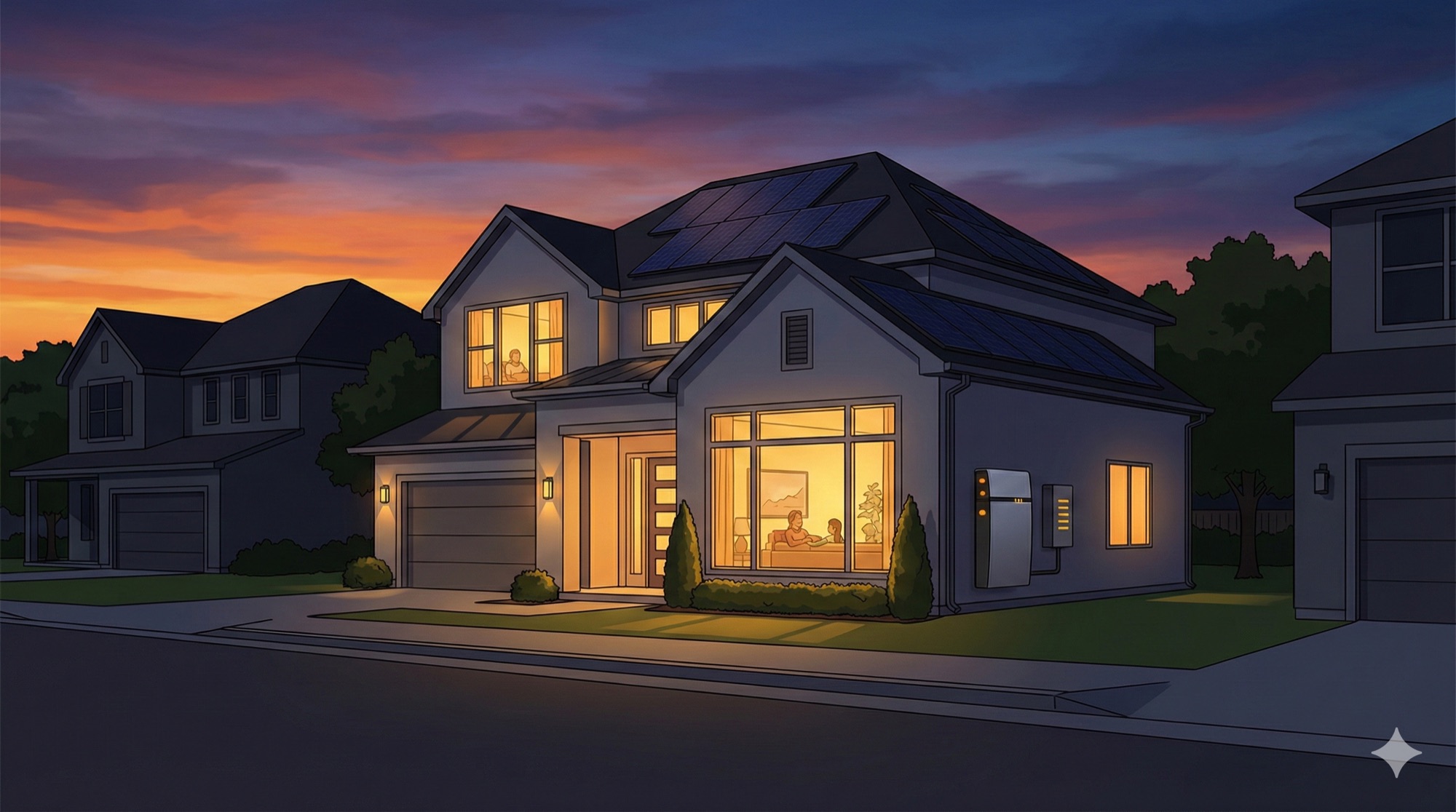
Texas home with solar panels during a power outage with battery backup keeping lights on

Solar Panels Power Outage: Why They Stop & Battery Solutions

December 4, 2025
by
Shawn Cornett


Quick Answer: If you have solar panels and the power goes out, your solar system will stop generating electricity—even on a sunny day. This happens because of a safety feature called anti-islanding protection. The good news? Adding battery storage for your solar panel system keeps your home powered during grid outages.

You've invested in solar panels. The sun is shining. Then the power goes out, and your lights go dark just like everyone else's. It's one of the most common frustrations Texas homeowners experience with grid-tied solar systems.

The reason comes down to safety—specifically, protecting utility workers who repair power lines during outages. But understanding why your solar panels stop working during a power outage also reveals the solution: battery storage.

Why Solar Panels Stop Working During Power Outages

Most residential solar systems in Texas are grid-tied. This means your solar panels connect directly to the electrical grid through an inverter. When your panels produce more electricity than you need, excess power flows to the grid. When you need more than your panels produce, you pull from the grid.

Here's the critical part: your inverter must detect grid power to operate. During a solar panels power cut, the inverter immediately shuts down. This isn't a malfunction—it's a deliberate safety mechanism.

Anti-Islanding Protection Explained

When power lines go down, utility workers need to repair them safely. If your solar panels continued sending electricity into the grid during an outage, they could electrocute workers or cause fires.
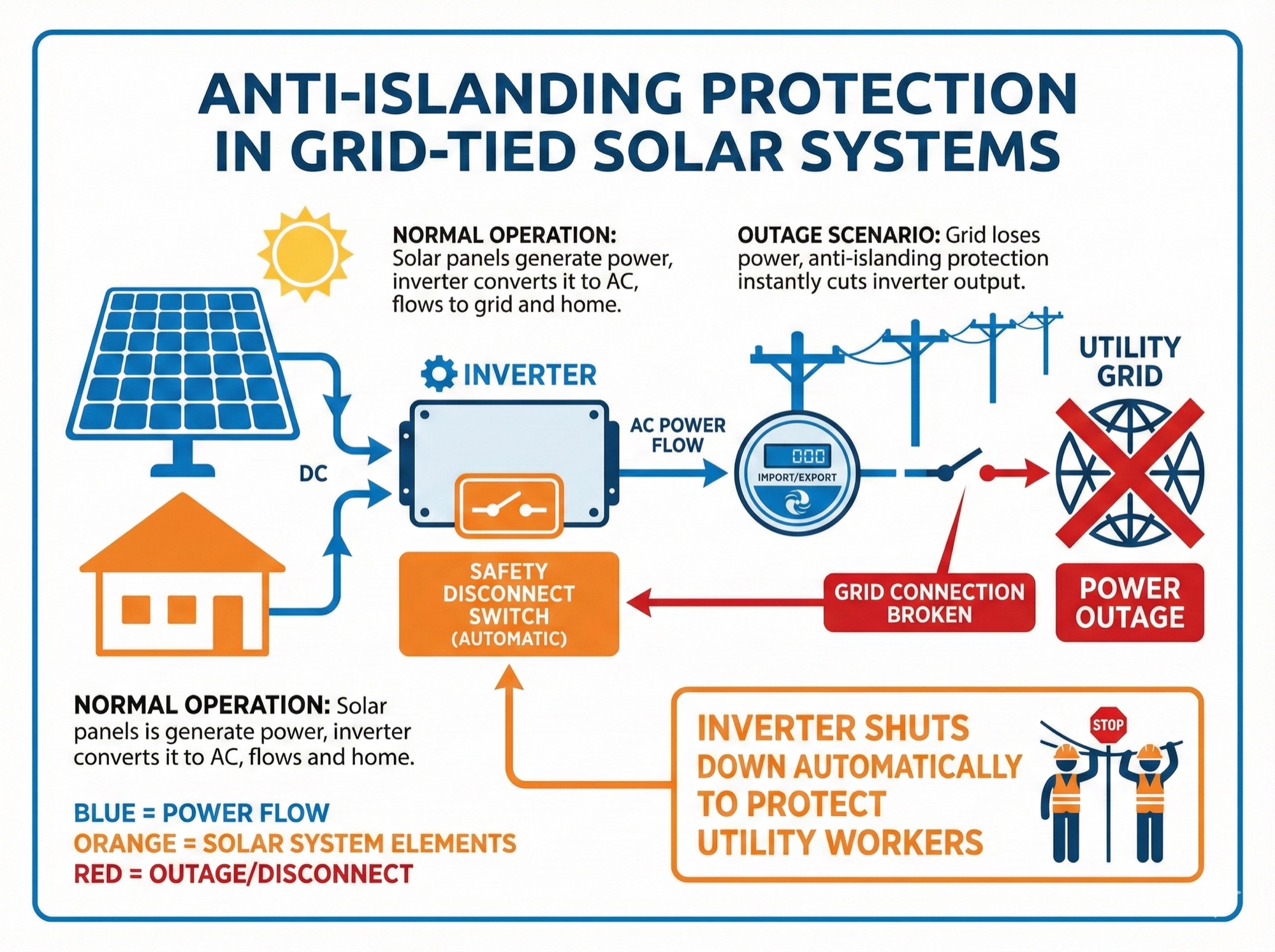
Diagram showing how anti-islanding protection disconnects solar panels from the grid during power outages

The safety feature that prevents this is called anti-islanding protection. Every grid-tied solar inverter must include it by law, per IEEE Standard 1547. The moment your inverter detects the grid is down, it stops converting solar energy to usable electricity.

This means your solar panels work during normal conditions but become useless exactly when you might need backup power most—during storms, grid failures, or the Texas grid instability events that have become increasingly common.

The Battery Storage Solution

If you have solar panels and the power goes out, battery storage changes everything. A solar battery system stores excess energy your panels produce during the day. During an outage, the battery disconnects from the grid and powers your home independently.
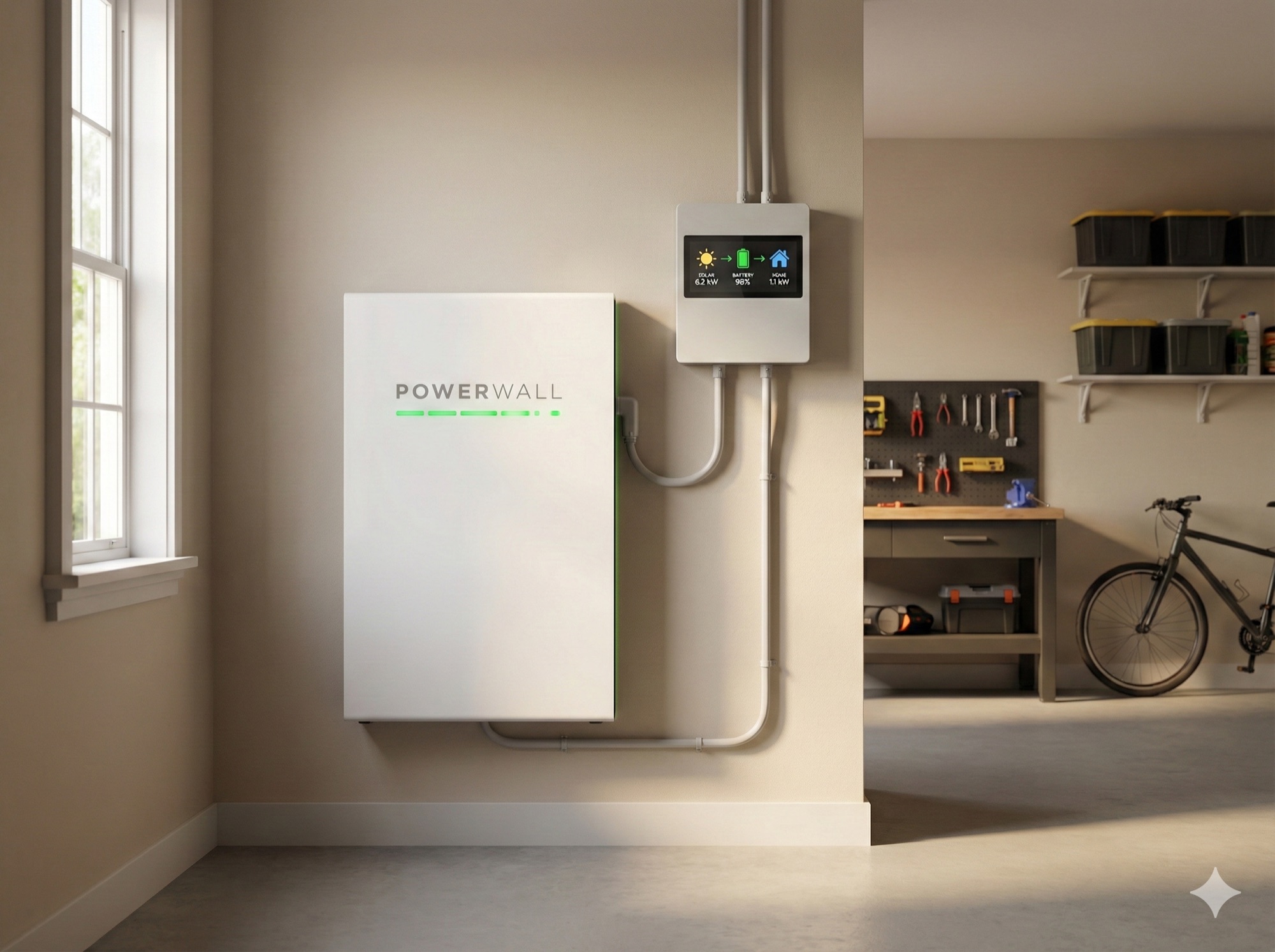
Home battery storage system connected to solar panels providing backup power during Texas grid outages

This setup is called "islanding" when done safely—your home becomes an island, powered by stored solar energy without any connection to utility power lines.

How Battery Backup Works

Here's the basic flow:

  1. Normal operation: Solar panels charge the battery while powering your home. Excess goes to the grid (earning solar buyback credits).
  2. Outage detection: The battery system detects the power outage within milliseconds.
  3. Automatic switchover: The system disconnects from the grid and switches to battery power seamlessly—often so fast you won't notice.
  4. Continued solar charging: During daylight, your panels continue charging the battery while it powers your home.
  5. Night operation: The battery provides stored power until morning, when solar charging resumes.

How Much Battery Storage Do You Need?

The right battery capacity depends on two factors: which appliances you want to power and how long outages typically last in your area.

Essential Loads Coverage

Infographic showing which home appliances a solar battery backup system can power during outages

Most Texas homeowners choose to power essential loads during outages:

Appliance Daily Usage
Refrigerator ~1.5 kWh per day
LED Lights ~0.5 kWh per day
WiFi Router ~0.2 kWh per day
Phone/Device Charging ~0.3 kWh per day
Medical Equipment Varies by device

A typical 10-15 kWh battery system can power these essentials for 24-48 hours—longer if the sun is shining and your panels keep charging.

For whole-home backup during extended outages, you may need 20-40 kWh of storage depending on your energy needs and home size.

Cost and ROI Considerations

Battery storage adds $10,000-$20,000 to a solar installation, depending on capacity. However, the federal solar tax credit applies to batteries installed with solar, reducing costs by 30%.

Beyond backup power, batteries offer additional savings:

  • Time-of-use optimization: Store cheap daytime solar and use it during expensive evening peak rates
  • Demand charge reduction: Smooth out energy usage to avoid utility demand charges
  • Increased solar self-consumption: Use more of your own solar energy instead of selling it back at wholesale rates

For Texas homeowners tired of grid reliability issues, the peace of mind alone often justifies the investment.

Getting Started with Solar Battery Storage

If your current solar panels power cut frustration has you considering battery backup, here's your next step: get a personalized assessment of your energy needs and backup requirements.

At VIP Energy Service, we help Texas homeowners find the right combination of solar and battery solutions for their homes. Our energy consultants can analyze your usage patterns, outage history, and budget to recommend the optimal system.

Ready to keep your lights on during the next outage? Request your free energy quote and discover how solar battery storage can provide true energy independence for your Texas home.

Sources

What's the Average Electricity Bill in Texas? And How High-Usage Homes Pay Less

The average Texas electric bill is $186.21 per month as of July 2026. See how it varies by home size, city, and season, and how high-usage homes pay less.
Read More >>

How to Read Your Texas Electricity Bill: Every Line Item Explained

Every Texas electricity bill breaks into three buckets: supply, delivery, and taxes. Here is what each 2026 line item means, plus a 6-point audit to catch overcharges.
Read More >>

Cheapest Electricity Rates in Texas Right Now: How to Spot a Real Deal

Texas' cheapest advertised electricity rate is 6.4 cents per kWh in July 2026, but bill credit tiers can double your rate. Use the 5-Signal Real Deal Test.
Read More >>

ERCOT Called for Conservation on July 13. Here's What It Means for Your Texas Bill (And Which Plans Take the Hit)

ERCOT called Conservation on July 13, 2026. Here is what it means for Texas households and which retail electricity plans take the hit.
Read More >>

Texas Just Approved $166 Million in Energy Bill Assistance. Here's Who Qualifies and How to Save Before It Starts.

Governor Abbott's $166M energy assistance award funds Texas utility bill help, weatherization, and equipment repair beginning January 1, 2027. Here is who qualifies, how to apply through TDHCA and 2-1-1, and five moves any Texas household can make this week to lower the summer electricity bill.
Read More >>

No-Contract & Month-to-Month Electricity in Texas: How Lone Star Flex Works

Texas no-contract month-to-month electricity, explained. How Ambit's Lone Star Flex works, when it beats a fixed plan, and the ETF math for switching.
Read More >>

Fixed-Rate vs Variable-Rate Electricity in Texas: Which Is Right for You

Fixed vs variable electricity in Texas: compare plan types, real 2026 price ranges by TDU, and use the five-question Texas Rate Reality Check to pick the right plan.
Read More >>

Texas Electricity Plans Explained: How to Pick the Right Rate Plan in 2026

Compare Texas electricity plans in 2026. Fixed vs variable vs indexed vs free nights vs prepaid, TDU delivery charges, bill credit traps, and the 7 questions to ask before you enroll.
Read More >>

Free Nights Plan Calculator: Are Free Nights Plans Right for You?

A reusable 5-Number Fit Test framework, three worked Texas household examples, and the actual calculator tools available in 2026 to tell whether a free nights electricity plan beats a fixed-rate plan for your home.
Read More >>

Best Free Nights Plans in Texas by ZIP Code

Free nights plans in Texas vary by ZIP code because your TDU (Oncor, CenterPoint, AEP Texas, TNMP) decides which retail plans you can buy. Here is the 3-step ZIP-to-Match Framework I use to land on the best one.
Read More >>

The Real Cost of Free Nights Plans: Reading the EFL Line by Line

A line-by-line, 7-section audit of any Texas Free Nights Electricity Facts Label, with a worked breakeven example at 1,000 kWh and a quick fit test for your household.
Read More >>

Why Your Texas Electric Bill Jumped in June 2026: TDU Delivery Charges Changed

As of June 1, 2026, Texas TDU residential delivery rates changed, and Oncor was the biggest mover. We walk Texas homeowners through what changed, why it is outside your REP's control, how much it adds to a summer bill, and four steps to cushion the hit.
Read More >>

Free Nights Plans for EV Owners in Texas: The Smartest Way to Charge

Texas EV owner? A free nights electricity plan can zero out your home charging bill. Here is the break-even math, top providers, and the setup that works.
Read More >>

Texas Summer Electricity Bills: How to Stay Cool and Save Money

TXU's Beat the Heat program signals summer bill season in Texas. Here are practical homeowner tips to compare plans, lock a fixed rate, and lower cooling costs.
Read More >>

How to Shift Your Energy Usage to Nights and Maximize a Free Nights Plan

A step-by-step playbook to shift energy usage to nights and maximize a Texas free nights plan: which appliances to run when, the break-even math, and how to verify savings.
Read More >>

Free Nights vs. Free Weekends: Which Texas Energy Plan Saves More?

Free nights vs free weekends in Texas: a side-by-side comparison, the break-even math, and who saves more on each plan.
Read More >>
1 2 14