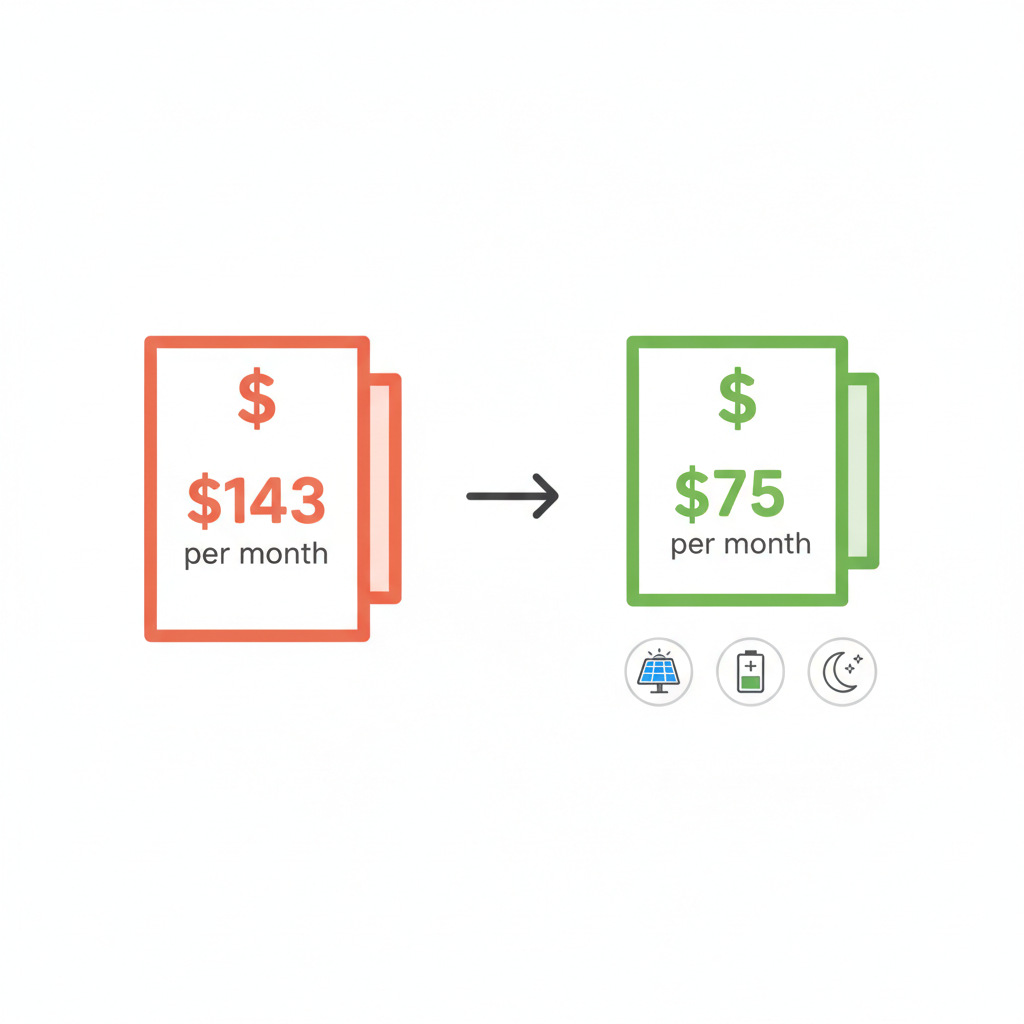
Combining solar panels, battery storage, and a free nights electricity plan creates a 24-hour energy strategy that can cut Texas electricity costs from ~$143/month to as low as $71–$82/month, saving approximately $732–$864 per year. Solar covers daytime usage, the battery bridges peak evening hours, and the free nights plan eliminates overnight energy charges. Total system cost: $32,000–$40,500 before incentives (Oncor rebate up to $9,000 available).
What if your solar panels, home battery, and electricity plan all worked together around the clock? That's the idea behind the Texas triple play — combining solar electricity plans with home battery storage in Texas alongside a free nights plan to slash your electricity costs from every angle. For the average Texas home, this strategy can cut monthly bills from ~$143 to as low as $71–$82, saving $732–$864 per year. Here's how each layer works together, what it costs in 2026, and whether it makes sense for your home. For background on free nights plans, see our guide to free nights electricity plans in Texas.
How the Triple Play Works
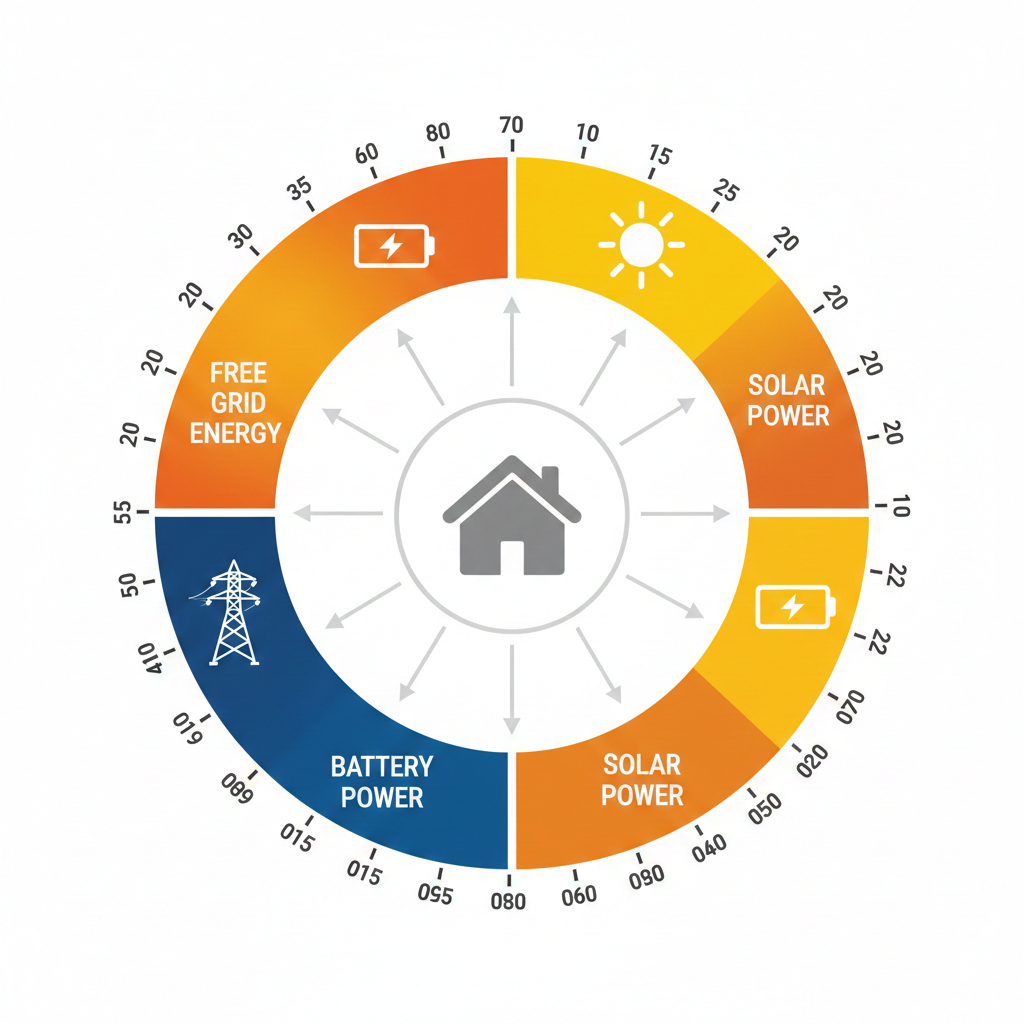
The triple play creates a 24-hour energy cycle where you rarely pay full price for electricity:
| Time Window | Power Source | Cost |
|---|---|---|
| 9 PM – 6 AM | Free grid electricity | $0 energy (TDU only ~5.58¢) |
| 6 AM – 9 AM | Battery discharge | $0 (charged overnight for free) |
| 9 AM – 5 PM | Solar panels | $0 (self-generated) |
| 5 PM – 9 PM | Battery discharge | $0 (charged by solar during the day) |
Each layer covers the others' weaknesses. Solar alone can't help at night — but the free nights plan and battery handle that. A free nights plan alone has expensive daytime rates (21.9¢/kWh) — but solar and battery eliminate most daytime grid purchases. A battery alone is expensive to charge from the grid — but solar and free nights provide zero-cost energy to charge it.
The result: your home draws from the grid primarily during free hours, and your battery bridges the gaps. According to Good Faith Energy, Texas solar-battery owners can configure time-based controls on systems like Tesla Powerwall and FranklinWH to automate this daily cycle.
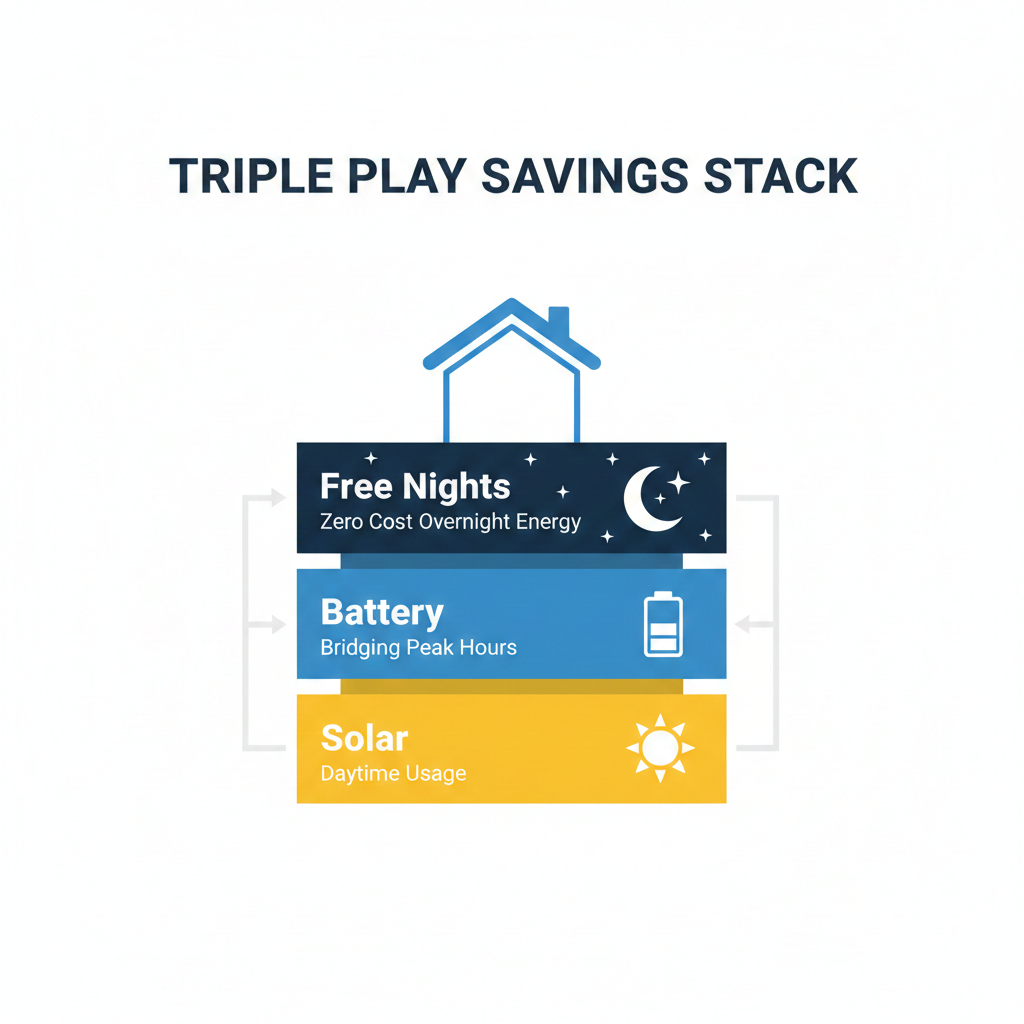
The 3-Layer Savings Stack
Here's how each layer contributes to home battery storage electricity bills savings for the average Texas home (1,100 kWh/month):
Layer 1 — Solar generation: An 8 kW system in Texas generates approximately 1,200 kWh/month, according to EnergySage. That's enough to cover most or all daytime consumption — eliminating the 21.9¢/kWh daytime energy charge.
Layer 2 — Battery arbitrage: Your battery charges for free during nighttime hours and discharges during the expensive 6 AM–9 AM and 5 PM–9 PM windows. This captures value from the price gap between $0 nighttime energy and 21.9¢/kWh daytime rates.
Layer 3 — Free nights plan: Overnight usage (battery charging, appliances, HVAC) costs $0 in energy charges. You only pay TDU delivery at ~5.58¢/kWh, according to QuickElectricity.
Combined monthly estimate:
| Component | Fixed-Rate (13¢/kWh) | Triple Play |
|---|---|---|
| Daytime energy | $93 | $0–$11 |
| Nighttime energy | $50 | $0 (free plan) |
| TDU delivery | Included | $61 |
| Base charge | $0 | $9.95 |
| Monthly total | ~$143 | ~$71–$82 |
| Annual savings | — | ~$732–$864 |
Real-world results back this up: Texas homeowners on DIY Solar Forum report achieving near-zero electricity bills with solar + battery + free nights configurations, with one user paying just $77 total over six months.
What the System Costs in 2026
Transparency matters here. An 8 kW solar array in Texas costs $20,000–$24,000 before incentives, and a 13.5 kWh Tesla Powerwall 3 runs $12,000–$16,500 installed, according to SolarReviews. Total system cost: approximately $32,000–$40,500.
Important for 2026 buyers: The federal 30% Residential Clean Energy Credit expired December 31, 2025. This increases out-of-pocket costs compared to previous years. However, key incentives remain:
- Oncor rebate: Up to $9,000 for solar + battery installations in the DFW service area, according to QuickElectricity
- Third-party ownership (TPO): Solar leases and PPAs still qualify for the federal tax credit through 2027 — you get the benefits without the upfront cost
- Battery cost trends: Lithium battery costs are declining 8–12% per year, with prices projected to reach $550–$850/kWh by late 2026, according to Native Solar
For current battery pricing, see our cost of battery storage per kWh guide. To understand how solar and battery systems work together, we have a dedicated explainer.
Why Ambit's Free & Clear Nights Fits This Strategy
Ambit Energy's Free & Clear Nights plan is built for solar electricity plans with home battery storage in Texas:
- 9 PM – 5:59 AM free window — 9 hours of $0 energy for battery charging and overnight usage
- 100% wind-powered — your nighttime grid electricity comes from renewable sources, complementing your solar investment
- TLC Pledge — Ambit gives you 60 days to test the plan. If it doesn't fit, switch to any other Ambit plan at no cost. No early termination fee during the trial period
- TDU delivery charges still apply (~5.58¢/kWh in Oncor territory), but the energy charge — typically the largest line item — is eliminated during free hours
For solar buyback plans with free nights, Ambit also offers 1:1 solar buyback on other plans if you decide to sell excess generation back to the grid instead.
Is the Triple Play Right for Your Home?
The triple play makes the most sense if you:
- Own your home (roof access for solar, ability to install battery)
- Use 1,000+ kWh/month (higher usage = more savings to capture)
- Live in Oncor or CenterPoint territory (TDU rebates and competitive delivery rates)
- Plan to stay 7+ years (allows the system to pay for itself)
Not sure where you stand? Check your nighttime usage percentage at Smart Meter Texas, then compare Ambit Energy rates and plans to see which free nights option fits your home.
Ready to Build Your Triple Play System?
Get a personalized solar + battery + free nights recommendation from Ambit Energy VIP Energy Service.
Frequently Asked Questions
How much can I save with solar + battery + free nights in Texas?
The average Texas home (1,100 kWh/month) can save approximately $732–$864 per year with the triple play strategy compared to a standard fixed-rate plan. Your actual savings depend on solar system size, battery capacity, daytime consumption patterns, and your TDU service area.
Did the federal solar tax credit expire?
The 30% Residential Clean Energy Credit (Section 25D) for customer-owned systems expired December 31, 2025. However, third-party-owned systems (solar leases and PPAs) remain eligible through 2027. The Oncor residential solar program also offers up to $9,000 in rebates for qualifying solar + battery installations.
Can I add battery storage to my existing solar system?
Yes — battery storage can be retrofitted to most existing solar installations. A 13.5 kWh battery like the Tesla Powerwall 3 costs $12,000–$16,500 installed and can be configured to work with free nights plans using time-based charging controls. Battery costs are declining 8–12% per year, making 2026 pricing more accessible than previous years for the battery component.
Sources:
EnergySage |
SolarReviews |
QuickElectricity |
Native Solar |
Good Faith Energy
Rates and plans subject to change. Always review the Electricity Facts Label (EFL) before signing up. System costs and savings estimates are approximate and vary by location, installer, and usage patterns.
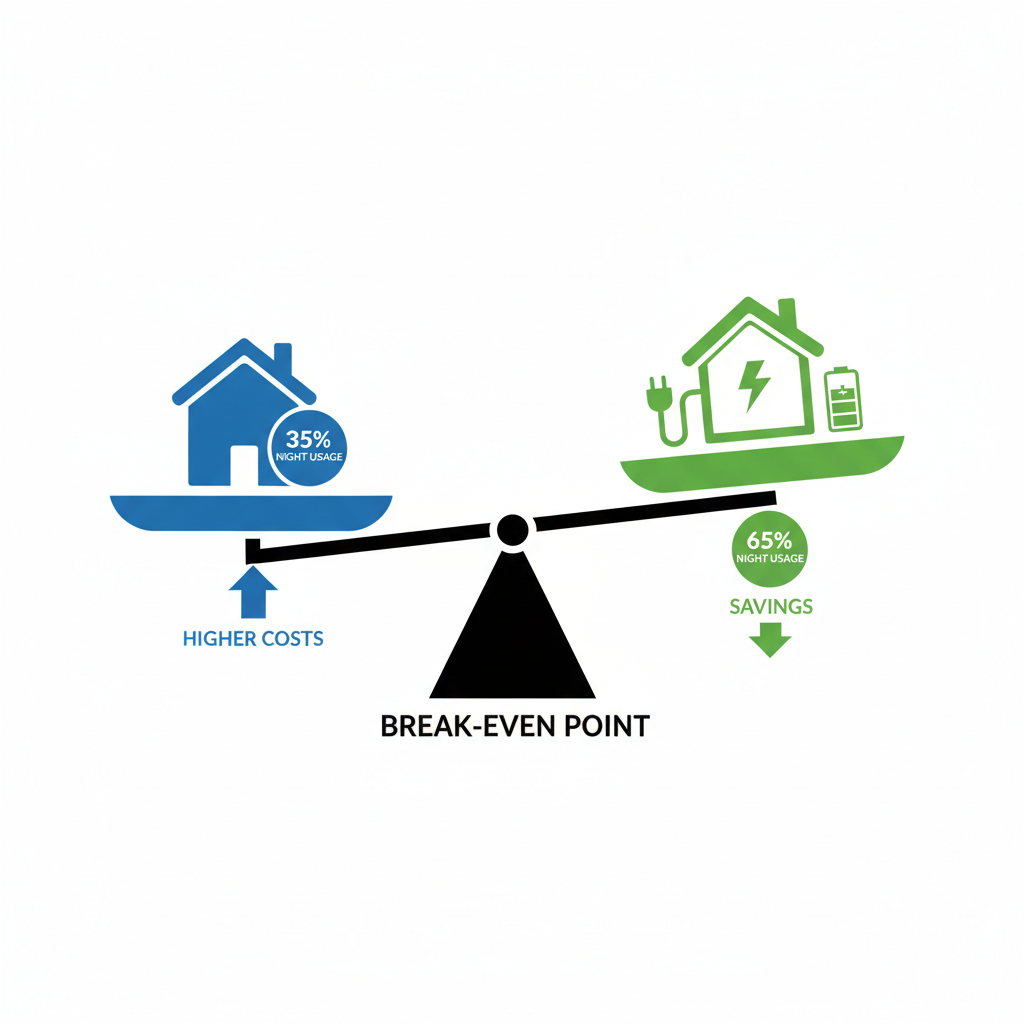
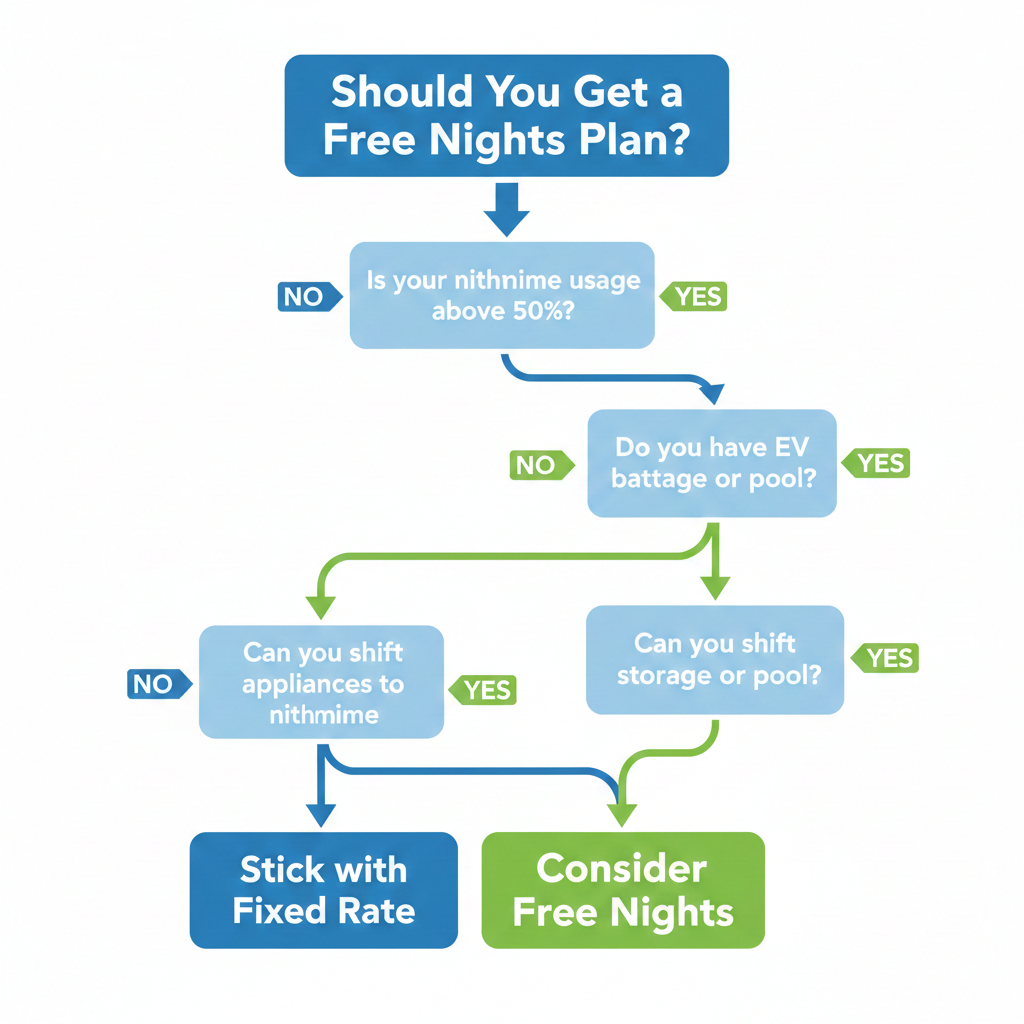
Are free nights electricity plans worth it? For most Texas homes, no. A study of 501 consumers found free nights plans cost 30% more ($1,435/year) than fixed-rate plans. The break-even threshold requires shifting 65% of usage to free hours — but the average Texas home naturally uses only 33–35% at night. Free nights plans are worth it only for EV owners, battery storage owners, or households that can genuinely shift the majority of consumption to nighttime hours.
Are free nights electricity plans worth it for your Texas home? The short answer: for the average household, the best free nights electricity plan in Texas still costs more than a standard fixed-rate plan. A study of 501 Texas consumers found that free nights plans cost 30% more ($1,435/year) than traditional plans. But the math changes completely if you can shift 65% or more of your usage to free hours — especially with battery storage. Here's our data-driven breakdown of who saves and who doesn't with free nights electricity plans in Texas.
What "Free" Really Costs
Free electricity at night sounds like a great deal — until you look at the full bill. "Free" means the energy charge drops to $0 during nighttime hours (typically 9 PM to 6 AM). But two costs remain:
TDU delivery charges apply 24/7. Your local utility (Oncor, CenterPoint, AEP) charges 5.58–6.00 cents per kWh for delivery regardless of when you use electricity. At 400 kWh of nighttime usage, that's still $22–$24/month during "free" hours, according to QuickElectricity.
Daytime rates jump 2–3x higher. To offset the free hours, providers charge 18–32 cents per kWh during the day — compared to 8.8–12 cents on a standard fixed-rate plan. A study by EnergyBot found that 50% of Texas consumers chose free nights plans thinking they'd save money, yet 87% ended up not selecting the least expensive option available.
The Electricity Facts Label (EFL) can be misleading: providers assume 35–50% nighttime usage when calculating the "average" rate shown on the label. If your actual nighttime usage is lower, your effective rate is higher than advertised.
The Break-Even Math
Is free nights electricity worth it? Here's what the numbers show for the average Texas home using 1,100 kWh per month, according to the U.S. Energy Information Administration:
| Night Usage | Free Nights Cost/Mo | Fixed-Rate Cost/Mo | Annual Difference |
|---|---|---|---|
| 35% (average) | $204 | $132 | +$858 more |
| 60% (optimized) | $149 | $132 | +$198 more |
| 65% | ~$132 | $132 | Break even |
| 75% (EV + battery) | $158 | $180 | -$270 savings |
The 65% rule: You need approximately 65% of your total electricity consumption during free hours to break even with the best free nights electricity plan in Texas. The average Texas household naturally uses only 33–35% at night — meaning most homes would need to nearly double their nighttime usage to benefit.
Check your own numbers first. Before signing up, download your 15-minute interval usage data from Smart Meter Texas to calculate your actual nighttime percentage.
Who Actually Saves with Free Nights Plans
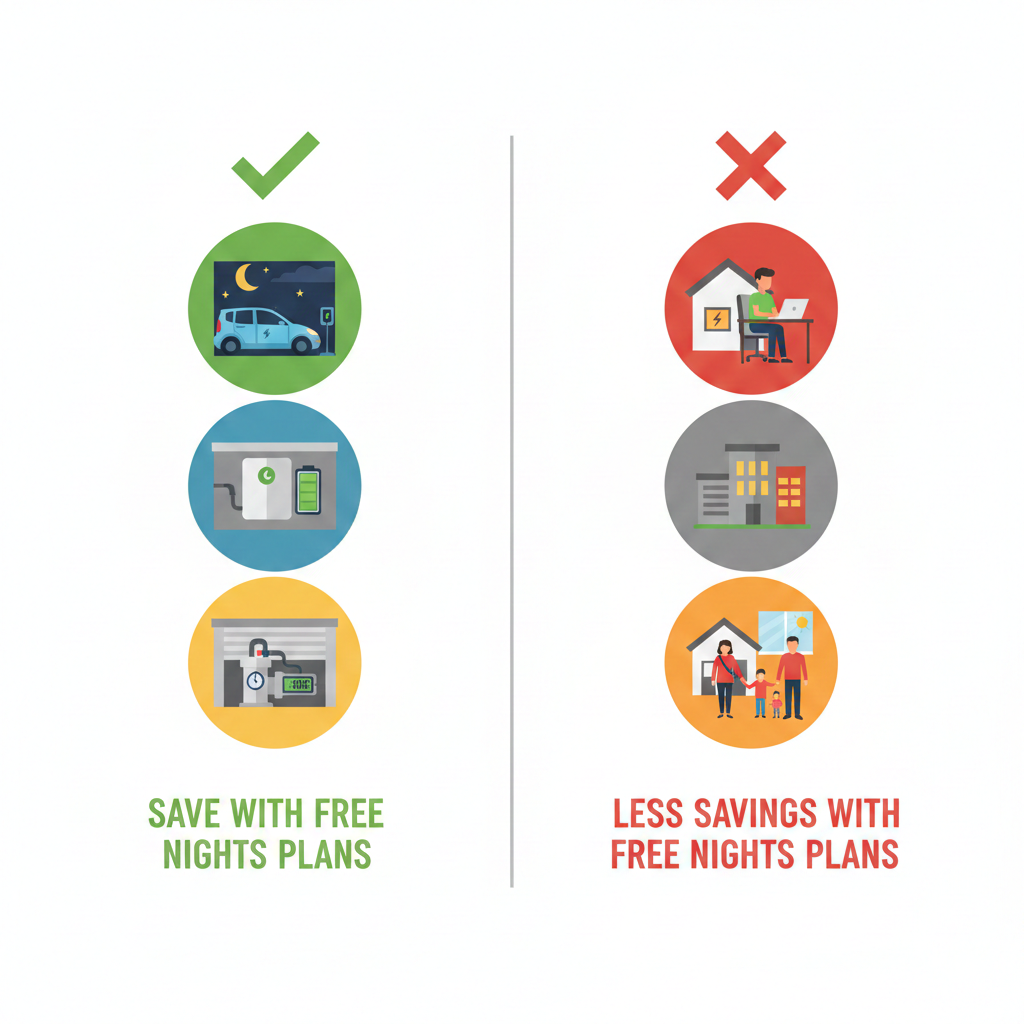
Free electricity at night genuinely pays off for these specific households:
EV owners charge vehicles overnight when the energy cost drops to $0. With 90% of EV charging happening at home overnight, an EV owner charging 300 kWh monthly saves the full energy charge — though TDU delivery (~$17/month) still applies.
Battery storage owners unlock the biggest advantage. A home battery charges from the grid at $0 during free hours and discharges during expensive daytime peaks. This energy arbitrage approach effectively reduces all electricity to TDU-only costs (~5.5 cents/kWh). For details on system pricing, see our guide to the cost of battery storage per kWh.
Pool owners can shift pump operation (3,000–5,000 kWh/year) entirely to nighttime hours, saving 30–50% on pump electricity costs without any lifestyle changes.
The common thread: you need infrastructure (EV, battery, pool timer) plus intentional scheduling to make free electricity at night worthwhile.
If your household looks like the ones above, you can compare Ambit's Free & Clear Nights plan for your address before you decide.
Who Should Skip Free Nights Plans
Is free nights electricity worth it if you work from home? Probably not. The International Energy Agency reports that work-from-home arrangements increase household energy consumption 7–23%, with most of that increase during expensive daytime hours — the opposite of what free nights plans require.
Low-usage households (<800 kWh/month) lose money regardless of scheduling. With fewer total kWh, the savings from free nighttime energy cannot offset the premium daytime rates. At 500 kWh/month, expect to pay roughly $360/year more than a fixed-rate plan.
Families home during the day — with children, elderly family members, or caregivers — generate heavy daytime usage from HVAC, cooking, and electronics. Shifting enough usage to nighttime hours is unrealistic.
Renters without automation face limited options. Without smart plugs, programmable thermostats, or the ability to install battery storage, meaningful usage shifting requires manual effort that rarely sustains long-term.
How to Know Before You Sign Up
Before committing to the best free nights electricity plan in Texas:
- Check your actual nighttime usage at Smart Meter Texas — if it's below 50%, free nights plans will cost you more
- Compare fixed-rate alternatives — plans starting at 8.8–12 cents/kWh are widely available for Texas homeowners
- Read the Electricity Facts Label (EFL) carefully — compare the 1,000 kWh rate, not the advertised average
- Consider Ambit's TLC Pledge — Ambit Energy's 60-day pledge lets you switch to any other Ambit plan at no cost if free nights doesn't fit your lifestyle, giving you a risk-free trial period
Ready to find the right electricity plan for your home? Compare Ambit Energy rates and plans or explore no-deposit electricity plans if upfront costs are a concern.
Not Sure Which Plan Fits Your Home?
Get a personalized energy recommendation from Ambit Energy VIP Energy Service.
Frequently Asked Questions
How much do free nights electricity plans really cost?
For the average Texas home using 1,100 kWh/month with typical 35% nighttime usage, a free nights plan costs approximately $204/month — about $72 more per month ($858/year more) than a comparable fixed-rate plan. The "free" nighttime energy comes with daytime rates of 18–32 cents/kWh, which is 2–3x higher than standard fixed-rate plans.
What percentage of usage needs to shift to free hours to save money?
You need approximately 65% of your total electricity consumption during free hours to break even with a fixed-rate plan. The average Texas household naturally uses only 33–35% at night. To reach 65%, most homes require EV charging, battery storage, or significant appliance scheduling changes.
Can battery storage make free nights plans worth it?
Yes — battery storage is the most effective way to make free nights plans profitable. A home battery charges from the grid at $0 during free nighttime hours and discharges during expensive daytime peaks, effectively reducing all energy costs to TDU delivery charges only (about 5.5–6.0 cents/kWh). For the average Texas home, battery arbitrage with a free nights plan can save $100+ per month compared to paying full daytime rates.
Sources:
EnergyBot |
Smart Meter Texas |
U.S. Energy Information Administration |
QuickElectricity
Rates and plans subject to change. Always review the Electricity Facts Label (EFL) before signing up. Rates vary by location, TDU service area, and usage level.
Free nights electricity plans in Texas charge $0 for energy during off-peak hours (typically 9 PM – 6 AM) and higher rates during the day. To save money, you need to shift 50–65% of your usage to free hours. Without deliberate shifting, the average household pays about 30% more than a fixed-rate plan. The biggest savings opportunity: pairing a home battery with a free nights plan — charging at $0 overnight and discharging during expensive daytime hours — which can save $1,000+ per year for the average Texas home.
Free nights electricity plans let Texas homeowners get $0 energy charges during off-peak hours — typically 9 PM to 6 AM. But "free" doesn't mean zero cost, and the math only works in your favor if you know how to use these plans correctly. This guide breaks down how free nights electricity plans work in the Texas deregulated market, which providers offer the best deals, and how pairing battery storage with a free nights plan can unlock savings most homeowners miss.
What Are Free Nights Electricity Plans?
In Texas's deregulated electricity market, about 85% of households can choose their electricity provider through ERCOT (Electric Reliability Council of Texas). Free nights electricity plans are a type of time-of-use pricing where your retail electric provider charges $0.00 per kWh for energy during designated nighttime hours.
Here's the key: wind energy generates heavily at night in Texas — accounting for 24% of the state's total electricity generation — creating surplus capacity on the grid. Providers buy this cheap wholesale electricity and offer it as "free" to customers, while charging higher-than-average rates during daytime hours.
Your smart meter tracks electricity usage at 15-minute intervals — 96 data points per day — so your provider knows exactly when you used power, according to Smart Meter Texas.
Important: TDU delivery charges from your local utility (Oncor, CenterPoint, AEP) still apply 24/7, even during "free" hours. These charges typically represent 30–40% of your total electricity bill, according to ElectricityPlans.com.
How Free Nights Plans Compare in Texas
Not all free nights electricity plans are created equal. Here's how the leading providers compare:
| Provider | Plan Name | Free Hours | Peak Rate | Base Charge |
|---|---|---|---|---|
| Ambit Energy | Free & Clear Nights | 9 PM – 5:59 AM | 21.9¢/kWh | $9.95/mo |
| TXU Energy | Free Nights & Solar Days | 8 PM – 4:59 AM | ~19.9¢/kWh | $9.95/mo |
| Reliant Energy | Truly Free Nights | 8 PM – 6 AM | ~18.2¢/kWh | Included |
| Direct Energy | Twelve Hour Power | 9 PM – 9 AM | ~23.6¢/kWh | Varies |
| Chariot Energy | Free Nights 24 | 11 PM – 5:59 AM | ~15.5¢/kWh | N/A |
Ambit Energy's Free & Clear Nights stands out with 100% wind-powered electricity and the TLC Pledge — a 60-day window to switch to any other Ambit plan at no cost if the free nights plan doesn't fit your lifestyle.
For more on Ambit's full plan lineup, see our guide to Ambit Energy plans.
Can Free Nights Plans Actually Save You Money?
The honest answer: it depends entirely on how much electricity you use during free hours.
For the average Texas household using 1,096 kWh per month, according to Choose Texas Power:
- 40% shifted to free hours: You'll pay about $22 MORE per month than a fixed-rate plan
- 60% shifted to free hours: You'll save about $26 per month ($307/year)
- 75% shifted to free hours: You'll save about $62 per month ($739/year)
The break-even threshold falls around 50–65% of usage during free hours, according to industry analyses from EnergyBot. Without deliberate usage shifting, the average household pays about 30% more on a free nights and weekends electricity plan compared to a traditional fixed-rate plan.
Who saves the most with free nights electricity plans:
- Night owls and evening-heavy households
- EV owners who charge overnight (TXU estimates $500+/year in EV charging savings)
- Battery storage owners (the biggest opportunity — more on this below)
- Workers away from home during daytime peak hours
- Pool pump owners who schedule pumps for nighttime
Who should consider a fixed-rate plan instead:
- Work-from-home professionals with heavy daytime usage
- Families with young children home during the day
- Households unable to shift 50%+ of usage to nighttime
What "Free" Really Means: The Hidden Costs
The biggest misconception about free nights electricity in Texas: customers think ALL costs disappear during free hours. Here's the reality:
TDU delivery charges apply 24/7. In the Oncor service area (Dallas/Fort Worth), delivery charges run about 5.58 cents per kWh. If you use 400 kWh during "free" nighttime hours, you still pay $22.32 in delivery charges. CenterPoint Energy (Houston) recently raised its delivery rate to about 6.00 cents per kWh.
Other costs to watch for:
- Higher daytime rates: Free nights electricity plans charge 15–24¢/kWh during peak hours — 50% or more above traditional fixed-rate plans (7–12¢/kWh)
- Monthly base charges: $9.95–$15.00/month regardless of usage
- Early termination fees: $150–$375 if you cancel before your contract ends
- Free delivery varies: Some providers (Reliant, TXU, Direct Energy) waive TDU charges during free hours. Others (Ambit, Chariot) do not — a difference of $20–$40/month depending on nighttime usage
The Battery Storage Advantage: Unlocking Real Savings
Here's where free nights electricity plans get genuinely exciting. Pairing a home battery storage system with a free nights plan creates an energy arbitrage opportunity that transforms how the math works.
How it works:
- Night (9 PM – 6 AM): Your battery charges from the grid at $0/kWh energy cost
- Day (6 AM – 9 PM): Your battery discharges to power your home, avoiding the 21.9¢/kWh peak rate
- Net effect: You pay only TDU delivery charges (~5–6¢/kWh) for ALL electricity, 24 hours a day
Savings example for the average Texas home (1,096 kWh/month):
- Typical daytime usage without battery: 658 kWh at 21.9¢ = $144.10
- With battery (daytime powered from nighttime charge): $0.00 energy cost
- Additional TDU for nighttime battery charging: ~658 kWh × 5.6¢ = $36.85
- Monthly savings from battery arbitrage: ~$107
- Annual savings: ~$1,287
A typical system like the Tesla Powerwall 3 (13.5 kWh) covers partial daytime usage. For full arbitrage, you'll need 20–25 kWh of capacity — about two batteries. For detailed pricing, see our cost of battery storage per kWh guide.
At Ambit Energy VIP Energy Service, we help homeowners combine the best free nights electricity plan with the right battery storage solution to maximize savings.
How to Maximize Your Free Nights Savings
Whether or not you add battery storage, here are practical steps to get the most from your free nights electricity plan:
- Shift heavy appliances to nighttime: Run your dishwasher, washing machine, and dryer after 9 PM
- Charge EVs overnight: Use your vehicle's scheduled charging feature to start after free hours begin
- Pre-cool your home: Drop the thermostat a few degrees before free hours end so your AC runs less during peak pricing
- Use smart plugs and timers: Automate water heaters, pool pumps, and other high-draw appliances
- Track your usage: Check Smart Meter Texas weekly to see what percentage of usage falls in free hours
- Consider no-deposit electricity plans if upfront costs are a concern
Ready to Start Saving with Free Nights Electricity?
Find the right Ambit Energy plan and battery storage combination for your home.
If a free nights plan fits how your household actually uses electricity, you can see Ambit's Free & Clear Nights plan and check availability at your address.
Frequently Asked Questions
Are free nights electricity plans really free?
Free nights electricity plans charge $0 for the energy portion of your bill during off-peak hours (typically 9 PM to 6 AM). However, TDU delivery charges from your local utility (Oncor, CenterPoint, AEP) still apply 24/7. These delivery charges run 5–6 cents per kWh, so "free" electricity still costs something.
How much can I save with a free nights plan in Texas?
Savings depend on how much electricity you shift to free hours. If you move 60% of usage to free hours, you could save about $300/year. With battery storage enabling 75%+ shifting, savings can reach $740–$1,287/year compared to a standard fixed-rate plan. Without deliberate shifting, you'll likely pay more.
Can I pair battery storage with a free nights plan?
Yes — and it's the most powerful savings strategy available. A home battery charges for $0 at night and discharges during expensive daytime hours, effectively reducing your energy costs to TDU delivery charges only (~5–6¢/kWh). This energy arbitrage approach can save over $100/month for the average Texas household.
Sources
- Smart Meter Texas — Usage Tracking
- ElectricityPlans.com — TDU Delivery Charges
- Choose Texas Power — Average Electric Bill in Texas
- EnergyBot — The Truth About Free Nights Plans
- EIA — Texas Wind Energy Generation
Most Texas homes need a battery energy storage system for home backup sized at 10–15 kWh for partial backup or 20–30+ kWh for whole-home coverage including AC. Texas households average 36.5 kWh per day — 28% above the national average — with air conditioning consuming 50–70% of summer electricity. A single 13.5 kWh battery handles essentials plus limited AC, while two units provide full whole-home protection.
Choosing the right battery energy storage system for home use starts with one question: how much power do you actually need? Texas homes use about 28% more electricity than the national average — and a battery that works in Michigan may fall short during a July heat wave in Dallas. Here's how to figure out the right home battery storage capacity for your household.
How Much Energy Does Your Home Actually Use?
The average U.S. household uses about 28.4 kWh per day, according to the EIA. But Texas homes average 36.5 kWh per day — roughly 1,096 kWh per month, according to Choose Texas Power.
In summer, that number climbs to 40–50 kWh per day. Air conditioning accounts for 50–70% of summer electricity use in Texas, according to Strickland HVAC. A 3-ton central AC unit alone draws 2,500–3,500 watts per hour.
Start by checking your electricity bill for your average monthly kWh, then divide by 30. That daily number is your baseline for sizing a battery energy storage system for home backup.
How to Calculate the Right Battery Size
Figuring out how much battery storage do I need for my home comes down to three decisions:
Step 1: Decide what to back up. Essential circuits only (fridge, lights, Wi-Fi)? Partial home? Or everything including AC?
Step 2: Choose your backup duration. Most homeowners target 12–24 hours for essential loads.
Step 3: Use the simplified formula.
Required Battery Capacity = Daily kWh Need ÷ (Depth of Discharge × Efficiency)
Modern lithium batteries offer 90–100% depth of discharge and 90–97% round-trip efficiency, according to Anern. Here are the three home battery storage capacity tiers:
- Essential backup (5–10 kWh): Fridge, lights, Wi-Fi, phone chargers — lasts 10–24 hours
- Partial home (10–15 kWh): Essentials plus fans, TV, select outlets — or essentials with AC for 4–6 hours
- Whole home (20–30+ kWh): Everything including central AC — typically requires two battery units
What Can Different Battery Sizes Power?
Understanding home battery storage capacity at each tier helps you choose the right system:
| Battery Size | What It Powers | Duration |
|---|---|---|
| 10 kWh | Fridge, lights, Wi-Fi, chargers | 10–24 hours |
| 15 kWh | Essentials + AC (4–6 hrs) or essentials only (24+ hrs) | 4–24+ hours |
| 20+ kWh | Whole home with AC | 8–12 hours |
A 10kw home battery storage setup handles essentials well, but won't keep your AC running long. A 3-ton AC unit uses 20–28 kWh over 8 hours — that single appliance can drain a 10 kWh battery in about 3 hours.
NREL recommends sizing batteries to support at least 1.5 times the expected peak load for reliability.
Top Home Batteries for Texas Homeowners
Here's how the leading battery energy storage systems for home use compare:
| Battery | Capacity | Continuous Power | Warranty |
|---|---|---|---|
| Tesla Powerwall 3 | 13.5 kWh | 11.5 kW | 10 years |
| FranklinWH aPower 2 | 15 kWh | 10 kW | 15 years |
| Enphase IQ 5P | 5 kWh (modular) | 3.84 kW/unit | 15 years |
The Powerwall 3 hits a sweet spot for most Texas homes — 13.5 kWh provides solid partial-home backup with enough power output (11.5 kW) to start and run central AC. For larger homes, the FranklinWH offers 15 kWh with a longer warranty. The Enphase system is ideal if you want to start small and scale up.
For detailed pricing, see our cost of battery storage per kWh guide.
Why Battery Sizing Is Different in Texas
Texas homeowners face unique home battery storage capacity challenges. Central AC is the biggest factor — running a 3-ton unit for 8 hours uses 20–28 kWh, which is why whole-home backup typically requires 20+ kWh.
ERCOT peak demand could rise from 85,000 MW to 145,000 MW within five years, according to Ascend Analytics. That means more conservation appeals and potential brownouts.
With Ambit Energy's Free Nights plans, you can charge your battery for $0 overnight and discharge during expensive daytime hours — turning your battery energy storage system for home use into a daily bill-reduction tool, not just emergency backup.
At Ambit Energy VIP Energy Service, we help Texas homeowners find the right battery storage installation and energy plan combination for their needs.
Ready to Size Your Home Battery?
Get a free energy quote and find the right battery + plan combination.
Frequently Asked Questions
How much battery storage do I need for my home?
Most Texas homes need 10–15 kWh for partial backup (essentials plus limited AC) or 20–30+ kWh for whole-home backup including air conditioning. Start by checking your daily kWh usage on your electricity bill and deciding which circuits you want to protect.
Can a home battery run my air conditioner?
Yes, but AC is the largest residential load. A 3-ton central AC unit draws 2,500–3,500 watts, using 20–28 kWh over 8 hours. You need at least 13.5 kWh (like a Tesla Powerwall 3) for 4–6 hours of AC runtime, or 27+ kWh for extended cooling.
Is 10 kWh enough for a Texas home?
A 10kw home battery storage system can power essential loads (refrigerator, lights, Wi-Fi, phone chargers) for 10–24 hours. However, it won't sustain air conditioning for long. For Texas summers, 13.5–15 kWh is a more practical starting point.
Sources
- EIA — U.S. Household Electricity Consumption
- Choose Texas Power — Average Electric Bill in Texas
- Strickland HVAC — AC Energy Use in Texas
- Anern — LiFePO4 Battery Efficiency
- Ascend Analytics — ERCOT Demand Projections
A typical home battery storage system costs $9,000 to $18,000 installed before incentives. In Texas, the average is about $17,472 for a 13 kWh system. Battery pack prices have dropped 93% over the past decade, with further declines projected through 2026. The federal 30% tax credit is no longer available for homeowner-purchased systems in 2026, but Texas incentives like the Oncor rebate (up to $9,000) can significantly reduce costs.
Battery pack prices have dropped 93% over the past decade, but what does a complete home battery storage system actually cost for Texas homeowners in 2026? Between changing federal incentives, falling equipment prices, and Texas-specific rebates, the answer depends on several factors.
Here's a clear breakdown of home battery storage cost in 2026 — including what you'll pay, what's included, and how to maximize your return.
What Does Home Battery Storage Cost?
A typical home battery storage system costs $9,000 to $18,000 installed before incentives, according to EnergySage. In Texas specifically, the average installed price runs higher — about $17,472 for a 13 kWh system, based on EnergySage marketplace data.
Here's how the top systems compare:
| Battery | Capacity | Installed Cost |
|---|---|---|
| Tesla Powerwall 3 | 13.5 kWh | $13,500–$15,400 |
| FranklinWH aPower | 13.6 kWh | ~$18,000 |
| Enphase IQ 5P (x2) | 10 kWh | $15,000–$17,000 |
For a deeper per-kWh analysis, see our cost of battery storage per kWh guide.
What's Included in the Price?
The solar battery backup cost covers more than just the battery unit:
- Battery equipment (50–60% of total) — the battery pack, integrated inverter, and management system
- Installation labor (15–25%) — electrical work, mounting, wiring
- Permits and inspections (2–5%) — local building permits, utility interconnection
- Electrical panel upgrades (if needed) — older panels may require a subpanel or upgrade ($1,000–$4,000)
Non-hardware "soft costs" like labor and permitting vary significantly by market — and are one reason Texas installation costs run above the national median.
Federal Tax Credit Changes for 2026
Important update: The 30% Residential Clean Energy Credit that previously applied to standalone battery purchases was eliminated for homeowner-purchased systems (cash or loan) effective January 1, 2026, according to Solar.com.
What this means for Texas homeowners:
- Homeowner purchases (cash/loan): No longer eligible for the 30% federal credit in 2026
- Third-party ownership (lease/PPA): Still qualifies for the investment tax credit through 2027
- Texas-specific incentives still available:
- Oncor rebate: up to $9,000 for solar + battery systems in Dallas/Fort Worth
- Austin Energy: up to $2,500 for battery installations
- Property tax exemption for solar + battery systems (statewide)
Learn more about available rebates in our battery backup rebate guide.
Are Battery Prices Still Dropping?
Yes — and fast. According to BloombergNEF, lithium-ion battery pack prices hit a record low of $108/kWh in 2025, down 8% from 2024. Stationary storage packs dropped even further to $70/kWh — a 45% year-over-year decline.
"Cut-throat competition is making batteries cheaper every year. Record-low battery prices create an opportunity to lower costs and accelerate the deployment of grid-scale storage."
— Evelina Stoikou, Head of Battery Technology, BloombergNEF
Industry projections suggest residential battery systems could cost $8,000–$11,000 by late 2026, with installed costs dropping to $550–$850/kWh.
How Long Until a Battery Pays for Itself in Texas?
For most Texas homeowners, a home battery system pays for itself in 6 to 10 years through electricity bill savings. The payback accelerates if you:
- Use Free Nights plans — Charge the battery for $0 overnight and use stored energy during expensive daytime hours. This can save $1,000 to $1,500 per year in energy arbitrage, according to EcoFlow.
- Qualify for the Oncor rebate — A $9,000 rebate can cut payback to 3 to 5 years.
- Factor in outage protection — Winter Storm Uri caused $2,000 to $10,000+ in damages per household. A battery eliminates that risk.
At Ambit Energy VIP Energy Service, we help Texas homeowners pair battery storage with no-deposit electricity plans designed to maximize your savings.
Ready to Explore Battery Storage for Your Home?
Get a free energy quote and find the right plan for your home.
Frequently Asked Questions
How much does home battery storage cost in Texas?
A typical home battery system in Texas costs $14,851 to $20,093 installed for a 13 kWh system, based on EnergySage marketplace data. National averages range from $9,000 to $18,000.
Is the 30% federal tax credit still available for batteries in 2026?
The 30% Residential Clean Energy Credit for homeowner-purchased (cash/loan) battery systems ended December 31, 2025. Third-party ownership arrangements (leases, PPAs) still qualify through 2027.
How long does it take for a home battery to pay for itself?
Most Texas homeowners see a payback period of 6 to 10 years. With Free Nights plan savings and available rebates like the Oncor program, payback can drop to 3 to 5 years.
Sources
- EnergySage — How Much Do Batteries Cost?
- EnergySage — Texas Energy Storage Cost Data
- BloombergNEF — Record Low Battery Prices (2025)
- Solar.com — Federal Tax Credit Changes
- EcoFlow — Energy Arbitrage with Home Battery
Update, October 2026: According to the IRS, the 30% federal Residential Clean Energy Credit is not available for systems placed in service after December 31, 2025. Mentions of the credit below apply only to systems installed by then. Texas utility rebates and the Texas property tax exemption may still lower your cost.
A home battery backup without solar connects directly to your home's electrical panel and charges from the grid. In Texas, homeowners can charge the battery for free overnight on Free Nights electricity plans and use stored energy during expensive daytime hours — saving over $1,500 per year while maintaining automatic backup power during outages.
You don't need solar panels to benefit from a home battery backup. If you've been exploring home battery storage but don't have — or don't want — rooftop solar, a grid-charged battery system can still protect your home during outages, lower your electricity bills, and pair perfectly with Texas Free Nights energy plans.
Here's what every Texas homeowner should know about home battery backup without solar.
How a Home Battery Works Without Solar
A home battery backup without solar connects directly to your home's electrical panel and charges from the grid — the same electricity you already use every day. During off-peak hours, the battery draws low-cost power from the grid and stores it. When rates climb or the power goes out, the battery discharges stored energy to keep your home running.
Tesla calls this "Time-Based Control" mode. The Powerwall charges when electricity is cheapest and discharges when rates are highest — all automatically, with no solar panels required.
"When Powerwall is installed without solar, it charges from the grid to power your home during grid outages, to save you money on your electricity bill using Time-Based Control mode, and to support the Tesla Virtual Power Plant."
— Tesla Support Documentation (Tesla)
Why Grid-Only Batteries Make Sense in Texas
Texas is one of the best states for home battery storage without solar — thanks to the deregulated energy market and Free Nights electricity plans.
Free Nights arbitrage. Texas Free Nights plans charge $0 for energy used between approximately 9 PM and 7 AM. With a whole house battery backup without solar, you charge the battery for free overnight and use that stored energy during the day when rates are significantly higher. According to EcoFlow, energy arbitrage with a home battery can save over $1,500 per year.
Outage protection. The ERCOT grid remains vulnerable — winter reserve margins have dropped to 10.1%, well below the 15% industry standard. A home battery backup without solar provides instant backup power when the grid fails, switching to battery in less than one second. A 13.5 kWh battery can power essential circuits for 24 to 72 hours during an outage.
Cost efficiency. Battery-only installations cost $9,000 to $18,000 before incentives, according to EnergySage. Battery pack prices fell to a record low of $108/kWh in 2025 — a 93% decline over the past decade. For a closer look at costs, see our guide to the cost of battery storage per kWh.
Who Should Consider a Battery Without Solar?
A whole home battery backup without solar makes sense for Texas homeowners who:
- Want outage protection now — without waiting for a solar installation
- Have shading or roof limitations — tree cover, north-facing roof, or HOA restrictions that prevent solar
- Rent their home — portable battery systems require no permanent modifications
- Want to optimize Free Nights plans — charge for free at night, use during the day
- Plan to add solar later — most modern batteries (Tesla Powerwall, FranklinWH, Enphase) are designed to integrate with solar panels when you're ready
Home battery storage without solar is a practical first step toward energy independence. You get immediate backup protection and bill savings while keeping the option to add solar panels in the future.
Best Batteries for Grid-Only Use
The leading home battery systems that work without solar include:
- Tesla Powerwall 3 (13.5 kWh) — Time-Based Control mode for automated grid arbitrage. ~$9,800 installed after the tax credit, for 2025 installs.
- FranklinWH aPower 2 (15 kWh) — aGate controller manages grid-only operation with intelligent peak-rate avoidance.
- Enphase IQ Battery 5P (5 kWh modular) — Start small and scale up. Best for targeted backup of specific circuits.
All three systems charge from the grid, provide automatic outage backup, and can integrate with solar panels later.
Take the Next Step
Whether you're looking for outage protection, Free Nights plan savings, or a stepping stone to solar, a home battery backup without solar gives you energy security and savings starting day one.
At Ambit Energy VIP Energy Service, we help you pair the right battery with the right electricity plan. Our Free Nights plans and no-deposit options make it easy to get started.
Ready to Protect Your Home With Battery Backup?
Get a free energy quote and find the right plan for your home.
Frequently Asked Questions
Can I use a home battery without solar panels?
Yes. Home battery backup systems charge directly from the grid. You don't need solar panels to use a battery for outage protection or to lower your electricity bills.
How much does a battery-only system cost?
A typical home battery installation costs $9,000 to $18,000. The 30% federal tax credit, which brought that to $6,000 to $12,000, is not available for systems placed in service after December 31, 2025. Costs continue to fall as battery technology improves.
Will a home battery work with Free Nights electricity plans?
Yes. A home battery charges for free during nighttime hours on Texas Free Nights plans and uses that stored energy during expensive daytime rates — maximizing your savings.


