Update, October 2026: According to the IRS, the 30% federal Residential Clean Energy Credit is not available for systems placed in service after December 31, 2025. Mentions of the credit below apply only to systems installed by then. Texas utility rebates and the Texas property tax exemption may still lower your cost.
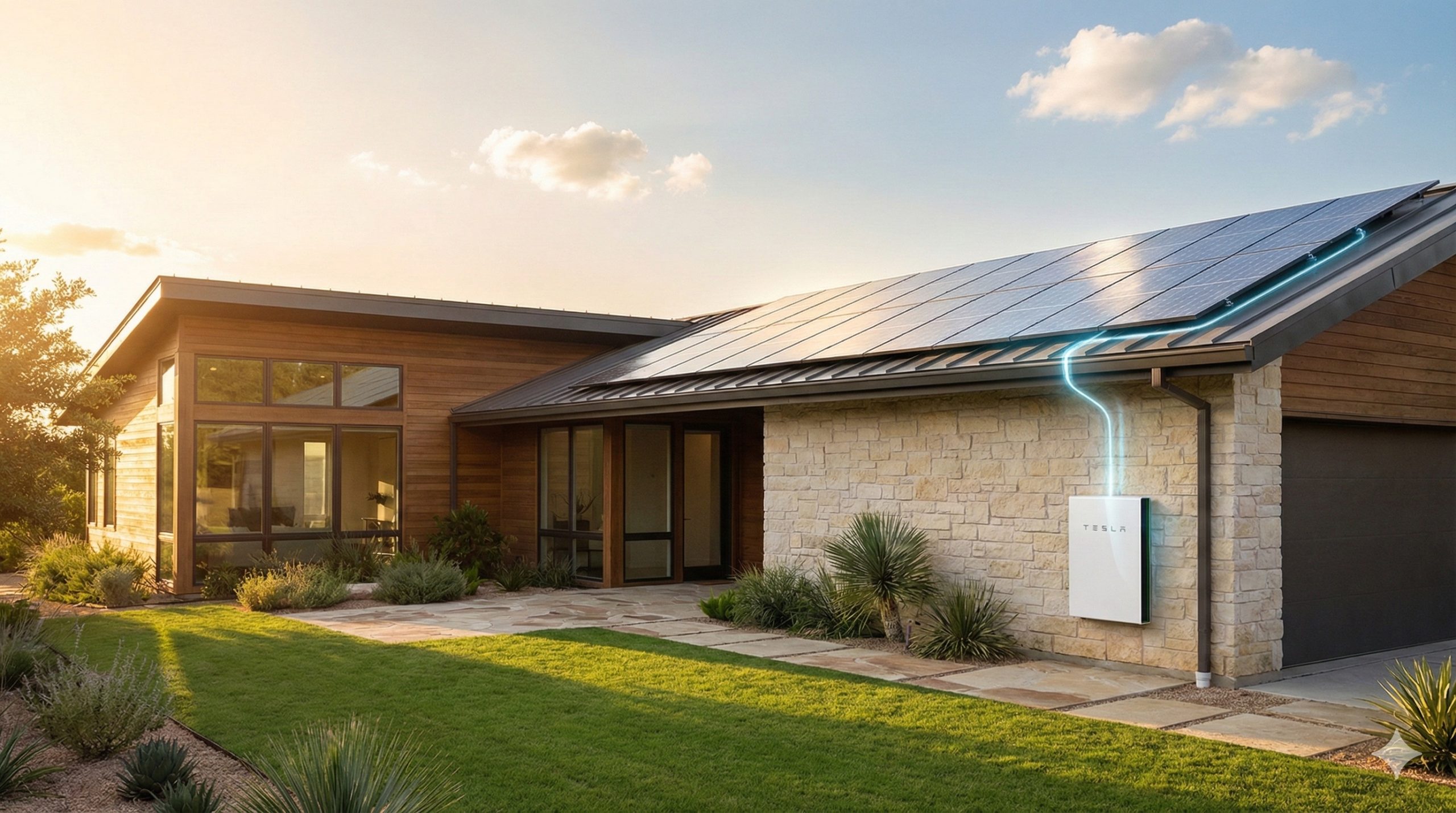
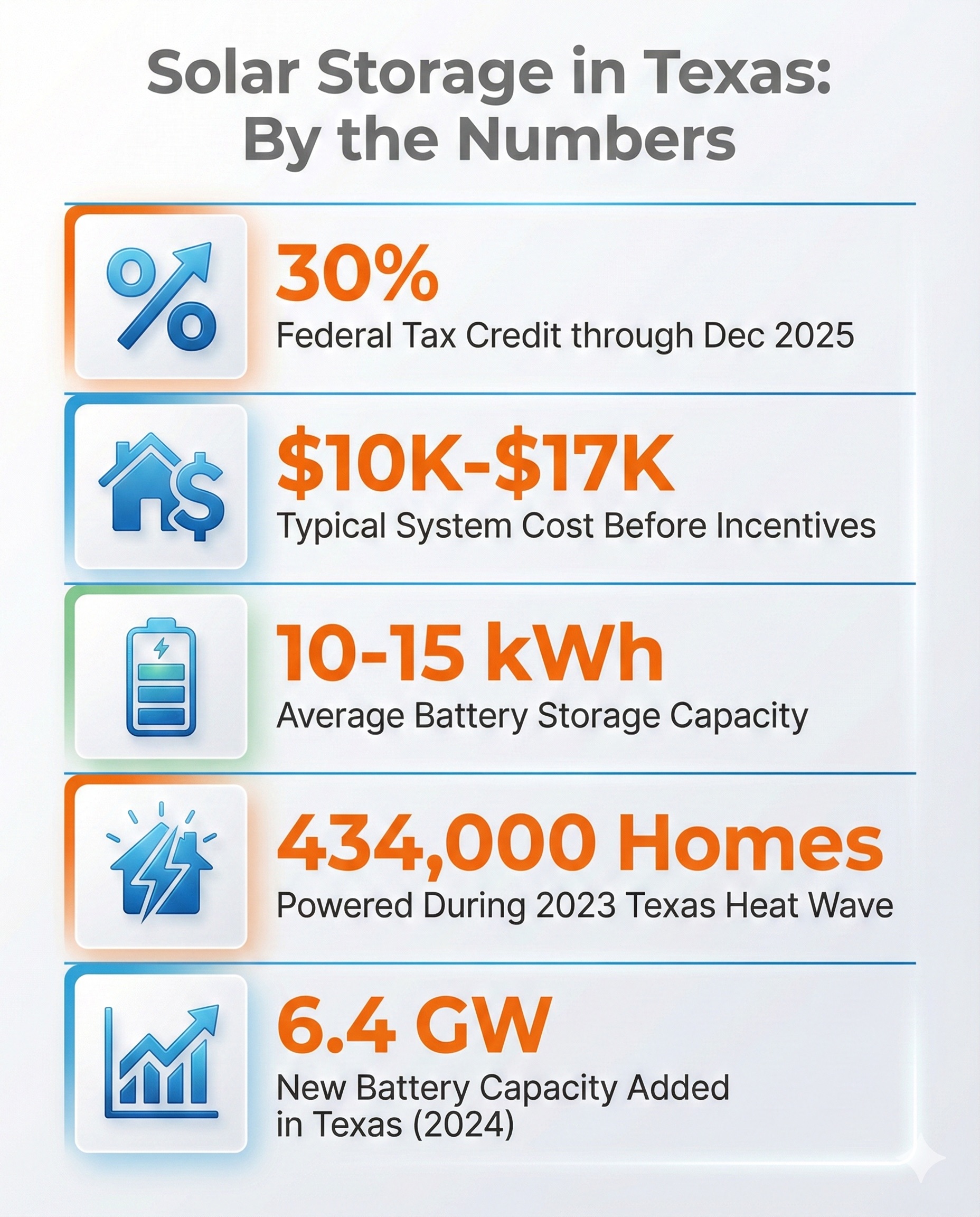
Solar storage combines photovoltaic (PV) panels with battery systems to capture and store excess solar energy for later use. This pairing allows Texas homeowners to use solar power during peak evening hours, provide backup during outages, and maximize energy independence. Modern lithium iron phosphate (LFP) batteries offer 10-15 kWh capacity, 90%+ round-trip efficiency, and 10+ year lifespans. With Texas adding 6.4 GW of new battery capacity in 2024—the most of any state—now is an ideal time to explore solar storage solutions for your home.
For a comprehensive overview of battery options and technologies, see our complete solar battery storage guide.
Solar storage systems pair rooftop PV panels with battery units to capture, store, and deploy solar energy on demand. During daylight hours, your solar panels generate direct current (DC) electricity. Any excess power that your home doesn't immediately consume charges your battery system instead of flowing back to the grid.
The heart of a solar storage system is the inverter. In AC-coupled systems, separate inverters handle the solar panels and battery independently. DC-coupled systems use a single hybrid inverter to manage both components more efficiently. According to the Department of Energy, hybrid inverters simplify installation and typically achieve round-trip efficiency above 90%, meaning you retain most of the energy you store.
When evening arrives or an outage occurs, your battery releases stored solar energy to power your home. This on-demand access transforms intermittent solar generation into reliable, 24-hour renewable energy.
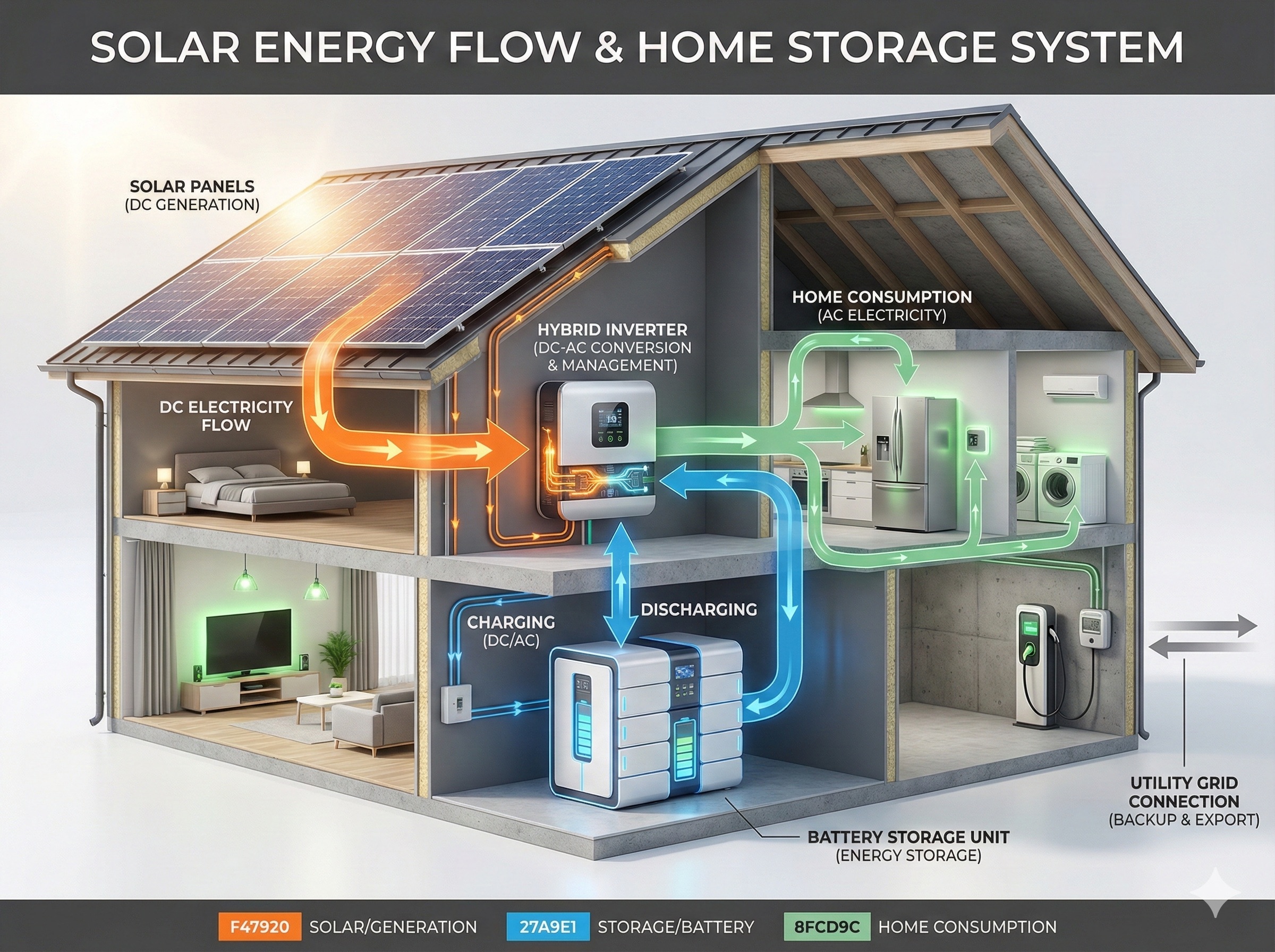
A complete solar storage installation includes several essential components working in harmony:
Solar Panels: Generate DC electricity from sunlight. Most residential systems in Texas use 6-12 kW arrays depending on home size and energy consumption.
Battery System: Stores excess solar energy for later use. Popular options include the Tesla Powerwall, Enphase IQ Battery, and Generac PWRcell. Most residential batteries provide 10-15 kWh of usable capacity—enough to power essential loads for several hours during an outage.
Inverter: Converts DC electricity to AC power for home use. Hybrid inverters manage both solar production and battery storage in a single unit.
Critical Load Panel: Prioritizes which circuits receive power during outages. This ensures your refrigerator, medical equipment, and communications stay operational when you need them most.
Modern lithium iron phosphate (LFP) batteries dominate the Texas market due to their safety, longevity, and performance in high temperatures. LFP chemistry offers 90-100% depth of discharge and thousands of charge cycles over a 10+ year lifespan. Learn more about sizing your solar battery for your specific needs.
Texas homeowners face unique energy challenges that make solar storage particularly valuable. ERCOT, the state's grid operator, projects electricity demand will nearly double by 2030, increasing strain on infrastructure during extreme weather events.
Outage Protection: During a September 2023 heat wave, battery storage systems helped avoid grid failure by powering approximately 434,000 homes when traditional generation couldn't keep up. With solar storage, you're prepared for both summer heat waves and winter storms. See how solar panels perform during power outages.
Energy Independence: Reduce your reliance on the ERCOT grid by storing your own solar energy. Use battery power during expensive peak hours or when rates spike due to demand.
Bill Savings: Maximize your solar investment through peak shaving and time-of-use optimization. Pair your system with a competitive solar buyback program to earn full credits for excess generation.
Tax Incentives: The federal Investment Tax Credit provided a 30% credit on solar storage systems placed in service by December 31, 2025. It is not available for newer systems. Texas still offers property tax exemptions for solar and battery improvements.

Understanding the investment helps you plan effectively. According to Lone Star Solar Services, home battery systems in Texas typically cost $10,000-$17,000 installed before incentives.
For example, a Tesla Powerwall installation runs approximately $15,400-$16,779 before incentives. For systems installed by the end of 2025, the 30% federal tax credit brought the net cost to approximately $10,780-$11,745.
Several factors affect your solar storage ROI:
Most Texas homeowners see payback periods of 10-15 years for battery storage alone, with shorter timelines when paired with solar panels in high-use households. Request your free energy quote to get a personalized cost analysis.
Solar storage makes the most sense for homeowners who meet several criteria:
Consider your home's size, energy consumption patterns, and budget when evaluating options. Even modest battery systems can power essential circuits during emergencies, while larger installations provide whole-home backup capability.
For detailed guidance on home battery backup options, explore our resources or speak with an energy consultant.
Solar storage transforms your PV system from a daytime power source into a complete energy solution. With battery costs declining and Texas grid challenges intensifying, homeowners have good reasons to look at storage now.
Ready to explore solar storage for your home? Get your free energy quote or call our Texas energy consultants at (817) 402-2664 to discuss your options. You can also compare solar buyback plans to maximize your solar investment returns.












Copyright © 2026 VIPEnergyService.com. All rights reserved | PUCT# 10117