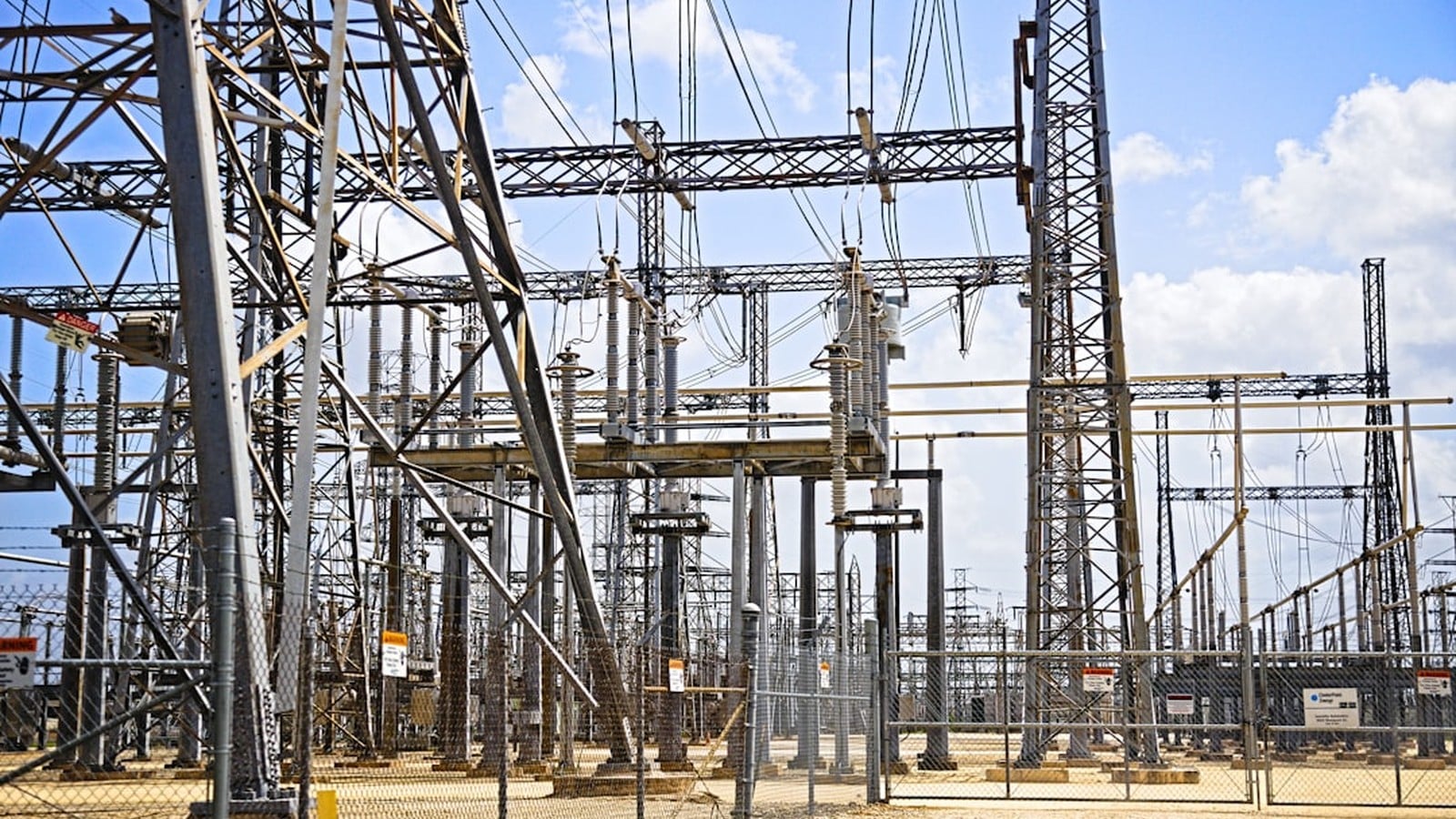
If you live in a deregulated part of Texas, four different players share the job of getting electricity into your home: ERCOT runs the grid, the Public Utility Commission of Texas (PUCT) regulates the market, your Transmission and Distribution Utility (TDU) owns the wires, and your Retail Electric Provider (REP) sells you the plan and sends the bill. Rates and product information referenced here are current as of July 2026.
ERCOT is the Electric Reliability Council of Texas, an independent, membership-based nonprofit organization that operates the electric grid across most of Texas and administers the state's wholesale electricity market. It is not a government agency, and it does not sell electricity or send you a bill. According to the Texas Comptroller (2023), ERCOT manages the flow of electric power to more than 26 million Texans, representing about 90% of the state's electric load, and its service territory covers roughly 75% of Texas by land area (ERCOT Fact Sheet, 2022).
ERCOT is overseen by the Public Utility Commission of Texas (PUCT), which regulates provider licensing, billing practices, and customer protections in the deregulated market, according to ElectricRates.org (2025). In practical terms, ERCOT balances the state's power supply and demand in real time, tracks generation and transmission constraints, and administers the market where power plants sell wholesale electricity that retailers then package into the plans homeowners see on Power to Choose. For a federal view of how competitive wholesale markets like ERCOT function, see the Federal Energy Regulatory Commission's electric power markets page.
Peak demand keeps climbing. According to the Texas Comptroller (2023), ERCOT set an all-time peak demand record of 85,435 megawatts on August 10, 2023. According to the U.S. Energy Information Administration (2025), ERCOT electricity demand reached a record high in the first nine months of 2025 versus the same period in prior years, driven in part by data center growth and heavier summer air-conditioning load. Pablo Vegas, President and CEO of ERCOT, has framed the operator's mandate as delivering reliable and efficient grid operation while enabling the state's ongoing energy transition.

Yes, most of Texas is deregulated for retail electricity, but not all of it. Deregulation applies inside the ERCOT footprint, which is why you can shop for plans in Houston, Dallas-Fort Worth, Corpus Christi, the Rio Grande Valley, and most of the state's population centers. However, cooperative and municipal utility service areas can remain outside the deregulated market. Austin (Austin Energy), San Antonio (CPS Energy), and many rural co-op areas are examples of places where you cannot shop for a Retail Electric Provider. According to ElectricRates.org (2025), roughly 75% of ERCOT load is served by competitive providers, while about 25% remains in cooperatives and municipal utilities exempt from deregulation.
The simplest way to check your address is to enter your ZIP code into Power to Choose. If plans return, you can shop. If Power to Choose tells you your area is not part of the competitive market, your electricity is supplied by a local co-op or municipal utility instead.
Every deregulated Texas electric bill sits on four separate players. Understanding which one does what makes the rest of this guide easier to follow, and it makes shopping a plan far less confusing.
Layer 1: The Grid, ERCOT. ERCOT operates the physical grid and the wholesale market where generators sell power. It never contacts you directly. Dan Woodfin, Vice President of System Operations at ERCOT, oversees the real-time operations and planning that keep the Texas power system stable. Live grid data and market reports are published on the ERCOT market reports page.
Layer 2: The Regulator, the PUCT. The Public Utility Commission of Texas licenses Retail Electric Providers, enforces consumer-protection rules, and runs the official Power to Choose comparison site. Thomas J. Gleeson, Chairman of the PUCT, and Commissioner Morgan Johnson lead the agency that decides how retail plans must be disclosed to homeowners.
Layer 3: The Wires, your TDU. Your Transmission and Distribution Utility, sometimes called a TDSP, owns the poles, wires, meters, and transformers in your neighborhood. TDUs are still regulated monopolies inside their territory. Oncor covers most of North and West Texas, CenterPoint Energy covers Houston and the surrounding Gulf Coast, AEP Texas covers South Texas and parts of the Panhandle, and Texas-New Mexico Power (TNMP) serves scattered pockets across the state. You do not choose your TDU. Its charges show up on your bill regardless of which provider you use. For a line-by-line walkthrough of where TDU charges land on your bill, see our guide to how to read your Texas electricity bill.
Layer 4: The Retailer, your REP. Your Retail Electric Provider is the company you actually sign up with. It buys wholesale power from the ERCOT market, adds the TDU's delivery costs, applies its own margin and product features, and sends you the bill. Ambit Energy is one example of a REP that sells to Texas homeowners through its VIP Energy Service consultant network.
When something goes wrong, this stack tells you who to call. Outage or downed wire in your yard? That is your TDU. Rate question, bill dispute, or plan change? That is your REP. Broad market question or grid conservation notice? That is ERCOT. Consumer complaint that cannot be resolved with your REP? That is the PUCT.

Power to Choose is the official comparison site operated by the Public Utility Commission of Texas where homeowners can filter available REP offers by ZIP code, contract length, and product type. It is the only comparison tool run by the state itself, which is why it is the neutral starting point most Texans use before they enroll.
The site is useful, and it also has a well-known trap: the headline average rate number that shows up in the plan grid is calculated at fixed usage points (usually 500, 1,000, and 2,000 kilowatt-hours per month). If your household does not use exactly that much power in a given month, the rate you actually pay can look nothing like the number that hooked you in the grid view. The way around it is simple: use Power to Choose to build a shortlist, then click through to the Electricity Facts Label on each plan and read the fine print before you pick. For a deeper look at how Power to Choose "average" rates can misrepresent your real cost, see our guide to spotting the cheapest real electricity rates in Texas.
The Electricity Facts Label is the standardized disclosure document every Texas REP has to publish for every plan. It is the single most useful piece of paper in this whole process, and it is required by the PUCT to answer four questions in plain language: what the plan costs, how the price is structured, how long the contract runs, and which fees apply if you leave early or use less than expected.
Here is a cheat sheet for reading one:
| Section | What to Check |
|---|---|
| Electricity Price | The average price at 500, 1,000, and 2,000 kWh per month. Match it to your actual usage. |
| Pricing Structure | Fixed, variable, or indexed. Fixed locks the energy charge for the term; variable can change monthly. |
| Contract Term | 6, 12, 24, or 36 months are typical. Note the exact end date. |
| Early Termination Fee | Applies if you leave before the contract ends. Common amounts run $150 to $295. |
| Minimum Usage Fee or Bill Credit | A fee triggered below a usage floor, or a credit that only kicks in above a usage threshold. |
| Renewable Content | The percentage of the plan sourced from renewables. State average shown for comparison. |
If a REP will not hand you an EFL before you enroll, walk away. Under PUCT rules the EFL has to be available up front. For a section-by-section walkthrough on a real plan, see The Real Cost of Free Nights Plans: Reading the EFL Line by Line.

Most plans on Power to Choose fall into four buckets. Choosing the right bucket for your household matters more than chasing the single lowest advertised rate.
Switching in a deregulated area is far simpler than most Texans expect. Nothing gets rewired, no one comes to your house, and your power does not go out.
To avoid an early termination fee, you should time your switch to your current contract's end date. You can switch right away if your existing plan is month-to-month or already expired to a holdover variable rate. If a no-contract plan fits your situation, our Lone Star Flex month-to-month walkthrough covers how that structure works.
Texas homeowners still recall the Winter Storm Uri event in February 2021 and its impact on ERCOT. As cited in Wikipedia's ERCOT entry, the storm caused about 34,000 megawatts of generation shortfall, due to the freezing temperatures that took out gas production, iced over wind turbines, and caused plants across the state to shut down. Millions of Texans were left without power, and some customers on indexed or wholesale-passthrough plans received sky-high bills.
Since 2021 the state has mandated the weatherization of generators, increased reserve requirements, and made changes to the ancillary services market. The grid's resilience has improved, although the summer peaks continue to set records. Additionally, data center load requests continue to increase (Texas Legislature Online ERCOT update, 2025). For homeowners, the practical lesson remains the same: your plan type is what determines your exposure to the market. Fixed-rate plans shield homeowners from wholesale-price spikes. Indexed and variable-rate plans do the opposite.
Is my area deregulated? Enter your ZIP on Power to Choose. If plans appear, you can shop. If not, your service is from a co-op or a municipal utility.
Will my power go out when I switch providers? No. The switch is done behind the scenes between your new REP and your TDU. You will not lose service.
Will I be charged for switching providers or cancelling my contract? If you switch providers, you will not pay a fee to switch. However, if you have a fixed-term contract that has not yet expired, your current REP may charge you an early termination fee that is listed on your EFL, which is usually between $150 and $295.
Can you explain the differences between ERCOT, my utility, and my provider? ERCOT manages the grid and the wholesale market. Your utility (the TDU) owns the wires, and is in charge of outages. Your Retail Electric Provider (REP) sells you the plan at retail and does the billing.
Does Power to Choose show every plan? Power to Choose displays every plan for your ZIP code that is filed by licensed REPs, but individual REPs sell some plans directly through their websites and consultant networks. It is a good idea to check both.
Can I switch providers while I have a contract? Yes, but you will have to pay an early termination fee to your current REP. Many Texans try to time their switch to the last 30 to 60 days of their contract to avoid this.
This guide is written for Texas homeowners shopping the deregulated retail market for their household electricity. The Texas deregulated market gives homeowners real leverage, but only if you know which layer you are pulling on. Use Power to Choose as a filter, use the EFL as the source of truth, match the plan type to how your household actually uses power, and time your switch to your contract end date. If you would rather have a local person walk you through the shortlist for your ZIP, our VIP Energy Service consultants live inside the Ambit Energy retail product catalog and can quote you against your actual usage history. Get a personalized quote from a VIP consultant or read how to read your Texas electricity bill line by line to confirm the switch pays off before you enroll.
Product details, availability, pricing, and terms are subject to change. Plan enrollment is subject to credit approval and the plan's Terms of Service and Electricity Facts Label. Rates and product information referenced above are current as of July 2026. Individual earnings and results for Ambit Energy Consultants can vary and are not guaranteed. Statement of Independent Contractor: Ambit Energy Consultants are independent contractors and not employees. Earnings vary; income is not guaranteed.













Copyright © 2026 VIPEnergyService.com. All rights reserved | PUCT# 10117