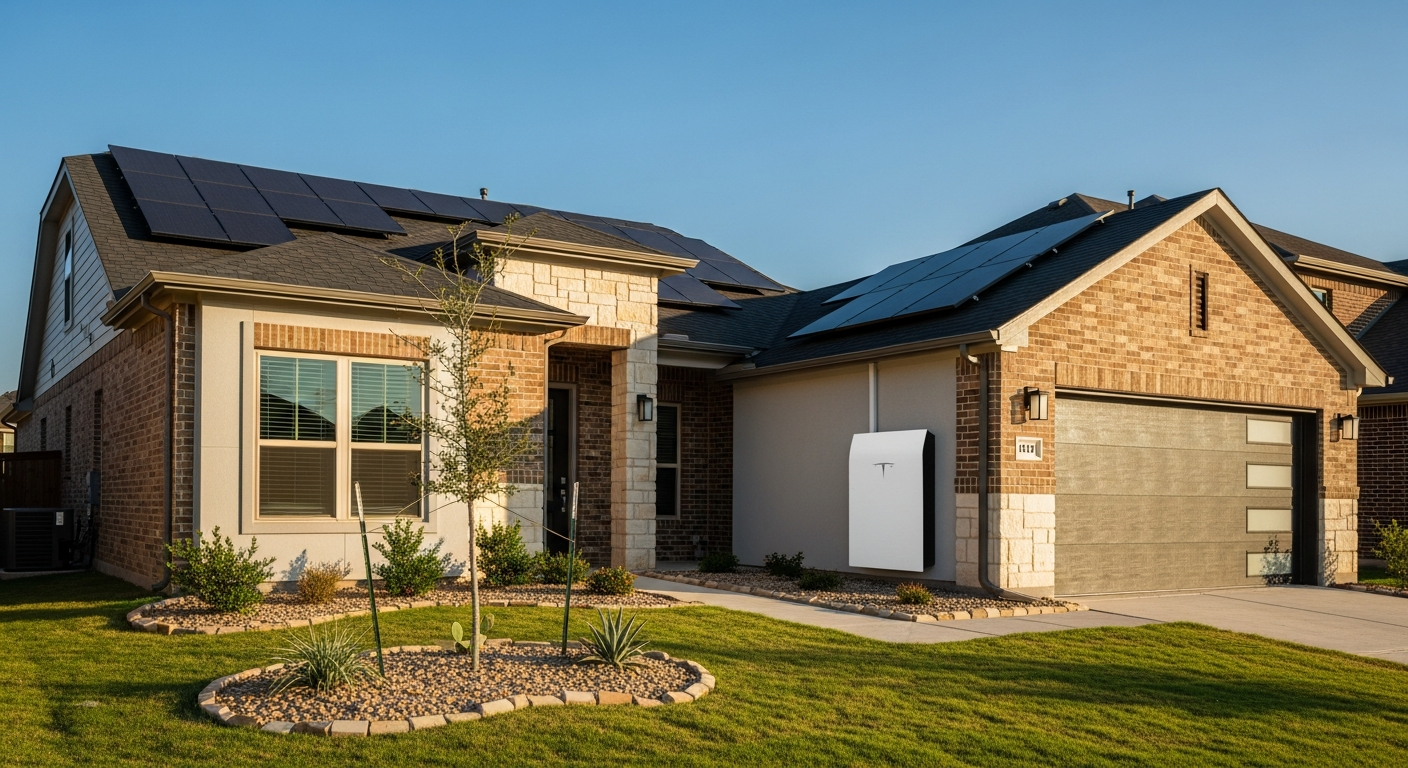
Updated November 2026 with current battery rankings, specs, costs and federal tax credit rules.
During Winter Storm Uri in February 2021, 69 percent of Texans lost power at some point, for an average of 42 hours, according to a University of Houston survey cited by the Texas Comptroller. That memory still drives a lot of Texas homeowners to look at solar battery storage as backup for the house.
Picking among solar battery storage companies means sorting out three things: who makes the battery, who installs it, and who credits your extra solar. This guide compares the leading battery makers in 2026 using current specs and warranties, explains what a battery costs in Texas now that the federal homeowner credit has ended, and shows how a battery fits with a Texas solar buyback plan.
Most of the country's new grid-scale storage is being built in Texas. The U.S. Energy Information Administration (EIA) reports a record 15 GW of utility-scale battery storage added nationwide in 2025, with 24 GW planned for 2026. Texas accounts for 53 percent of that planned 2026 capacity, or 12.9 GW. By the end of 2025 the U.S. had 43.6 GW of battery storage operating, and operators added another 8.3 GW in the first half of 2026, according to EIA.
Those big batteries help ERCOT balance supply and demand. They don't keep your lights on when ice takes down a local line or the grid has to shed load. ERCOT still models the chance of an energy emergency during a severe winter storm in its monthly outlook for December 2026. A home battery is the piece that covers your house specifically.
Texas has no statewide net metering law, so what you get for exported solar depends on your retail electricity plan. Many plans credit exports at a fraction of the retail energy rate. On those plans, a battery pays off by storing midday surplus for your own evening use instead of selling it cheaply.
On a retail-match plan, every exported kilowatt-hour is already credited at the same energy rate you pay, so you don't need a battery to capture the value of your solar. There, a battery's main job is backup power. The Ambit guide to solar buyback vs. battery storage runs the numbers both ways.
The rankings below come from EnergySage's best home batteries list, updated April 29, 2026 and based on the 40 batteries installers quoted most often on its marketplace from October 2025 through March 2026. Every battery here uses lithium iron phosphate (LFP) chemistry, which is known for safety and long life.
Tesla's Powerwall 3 ranks first overall and is the most frequently quoted battery on EnergySage. It stores 13.5 kWh and delivers 11.5 kW of continuous power, one of the highest ratings on the list, so it can run more appliances at once. A hybrid inverter is built in, which lets it pair directly with new solar panels or connect to an existing system.
It's a strong all-around pick. If you have a shaded or complicated roof and want microinverters on every panel, a battery built for that setup may fit better.
The aPower 2 has the highest peak power on EnergySage's list at 15 kW, which helps start appliances that pull a big surge when they switch on. Each unit holds 15 kWh, and up to 15 units can be stacked for whole-home backup.
The tradeoff is efficiency. At 90 percent, it loses a bit more stored energy than the top-ranked batteries.
If your home already runs on Enphase microinverters, the IQ Battery 10C is the natural fit. It holds 10 kWh, delivers strong peak power, and carries a 15-year warranty.
It's one of the pricier batteries per kWh, and its energy optimization features are more limited than Tesla's.
Built for SolarEdge inverter systems, the BAT-10K connects on the DC side, which keeps losses down when it's paired correctly. It's less flexible than AC-coupled batteries and had the highest average quoted price per kWh on EnergySage's list.
The Powerflo 16 packs 16 kWh into one unit, the most single-battery capacity on the list, with 97.5 percent efficiency and a 15-year warranty. Its lower power ratings make it better for long, steady backup than for running several large appliances at once. MidNite Solar is a newer name in home batteries, so installer familiarity is still catching up.
Sigenergy's modular SigenStor battery posted the highest roundtrip efficiency on the list at 98 percent, so very little stored energy is lost. Each module holds 8.8 kWh. Like MidNite Solar, it has a shorter track record with U.S. installers than the bigger brands.
Lithium titanate (LTO) batteries such as Villara's VillaGrid are built for very long life, but their high price keeps them uncommon in installer quotes, and EnergySage left LTO off its 2026 list for that reason. You may also see quotes for Qcells, sonnen or other brands. Judge any of them by the same yardsticks: usable capacity, continuous power, roundtrip efficiency, and what the warranty guarantees at the end of its term.
| Company | Battery | Usable capacity | Continuous / peak power | Efficiency | Warranty | Coupling | Avg. quoted price per kWh |
|---|---|---|---|---|---|---|---|
| Tesla | Powerwall 3 | 13.5 kWh | 11.5 / 11.5 kW | 97.5% | 10 years (70%) | AC or DC | $998 |
| FranklinWH | aPower 2 | 15 kWh | 10 / 15 kW | 90% | 15 years (70%) | AC | $1,177 |
| MidNite Solar | Powerflo 16 | 16 kWh | 8.1 / 10.7 kW | 97.5% | 15 years | AC | $338 |
| Sigenergy | SigenStor BAT | 8.8 kWh | 4.6 / 6.9 kW | 98% | 10 years (70%) | AC or DC | $562 |
| Enphase | IQ Battery 10C | 10 kWh | 7.1 / 14.2 kW | 90% | 15 years (70%) | AC | $1,404 |
| SolarEdge | BAT-10K | 9.7 kWh | 5 / 7.5 kW | 94.5% | 10 years (70%) | DC | $1,532 |
Source: EnergySage, updated April 29, 2026. Warranty shows the term and the capacity guaranteed at the end of it. Prices are EnergySage marketplace averages. Your quote will depend on your installer, your home, and whether the battery needs a separate inverter.
In Texas, three different companies usually touch a home battery, and it helps to know which one you're shopping for.
Some providers also run virtual power plant programs that pay batteries to send power to the grid during tight hours. ERCOT's Aggregate Distributed Energy Resource pilot is the framework behind them, and ERCOT raised the pilot's registered capacity limit from 200 MW to 500 MW in March 2026. Participation runs through a provider's program, so compare what the program pays against what your solar buyback plan already credits before you switch.
Capacity (kWh) is how long a battery can run your home. Power (kW) is how much it can run at once. EnergySage estimates the average home needs at least 30 kWh to run a full day without recharging, but most people back up only a few critical loads, which a battery of about 10 kWh can handle. With solar panels, the battery recharges whenever the sun is out.
Start with your bills and a list of what has to stay on during an outage, such as the refrigerator, lights, internet, medical equipment or a well pump. The guide on how to size a battery for solar walks through the math.
Warranties on the batteries above run 10 to 15 years, and most promise 70 percent of the original capacity at the end. Some also cap throughput, the total energy the battery can move during the warranty. EnergySage gives the example of a 20,000 kWh throughput warranty on a 10 kWh battery, which works out to about 2,000 full cycles, or one cycle a day for roughly 5.5 years. If you plan to cycle your battery every day, ask about the throughput cap before you sign.
Understanding how solar and batteries work together narrows the field quickly. AC-coupled batteries connect at your electrical panel and are the easiest way to add storage to an existing solar system. DC-coupled batteries share a hybrid inverter with the panels, which is more efficient and usually makes the most sense for a brand-new solar-plus-storage install. Microinverter systems need an AC-coupled battery, so Enphase owners usually look at the IQ Battery first, while SolarEdge owners look at the BAT-10K.
A battery only powers your home during an outage if it's installed for backup, through a backup gateway or a critical loads panel that separates the circuits you want covered. EnergySage rates the Tesla, FranklinWH, Sigenergy and SolarEdge batteries as fully autonomous in an outage, and the Enphase and MidNite Solar batteries as strong. For outage planning beyond the battery itself, see the guide to solar battery backup for Texas power outages and what solar panels can do during an outage.
EnergySage puts the typical home battery at about $15,000 for roughly 13.5 kWh of storage before any incentives. Average quoted prices on its marketplace range from $338 per kWh for the MidNite Solar Powerflo 16 to $1,532 per kWh for the SolarEdge BAT-10K, so the brand and the number of units you need move the total a lot. Homes that want whole-home backup often need two or more batteries.
For a deeper breakdown, see the guides to solar battery prices and home battery storage in Texas.
The 30 percent federal Residential Clean Energy Credit no longer applies to new installs. The IRS says the credit isn't available for any property placed in service after December 31, 2025, so a battery you buy and install in 2026 is priced without it.
Leases and prepaid agreements work differently. When a company owns the battery on your home, that company may be able to claim the separate Clean Electricity Investment Credit for energy storage. If you're comparing a lease with a purchase, ask the installer to show in writing how any credit is reflected in your price.
Texas exempts the appraised value that a solar energy device adds to your home, as long as the system is mainly for on-site use. The definition in Texas Tax Code Section 11.27 includes equipment that stores the energy your panels convert. To claim it, file Comptroller Form 50-123 with your county appraisal district, not with the Comptroller.
For most homes, the strongest case for a battery is backup power during outages, not bill savings. How much a battery saves depends on your buyback plan. If your plan credits exports at a fraction of retail, storing surplus solar for evening use recovers value you'd otherwise lose. If your plan already credits exports at your full energy rate, a battery adds resilience but little extra savings. Decide which problem you're solving first, then size and price the battery for that.
Ambit's Total Solar Buyback plan credits the electricity your panels export at the same energy rate you pay for the electricity you use. Unused credits roll over month to month, and they can offset up to 100 percent of your energy charges. Because exports are already credited at full value, a battery on this plan is mainly about keeping your home running when the grid goes down.
Ambit Energy, VIP Energy Service pairs that plan with local, personal help. An advisor can look at your usage and solar production and tell you whether your plan, your battery size, or both should change. Additional benefits include:
Plan details and rates subject to change. An Energy Facts Label is available for every plan.
Want to see how a battery fits your solar and your plan? Upload your bill for a free solar buyback analysis or request a free energy quote and talk with a local energy advisor.
What is the best solar battery storage company in Texas?
There isn't one right answer for every home. EnergySage's April 2026 ranking puts the Tesla Powerwall 3 first overall, followed by the FranklinWH aPower 2, the MidNite Solar Powerflo 16 and the Sigenergy SigenStor BAT, with the Enphase IQ Battery 10C and SolarEdge BAT-10K tied for fifth. The right fit depends on your existing solar equipment, how much you want to back up, and your budget. For product-by-product picks, see the guide to the best solar battery for your home.
How much does solar battery storage cost in Texas in 2026?
About $15,000 for roughly 13.5 kWh of storage before incentives, based on EnergySage marketplace data. Multi-battery systems for whole-home backup cost more. The 30 percent federal homeowner credit ended for systems placed in service after December 31, 2025.
Can I still get the 30% federal tax credit for a home battery?
Not for a battery you own that's placed in service in 2026 or later. The IRS ended the Residential Clean Energy Credit for property placed in service after December 31, 2025. If a company owns the battery under a lease, that company may be able to claim a separate business credit.
Do solar batteries work during power outages?
Yes, when they're installed with a backup gateway or critical loads panel. With solar panels, the battery can recharge during the day and stretch your backup through a multi-day outage.
What warranty should I look for in a solar battery?
At least 10 years with a stated end-of-warranty capacity, usually 70 percent. FranklinWH, Enphase and MidNite Solar offer 15 years on the batteries above. Check for a throughput cap if you plan to cycle the battery every day.
How long do solar batteries last?
Most home batteries are warrantied for 10 to 15 years. How long yours lasts depends on its chemistry, how often you cycle it, and heat. The LFP batteries above are known for safety and long life.
Can I add a battery to my existing solar system?
Yes. AC-coupled batteries connect at your electrical panel and can be added to most existing systems. If you have microinverters, an AC-coupled battery is the way to go.
What size battery do I need for my home?
Backing up a few critical loads usually takes about 10 kWh. Running a whole home for a full day without recharging takes about 30 kWh, according to EnergySage. The battery sizing guide walks through your own numbers.
Can a home battery make money in Texas?
It can, through a virtual power plant program that a retail electricity provider runs under ERCOT's Aggregate Distributed Energy Resource pilot. Compare what the program pays against what your current plan credits for exported solar before you switch.
Are solar batteries worth it in Texas?
For backup during outages, often yes, given Texas weather. For pure bill savings, it depends on your buyback plan. On a plan that credits exports at a fraction of retail, a battery recovers more value. On a retail-match plan like Ambit's Total Solar Buyback, the battery is mostly about resilience.
The right battery company depends on your home, your solar setup, and what you want covered when the power goes out. Your electricity plan matters just as much, because it decides what your solar is worth on the days the grid is up.
Ambit has served Texas homes since 2006, and the local Ambit Energy, VIP Energy Service team can help you compare plans for a solar-plus-storage home.
Ready to plan your solar-plus-storage setup? Request your free energy quote and talk with a local energy advisor about your options.













Copyright © 2026 VIPEnergyService.com. All rights reserved | PUCT# 10117
Important message regarding earnings: Ambit Energy makes no guarantee or promise of income or business. Anyone considering building a full-time or part-time Ambit business should have realistic expectations of their potential income. Learn more at goambit.com/disclaimer.