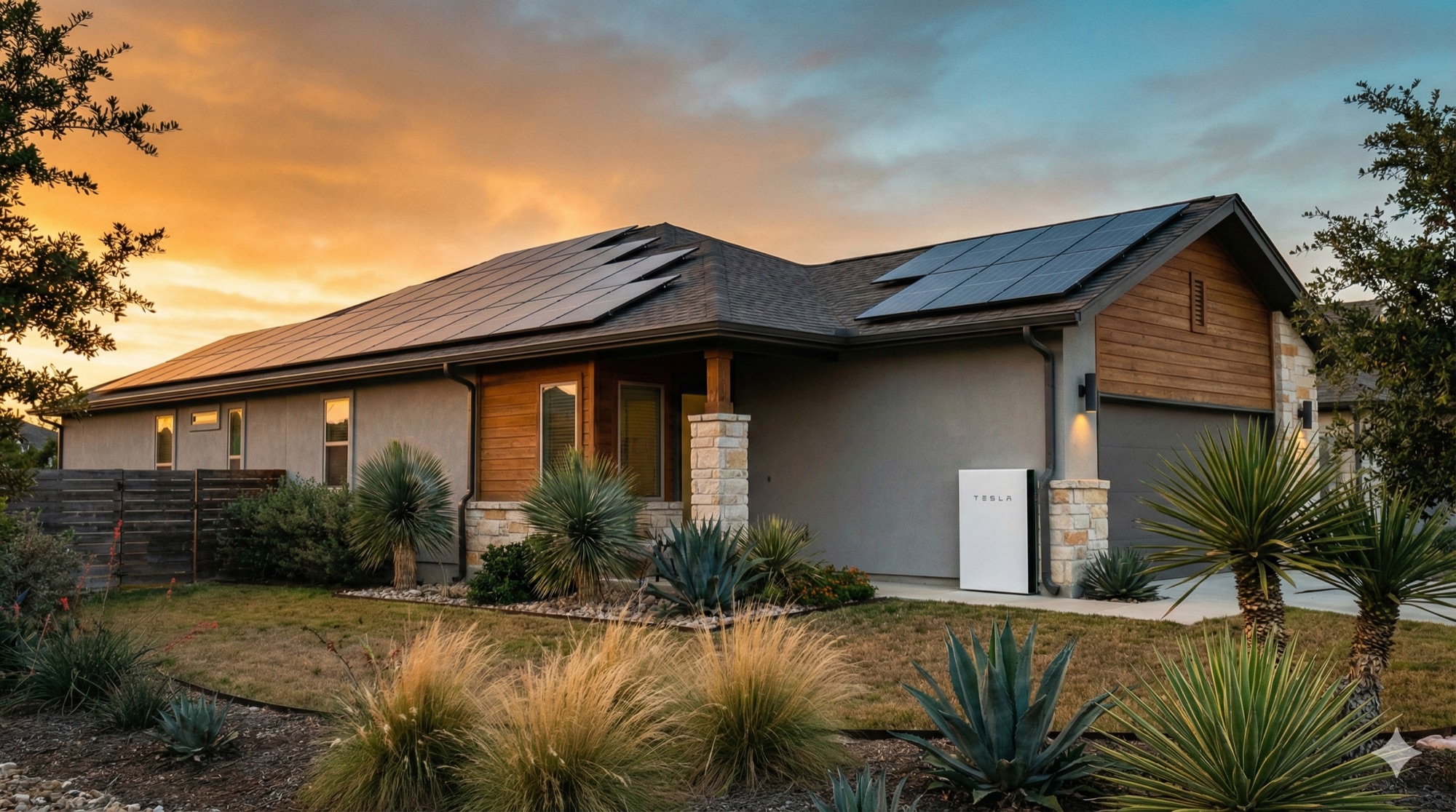
Updated October 2026. When choosing a solar battery for a Texas home, there are four things to look at closely: maximum power output, how well it handles Texas heat, the warranty, and compatibility with your existing or planned solar equipment. This guide reviews the solar batteries Texas installers quote the most, using EnergySage marketplace data and each manufacturer's most recent spec sheet. Changes to the federal tax credit this year affect a lot of families, so those are covered too. If cost is your first question, start with this breakdown of home battery storage cost in 2026.
The best solar battery for most Texas homes in 2026 is a lithium iron phosphate (LFP) battery, and Tesla Powerwall 3 is the best all-around pick, with 13.5 kWh of usable storage, 11.5 kW of continuous power and a built-in inverter. FranklinWH aPower 2 is the pick for large homes that want whole-home backup (15 kWh, 10 kW, 15-year warranty). If your solar system already runs on Enphase microinverters, go with the Enphase IQ Battery 10C. Plan on about $1,000 per kWh installed in Texas, roughly $13,000 for a typical 13 kWh system, and keep in mind that the 30% federal tax credit no longer applies to batteries homeowners buy and install in 2026.
| Battery | Usable capacity | Continuous power | Chemistry | Warranty | Best for |
|---|---|---|---|---|---|
| Tesla Powerwall 3 | 13.5 kWh | 11.5 kW | LFP | 10 years | Best overall, new solar installs |
| FranklinWH aPower 2 | 15 kWh | 10 kW | LFP | 15 years or 60 MWh | Whole-home backup, large homes |
| Enphase IQ Battery 10C | 10 kWh | About 7.1 kW | LFP | 15 years | Homes with Enphase microinverters |
| Enphase IQ Battery 5P | 5 kWh | 3.84 kW | LFP | 15 years | Small, modular add-ons |
| SolarEdge Home Battery | 9.7 kWh | 5 kW | Varies by model | 10 years | Homes with SolarEdge inverters |
| Sol-Ark L3 Series | Modular | Set by the Sol-Ark inverter | LFP | 10 years (product) | Texas-based brand, large or off-grid systems |
Specs come from each manufacturer's current data sheet. Capacity is per unit, and most of these batteries can be stacked for more storage.
A battery spec sheet has lots of numbers. Six are critical for performance in a Texas home.
Average quoted prices and roundtrip efficiency figures come from EnergySage's 2026 battery ranking, which is built from real installer quotes on its marketplace.
Powerwall 3 is the most-quoted battery on the EnergySage marketplace, and EnergySage ranks it number one for 2026. Each unit stores 13.5 kWh and delivers 11.5 kW of continuous power, comfortably above what a typical central air conditioner draws while it runs. It also has a hybrid solar inverter built in, so a new solar-plus-battery install needs less equipment on the wall. Powerwall 3 uses LFP cells, a change from the NMC chemistry in the older Powerwall 2.
Key specs: 13.5 kWh usable, 11.5 kW continuous, 97.5% roundtrip efficiency, 10-year warranty, about $998 per kWh average quoted price (EnergySage).
The tradeoff: you get the most out of Powerwall 3 when it's paired with its own inverter. If your roof is shady or complex and you want panel-level microinverters, an Enphase system may fit better.
Best for: new solar installs, EV owners, whole-home backup
The aPower 2 packs 15 kWh into a single unit, one of the largest capacities available from an established brand. It delivers 10 kW of continuous power and 15 kW of peak power, which helps with the startup surge from AC compressors and well pumps. The warranty runs 15 years or 60 MWh of throughput, one of the longest on the market, and the aGate controller manages solar, grid, battery and a backup generator from one place.
Key specs: 15 kWh usable, 10 kW continuous (15 kW peak), 90% roundtrip efficiency, 15-year or 60 MWh warranty, about $1,177 per kWh average quoted price (EnergySage).
The tradeoff: at 90% roundtrip efficiency, it loses a bit more stored energy than Powerwall 3.
Best for: large homes, whole-home backup, homes that also run a standby generator
Enphase batteries are AC-coupled and designed to work with Enphase microinverters, so they're the natural choice if your solar system already uses them. The IQ Battery 10C stores 10 kWh with about 7.1 kW of continuous power. The smaller IQ Battery 5P stores 5 kWh with 3.84 kW. Both use LFP chemistry and carry a 15-year limited warranty. Because the units are modular, you can start small and add capacity later.
Key specs (IQ Battery 10C): 10 kWh usable, about 7.1 kW continuous, 90% roundtrip efficiency, 15-year limited warranty, about $1,404 per kWh average quoted price (EnergySage).
The tradeoff: Enphase is one of the more expensive options per kWh, and EnergySage rates its energy optimization features as more limited than Tesla's or FranklinWH's.
Best for: Enphase microinverter systems, homeowners who want to expand over time
If your panels feed a SolarEdge inverter, the SolarEdge Home Battery connects on the DC side and charges straight from your panels. It stores 9.7 kWh per unit, with 5 kW of continuous power and a 10-year warranty.
Key specs: 9.7 kWh usable, 5 kW continuous, 94.5% roundtrip efficiency, 10-year warranty, about $1,532 per kWh average quoted price for the BAT-10K (EnergySage).
The tradeoff: because it's DC-coupled, it only makes sense with a SolarEdge inverter, and its power output is lower than similarly priced batteries.
Best for: homes with SolarEdge inverters
Sol-Ark is headquartered in Allen, Texas, just north of Dallas. Its L3 Series batteries use LFP chemistry, come in indoor and outdoor versions and carry a 10-year product warranty, with a throughput-based performance warranty that varies by configuration. They're built to pair with Sol-Ark hybrid inverters and scale to large systems, which suits bigger homes, rural properties and off-grid setups.
The tradeoff: the battery and inverter are a package decision, so you're buying into the Sol-Ark ecosystem.
Best for: Texas homeowners who want a Texas-based brand, larger or off-grid systems
EnergySage's 2026 ranking also includes two newer brands: the MidNite Solar Powerflo 16, with 16 kWh in one unit and a 15-year warranty, and the Sigenergy SigenStor, which posted the highest roundtrip efficiency on its list at 98%. Both post strong specs at lower prices per kWh. The catch is a shorter track record, so ask your installer how many they've installed and who handles warranty service in Texas.
For a look at the companies behind these products, see the guide to top solar battery storage companies for Texas homes.
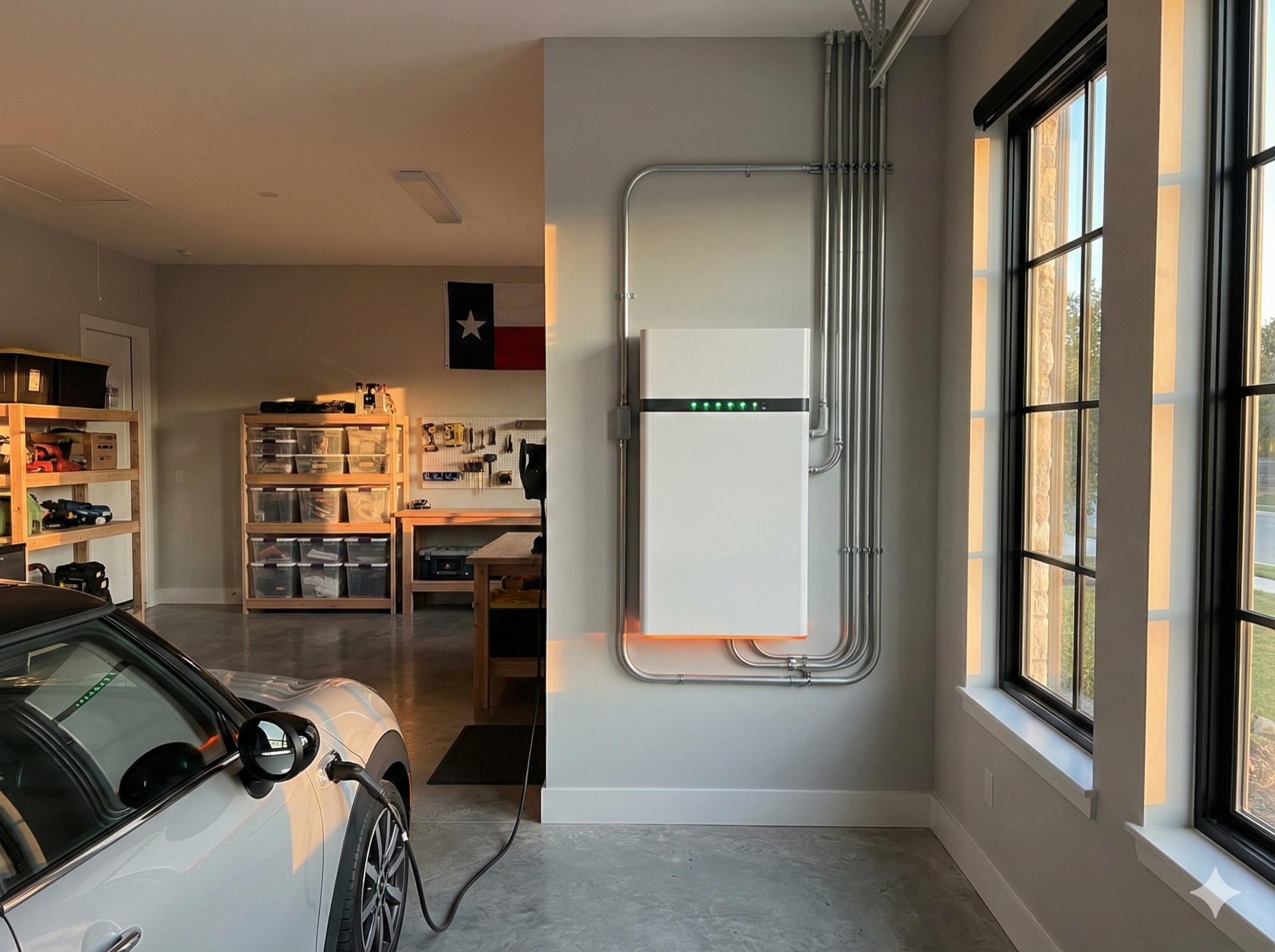
Most home batteries sold in 2026 use lithium iron phosphate (LFP). It's more thermally stable than nickel manganese cobalt (NMC), the chemistry in many older lithium-ion batteries like Powerwall 2, and it handles deep daily cycling well. That matters in a Texas garage that can sit in the 90s or higher through August. No matter what battery you choose, look for the operating temperature range on the spec sheet. Talk to your installer about where the battery will be placed to avoid direct afternoon sun.
Lead-acid batteries still cost less up front, but you can only use about half their capacity and they wear out much sooner. Today they make sense only for small off-grid or legacy setups.
| Battery type | Usable capacity | Typical cycle life | Best for |
|---|---|---|---|
| LFP | 90% or more | 6,000+ cycles | Most Texas homes in 2026 |
| Lithium-ion (NMC) | About 90% | 4,000-5,000 cycles | Older models such as Powerwall 2 |
| Lead-acid | About 50% | 1,500-2,000 cycles | Small off-grid or legacy setups |
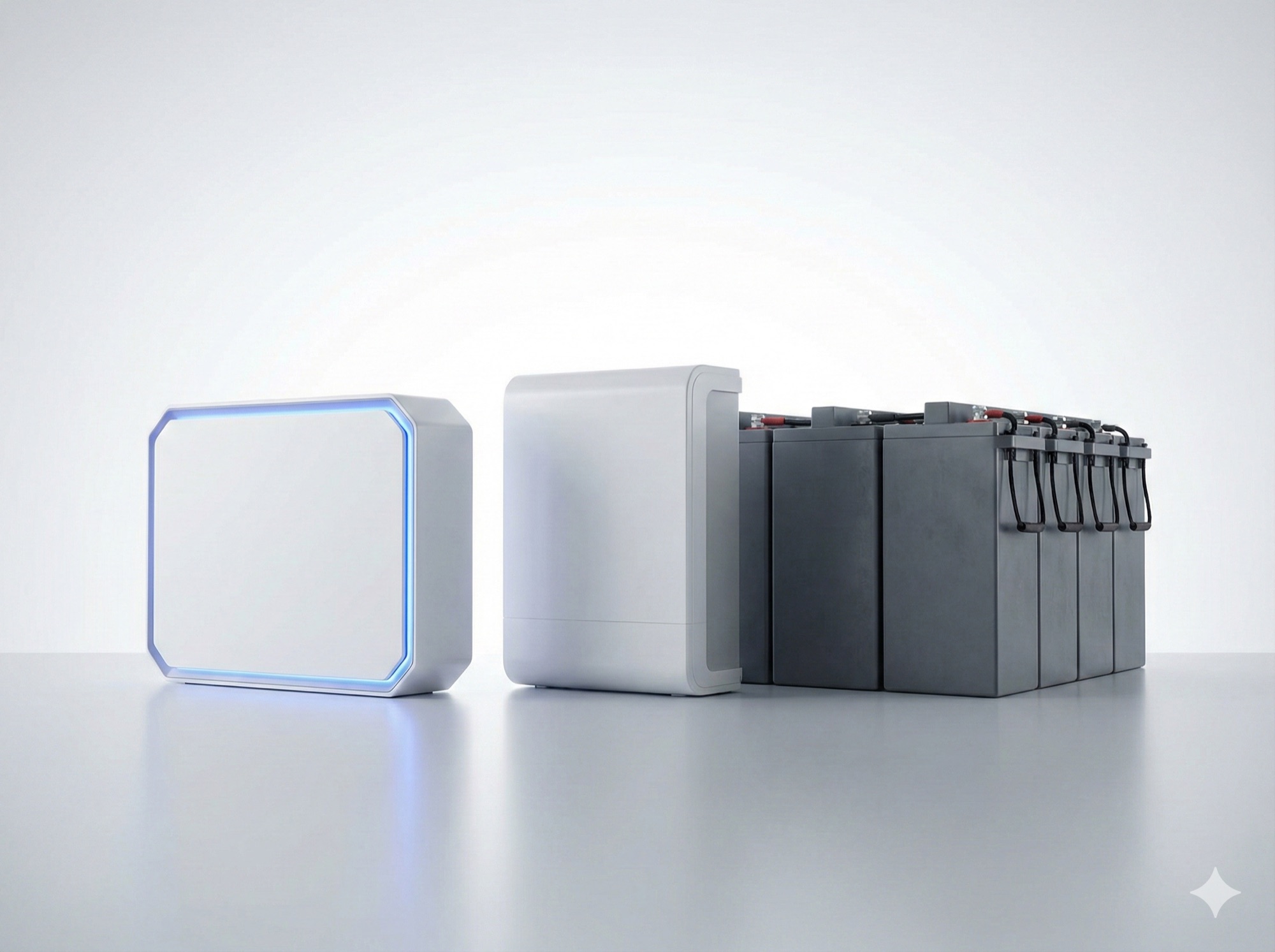
Curious how the pieces fit together? See how PV and battery systems work together.
EnergySage's Texas data puts installed battery storage at about $1,000 per kWh before incentives, or roughly $13,000 for a typical 13 kWh system (updated September 2026). The national average is higher, at about $1,159 per kWh and $15,647 for an average system.
Your price depends on the battery, how many units you stack, whether you need a main panel upgrade, and whether the battery goes in with new solar or gets added to an existing system. Brand matters too. On EnergySage's marketplace, average quoted prices run from about $998 per kWh for Powerwall 3 to about $1,532 per kWh for the SolarEdge BAT-10K.
For a deeper look at pricing, see the cost of battery storage per kWh guide. And if you're still deciding whether a battery pays off at all, read whether solar batteries are worth it in Texas.
Earlier versions of this guide pointed to the 30% federal Residential Clean Energy Credit. That's no longer available for new installs. The One Big Beautiful Bill Act ended the credit (Section 25D) for expenditures made after December 31, 2025, and the IRS treats an expenditure as made when installation is completed. So a battery a homeowner buys and has installed in 2026 doesn't qualify, even if it was paid for in 2025.
Two things still matter. If your battery was installed in 2025 or earlier and you couldn't use the whole credit that year, the unused amount can carry forward to future returns. And if an installer offers a lease or power purchase agreement, the federal rules for third-party-owned residential systems changed too, so ask in writing how any incentive is handled and how it affects your price. Tax situations vary, so talk with a tax professional before you count on any credit.
With the federal credit gone, programs closer to home carry more weight. In the deregulated parts of Texas served by Oncor, CenterPoint, AEP Texas and TNMP, ERCOT's Aggregated Distributed Energy Resource (ADER) pilot lets home batteries join virtual power plants, with compensation passed through participating retail electricity providers. Tesla Electric, for example, credits enrolled Powerwall owners for virtual power plant participation. Homes served by a municipal utility or an electric co-op should check with that utility directly, since several run their own battery programs.
In the deregulated market, your electricity plan also affects what a battery saves you. A battery can charge during cheaper or free hours and power your home during the hours with higher rates. See how that works in Solar + Battery + Free Nights: The Texas Triple Play. If you export extra solar to the grid, compare the best solar buyback plans in Texas and learn how Texas solar buyback programs work. You can also compare Texas electricity rates and plans.
Start with your bill. Divide your monthly kWh by 30 to get daily use (here's how many kWh a Texas home uses per day in summer), then decide what you want the battery to do.
Batteries need to be matched to your solar equipment. An Enphase microinverter system points to an Enphase battery. SolarEdge equipment points to SolarEdge batteries. A new install gives you the most flexibility, and that's where the Powerwall 3 and the FranklinWH aPower 2 are worth a close look.
Read your warranty for the number of years covered and the share of original capacity guaranteed at the end of the term. Most promise about 70%.
For the full sizing math, see how to size a home battery. For Texas-specific setups, the Texas solar battery storage guide and the home battery storage guide for Texas go further.
For most homes, Tesla Powerwall 3. It combines 13.5 kWh of storage, 11.5 kW of continuous power, LFP chemistry and a built-in inverter, and it tops EnergySage's 2026 ranking. FranklinWH aPower 2 is the better fit for very large homes that want whole-home backup.
Yes, if it has enough continuous and peak power. For whole-home backup with central AC, look for 10 kW or more of continuous output, or plan on stacking two units.
Not for batteries homeowners buy and install in 2026. The 30% Section 25D credit ended for expenditures made after December 31, 2025. Virtual power plant programs and local utility programs are the places to look for battery incentives now.
Most come with 10 to 15 year warranties that guarantee about 70% of original capacity at the end of the term. LFP batteries typically last longer than older NMC or lead-acid designs.
No. A battery can charge from the grid and still give you backup power and shift your usage to cheaper hours. Learn more about home battery backup without solar.
Most grid-tied solar systems shut off during an outage for safety, so panels alone won't keep your lights on. A battery is what lets solar keep powering your home. See why solar panels stop during a power outage.
For Texas homeowners who want reliable home battery backup, the right battery can pay off twice: lower bills on normal days and peace of mind when the grid goes down. To find a qualified installer, start with the guide to the best solar providers in Texas.
Battery prices, specs and program terms in this guide come from the sources listed below as of October 2026 and change often. Plan details and rates subject to change.













Copyright © 2026 VIPEnergyService.com. All rights reserved | PUCT# 10117