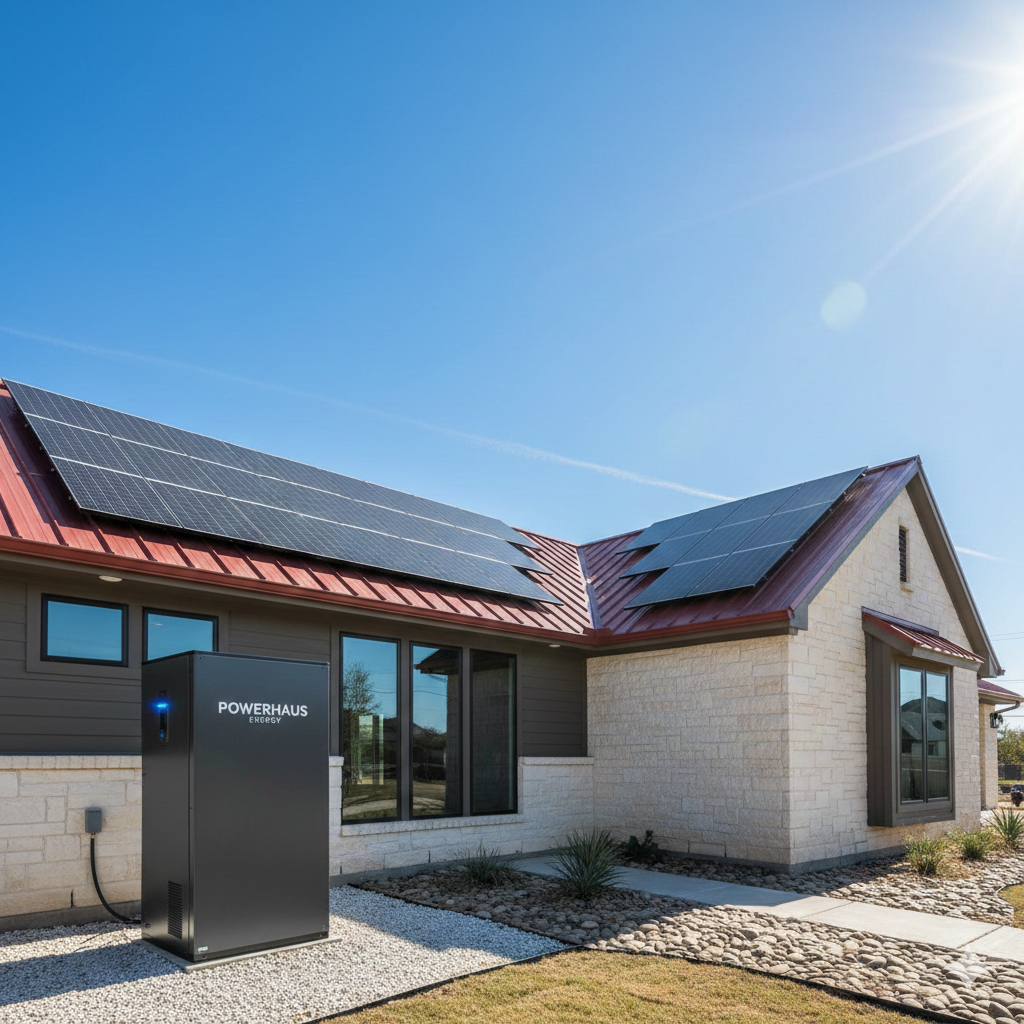
If you want to know how much a whole house solar generator costs, the answer ranges from $3,500 to $25,000 depending on capacity and features. Texas homeowners are increasingly turning to solar generators for backup power and energy independence, especially after experiencing grid reliability issues. Understanding the true cost helps you make an informed decision about protecting your home.
This guide breaks down solar generator pricing by system size, compares popular brands, and shows you how to maximize savings through federal tax credits and Texas utility rebates. For a complete overview of backup power options, see our guide to whole house battery backup cost.
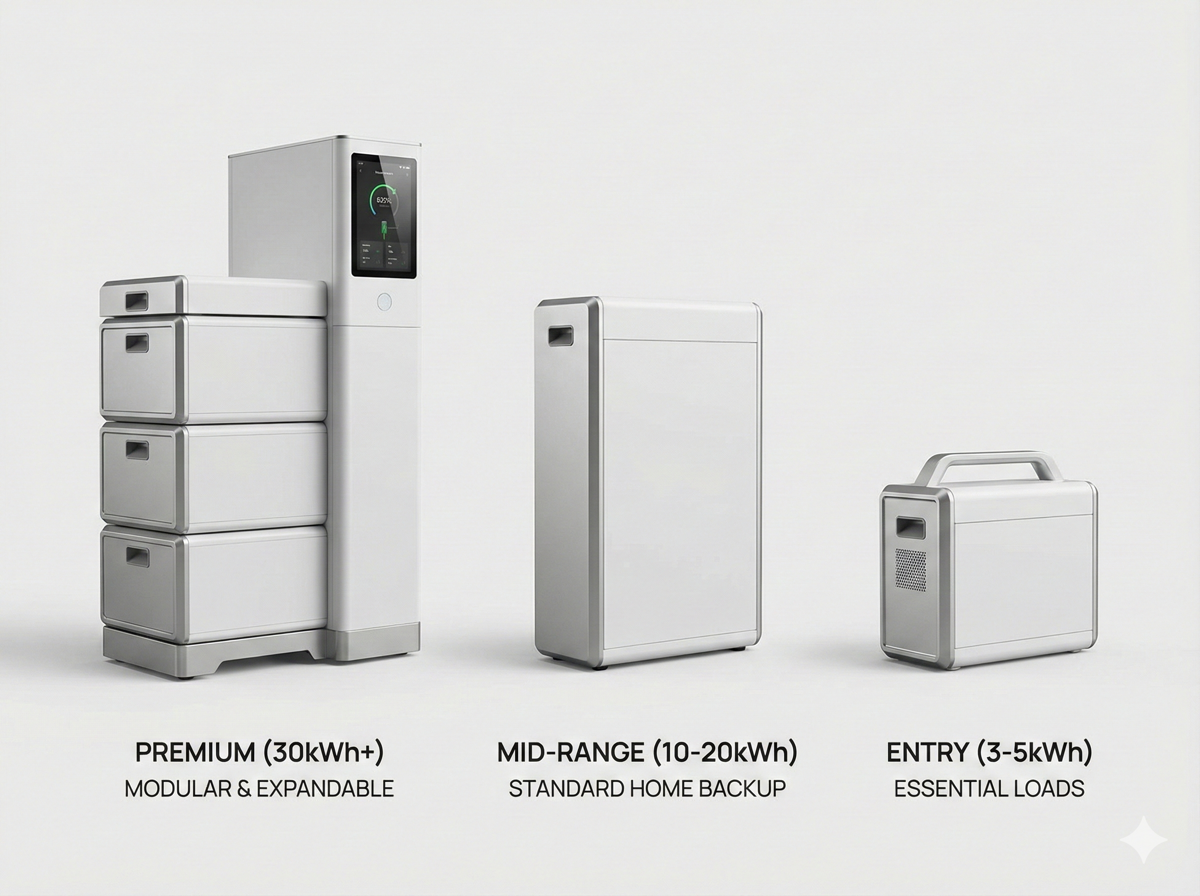
The solar generator cost you pay depends primarily on power output and storage capacity. Larger systems with more battery storage cost more but can power your entire home including HVAC systems.
| System Tier | Cost Range | Capacity | What It Powers |
|---|---|---|---|
| Entry-Level | $3,500 - $5,500 | 5-7 kWh | Essential appliances only |
| Mid-Range | $8,000 - $15,000 | 10-18 kWh | Most home electrical needs |
| Premium | $15,000 - $25,000 | 20-36+ kWh | Entire home including A/C |
Entry-level systems handle essential appliances like refrigerators, lights, and phone chargers during outages. Mid-range solar power systems can run most of your home for 8-12 hours. Premium whole house solar generators provide complete energy independence with enough output and storage capacity to power everything including air conditioning.
According to EcoFlow, the average American home consumes about 10,566 kWh annually. For Texas homes running air conditioning heavily in summer, daily energy consumption often exceeds 40 kWh, requiring larger battery capacity.
Several manufacturers produce solar powered generators designed for whole-home backup. Here are the leading options with current pricing:
| Brand | Model | Capacity | Price | Best For |
|---|---|---|---|---|
| EcoFlow | DELTA Pro Ultra | 6 kWh | $5,199 | Small homes |
| EcoFlow | DELTA Pro Ultra | 18 kWh | $13,500 | Medium homes |
| EcoFlow | DELTA Pro Ultra | 36 kWh | $24,000 | Large homes |
| Bluetti | AC200MAX+ | Up to 8.2 kWh | $2,000 - $8,000 | Budget buyers |
| Goal Zero | Home Backup | 10.8 kWh | $8,829 | Reliable backup |
EcoFlow leads the market for scalable house solar generator systems. Their modular design lets you start smaller and add capacity later. Bluetti offers more affordable initial cost options for homeowners watching their budget. Goal Zero provides rock-solid reliability backed by years of portable solar power systems experience.
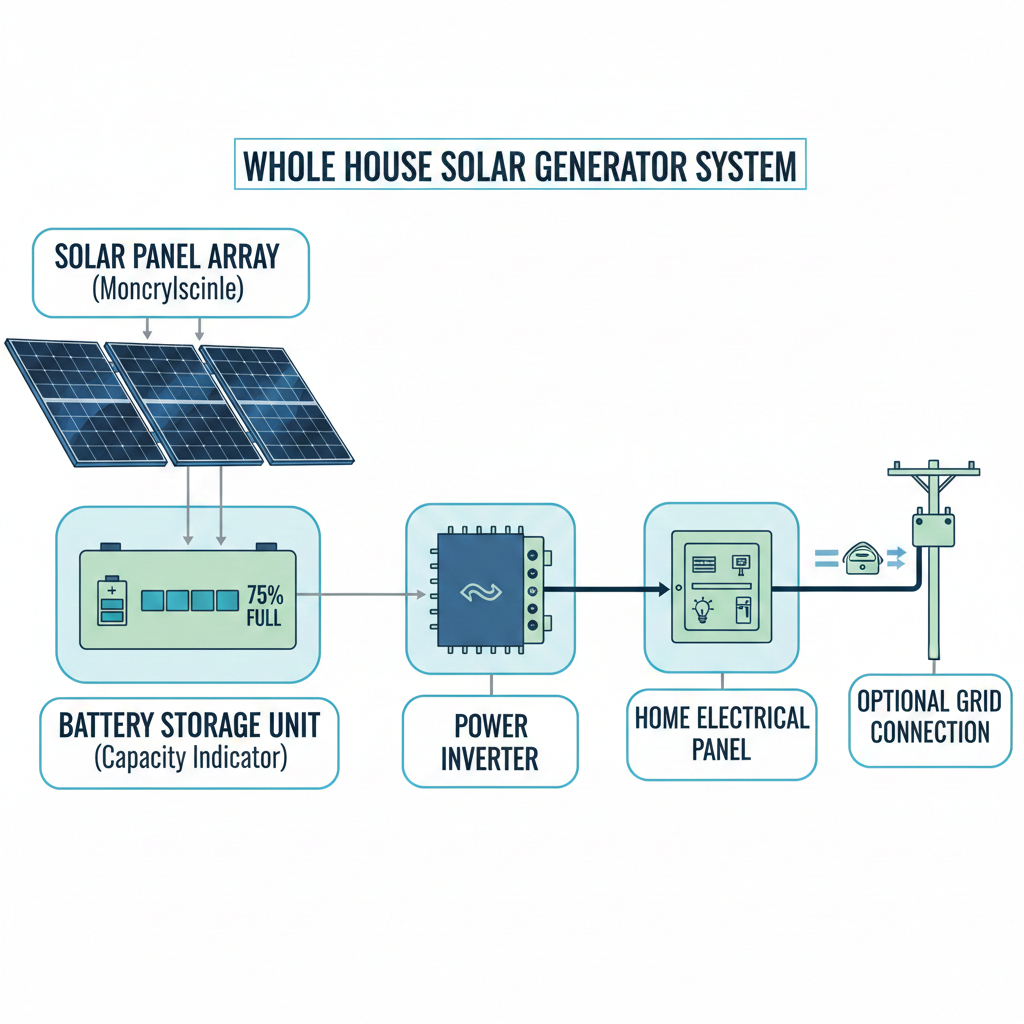
Several factors include the final price you pay for installing a solar generator system.
Battery technology significantly impacts cost. Lithium iron phosphate (LiFePO4) batteries cost $800-$1,500 per kWh but last 3,000+ cycles. Standard lithium-ion runs $1,000-$3,000 per kWh with fewer cycles. Lead-acid batteries have the lowest upfront cost at $500-$1,200 per kWh but require replacement sooner.
For detailed battery pricing, check our cost of battery storage per kWh breakdown.
The type of solar panels you choose affects total system cost. A solar panel array with monocrystalline panels costs more but produces more power per square foot. Determining the size of the solar array depends on your roof space and energy needs. Most whole-home systems require 4-10 panels rated at 400W each.
DIY installation saves thousands but requires electrical knowledge. Professional installation adds $1,000-$5,000 depending on complexity. Homes needing electrical panel upgrades or permitting face additional costs. Texas requires licensed electricians for grid-tied systems.
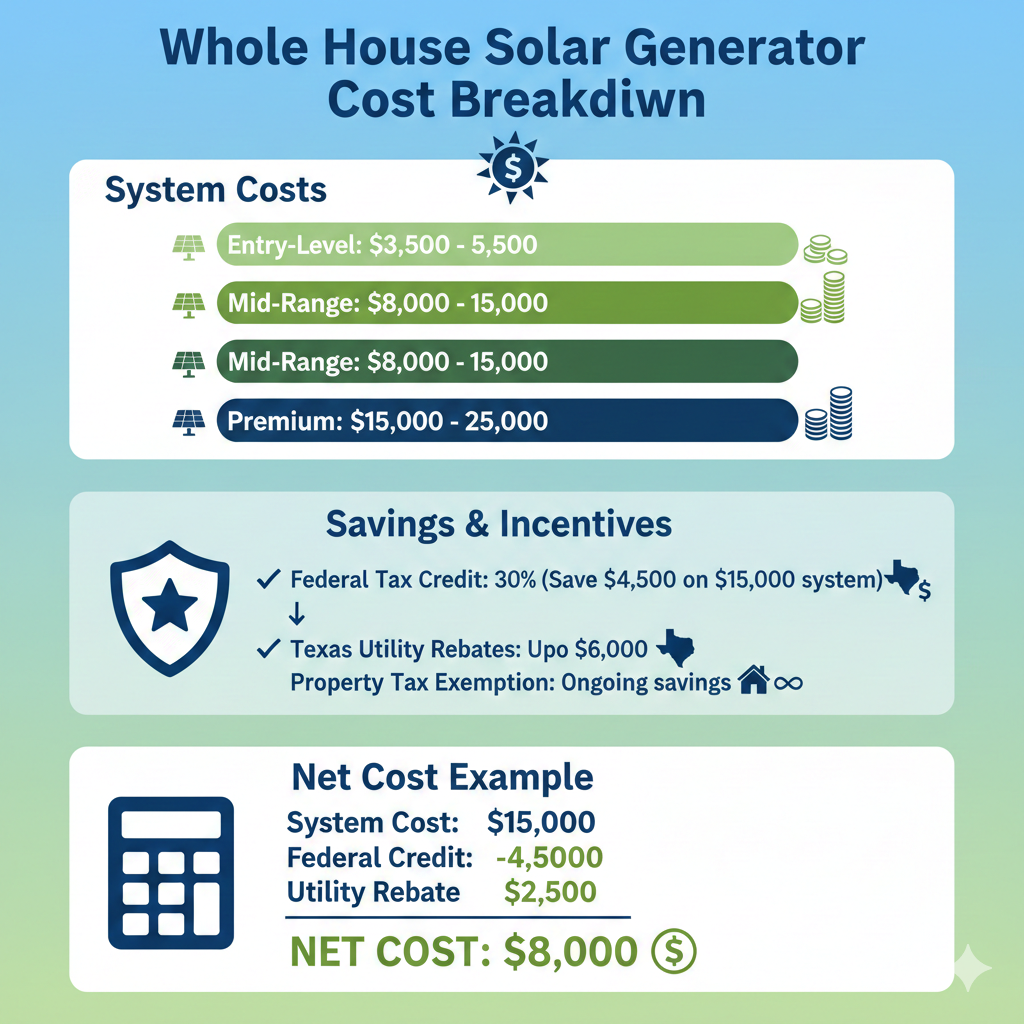
Smart homeowners stack available incentives to dramatically reduce their net cost.
The Residential Clean Energy Credit provides a 30% tax credit on qualified solar and battery systems through 2032. This applies to both equipment and installation costs.
Example savings on a $15,000 system:
The credit applies to standalone battery storage of 3 kWh or larger, making most whole house solar generators eligible.
Texas offers no state tax credit, but provides valuable property tax exemption. The added value from your solar energy system does not increase your property taxes. This saves hundreds annually on larger systems.
Texas utility rebates vary by provider:
For a $15,000 system in Austin Energy territory:
Solar generators offer significant long term advantages over fossil fuel alternatives.
| Factor | Solar Generator | Gas Generator |
|---|---|---|
| Fuel Cost | Free (sunlight) | $50-150/month |
| Noise Level | Silent operation | 65-75 decibels |
| Maintenance | Minimal | Regular oil and filters |
| Lifespan | 10-25 years | 10-15 years |
| Emissions | Zero | Carbon output |
Solar generators eliminate ongoing fuel costs entirely. A gas generator running 8 hours daily during an extended outage costs $20-40 in fuel per day. Solar generators recharge free from your solar panel array or grid power when available.
The silent operation makes solar generators ideal for residential neighborhoods. No fumes means safe placement near your home without ventilation concerns.
Proper sizing ensures your solar generator meets your energy consumption needs without overspending.
Use our solar battery ah calculator to determine your specific requirements.
| Home Size | Recommended Capacity | Estimated Cost |
|---|---|---|
| 1,500 sq ft | 10-15 kWh | $8,000 - $12,000 |
| 2,500 sq ft | 15-25 kWh | $12,000 - $18,000 |
| 3,500+ sq ft | 25-36+ kWh | $18,000 - $25,000 |
Start by listing your essential appliances and their wattage. Refrigerators typically draw 150-400W, while central A/C requires 3,000-5,000W. Your solar generator must handle peak loads while maintaining enough storage for overnight backup power.
For Texas homeowners, whole house solar generators provide genuine energy independence and long term value.
Outage protection: After Winter Storm Uri showed ERCOT grid vulnerabilities, many Texans prioritize backup power. Solar generators keep essential appliances running regardless of grid status.
Long-term savings: Rising electricity rates make solar energy increasingly attractive as a renewable energy source. Systems typically achieve payback within 5-10 years through reduced utility bills and avoided outage costs.
Home value: Homes with solar and battery backup systems command premium prices. Buyers recognize the value of energy independence.
Environmental impact: Solar generators produce zero emissions, reducing your carbon footprint while saving money.
Now you know how much a whole house solar generator costs and how to maximize your savings. Prices range from $3,500 for basic systems to $25,000+ for premium whole-home solutions. Federal tax credits reduce costs by 30%, and Texas utility rebates can save an additional $2,500-$6,000.
The right system depends on your home size, energy needs, and budget. VIP Energy Service helps Texas homeowners navigate solar generator options and find the best fit for their situation. Contact our team to discuss your backup power needs and get a personalized recommendation.
Ready to explore your options? Get your free energy quote from VIP Energy Service and discover how solar backup can protect your Texas home.
Last updated: January 2026













Copyright © 2026 VIPEnergyService.com. All rights reserved | PUCT# 10117