Who Pays the Electric Bill in a Texas Strip-Center Lease? What Tenants Should Check Before Signing
November 25, 2026
by
Shawn Cornett
Strip center tenant electricity in Texas starts with one question: is your suite separately metered, with the bill in your own name?
If your suite has its own utility meter and the account is in your name, a retail electric provider bills you and you pay it directly.
If the account is in the landlord's name, the landlord pays the provider, and the lease says what you owe toward it.
The meter decides who can choose a provider. The lease decides who pays.
Settle both before you sign. This guide is written for Texas shops, offices, restaurants and franchise locations that the Public Utility Commission of Texas (PUCT) would call a small commercial customer, with a peak demand under 50 kW. It's general information, not legal advice.
Key takeaways
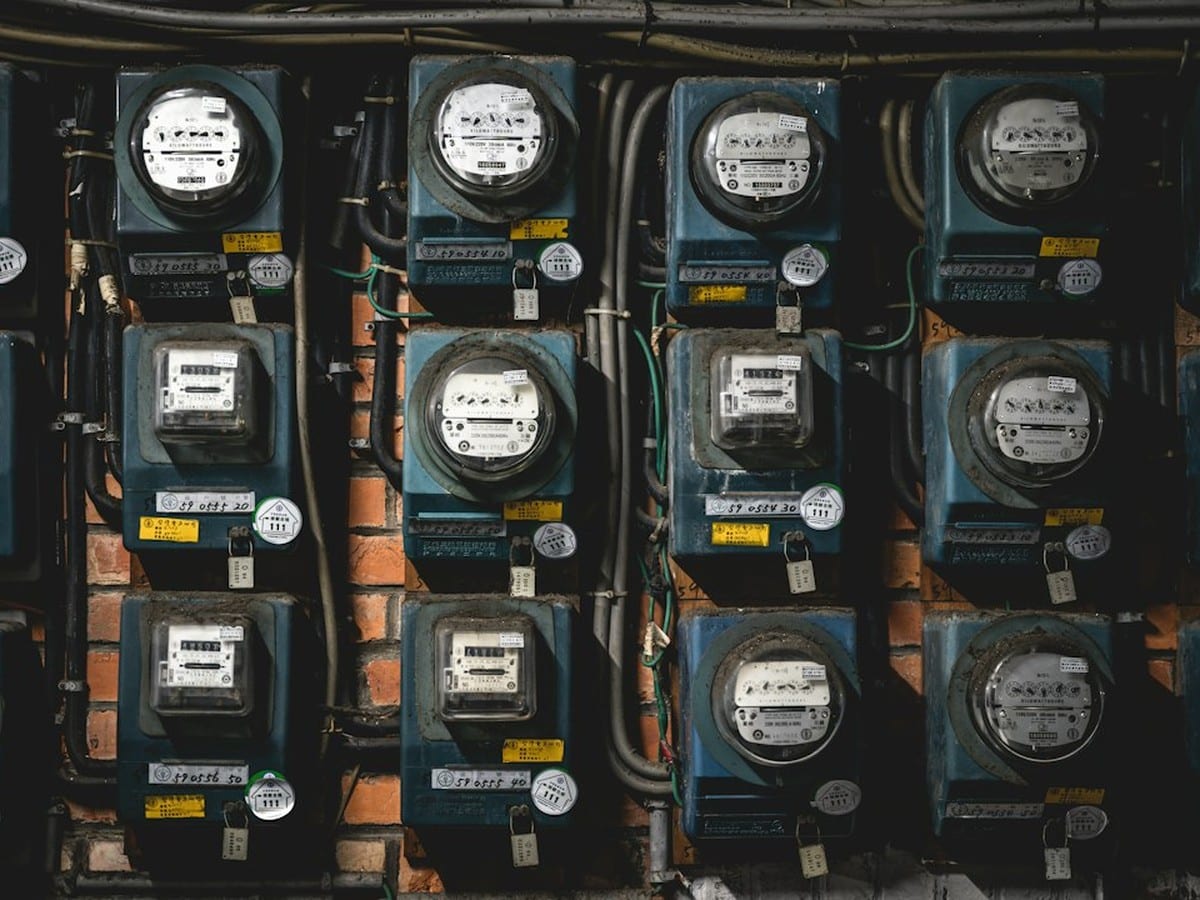
Three setups, not two: A suite can have its own utility meter, share one account with other suites, or sit behind a submeter the landlord reads. A meter on the wall doesn't tell you which.
The meter decides who can choose: Under Texas Utilities Code 31.002, a retail customer is "separately metered," which includes being billed directly by a provider or utility.
The address matters too: The Electric Reliability Council of Texas (ERCOT) says approximately 85% of Texas electricity consumers can choose their retail provider (November 2025). Most city-owned utilities and cooperatives haven't opted in.
The lease decides who pays: Gross, modified gross and NNN are labels. Find the sentence in your lease that states the electricity charge or how it's computed.
Ask for one bill: A past electric bill for the suite shows the service address, the ESI ID and the account number.
Who pays for electricity in a strip-center lease?
The party named on the electric account pays the provider.
The lease says whether any of that cost moves to you.
There are three meter setups to check for, and they don't all put your name on the account.
Meter setup
Name on the electric account
Who bills you
Who chooses the provider
Your own utility meter
Yours
Your retail electric provider
You, where retail choice is open
One account for several suites
The account holder, such as the landlord
The account holder, as the lease says
The account holder, where retail choice is open
Landlord's submeter
The landlord
The landlord, from a meter it reads
The landlord, where retail choice is open
Your own utility meter
The suite has its own ESI ID, the ID number for that point of delivery.
You sign up with a retail electric provider, and that provider bills you.
The delivery utility, or TDU, reads the meter and delivers the power.
One account for several suites
One utility account serves more than one suite, and the account holder buys the power.
Oncor's tariff (Section 6.2.3.1.2) provides for this. It serves multitenant buildings either through a meter for each tenant space or through one meter for several spaces.
The lease says how the cost is shared.
Landlord's submeter
A submeter is a private meter, behind the landlord's account, that measures one suite's use. The landlord reads it and bills from it.
Texas Utilities Code 31.002(18) defines separately metered as "metered by an individual meter that is used to measure electric energy consumption by a retail customer and for which the customer is directly billed by a utility, retail electric provider, electric cooperative, or municipally owned utility."
A submetered tenant is billed by the landlord, so a submeter isn't a separate meter under that definition. This is the setup that's easiest to mistake for your own meter.
How can you tell if your suite has its own meter?
Short answer: Get a past electric bill for the suite, then match its ESI ID and suite number to a meter labeled for your space.
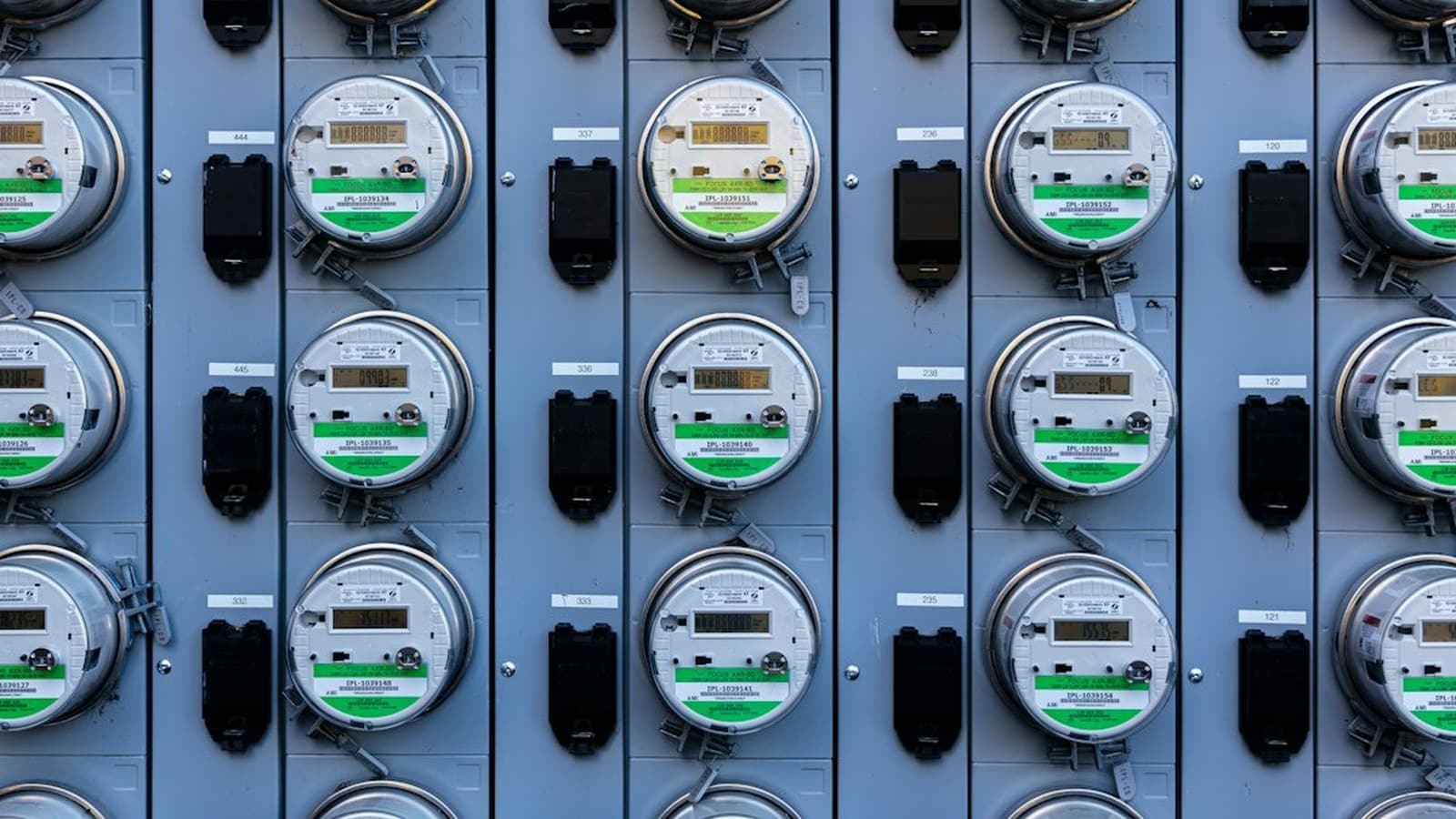
Why a meter isn't proof: The one you see could be a submeter, a house meter for shared areas or the meter for the suite next door.
What an ESI ID is: It's "the basic identifier assigned to each point of delivery," according to the PUCT's 16 TAC 25.5. It belongs to the location, not to the business.
6 steps to check before you sign
Ask for a bill. Every retail electric provider's bill has to show "the service address, electric service identifier (ESI), and account number of the customer" (16 TAC 25.479). You don't have one yet, so ask the landlord or the prior tenant.
Read the name on it. A provider's bill in the prior tenant's name for that suite is a strong sign of a separate meter. A bill in the landlord's name needs a follow-up question.
See the meter labeled for your suite. In individually metered retail buildings, CenterPoint's tariff (Section 5.10.3) makes the property owner responsible for proper connection to the meter socket, "including correct identification and labeling of Meter socket in order to designate living unit or retail space being metered."
Check with the delivery utility. The step is different at each one, as the table below shows.
Match the suite number. A result at the street address can belong to a sign, a house meter or the suite next door.
Ask what the meter feeds. Find out which meter runs your air conditioning and your sign. In the U.S. Energy Information Administration's (EIA) 2018 survey, 74% of mercantile buildings used packaged air conditioners (national data).
What do gross, modified gross and NNN leases mean for the electric bill?
They describe how expenses are generally split, but none of them settles your electric bill. Two leases with the same label can treat electricity differently, so read the utilities clause before you rely on the label.
The definitions below come from NAIOP, the commercial real estate development association. They're national, not Texas law.
Lease label
NAIOP's general definition
What it leaves open
Gross
The landlord "receives stipulated rent from a tenant and is obligated to pay all the property's operating expenses and real estate taxes"
Whether separately metered electricity is carved out
Modified gross
"Payment of the property's operating expenses is divided between the lessor and lessee via specified terms in the lease"
Which side electricity falls on
NNN (triple net)
"The tenant pays taxes, maintenance and property insurance as well as all operating costs associated with the tenant's occupancy," including utility costs
Whether you have your own account or reimburse the landlord's
Gross doesn't always mean electricity is included. Mackenzie Taylor Cietek, a real estate attorney at Holland & Knight, wrote on March 10, 2026, that gross leases often have carve outs, such as requiring the tenant to pay "separately metered utilities (e.g. gas, electricity and water), after-hours utility charges." Her conclusion about all three labels: "the actual obligations are determined by the lease language itself, not the language used to describe the allocation."
Texas doesn't fix the labels by statute, either. "No Texas statute defines those labels with universal terms," wrote Hank Fasthoff, founder of Fasthoff Law Firm in Houston, on July 5, 2026.
Who pays: Electric has its own line, with a box to check for landlord or tenant.
Who chooses: "The responsible party may select the utility service provider." If the tenant selects it, access or alterations need the landlord's consent, which the landlord won't unreasonably withhold.
Your homework: "Tenant should determine if all necessary utilities are available to the leased premises and are adequate for Tenant's intended use."
Your own lease: It may use another form and say something else, so check who it says pays for electricity and whether it says who selects the provider.
Who pays for common-area power?
The lease decides. Parking lot lights, the center's sign and other shared loads run on somebody's account. When it's the landlord's account, the lease says whether tenants reimburse the cost and how.
CAM is the term to look for. Common area maintenance, or CAM, is the cost of operating and maintaining the parts of a property that tenants share.
Two Texas examples: The Texas REALTORS form's CAM definition lists "lighting" and "utilities" next to security, cleaning and trash removal. Fasthoff names "utilities for shared areas" among the costs an NNN lease may recover.
Where the charge has to appear in writing
The rule:Texas Property Code 93.012(a) covers commercial tenancies: "A landlord may not assess a charge, excluding a charge for rent or physical damage to the leased premises, to a tenant unless the amount of the charge or the method by which the charge is to be computed is stated in the lease, an exhibit or attachment that is part of the lease, or an amendment to the lease." The section also preserves charges and remedies allowed under a statute or common law, so ask an attorney how it applies to your lease.
The sentence: Find the one that states the amount or the method for your suite's electricity, and the one that does it for common-area power.
The share: If you pay a share, what is it a share of? Fasthoff's advice: "Your lease should state the numerator, denominator, measurement standard, and events that permit a change."
The estimate: Tim Ferris, a REALTOR with LRG Realty in Texas, puts it this way: "Many tenants assume their monthly CAM payments are fixed. In reality, these payments are often estimates."
The records: Drew Erickson, an associate at the Houston firm Rapp & Krock, wrote in 2022 that an audit provision lets a tenant "review the books and records of the landlord to confirm that all CAM charges are proper under the lease."
The overlap: If you pay your own provider, ask how the lease keeps that electricity out of the CAM pool.
What should you ask the landlord before you sign?
Ask about three things: the meter, the account and the method.
Call it the Meter, Account, Method check. Get every answer in writing, and have the lease reviewed before you sign.
Check
Questions to ask
What settles it
Meter
Does my suite have its own utility meter and ESI ID? Which meter runs the air conditioning, sign and exterior lights?
A past bill and a meter labeled with your suite number
Account
Whose name is on the electric account now, and whose name will be on it after I move in? Does the lease say who selects the provider?
The name on the bill and the utilities clause
Method
Which sentence states the amount or the method for my electricity? Which one covers common-area power? When are estimates compared with actual costs?
The lease, its exhibits and any amendments
If the account stays in the landlord's name
Can I see the last 12 months of electric bills for the meter that serves my suite?
What else is on that meter, and how is my part figured?
If I add equipment or longer hours, does my part change?
How much electricity is at stake?
Use per square foot: Enclosed and strip malls averaged 19.6 kWh per square foot in EIA's 2018 national survey (CBECS Table C22), against 13.7 for other retail and 12.6 for all commercial buildings.
Building size: Strip shopping centers were 32% of mercantile buildings and averaged 29,600 square feet per building (EIA).
Share of electricity: Enclosed malls and strip shopping centers used 61% of the electricity in mercantile buildings, according to the same EIA report.
A rough scale: At 19.6 kWh, 1,500 square feet works out to 29,400 kWh a year, or 2,450 kWh a month. It's a whole-building average that mixes restaurants and shops, so it isn't a forecast for your suite.
Can a tenant choose their own electricity provider?
Yes, when two things are true: your suite is separately metered with the bill in your name, and the address is where retail choice is open. If either one is missing, the choice of provider isn't yours to make.
The meter:Texas Utilities Code 31.002(16) defines a retail customer as "the separately metered end-use customer who purchases and ultimately consumes electricity."
The address:Texas Utilities Code 39.102(a) gives choice to each retail customer "except retail customers of electric cooperatives and municipally owned utilities that have not opted for customer choice."
Where retail choice is open
Open:ERCOT puts about 85% of Texas electricity consumers in areas with choice, including Dallas, Fort Worth, Houston, Corpus Christi, Galveston and Waco (November 2025).
Opted in: ERCOT says only Nueces Electric Cooperative and Lubbock Power & Light have opted in. For scale, the PUCT's January 2025 report counts 76 electric cooperatives and 72 municipally owned utilities in Texas.
Not open: ERCOT lists Austin, San Antonio and many small communities as areas that haven't opted in. Outside the ERCOT grid, the PUCT says consumers are generally served by the local vertically integrated utility.
In use: Retail electric providers served 1,190,620 commercial premises in the competitive market as of March 2024, according to the same PUCT report.
If you can choose, line the contract up with the lease
Term: Compare the contract's end date with the lease's end date and any renewal option.
Delivery charges: Check whether they're included or passed through.
Generally yes, but the label doesn't say how. NAIOP's national definition of a triple net lease includes utility costs among the tenant's costs. It doesn't say whether you pay a provider through your own account or reimburse the landlord. Your lease does.
Is a submeter the same as having your own electric meter?
No. A submeter measures your suite's use, but the landlord holds the account and bills you. Your own utility meter has an ESI ID and a bill from a retail electric provider in your name.
Do Texas submetering rules cover a strip center?
The PUCT's submetering rules, 16 TAC 25.141 and 16 TAC 25.142, are written for apartments, condominiums and mobile home parks, not retail suites. For a submetered suite, read your lease for how the charge is figured.
What is included in CAM charges?
Whatever your lease lists. A 2022 Texas REALTORS commercial lease form includes lighting and utilities along with security, painting, cleaning and trash removal. Read the definition and the exclusions in your own lease.
What happens to your electricity contract if you relocate when the lease ends?
For residential and small commercial customers (under 50 kW), 16 TAC 25.475(c)(2)(C) bars an early termination fee "as a result of the customer's relocation if the customer provides a forwarding address and, if required, reasonable evidence that the customer no longer occupies the location specified in the contract." That's the electricity contract, not the lease, and the text speaks to relocating.
Who do you ask if the landlord doesn't know the ESI ID?
Start with the delivery utility. Oncor has a public lookup, CenterPoint and TNMP take calls, and AEP Texas sends customers to the retail provider they want to use. Give the full address with the suite number.
Rules, tariff sections and utility contact steps in this article were read Nov. 24 and 25, 2026. This article is general information, not legal advice. Have an attorney review your lease before you sign.
Who Pays the Electric Bill in a Texas Strip-Center Lease? What Tenants Should Check Before Signing
The meter decides who can choose a provider and the lease decides who pays. See how to check strip center tenant electricity in Texas before you sign.
What Ambit Ultimate Perks Gives You Each Month, and How Its Holiday Travel Deals Work
Ambit Ultimate Perks gives residential Customers $50 in Reward Dollars a month, per its terms. See which benefits use them, how the hotel and travel deals work and what the terms say about expiration.
Convenience Store and Gas Station Electricity in Texas: What Drives the Bill and How to Choose a Plan
Refrigeration drives most of a Texas convenience store's electricity bill. See what uses the power, how demand charges work and what to check before choosing a plan.
How Much Electricity Does a Small Business Use in Texas? Usage and Bills by Business Type
The average Texas commercial account used 8,790 kWh and paid $751.73 a month in 2024 (EIA), but that includes very large buildings. Here's how usage changes by business type and how to estimate your own.
Do Christmas Lights Really Raise a Texas Electric Bill? The Math at Your Plan's Rate
LED strings barely register on a bill, and large incandescent bulbs can. Here's the season math for Christmas lights at Oncor's delivery charge as of November 2026, a per-cent rule for your own EFL, and what changes on Free & Clear Nights.
Your Texas Fixed Rate Can Still Change for 3 Reasons. The PUCT Is Now Weighing a Fourth
Fixed rate electricity plans in Texas can change only for TDU charges, ERCOT admin fees or new laws. The PUCT is now weighing a fourth: grid reserve costs.
Budget Billing Won't Lower What You Pay. Here's What Average Monthly Billing Does in Texas
Budget billing won't lower what you pay in Texas. See how Ambit's Average Monthly Billing works, when the carried balance peaks, and who should skip it.
Opening a New Business Location in Texas? How to Set Up Electricity Before Move-In Day
To set up electricity for a new Texas business location, find the ESI ID, confirm the TDU, estimate peak demand, choose a plan and schedule the move-in.
How to Use Smart Meter Texas to Price Your Next Electricity Plan
Smart Meter Texas holds up to two years of your usage. Here's how to register, download it and price any Texas plan's EFL at your real kWh, winter included.
$85.27 per 1,000 kWh: TNMP's New Delivery Rates Top the PUCT Table, and December Bills Add a One-Month Surcharge
TNMP TDU delivery charges are $7.56 a month plus 7.7710 cents per kWh as of October 1, 2026, or $85.27 at 1,000 kWh, the highest on the PUCT's table. Two September steps added $12.75, and December 2026 bills add a one-month Rider IS surcharge.
Texas Picked Its 2027-28 Backup Electricity Providers. How POLR Service Works If Your Provider Shuts Down
Texas approved its 2027-28 provider of last resort list on Oct. 9, 2026. Your power stays on if your provider fails, and you can leave POLR service any time.
ERCOT's December 2026 Outlook Puts Grid Emergency Odds at 2.95% in Its Riskiest Hour. What a Texas Winter Storm Can and Can't Do to Your Electric Bill
ERCOT's December 2026 outlook puts the riskiest hour, 8 a.m. on December's peak-load day, at a 2.95% chance of an Energy Emergency Alert, well under its 10% low-risk line. Here is what a Texas winter storm can and can't do to your electric bill.
Houston Delivery Charges Fell on August 15. They Jumped September 1 and Rose Again for Meters Read September 30. What That Does to Your October Bill.
CenterPoint delivery charges dipped on August 15, jumped back up September 1, and rose again for Houston meters read on or after September 30. Here's what it means for your October bill.
Lubbock Electricity Rates Change November 1: LP&L's New $2.50 Base Charge Means Smaller Homes Pay More and Bigger Homes Pay Less
LP&L adds a $2.50 monthly base charge and cuts delivery to 6.008 cents per kWh on Nov 1, 2026. Homes under 822 kWh a month pay more, bigger homes pay less.
How to Dispute an Electric Bill in Texas: What the PUCT's New Complaint Process Changes, and What It Doesn't
To dispute an electric bill in Texas, write to your provider first (21 days to answer), then file with the PUCT. On October 21, 2026 the PUCT ends formal complaints. Here is what changes and what stays the same.
Direct Energy Free Nights Review: What the EFL Actually Charges After the Free Window
Direct Energy free nights (Twelve Hour Power) is free 9 p.m. to 9 a.m. As of September 29, 2026, the 12-month EFLs charge 34.5 to 35.4 cents per kWh after the free window. Here is the break-even math.
Important message regarding earnings: Ambit Energy makes no guarantee or promise of income or business. Anyone considering building a full-time or part-time Ambit business should have realistic expectations of their potential income. Learn more at goambit.com/disclaimer.