Update, October 2026: According to the IRS, the 30% federal Residential Clean Energy Credit is not available for systems placed in service after December 31, 2025. Mentions of the credit below apply only to systems installed by then. Texas utility rebates and the Texas property tax exemption may still lower your cost.
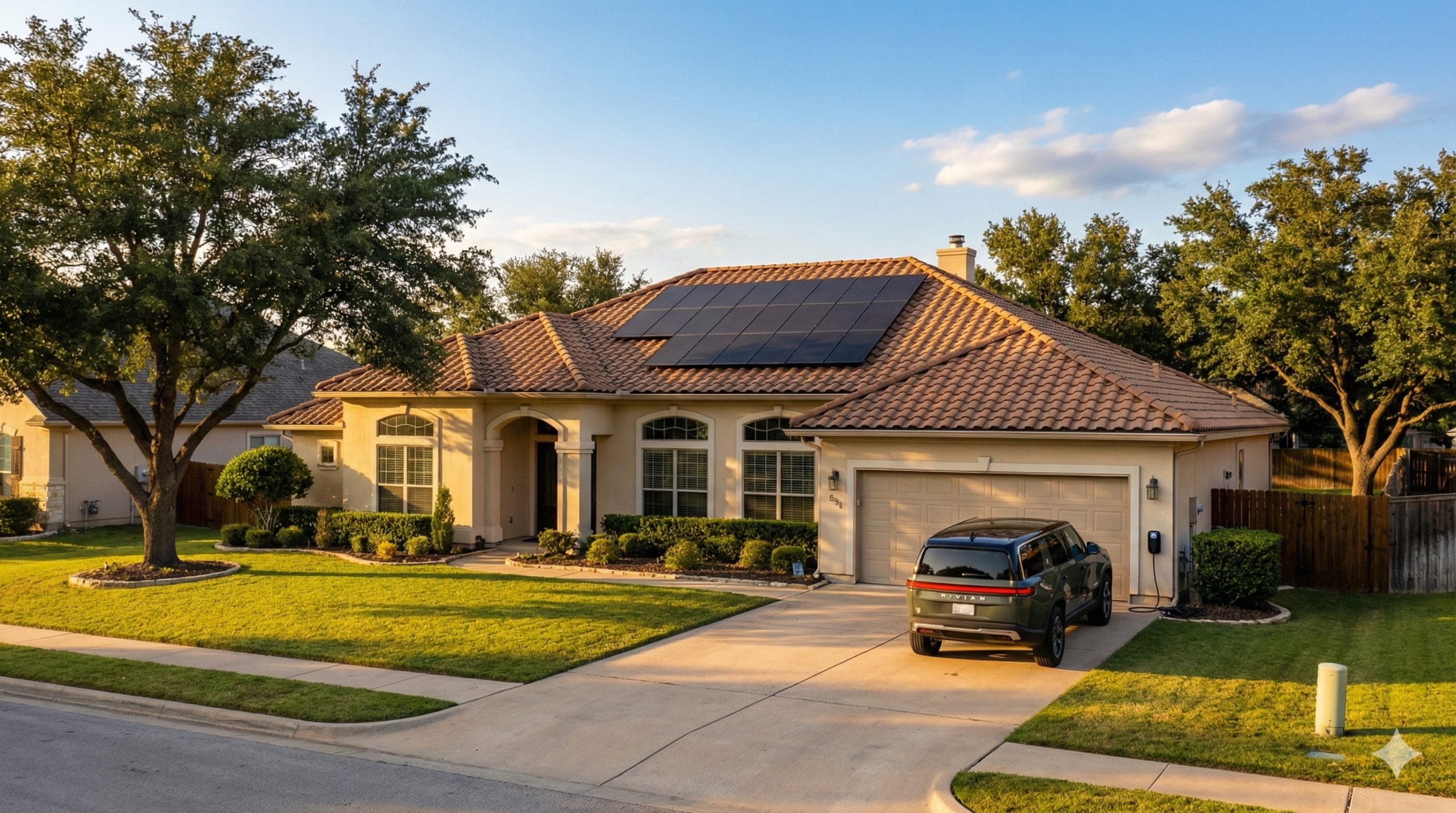
To power a house with solar energy, you need to install solar panels on your roof, connect them to an inverter that converts DC to AC power, and integrate with your electrical panel. The typical Texas home requires 15-25 panels to cover energy needs. Most homeowners pay $16,000-$26,000 before incentives, with the 30% federal tax credit reducing costs significantly.
For the best results, consider pairing solar with house energy storage to maximize savings and provide backup power during outages. Here's a complete step-by-step guide to powering your home with solar energy.
Before you can power a house with solar energy, you need to understand how much electricity your home actually uses. Start by reviewing 12 months of electricity bills to calculate your average monthly consumption.
According to the U.S. Energy Information Administration, the average American home uses approximately 10,500 kWh per year. However, Texas homes often use more due to air conditioning demands during hot summers. Your bills will show your specific usage patterns.
To calculate the system size you need, divide your annual kWh usage by 1,400 to 1,600. This gives you the kilowatts (kW) of solar capacity required. For example, a home using 12,000 kWh annually needs roughly an 8-9 kW system.
Consider future energy needs as well. Planning to add an electric vehicle, pool, or home addition? Factor these into your calculations now. The ERCOT grid in Texas experiences peak demand during summer afternoons, making solar particularly valuable for reducing strain during these high-use periods.
Not every property is equally suited for solar panels. Your roof's orientation significantly impacts energy production. South-facing roofs capture the most sunlight in Texas, though southwest and southeast orientations also work well.
According to the National Renewable Energy Laboratory, roof condition matters as much as orientation. Your roof should have at least 15 years of life remaining before installing solar panels. Plan approximately 100 square feet of roof space per kW of capacity you need.
Shading from trees, neighboring buildings, and chimneys can dramatically reduce production. Walk around your property at different times of day to identify shading patterns. Even partial shading on one panel can affect the entire system with certain inverter types.
If your roof isn't suitable, ground-mount systems offer an alternative. Texas homeowners with adequate land often choose ground mounts for easier maintenance and optimal positioning. Many areas in Texas feature flat terrain with minimal tree cover, making ground-mount installations straightforward.
Use free tools like the NREL PVWatts Calculator to estimate your property's solar potential based on location and roof characteristics.
Selecting the right equipment determines your system's performance for the next 25-30 years. Solar panels come in two main types: monocrystalline and polycrystalline.
According to the Solar Energy Industries Association, monocrystalline panels now account for over 80% of residential installations. These panels offer 20-24% efficiency compared to 15-17% for polycrystalline alternatives. The higher efficiency means you need fewer panels to achieve the same output.
For inverters, you'll choose between string inverters and microinverters. String inverters connect all panels in a series, making them cost-effective but sensitive to shading. Microinverters from manufacturers like Enphase attach to each panel individually, optimizing production even when some panels are shaded.
Battery storage is increasingly popular for Texas homes. Options like Tesla Powerwall, Enphase IQ batteries, and FranklinWH systems store excess energy for evening use or backup power. Pairing solar with house energy storage protects against grid outages and maximizes self-consumption.
Your installer will recommend mounting hardware and monitoring systems. Most systems include app-based monitoring that tracks production in real-time.

Installing solar panels to power a house follows a predictable process. Here's what to expect at each stage:
Step 1: Get Multiple Quotes
Request quotes from 3-5 certified solar installers. Compare equipment brands, warranties, and total costs. Verify NABCEP certification for your installer. Check online reviews and ask for references from recent local installations.
Step 2: Review and Sign Contract
Understand your financing options: cash purchase, solar loan, lease, or power purchase agreement (PPA). According to EnergySage, the average residential solar installation takes 6-12 weeks from contract to activation. Confirm equipment specifications and warranty details before signing.
Step 3: Permit Acquisition (1-4 Weeks)
Your installer handles permit applications. Most Texas cities require electrical permits for solar installations. If you have an HOA, obtain approval before proceeding. Permit timelines vary by jurisdiction.
Step 4: Equipment Delivery and Installation (1-3 Days)
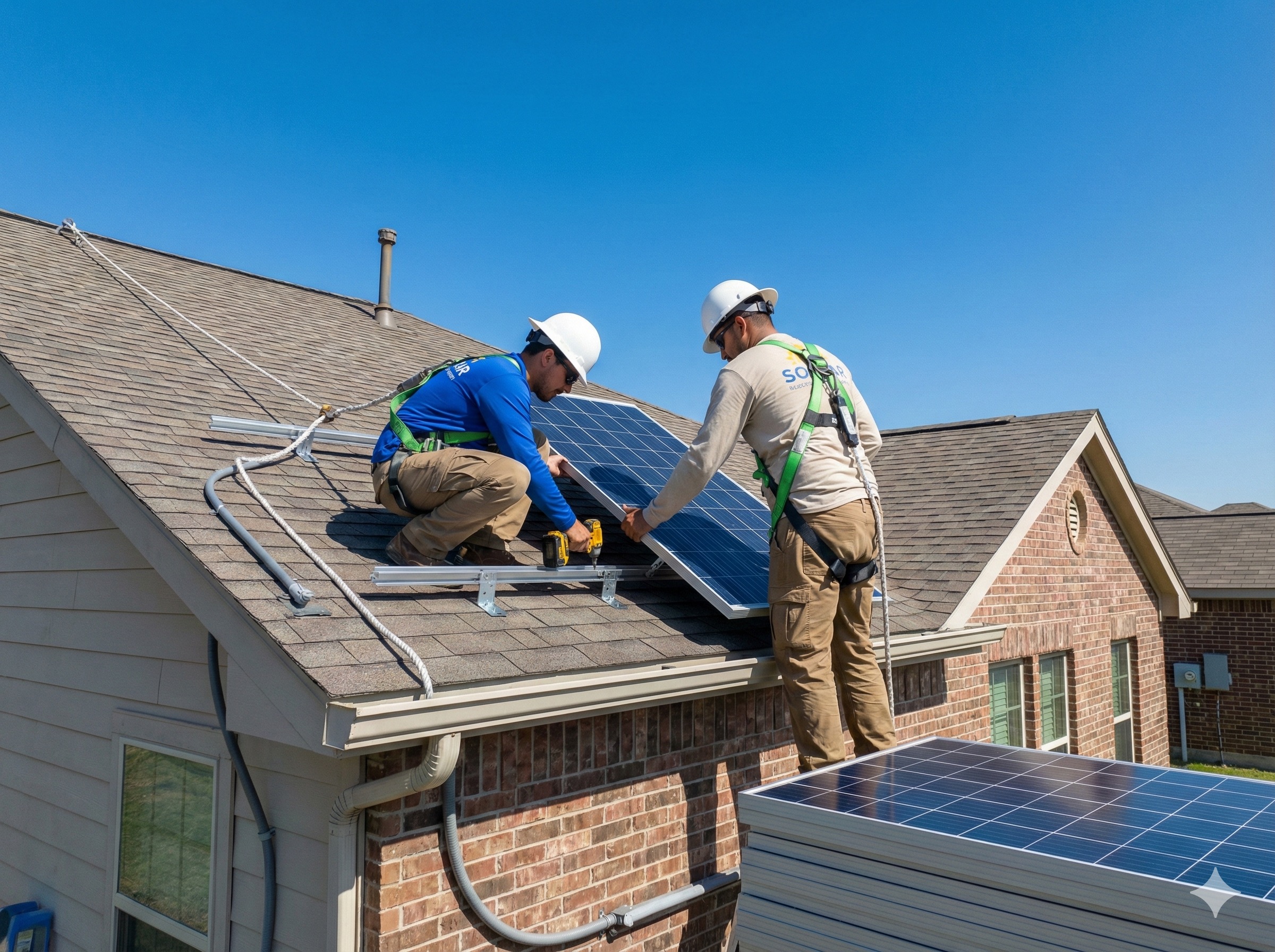
The installation crew prepares your roof, mounts the racking system, and secures panels. They run wiring to a new or existing electrical subpanel and install your inverter. Most residential installations complete in 1-3 days.
Step 5: Inspection (1-2 Weeks)
Your city's electrical inspector verifies the installation meets code requirements. The utility company also verifies the system before authorizing connection.
Step 6: Utility Interconnection (2-4 Weeks)
Your utility installs a net meter to track power flow in both directions. Enroll in a solar buyback program in Texas to receive credits for excess power you generate. You'll receive Permission to Operate (PTO) when interconnection is complete.
Step 7: System Activation
Flip the switch and start generating clean energy. Set up your monitoring app to track daily production. Compare your first full month's electricity bill to previous months.
Knowing the true cost to power a house with solar energy helps you make an informed decision. According to EnergySage, residential solar costs average $2.80 to $3.25 per watt in 2024.
For a typical 6-8 kW system, expect to pay $16,800 to $26,000 before incentives. The federal Investment Tax Credit (ITC) reduces this cost by 30% through 2032. According to the IRS, this credit applies to your federal tax liability, not as a refund.

Texas offers additional benefits. Property tax exemptions mean your home's value increases without raising your property taxes. According to the U.S. Department of Energy, homeowners can save $20,000 to $96,000 over a solar system's lifetime.
The payback period typically ranges from 6-12 years, depending on your electricity rates and sun exposure. Solar panels last 25-30 years with minimal degradation, meaning you'll enjoy free electricity for 15+ years after payback.
Check the DSIRE database for current incentives in your area. Some Texas utilities offer additional rebates for solar installations.
Texas has become one of the nation's leading solar markets. According to the Solar Energy Industries Association, Texas added more solar capacity than any other state in 2024 and ranks second nationally for total installed capacity.
The ERCOT grid operates independently from the national grid, creating unique opportunities and challenges. Solar buyback rates vary significantly by utility, ranging from 5 to 15 cents per kWh. Compare rates through a solar buyback analysis to find the best program for your situation.
After Winter Storm Uri in 2021, more Texas homeowners recognize the value of energy independence. Battery storage adoption is accelerating as costs decline and reliability concerns persist. New utility programs launching in 2026 will offer additional options for solar customers.
VIP Energy Service helps Texas homeowners navigate the Texas solar payback program options. Our energy consultants provide personalized guidance based on your usage patterns and goals.
Most solar systems operate reliably with minimal maintenance. However, knowing how to troubleshoot common issues helps you power your house with solar energy effectively.
Common Issues and Quick Fixes:
If production seems low, check for obvious shading from new tree growth or debris on panels. Dirt and pollen accumulation can reduce output by 5-10%. Rain usually cleans panels naturally, but you may need to rinse them during dry spells.
Monitor your app for inverter error codes. Many issues resolve by cycling the inverter off and on. Check your breaker panel to ensure the solar breaker hasn't tripped.
If your electricity bill is higher than expected, review your usage patterns. Time-of-use rates mean you may pay more for evening consumption even with solar credits.
When to Call a Professional:
Contact your installer for physical damage from hail, fallen branches, or severe weather. Texas hailstorms can crack panels or damage mounting hardware. Persistent inverter errors require professional diagnosis.
Call a professional if you notice roof leaks near mounting points or observe a production drop greater than 20% not explained by weather or seasonal changes. Electrical issues are never DIY projects.
Ready to power your home with solar? Contact VIP Energy Service at (817) 402-2664 for personalized guidance on solar options and buyback programs for your Texas home.









Copyright © 2026 VIPEnergyService.com. All rights reserved | PUCT# 10117
Important message regarding earnings: Ambit Energy makes no guarantee or promise of income or business. Anyone considering building a full-time or part-time Ambit business should have realistic expectations of their potential income. Learn more at goambit.com/disclaimer.