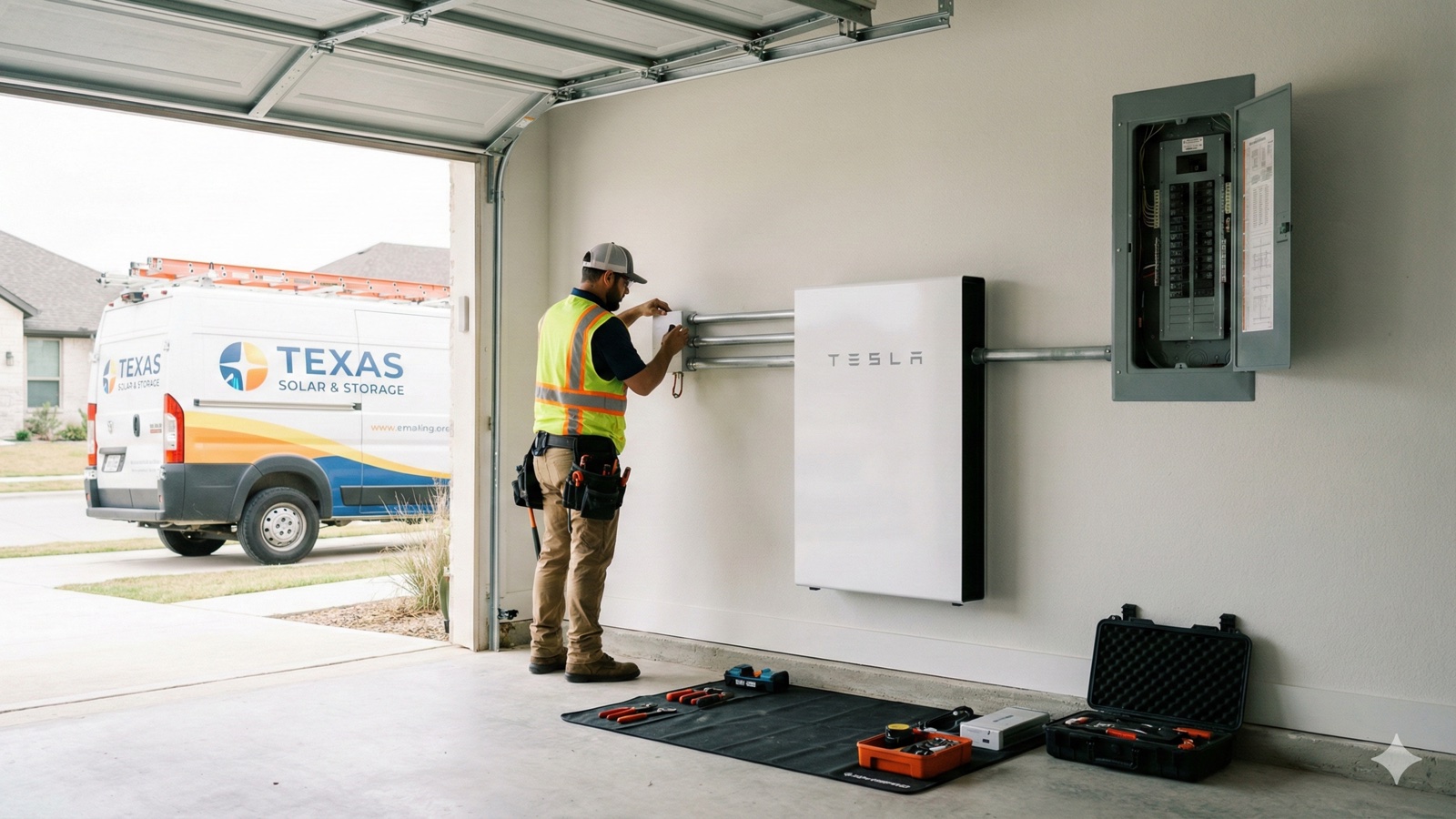
Update, October 2026: According to the IRS, the 30% federal Residential Clean Energy Credit is not available for systems placed in service after December 31, 2025. Mentions of the credit below apply only to systems installed by then. Texas utility rebates and the Texas property tax exemption may still lower your cost.
Texas homeowners are turning to battery storage installation as the solution to an increasingly strained power grid. With ERCOT projecting demand to double by 2030 and extreme weather events becoming more frequent, having backup power isn't just convenient—it's essential.
Battery storage installation is the professional process of adding an energy storage system to your home. These systems store energy from solar panels or the grid, providing energy independence when you need it most. This complete guide covers everything Texas homeowners need to know: costs, top brands, the installation process, and which incentives still apply.
Battery storage installation involves professionally integrating battery storage systems into your home's electrical infrastructure. These home battery units store energy from two primary sources: solar panels during daylight hours or the grid during off-peak pricing.
When the grid goes down, your battery provides backup power to essential appliances—refrigerators, medical equipment, HVAC systems, and lighting. Beyond emergencies, batteries enable you to store energy during low-rate periods and use it during expensive peak hours.
Professional battery installers handle everything from site assessment through utility interconnection. The result is energy storage that works seamlessly with your existing electrical system and, if applicable, your solar system.
Understanding each type of battery helps you make the right choice for your Texas home.
Lithium-ion technology dominates the home battery market. Two main subtypes exist:
| Battery Type | Efficiency | Safety | Lifespan | Best For |
|---|---|---|---|---|
| LiFePO4 (Lithium Iron Phosphate) | 95-98% | Highest - no thermal runaway | 10+ years | Safety-focused homes |
| NMC (Nickel Manganese Cobalt) | 90% | Moderate | 10 years | High energy density needs |
LiFePO4 solar batteries offer the safest chemistry with no risk of thermal runaway. NMC batteries pack more energy into smaller spaces but require proper ventilation.
Lead-acid batteries offer a budget option but with shorter lifespans and lower efficiency (80-85%). Flow batteries represent emerging technology—unlimited cycles but larger footprint. Solid-state batteries promise higher efficiency with no fire risk, expected for residential use around 2028.
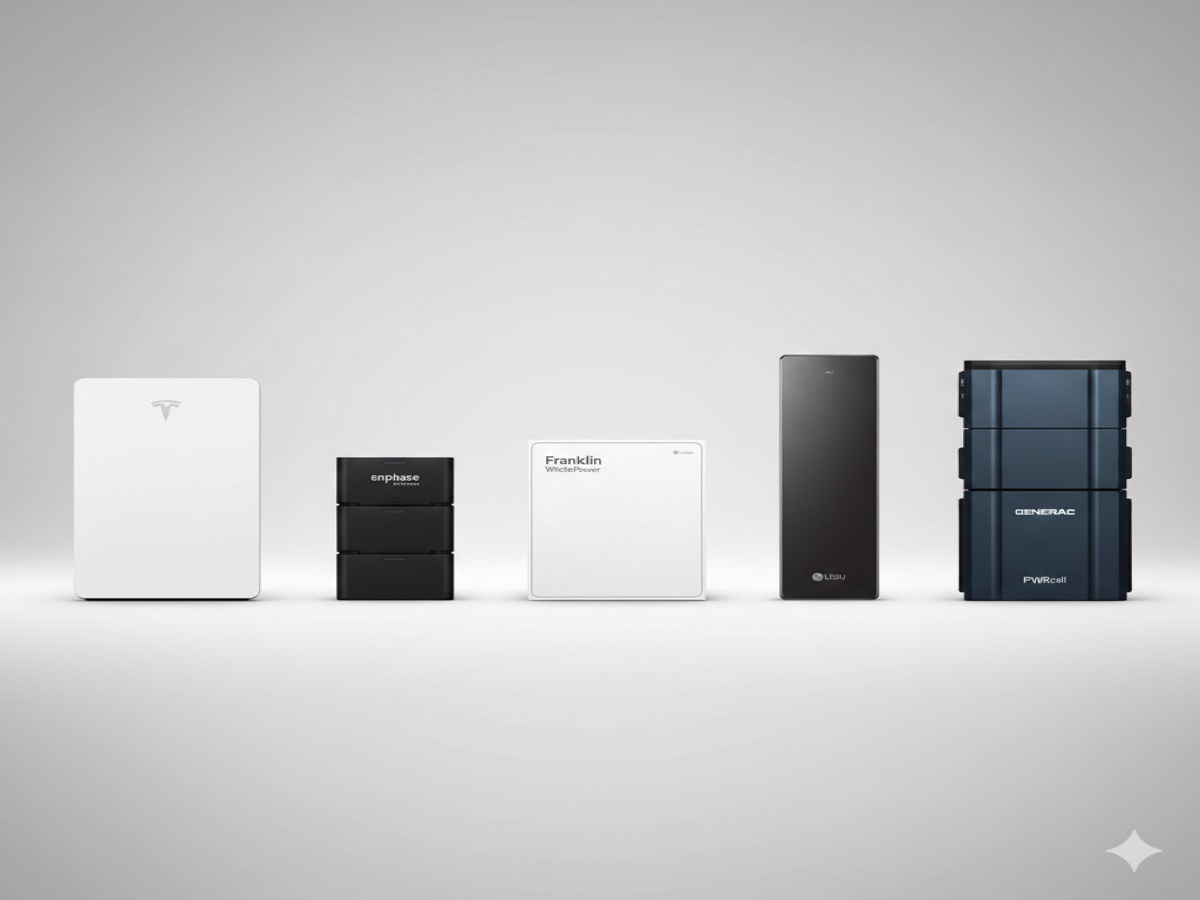
Five brands lead the residential battery storage systems market:
| Brand/Model | Capacity | Efficiency | Price Range | Warranty |
|---|---|---|---|---|
| Tesla Powerwall 3 | 13.5 kWh | 90% | $15,400-$16,779 | 10 years |
| Enphase IQ Battery 5P | Modular (3.84 kWh each) | 96% | $12,000-$15,000 | 10-15 years |
| Franklin WholePower | 15 kWh | 90%+ | $14,000-$18,000 | 10 years |
| LG RESU Prime | 9.6-16 kWh | 90-94% | $10,000-$14,000 | 10 years |
| Generac PWRcell | Modular (9-18 kWh) | 84-88% | $12,000-$20,000 | 10 years |
Tesla Powerwall 3 offers 30kW surge capability and seamless app integration. Enphase IQ Battery 5P leads in efficiency at 96% with modular scalability. Franklin WholePower integrates directly with generators—ideal for extended outages. LG RESU Prime delivers compact design with high efficiency. Generac PWRcell focuses on whole-home backup with modular expansion.
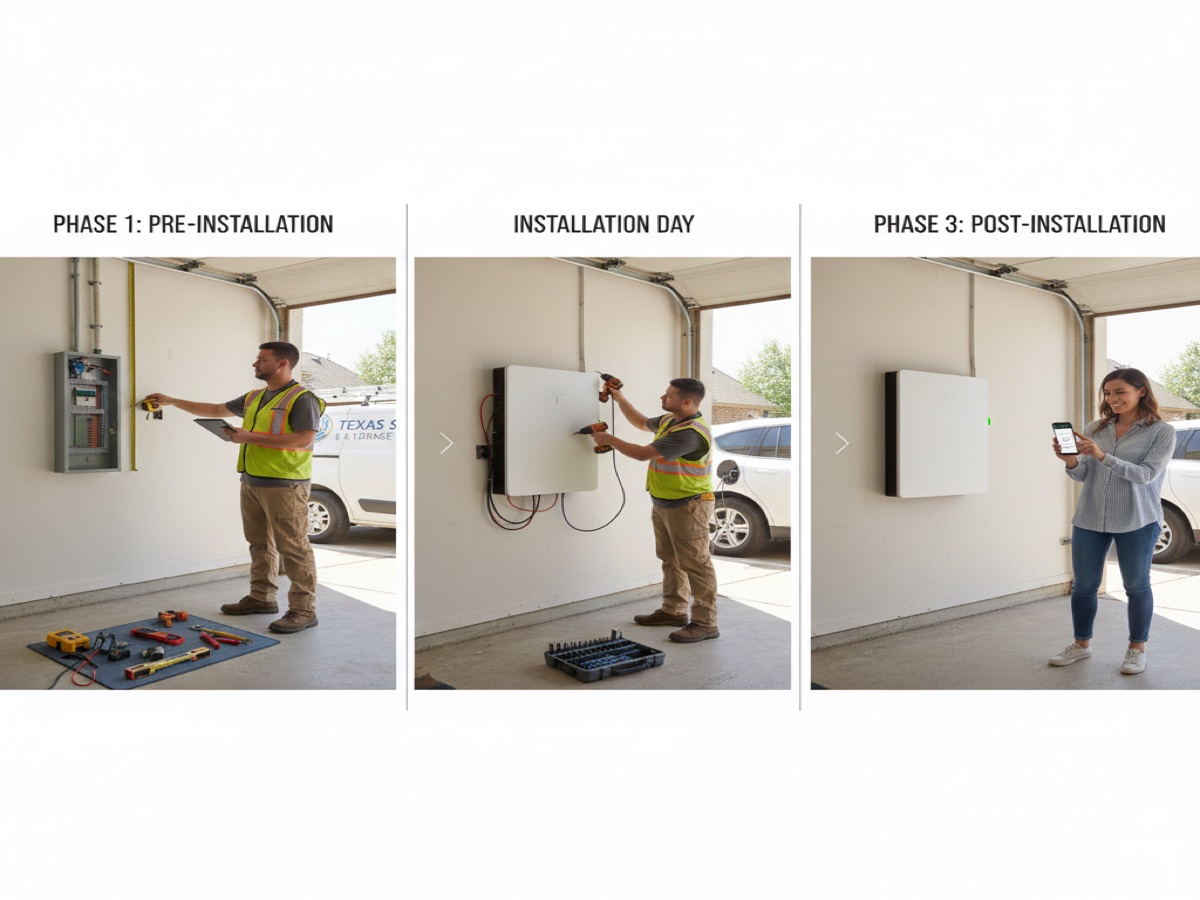
Professional battery storage installation follows three distinct phases.
Your battery installer begins with a comprehensive site evaluation:
Most installations require panel upgrades for older homes. Hybrid inverters convert the DC power from batteries to AC power for your home, simplifying the solar system integration.
Professional installation typically takes 4-8 hours for standard setups, or 1-3 days for complex retrofits:
| Phase | Duration | Activities |
|---|---|---|
| Site Preparation | 1-2 hours | Area cleaning, equipment staging |
| Mounting | 1-2 hours | Wall or floor mounting with secure brackets |
| Electrical Wiring | 2-3 hours | Panel connection, inverter integration |
| Testing | 1-2 hours | Charging/discharging verification |
Technicians secure the battery (typically 250+ pounds), connect it to your electrical panel, wire the inverter, and integrate with solar panels if present.
After installation, your system undergoes:
Total Timeline: 4-8 weeks from initial quote to fully operational system.
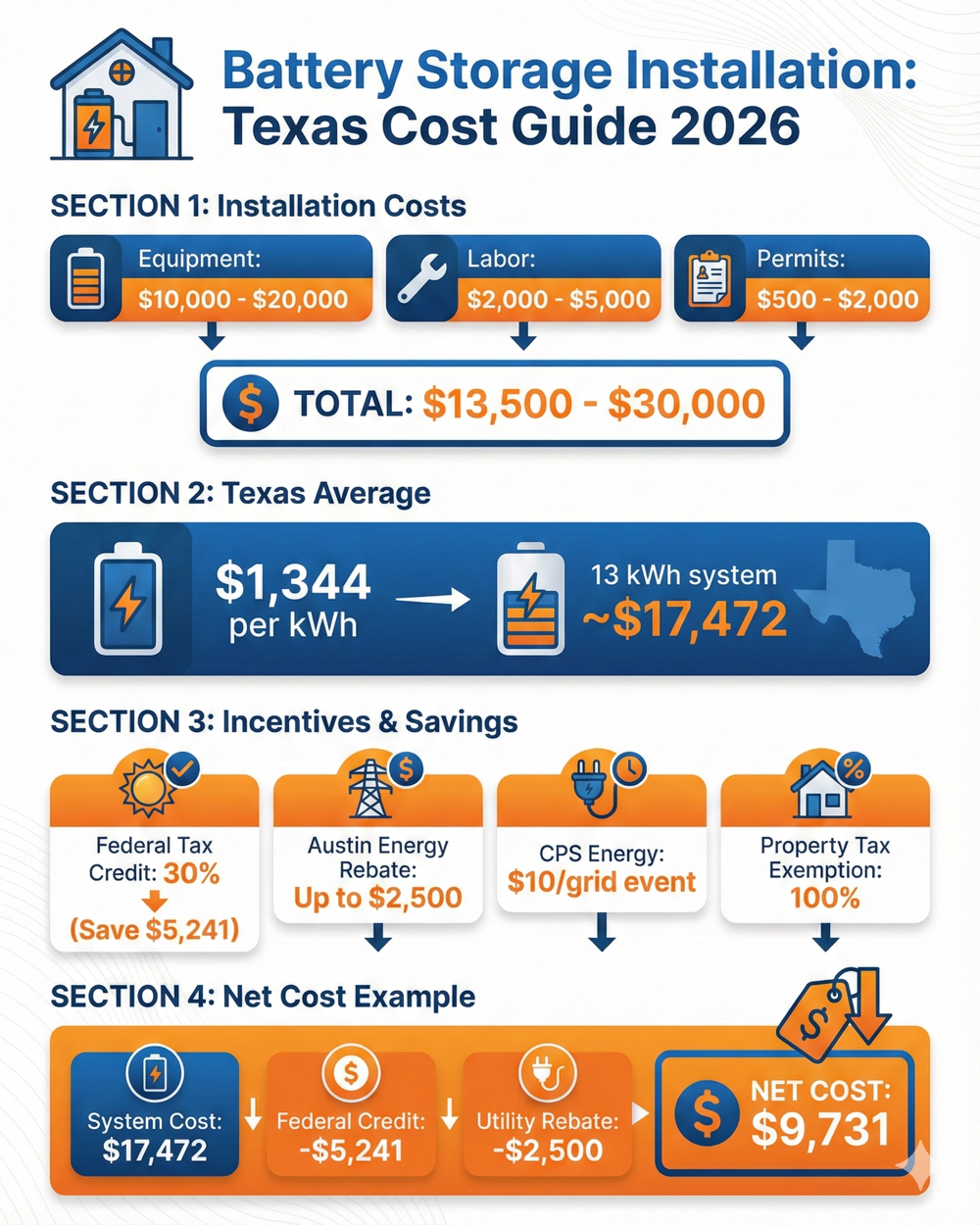
According to EnergySage December 2025 data, Texas homeowners pay an average of $1,344 per kWh for battery storage installation.
| Component | Cost Range | Notes |
|---|---|---|
| Equipment | $10,000-$20,000 | For 10-15 kWh systems |
| Labor | $2,000-$5,000 | 20-30% of total cost |
| Permits/Inspections | $500-$2,000 | Varies by municipality |
| Panel Upgrades | $1,000-$3,000 | If needed for older homes |
| Total Installed | $13,500-$30,000 | Before incentives |
For a typical 13 kWh system, expect approximately $17,472 before incentives. Systems installed by the end of 2025 could subtract the 30% federal tax credit, which brought that to roughly $12,230.
Electricity costs during peak demand can reach $0.15-0.25 per kWh in Texas. Battery storage enables time-of-use optimization, helping you save money by using stored energy during expensive peak hours.
The federal tax credit is not available for battery systems placed in service after December 31, 2025.
The Residential Clean Energy Credit provided 30% back on total installed costs for systems placed in service by December 31, 2025:
Example for a 2025 installation: $15,000 installed system = $4,500 federal tax credit = $10,500 net cost
| Utility | Program | Incentive | Requirements |
|---|---|---|---|
| Austin Energy | Battery Rebate | Up to $2,500 | Solar PV pairing, education course |
| CPS Energy | Battery Rewards | $10/grid event | Grid stabilization participation |
| Reliant | Octo GridBoost | $40/month + export credits | Battery enrollment in VPP |
Texas offers 100% property tax exemption on added home value from solar energy and battery storage systems. According to the Texas Comptroller, your home's increased value from the installation won't raise your property taxes.
Note on Net Metering: Texas has no statewide net metering in its deregulated ERCOT market. However, retail electricity providers offer billing credits for exported energy, and time-of-use optimization maximizes these credits. Learn more about our solar buyback program to maximize your solar investment.
For Texas homeowners, battery storage installation offers compelling value:
Grid Resilience: ERCOT projects potential shortages starting summer 2026. Backup power keeps your home running when the grid fails—whether from summer heat waves or winter storms.
Energy Independence: Store solar energy during the day and use it at night. Reduce dependence on volatile grid pricing and unpredictable outages.
Time-of-Use Savings: Charge batteries during low-rate hours and discharge during peak pricing, reducing your monthly electricity bills.
VPP Participation: Virtual Power Plant programs pay you for allowing utilities to tap your stored energy during grid emergencies. Programs like CPS Energy's Battery Rewards and Reliant's Octo GridBoost provide ongoing credits.
Environmental Impact: Pair batteries with home solar for a renewable energy source that reduces your carbon footprint while providing long term cost savings.
The complete process takes 4-8 weeks: 1-4 weeks for permitting, 4-8 hours for actual installation, and 1-2 weeks for utility interconnection approval.
Yes. Standalone batteries placed in service from 2023 through 2025 qualified for the 30% federal tax credit, which is not available for newer installations. You can charge from the grid during off-peak hours and use stored energy during expensive peak periods.
For essential appliances backup (refrigerator, lights, HVAC), 10-15 kWh typically suffices. Whole-home backup requires 20+ kWh. Your installer will analyze your energy consumption to recommend the right size.
Most lithium ion battery systems last 10-15 years with proper maintenance. Warranties typically guarantee 70-80% capacity retention over the warranty period.
Yes. Building permits and utility interconnection approval are required in most Texas municipalities. Professional installers handle all permitting as part of their service.
Battery storage installation transforms how Texas homeowners manage energy. With costs averaging $1,344/kWh, it's worth pricing a system against your outage risk and buyback rate.
Texas-specific advantages make the case even stronger: utility rebate programs, 100% property tax exemptions, and the reality of an increasingly strained ERCOT grid. Whether you're pairing batteries with solar power systems or installing standalone storage for backup, professional installation ensures your system performs when you need it most.
Ready to explore battery storage installation for your Texas home? Get your free energy quote and start your journey toward energy independence.
Last updated: January 2026












Copyright © 2026 VIPEnergyService.com. All rights reserved | PUCT# 10117