Audience: Texas households shopping electricity plans (Ambit Brand).
A no-deposit light company in Texas is a retail electric provider (REP) that starts service without a refundable security deposit or a hard credit check. Texas gives you four legal doors into service, and which one fits depends on your credit, your age, your household situation, and how quickly you need the power on. This pillar walks all four, with the actual PUCT rules, the real rate ranges as of September 2026, and the trade-offs each door hides.
Key takeaways
- Texas offers four legal ways to skip a residential electricity deposit as of 2026: qualify on credit, use a Public Utility Commission of Texas (PUCT) waiver under Rule 25.478, present a letter of credit or a letter of guarantee, or enroll in a prepaid pay-as-you-go plan under PUCT Rule 25.498.
- Standard postpaid deposits typically run $100 to $400 in Texas, per Electric Choice (data as of 2026), while a soft-check no-deposit plan usually runs 10 to 16 cents per kWh and a prepaid plan usually runs 12 to 20 cents per kWh as of September 2026.
- PUCT Substantive Rule 25.478 waives the deposit for customers who are 65 or older with no recent past-due balance, customers with a 12-month letter of credit, and certified victims of family violence.
- Prepaid service under PUCT Rule 25.498 opens with a connection balance of up to $75 and can activate the same business day on any home with a smart meter, of which ERCOT reports more than 8 million are deployed statewide.
- Payless Power, a widely cited no-deposit prepaid REP, was listed at 18.49 cents per kWh on a 6-month prepaid plan as of September 8, 2026, per TexasElectricityRatings, roughly 3 to 4 cents above the state average residential rate of 15.41 cents per kWh reported by the U.S. Energy Information Administration for Q2 2026.
What is a "light company" in Texas, and why do most of them ask for a deposit?
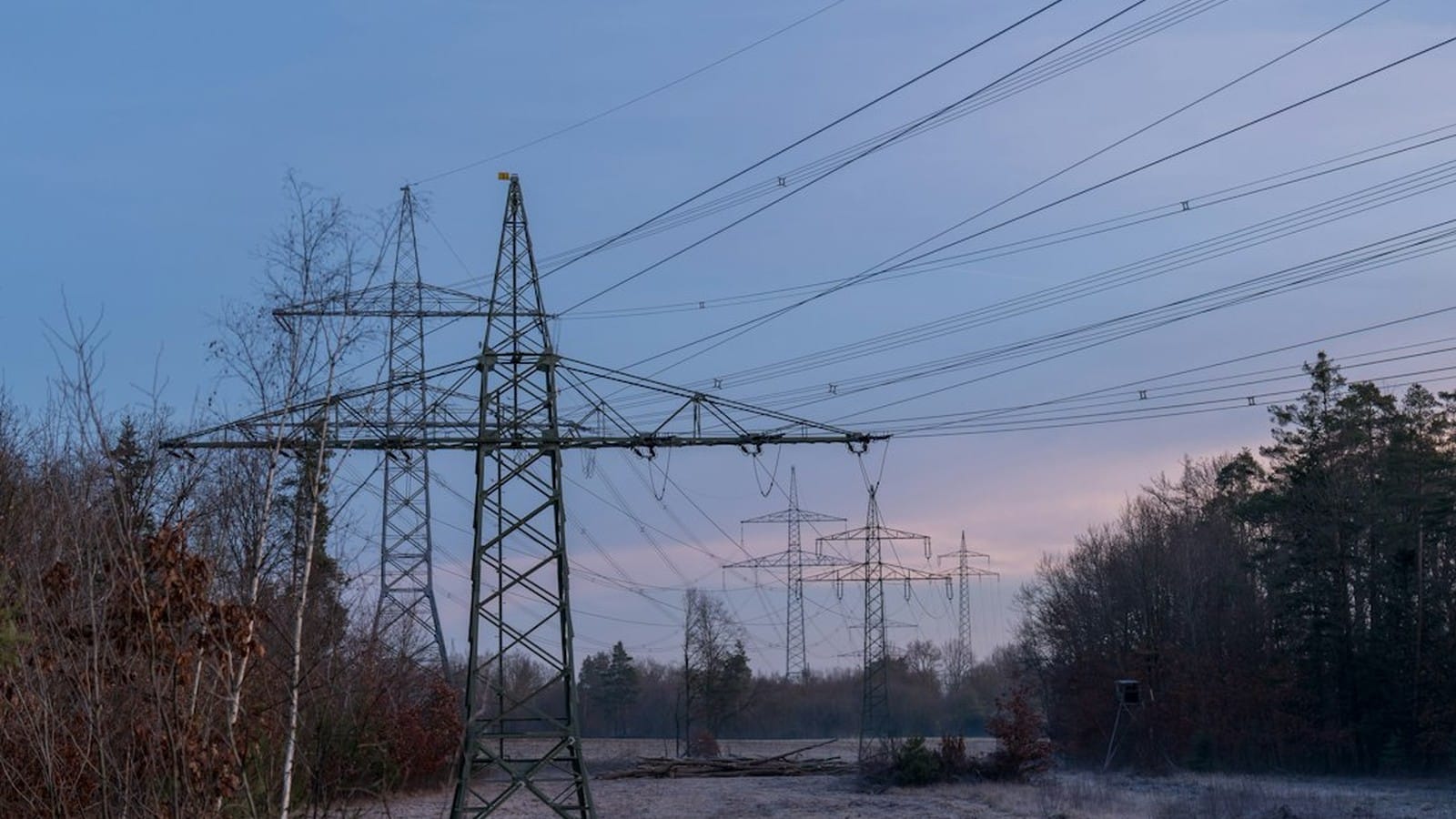
A "light company" in Texas is simply the everyday name for a retail electric provider, or REP, the company you buy your electricity from since Texas deregulated most of its market in 2002 under Senate Bill 7. It is not the utility that owns the poles and wires. That is your transmission and distribution utility, or TDU, and there are four large ones: Oncor in North Texas, CenterPoint Energy in the Houston area, AEP Texas across South and West Texas, and Texas-New Mexico Power in scattered pockets. Your light company handles billing, plan design, and enrollment. Your TDU handles the pole, the meter, and the wires to your house.
Deposits exist because REPs carry the credit risk on your unpaid usage. Under PUCT Substantive Rule 25.478, a REP may require a refundable deposit from a residential applicant who does not pass its credit screen, and the deposit is capped at the greater of one-fifth of the estimated annual billing or the sum of the estimated billing for the two highest consecutive months. In practice, Electric Choice puts typical Texas residential deposits at $100 to $400 as of 2026. Deposits earn interest, are refunded after 12 consecutive months of on-time payment or on account closure, and cannot be used to prevent enrollment when a valid waiver applies.
Deposits are also a scale problem. Texas has more than 100 REPs competing for retail customers, and ERCOT reports that over 8 million advanced smart meters are now deployed and served through the Smart Meter Texas platform. Every one of those meters can be enrolled remotely, which is why the light company you sign up with can start service in hours instead of days, once your qualifying door is chosen.
Which Texas light companies offer no-deposit service in 2026?
No single provider owns the no-deposit category. The right way to shop is by door (below), not by brand, because the same REP often offers a credit-qualified plan, a prepaid plan, and a waiver-eligible plan on the same rate card. That said, here are the light companies most often flagged in 2026 SERP results and consumer guides for no-deposit availability:
- Payless Power. Prepaid pay-as-you-go, no credit check, minimum initial funding around $40. TexasElectricityRatings listed Payless Power at 18.49 cents per kWh for a 6-month plan and 18.59 cents per kWh for a 12-month plan as of September 8, 2026. SaveOnEnergy.com (2026) ranks it as its top no-deposit, no-credit-check light company.
- Acacia Energy. Prepaid, no contract, no credit check, no deposit. One of the longest-running prepaid-only REPs in Texas.
- 4Change Energy. Offers no-deposit options for qualifying credit and prepaid variants. Frequently cited alongside Gexa in aggregator round-ups.
- Gexa Energy. Runs periodic no-deposit fixed-rate promotions for customers who pass a soft check.
- Discount Power. Houston-based, prepaid pay-as-you-go plans with same-day connection on smart meters.
- Pronto Power. Focus on North Texas metros with prepaid no-credit-check plans.
- Reliant, TXU, Direct Energy, Constellation. Large legacy REPs. All ask for a deposit if you fail credit, but all also honor PUCT waivers (Door 2 below) and letters of credit or guarantee (Door 3).
Ambit Energy, our own plan family, does not advertise a prepaid no-deposit product. Ambit is a postpaid REP that runs a soft credit check and, when a deposit is required, prices it within PUCT rules. If prepaid is genuinely the only door for you today, one of the specialists above is likely the better fit. If any of the four doors below fit, an Ambit fixed-rate plan is usually 3 to 8 cents per kWh cheaper than prepaid as of September 2026.
How do you qualify for no-deposit electricity without a credit check? The Four Doors framework
We use a four-door framework because "no deposit" is not one product. It is four different qualifying paths, each governed by a different rule and each carrying a different cost. Pick the door your household actually fits, then choose a plan inside it.
- Door 1: Credit soft check for customers who pass a light screen without a hard pull.
- Door 2: PUCT Rule 25.478 waiver for customers who fit one of five statutory categories.
- Door 3: Letter of credit or letter of guarantee for customers whose history is fine but is not visible on a bureau report.
- Door 4: Prepaid pay-as-you-go under PUCT Rule 25.498, for customers who want no credit involvement at all.
The rest of this guide walks each door in order, with the actual rule text, the paperwork you need, and the effective rate the door tends to produce as of September 2026.
Door 1: Qualify on credit with a soft check
Most Texas REPs run a light credit screen when you request a fixed-rate postpaid plan. If your score clears their internal threshold, the deposit is waived and no hard inquiry hits your bureau file. Thresholds vary, but soft-check no-deposit plans in Texas typically land between 10 and 16 cents per kWh in 2026, in line with the market. ChooseMyPower reported that the cheapest 1,000-kWh plan in Texas fell to 5.6 cents per kWh on August 7, 2026, from 6.3 cents a month earlier, and the median rate across six utility territories fell from 16.8 cents to 16.0 cents per kWh over the same window.
Door 1 is the cheapest door by far. If a REP tells you it has to run credit but promises no hard pull, ask directly whether the inquiry is reported to Experian, Equifax, or TransUnion. A true soft check is not.
Door 2: PUCT Rule 25.478 deposit waivers
PUCT Substantive Rule 25.478 lists five ways a residential applicant can avoid a deposit without regard to credit score. All five are current as of 2026, and every REP operating in the ERCOT market is required to honor them.
- Age 65 or older with no past-due balance owed to any Texas REP within the last two years. Photo ID with date of birth is usually enough. Randy Chapman, a retired legal-aid attorney and former executive director of the Texas Legal Services Center, told Public Health Watch on August 27, 2026, that people relied on the low bills the old System Benefit Fund produced and many were not prepared for the rate shock that followed. The age-65 waiver is one of the few tools that meaningfully protects that group.
- Letter of credit from a prior REP or utility showing 12 consecutive months of on-time payment. The letter has to name you, list the account, and confirm no more than one late payment inside the 12-month window.
- Certified victim of family violence under Texas Family Code Section 71.004. A completed PUCT-approved family violence certification letter, signed by an authorized agency, waives the deposit and also unlocks the confidential-customer protections in PUCT Rule 25.44.
- Medically indigent with documentation from a caseworker or licensed medical professional.
- Existing customer in good standing who has paid every bill on time for 12 months and is moving inside the same REP's service area.
Door 2 typically produces the same rate as Door 1. There is no waiver premium. A properly documented waiver moves you into the same postpaid rate class as a customer who cleared credit. The waiver rules are the primary way the PUCT protects customers who cannot clear a standard credit screen.
Door 3: Letter of credit or letter of guarantee
Door 3 is what Texans call the credit-invisible door. If you are new to the country, recently 18, or living with family and never held utilities in your own name, a soft check will not find you. Two paperwork options unlock service anyway.
- Letter of credit. A written statement from your prior utility (electric, gas, or water) confirming 12 months of good payment. This is the same document listed under Rule 25.478 for the age-neutral waiver, and it works for renters moving from out of state as well.
- Letter of guarantee. A signed guarantee from a Texas resident with satisfactory credit or an established customer record with the same REP, agreeing to pay the account if you default. The guarantor takes on the risk that you would otherwise cover with a deposit.
Not every REP publicizes Door 3, so you may need to call and ask. It is the fastest door for a newcomer to Texas who has no U.S. credit file at all.
Door 4: Prepaid pay-as-you-go under PUCT Rule 25.498
PUCT Rule 25.498 governs prepaid electric service in Texas. It requires no credit check, no deposit, and no long-term contract. In return, you fund an account balance in advance, use kWh against that balance, and the REP disconnects service (with required notice) if the balance falls below a specified threshold.
The mechanics that matter:
- Initial connection balance. Up to $75 under Rule 25.498. In practice, most prepaid REPs ask for $30 to $75 to open service.
- Same-day activation. If your address already has an advanced smart meter, and most do under ERCOT's 8-million-plus deployment, the REP can send a remote connect command and put power on within a few hours, provided you enroll before the daily cutoff (usually 3 p.m. to 6:30 p.m. Central).
- Balance notifications. Daily texts, emails, or app notifications with your remaining balance and estimated days of power.
- Disconnection threshold. Rule 25.498 permits disconnection once your balance falls to a low threshold (commonly $10), after the required advance notice.
- Rate. Prepaid plans generally price 20 to 30 percent higher per kWh than a competitive 12-month fixed-rate postpaid plan as of September 2026. That premium is the trade for skipping credit and the deposit.
Ed Hirs, energy economist and energy fellow at the University of Houston, explained the underlying market to Houston Public Media on May 24, 2024, describing Texas retail pricing as a system where generators earn most of their revenue during tight periods, which is why reserve capacity and short-notice service cost more. The prepaid premium reflects the same logic on the retail side: the REP absorbs settlement risk with no deposit, and that risk gets priced back into every kWh.
What does a no-deposit plan actually cost compared to a standard plan?
Here is a compact rate map (as of September 2026) so you can see the doors side by side.
| Door |
How you qualify |
Typical residential rate |
Deposit |
Speed to activate |
| Door 1: Credit soft check |
Pass a soft credit screen |
10 to 16 cents per kWh |
Waived |
1 to 2 business days |
| Door 2: PUCT Rule 25.478 waiver |
Age 65+, letter of credit, family violence certification, medical indigence, or good-payment history |
10 to 16 cents per kWh |
Waived |
1 to 2 business days |
| Door 3: Letter of credit or guarantee |
12-month good-payment letter from prior utility, or a Texas guarantor |
10 to 16 cents per kWh |
Waived |
1 to 3 business days |
| Door 4: Prepaid Rule 25.498 |
No credit, no deposit, no contract |
12 to 20 cents per kWh |
$0 (fund $30 to $75 balance) |
Same business day |
Anchoring benchmarks for the 2026 market: the U.S. Energy Information Administration reported Texas residential electricity at roughly 15.41 cents per kWh in Q2 2026, Electric Choice put the Texas 2026 average at 16.1 cents per kWh (up from 13.9 cents in 2023), and TexasElectricityRatings reported that TDU delivery charges on an average residential bill rose 44 percent between 2016 and 2026. That last number matters for prepaid customers, because TDU delivery charges are usually rolled into the prepaid per-kWh rate rather than broken out.
Are there special no-deposit light companies for seniors?
Age 65 is one of the five PUCT Rule 25.478 waiver categories, so any REP in the ERCOT market has to honor a valid senior application, so long as you have not carried a past-due balance in the last two years. There is no dedicated senior light company, and you should be careful of ads that suggest otherwise. What does exist:
- The Rule 25.478 age-65 waiver itself. Ask for it by name. It is the fastest path.
- LIHEAP-funded bill assistance through the Texas Comprehensive Energy Assistance Program (CEAP), administered county by county. CEAP does not waive deposits, but it can cover them.
- Provider-specific senior discounts. Some REPs run senior-marketed fixed rates in select markets. These are marketing labels, not a separate legal category.
Texas ended LITE-UP Texas, the statewide low-income discount, in 2016. Anything you see labeled LITE-UP in 2026 is out of date.
Are there "second-chance" light companies for bad credit?
Yes, and most of them are Door 4 (prepaid) providers. The consumer phrase second-chance light company almost always refers to a prepaid REP that accepts customers without a credit check and without a deposit. Payless Power, Acacia Energy, and Discount Power are the most-cited names in 2026 SERP results. A smaller group of postpaid REPs (Door 1) will approve customers with subprime credit if the applicant accepts a slightly higher fixed rate rather than a deposit, but this is negotiated case by case and is not a standard product.
If you carry an unpaid balance with a Texas REP, note that Rule 25.478 lets a new REP see that balance through the PUCT consumer database and may require it be resolved before service starts. A second-chance prepaid plan is often the only door open in that situation.
What are the trade-offs and hidden costs of a prepaid no-deposit plan?
Prepaid is not free money. In exchange for no deposit and no credit check, you accept four real costs.
- Rate premium. Expect to pay 20 to 30 percent more per kWh than a competitive 12-month fixed rate. On a 1,000-kWh month, that difference alone is roughly $30 to $50 as of September 2026.
- Disconnection sensitivity. Rule 25.498 allows disconnection at a low balance (often $10) after required notice. Miss a top-up during a heat wave and you can lose power the same day you meant to pay.
- Top-up fees and transaction minimums. Many prepaid REPs charge a small fee on each payment and set a $10 or $25 minimum. Fees are legal but must be disclosed on the Electricity Facts Label (EFL).
- No fixed rate lock. Prepaid rates can move month to month. A postpaid customer on a 12-month fixed plan is protected from a summer spike, and a prepaid customer usually is not.
The Texas Attorney General Consumer Protection Division accepts complaints against REPs that misrepresent any of these terms, including hidden fees or improper disconnection.
How do you actually enroll in a no-deposit light company today?
Five steps get most Texans on power within a business day.
- Confirm your smart meter. Nearly every Oncor, CenterPoint, AEP Texas, and TNMP address already has an advanced meter, but a rural address may not. If Smart Meter Texas cannot find your ESI ID, call the TDU first.
- Pick your door. Run through the Four Doors above and choose the one that fits your situation. Most households find Door 1 or Door 2 fastest and cheapest.
- Gather documents. Photo ID and Social Security number for Doors 1 through 3, plus a letter of credit or guarantee for Door 3. For Door 2, gather the waiver-specific paperwork (age proof, family violence certification, medical letter). For Door 4, no ID beyond a name and address is usually required.
- Enroll before the daily cutoff. Cutoffs for same-day activation typically fall between 3 p.m. and 6:30 p.m. Central, Monday through Saturday. Sunday enrollments usually activate Monday.
- Fund the first balance (Door 4) or confirm the plan (Doors 1 to 3). You will receive a welcome email, an Electricity Facts Label, and your Terms of Service.
Ambit Energy and no-deposit options
At Ambit Energy, we run a soft credit check on new residential applicants and waive the deposit for customers who clear it. If you fall into a PUCT Rule 25.478 category (age 65 with no past-due balance, letter of credit, family violence certification, medical indigence, or 12 months of on-time payment history with us), you qualify for Door 2 with Ambit at no additional charge. Door 3 letters of credit and letters of guarantee are also accepted. Call the number on your quote to submit the paperwork.
Ambit does not currently offer a prepaid Door 4 product. If prepaid is genuinely the only fit today, one of the specialist REPs above will serve you better in the short term, and we would rather see you connected than sitting without power. When your situation changes and you can move to a fixed-rate postpaid plan, come back to Ambit and we will help you make the switch.
Frequently asked questions
What is the cheapest no-deposit light company in Texas?
The cheapest no-deposit plan is almost always a Door 1 (soft-check) or Door 2 (waiver) fixed-rate plan, not a prepaid Door 4 plan. In the August 2026 market, ChooseMyPower reported the cheapest 1,000-kWh plan in Texas at 5.6 cents per kWh, and the median across six TDU territories at 16.0 cents per kWh. Prepaid plans (Payless Power at 18.49 cents per kWh on a 6-month plan as of September 8, 2026) sit above both.
Can I get a no-deposit light company with bad credit?
Yes. The two doors that do not depend on credit are Door 2 (PUCT Rule 25.478 waivers, if you fit one of the five categories) and Door 4 (prepaid under Rule 25.498). Door 3 (letter of credit or letter of guarantee) also works if a Texas resident with good credit will co-sign or if you have 12 months of good payment history with any utility.
How long until my electricity deposit is refunded?
Under PUCT Rule 25.478, a residential deposit must be refunded (with interest) after 12 consecutive months of on-time payment, or when the account is closed and any final balance is settled. Ask your REP for the specific refund date at the 12-month mark, since it does not always happen automatically.
Does a hard credit check hurt my score to sign up for electricity?
A hard inquiry can lower your FICO score by a few points for a few months. A soft inquiry does not. Most Texas REPs that advertise no-deposit fixed-rate plans run soft inquiries. Ask directly whether the check will appear on your Experian, Equifax, or TransUnion file. If the answer is no, it is a soft check.
Can I get no-deposit electricity same day in Texas?
Yes, typically through Door 4 prepaid. If your address has a smart meter and you enroll before the daily cutoff, most prepaid REPs can activate service the same business day. Doors 1 through 3 usually take one to two business days because the REP has to complete the credit or waiver step.
What if I still owe another Texas REP for a past bill?
The PUCT maintains a consumer database that new REPs can check. Under Rule 25.478, an unpaid final balance from a prior REP can be used as grounds to require a deposit or, in some cases, to require the balance be resolved before service starts. A prepaid Door 4 plan is usually the only immediate option in that situation. Once the prior balance is paid, Doors 1 through 3 open back up.
Bottom line: which door is right for you?
- If your credit is fair to good, start with Door 1 (soft-check fixed-rate plans). It produces the lowest per-kWh rate as of September 2026.
- If you are 65 or older, have a letter of credit, are a certified victim of family violence, are medically indigent, or have 12 months of good payment history with a REP, use Door 2. Same low rate, no credit involvement.
- If you are new to Texas or credit-invisible, use Door 3. A letter of credit from your prior utility or a Texas guarantor moves you into the same fixed-rate class.
- If none of the above apply, or you need power today with no paperwork, use Door 4 prepaid. It is the most expensive door per kWh, but it is the fastest and it does not touch your credit.
Ready to see which door fits your ZIP code? Compare Ambit Energy plans and start service today.
Plan details and rates subject to change. Energy facts label available at enrollment. Subject to credit approval. Visit ambitenergy.com for full plan terms.