
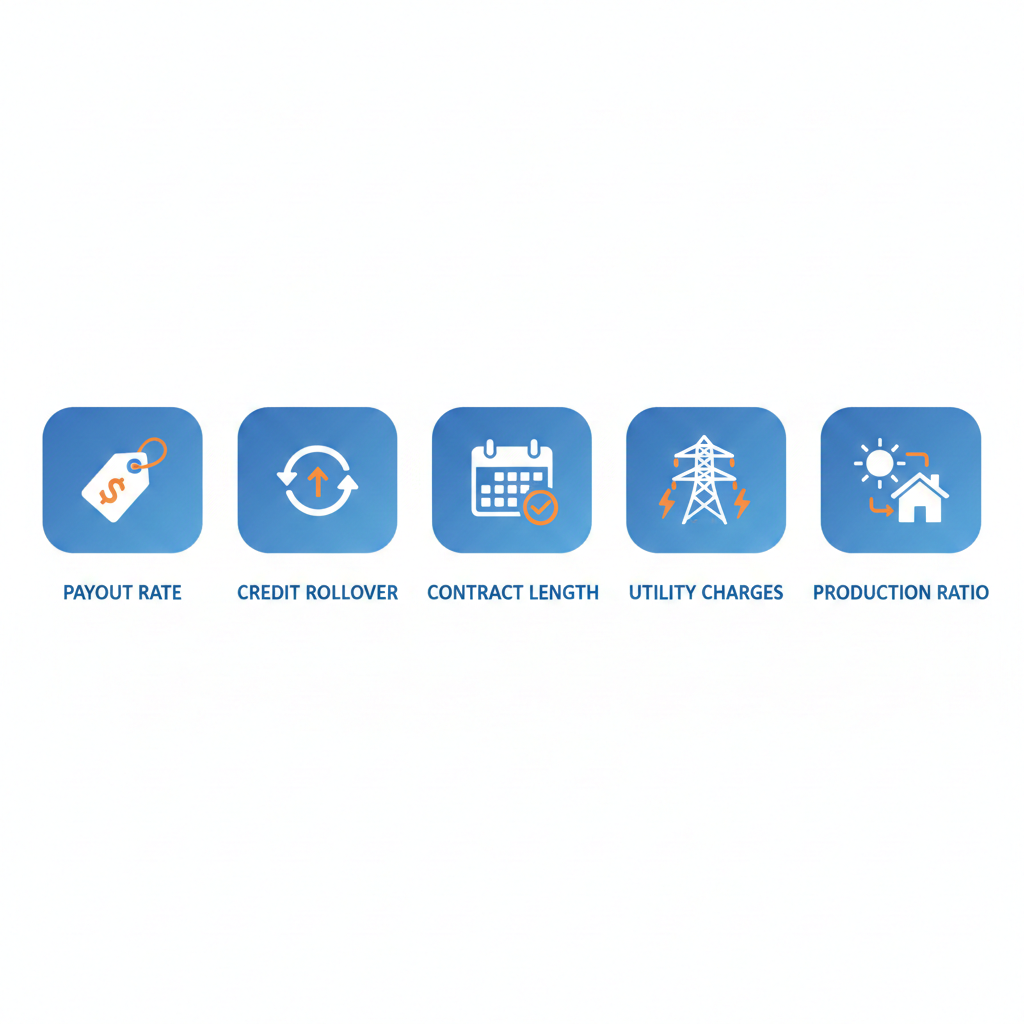
The best solar buyback plan in Texas depends on five factors: rate type (fixed vs. variable vs. 1:1), credit structure, contract length, TDU delivery charges, and your production-to-consumption ratio. As of 2026, Ambit Energy offers the highest fixed buyback rate at 12.5 cents per kWh in true 1:1 net metering, while real-time wholesale plans from Octopus and Chariot offer variable rates that peak higher but average lower.
With over a dozen Retail Electric Providers offering solar buyback electricity plans in Texas, finding the best solar buyback plans in Texas feels overwhelming. Our solar buyback plans in Texas complete guide compares 12 providers side by side — but which plan is best for your home depends on five critical factors that most comparison sites skip entirely. Without understanding these factors, you could lose hundreds of dollars per year on the wrong plan. This guide teaches you the comparison methodology so you can evaluate any best solar buyback plans in Texas and choose confidently.
Every list of best solar buyback plans Texas focuses on rates. Rates matter, but they are only one piece. Here are the five factors that actually determine your net savings from solar buyback electricity plans:
1. Rate Type: Fixed vs. Variable vs. 1:1 Net Metering
Fixed credit plans pay a set rate (typically 3 to 5 cents per kWh) for your exports. Real-time wholesale plans pay ERCOT market prices that ranged from negative 2 cents to 45 cents per kWh during 2025, according to ERCOT. True 1:1 plans credit exports at the same rate you pay for consumption — Ambit Energy offers 1:1 at 12.5 cents per kWh.
2. Credit Structure: Rollover, Caps, and Cash-Out
Some plans cap credits at $1,000 (TXU), while others roll over indefinitely. Octopus sends a check when monthly credits exceed $50. Ambit credits roll over monthly with no cap. Your solar energy credits in Texas strategy depends on which structure matches your export volume.
3. Contract Length and Early Termination Fees
Most solar buyback electricity plans run 12 to 24 months with ETFs ranging $150 to $295. The average Texas home pays $2.16 per watt for a solar system totaling approximately $30,887 before incentives, according to EnergySage. With the federal 30 percent tax credit expired since December 31, 2025, payback periods have extended to 8 to 11 years — making long-term plan economics critical.
4. TDU Delivery Charges
Here is the factor most comparison sites ignore: TDU delivery charges are not offset by solar credits. These add 4.5 to 6.3 cents per kWh plus monthly base charges on every kilowatt-hour you consume from the grid, regardless of how much you export. Oncor charges 5.58 cents per kWh, while CenterPoint charges 6.00 cents, according to Quick Electricity.
5. Your Production-to-Consumption Ratio
A home that exports 20 percent of its solar generation needs a different plan than one that exports 50 percent. Texas homes average 1,096 kWh per month in electricity consumption, according to the EIA. Compare that to your solar production to determine which solar electricity plans deliver the most value.
The Electricity Facts Label is a PUCT-mandated disclosure document every Texas REP must publish. For the best solar buyback plans Texas homeowners need to evaluate, here are the three lines that matter:
First, look for "Does the REP purchase excess distributed renewable generation?" — this confirms the plan offers solar buyback. Second, check the average price at 1,000 kWh — this is your all-in consumption cost including TDU charges. Third, find the export or buyback rate in the terms of service.
What is hidden in the EFL matters just as much. Minimum usage charges penalize solar homes that offset most consumption — some plans add fees when usage drops below 1,000 kWh. Tiered pricing means your actual rate changes at different consumption levels. And credit expiration terms buried in the Terms of Service document can wipe out accumulated credits when you switch providers. Always pull EFLs for your top three best solar buyback plans in Texas choices and compare them at your actual monthly usage, not the 1,000 kWh benchmark.
Houston-area homeowners face a unique challenge when searching for the best solar buyback plans in Texas. CenterPoint Energy's TDU delivery rate of 6.001 cents per kWh — among the highest in Texas — plus a $4.90 monthly base charge means that on 1,000 kWh of grid consumption, TDU charges alone total approximately $65, according to Quick Electricity. This includes a surcharge from CenterPoint's $2.9 billion grid resiliency program approved after Hurricane Beryl.
Because solar credits do not offset delivery charges, Houston solar buyback plans homeowners choose should prioritize low consumption rates over high buyback rates. For large overproducers, battery storage may capture more value than exporting to the grid at a discount.

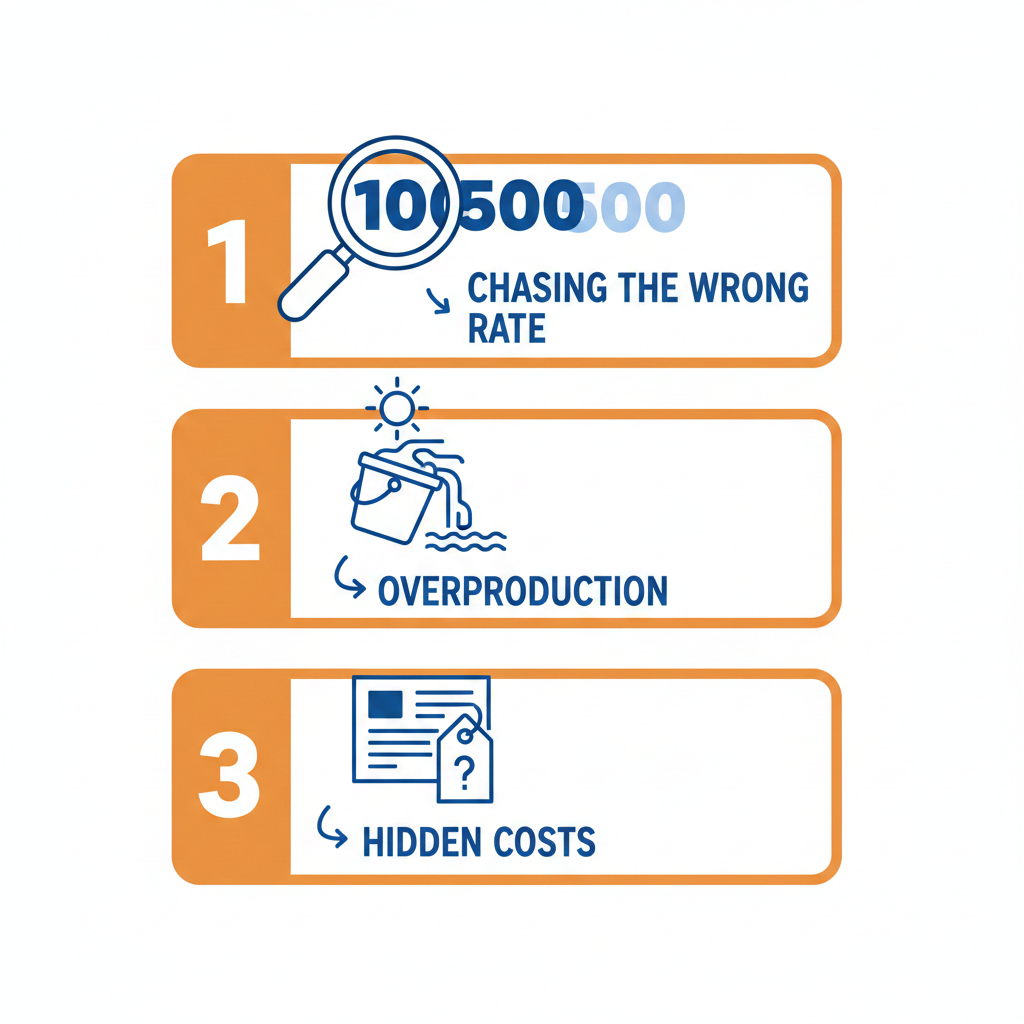
Mistake 1: Chasing the Highest Buyback Rate
A plan paying 12 cents per kWh for exports but charging 18 cents for consumption costs more than a 1:1 plan at 12.5 cents for both. Compare the net cost — buyback rate minus consumption rate — not just the buyback number alone. Solar surpassed coal in Texas grid generation share during summer 2025, accounting for 15.2 percent of demand at a record 29.8 GW peak, according to the Dallas Federal Reserve. More solar on the grid means buyback rates face continued downward pressure.
Mistake 2: Assuming 1:1 Is Always Best
True 1:1 net metering is excellent when your production roughly matches consumption. But if you significantly overproduce — exporting 40 percent or more of your generation — those credits may accumulate faster than you use them. In that scenario, a plan with a lower rate but cash-out option (like Octopus or David Energy) could deliver more actual value. Check the cost of battery storage per kWh to see if self-consumption beats export credits entirely.
Mistake 3: Ignoring TDU Pass-Through Costs
Two plans with identical energy rates can have dramatically different total costs depending on your TDU territory. TDU rates change twice per year — in March and September — and the trend has been consistently upward across all six Texas TDUs, according to Quick Electricity. Always calculate your total bill including delivery charges, not just the energy rate shown in plan advertisements.
Among the best solar buyback plans Texas homeowners can choose, Ambit Energy's structure is built for simplicity. At 12.5 cents per kWh in true 1:1 buyback, every kWh you export earns the same credit as what you pay for grid consumption — no complex tiers, no minimum usage requirements, and no hidden fee structures. Credits roll over monthly with no cap.
While most Texas REPs have shifted to paying 30 to 70 percent of the retail rate for exports, Ambit maintains full-value crediting. For moderate producers whose solar generation roughly matches their consumption, this straightforward structure consistently delivers the highest net savings. Compare Ambit Energy rates and plans to see current options for your area.
Find the Best Solar Buyback Plan for Your Home
Compare Ambit Energy's 1:1 solar buyback with your current plan and see how much more you could save.
As of 2026, Ambit Energy offers the highest fixed solar buyback rate at 12.5 cents per kWh in true 1:1 net metering. Real-time wholesale plans from providers like Chariot and Octopus can briefly exceed 25 cents per kWh during summer peak demand, but these rates are highly variable and can drop below 2 cents during mild weather months. For consistent value, 1:1 fixed-rate plans deliver the most predictable returns.
No. Solar buyback credits only offset the energy supply portion of your bill. TDU delivery charges — ranging from 4.5 to 6.3 cents per kWh depending on your territory — still apply on every kilowatt-hour you consume from the grid. This is why evaluating total bill cost matters more than comparing buyback rates alone.
Pull the Electricity Facts Label for your top three plan choices and compare the average price at your actual monthly usage level, not the 1,000 kWh benchmark. Factor in TDU delivery charges for your service territory, check credit rollover policies, and calculate your production-to-consumption ratio using 12 months of Smart Meter Texas data to determine how much you actually export.
Sources: ERCOT, EnergySage, Quick Electricity, EIA, Dallas Federal Reserve. Rates and plan details subject to change. Always verify current rates on the provider's website and review the Electricity Facts Label before enrolling.















Copyright © 2026 VIPEnergyService.com. All rights reserved | PUCT# 10117