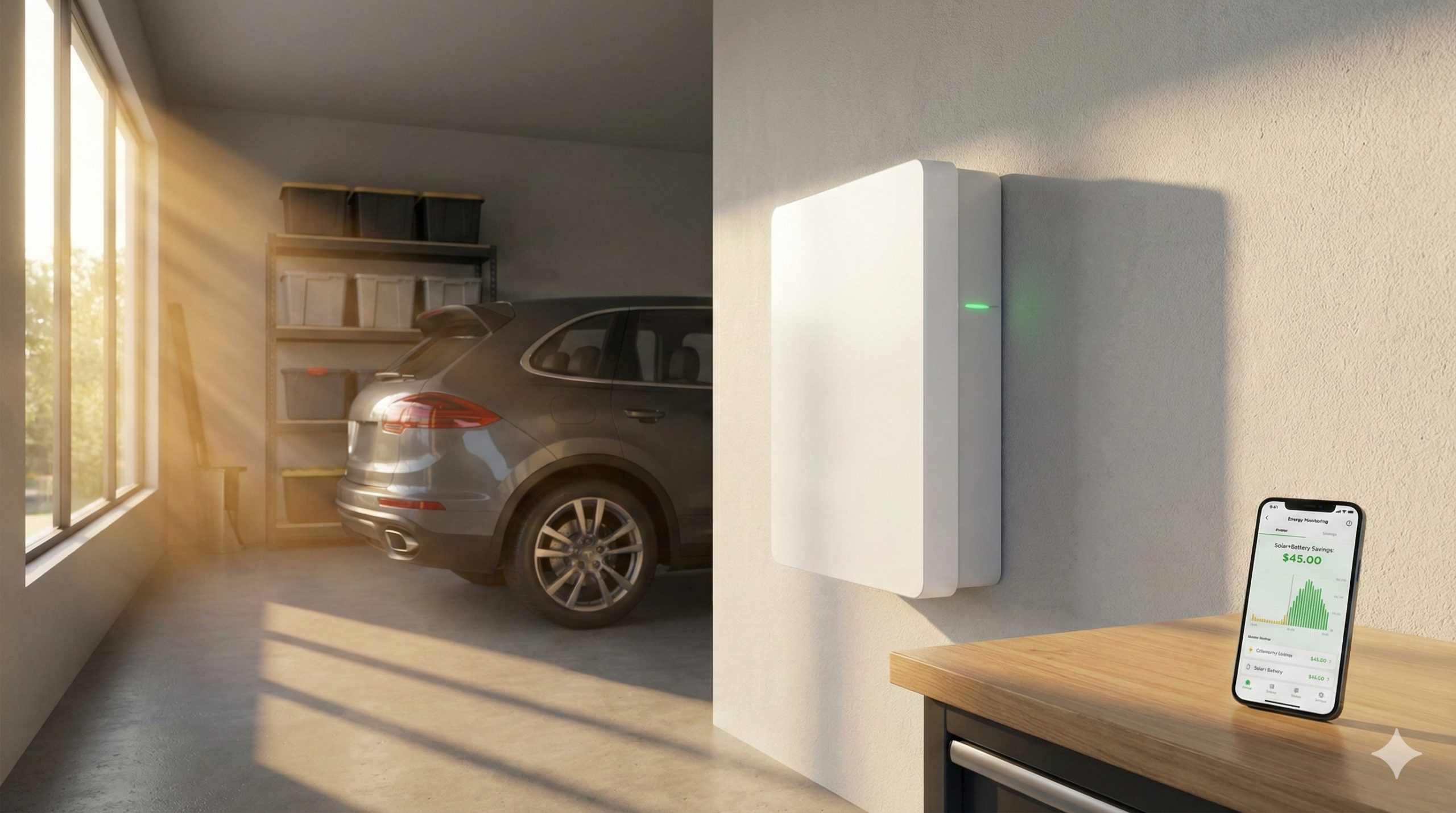
Update, October 2026: According to the IRS, the 30% federal Residential Clean Energy Credit is not available for systems placed in service after December 31, 2025. Mentions of the credit below apply only to systems installed by then. Texas utility rebates and the Texas property tax exemption may still lower your cost.
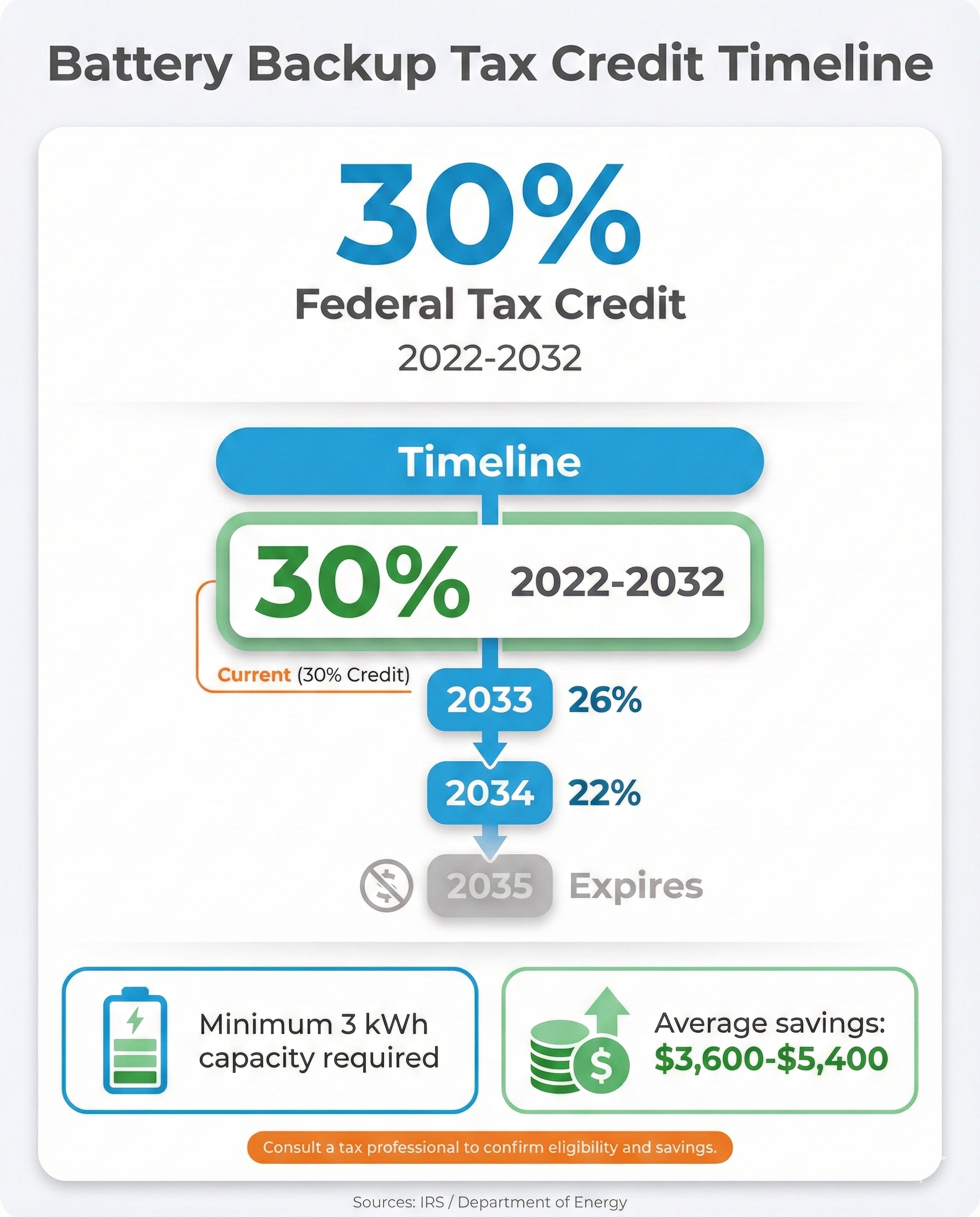
Texas homeowners can lower the costs of home energy storage systems by taking advantage of federal tax credits and state incentive programs. One of the main incentives is called the 30% federal Residential Clean Energy Credit, which is also known as a battery backup rebate. In order to qualify for this incentive, the battery system must have a storage capacity of 3 kilowatt-hours (kWh) or more. In other words, Texas homeowners receive a federal tax credit for 30% of the installation cost of the battery. This means that Texans receive $3,600-$5,400 in tax credits for an installation that costs $12,000-$18,000.
This is a comprehensive guide to everything related to battery backup rebates, including how to claim federal tax credits, understand state programs, and collect your incentives in 2026.
A battery backup rebate refers to a type of financial incentive, such as a tax credit or direct cash rebate, that helps defray the cost of installing home energy storage systems. These rebates stem from federal, state, and utility programs that promote the adoption of residential clean energy.
The biggest battery backup rebate comes from IRS, Residential Clean Energy Credit, which gives a tax credit/rebate for energy storage systems. The IRS states that the tax rebate/credit covers 30% of your total installed battery system cost through 2032. Your battery must have a minimum capacity of 3 kilowatt-hours (kWh) to qualify.
It is also important to note the distinction between a “rebate” and a “tax credit.” A rebate is given as cash back at the point of purchase, while a tax credit is an amount subtracted from the total federal income tax owed. The tax credit for battery backups is actually a tax credit, which means that you will claim it when you file taxes at the end of the year.
The battery backup tax rebates are due to the Residential Clean Energy Credit, which is under IRS Section 25D. This credit allows a tax deduction to homeowners of 30% of their total battery installation costs from their federal tax liability.
The ENERGY STAR battery storage guide states that installation labor, battery unit, and associated components are considered eligible expenses. The average cost of a residential battery storage system is $12,000-$18,000 before tax credits/ rebates and so your battery backup rebate will range from $3,600 to $5,400.
Understanding the timeline of federal tax credits is very valuable:
The amount of tax benefits that you can get with the Residential Clean Energy Credit can be carried over without an expiration date. This means that if there is a benefit that you did not use this year, you will be able to file for it in the upcoming years.
For you to be eligible for this battery backup rebate, you must have installed a battery in your primary or secondary residence in the United States. This also means that rental properties will not fit the criteria. If you want to get the most out of your investment, then this means you would have to learn how to size your battery system correctly.
Even though there are federal tax credits that have been established for battery backup rebates, some states and utilities give additional credits that can be combined with the federal ones.
California is at the forefront with its Self-Generation Incentive Program (SGIP), which is managed by the California Public Utilities Commission. EnergySage reports that the SGIP allocates $150 per kWh for general market customers and $1,100 to households in equity categories or high-fire threat districts.
Aside from California, there are other state battery backup rebate programs that are noteworthy:
The Solar Energy Industries Association says around 30% of new residential solar installations now include battery storage. This number is driven largely by these stacking incentives.
When considering if solar batteries are worth it for your home, be sure to consider federal as well as state or utility battery backup rebates that may apply.
Getting your federal battery backup rebate involves specific documentation and IRS forms. Doing it the right way will get you the full tax credit.
Step 1: Collect the Necessary Documents
For your battery installation, keep these records:
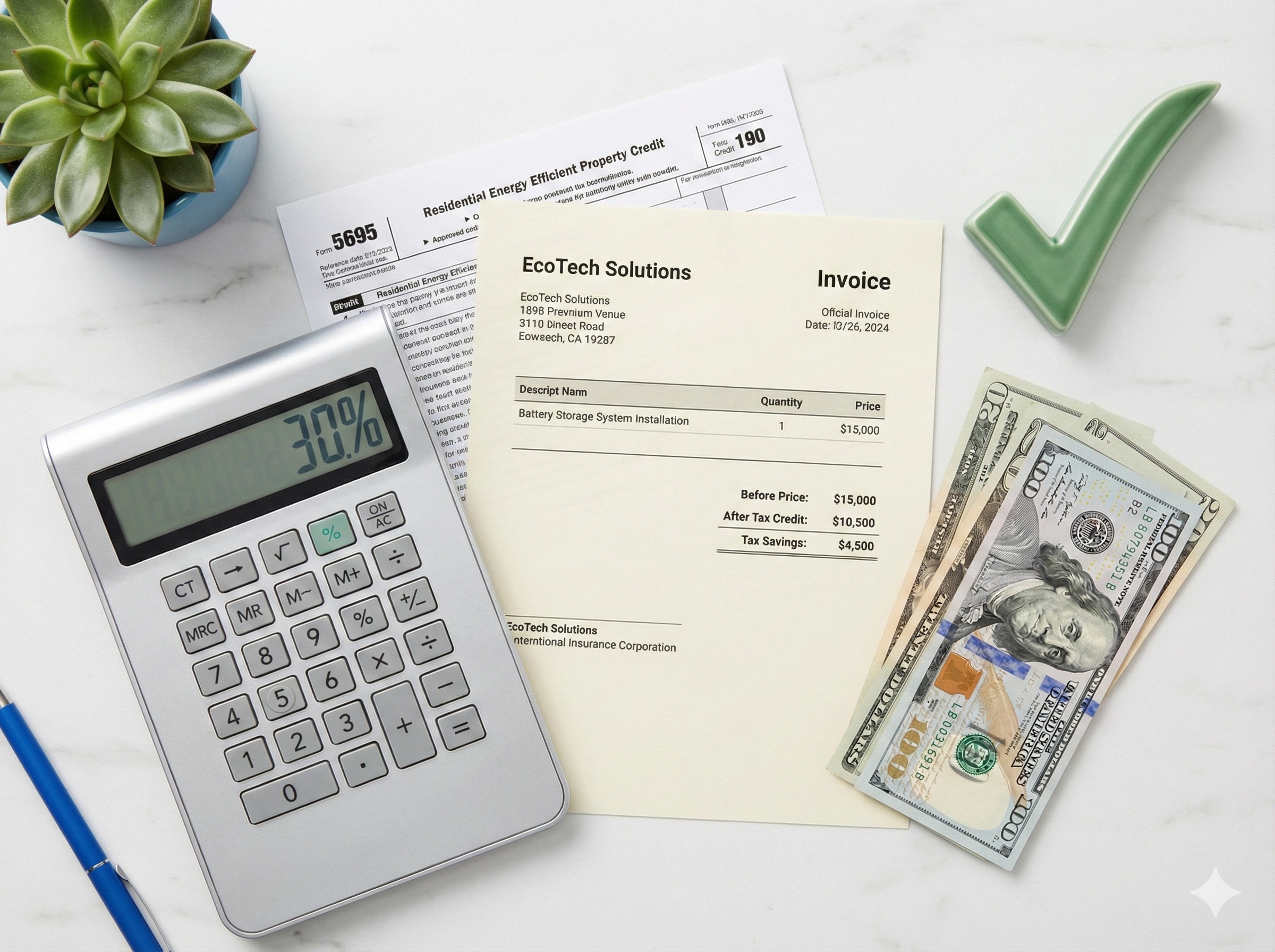
Step 2: Fill out IRS Form 5695
You will use IRS Form 5695 to claim the Residential Clean Energy Credit. You will need to:
Form 5695 must be submitted with your annual federal income tax return. The credit is applicable in the tax year the installation was finished, regardless of when payment was made for the system.
To get the most out of your overall energy investment, it’s important to understand solar and battery systems, and how they work together. A tax expert will help you correctly claim the battery backup rebate and will determine if you qualify for any other energy-related tax credits.
Texas homeowners are not eligible for a state battery backup rebate. Therefore, your only incentive for installing battery storage is the federal 30% tax credit.
That said, a few Texas electric cooperatives have local battery backup rebate programs:

The value of having a battery backup system in Texas was clearly proven during Winter Storm Uri in February 2021 when ERCOT data indicated more than 12 million customers were without power. When coupled with Texas solar buyback programs, home battery systems offer both backup power reliability and continued savings on energy costs.
By 2024, the residential battery market in the U.S. will have 1.3 GW of installed capacity and a 57% increase in battery adoption is predicted annually. Texas is one of the leading states in adopting this technology, largely due to the solar incentives and concerns about the reliability of the grid.
Wall mounted battery systems are a potential option for integrating power storage into your home in Texas.
Your energy needs and potential incentives will help determine your eligibility for battery backup rebates in 2026. Here’s how to start your journey toward energy independence.
Understand Your Energy Consumption
To best inform you on suitable battery capacity for your home, you should review your energy bills from the last year to understand your usage.
Compare Several Quotes
To determine which system sizes, types of batteries, and total costs are best, obtain quotes from a few qualified installers. Quotes must list equipment and labor costs separately for tax credit purposes.
Make Sure Your Incentives Are Verified
Check eligibility for your area’s utility-specific battery backup rebate programs as well as the federal 30% tax credit.
Consider 2026 and the Years After
The 30% federal credit will be available until 2032, and the costs for solar and batteries are expected to decrease in the coming years. Your energy needs and budget will determine the optimal solar battery for your home.
At Ambit Energy VIP Energy Service, we help Texas homeowners navigate energy storage decisions with personalized guidance. Our energy consultants can match you with the right combination of battery storage and electricity plans to maximize your savings.
Ready to explore your battery backup rebate options? Get your free energy quote and discover how battery storage combined with our competitive solar buyback rate can help you achieve true energy independence.















Copyright © 2026 VIPEnergyService.com. All rights reserved | PUCT# 10117