To start an electric bill dispute in Texas, contact your retail electric provider first and put the dispute in writing. Your provider has 21 days to investigate and report back. If that does not fix it, file a complaint with the Public Utility Commission of Texas (PUCT). The one big change: starting October 21, 2026, the PUCT no longer offers a formal complaint against your provider.
On October 1, 2026, the PUCT filed its order adopting amendments to 16 TAC §25.485 in Project No. 59557, the "Streamlined Complaint Process" rulemaking. The Texas Register acknowledgment filed the same day lists October 21, 2026 as the effective date. Most of the protections Texas households rely on during a billing dispute did not move at all. This guide separates what changed from what did not, then walks through the dispute one step at a time.
Key takeaways
- On October 1, 2026, the PUCT adopted a rule in Project No. 59557, effective October 21, 2026, that ends formal, docketed complaints against retail electric providers. One investigation by the PUCT Office of Consumer Assistance becomes the only PUCT complaint path.
- Your provider still has 21 days to investigate your complaint, 10 business days to finish a supervisory review, and 15 days to answer a complaint the PUCT forwards to it. None of those deadlines is new.
- Your provider cannot disconnect you over disputed charges until it or the PUCT decides whether they are accurate and tells you. While a PUCT complaint is pending, it also cannot send the disputed amount to collections or report it to a credit bureau. You still owe the undisputed portion.
- Billing was the largest complaint category against Texas retail electric providers from April 1 to September 30, 2026: 1,107 of 2,254 complaints, or 49.1 percent, according to PUCT complaint statistics.
- If you still disagree after the PUCT closes your complaint, the next stop is a Texas court. Justice courts hear civil claims of up to $20,000.
What changed in the PUCT complaint process?
The PUCT eliminated the formal complaint for customers of retail electric providers. Starting October 21, 2026, a complaint to the PUCT about your provider gets one investigation by the Office of Consumer Assistance (OCA). It ends with a closing letter. If the OCA finds a possible rule violation, the complaint goes to the Division of Compliance and Enforcement (DICE).
Before this change, the PUCT process had two tracks. You filed an informal complaint first. If you were not satisfied, the old rule let you "file a formal complaint with the commission within two years of the date on which the commission closes the informal complaint." That formal complaint was a docketed legal case, according to the rule text EnergyChoiceMatters reported in April 2026. That second track is what is gone. The amended rule also drops the word "informal" from the process.
Three practical changes follow from the adoption order:
- One PUCT investigation instead of two tracks. The OCA, formerly called the Consumer Protection Division, investigates your complaint. It also tries to help you and your provider reach a resolution.
- The closing letter ends the PUCT process. The letter summarizes the complaint, any remedies taken, and whether the documents suggest a rule violation. PUCT staff wrote in the recommended order, "Critically, this is not a formal legal decision made by the commission." The letter does exhaust your administrative remedies, which lets you go to court sooner.
- Enforcement can act for everyone affected. DICE can find the same billing error across a provider's whole customer base. It can also seek escalating penalties for repeat violations.
PUCT staff described the old formal track as "protracted and resource intensive contested cases, often involving claims requesting relief the commission is incapable of granting." The adoption order's stated goal: "the commission expects the amended process to produce significantly better results for consumers and to be significantly more user friendly."
Not everyone agreed. The Office of Public Utility Counsel (OPUC) is the state agency that represents residential and small commercial utility customers. In June 19, 2026 comments signed by Chief Executive and Public Counsel Benjamin Barkley, OPUC argued that "to the extent the PFP relies upon Senate Bill (SB) 790 as the basis for the extensive changes made to the Commission's complaint process, this interpretation should be rejected as it greatly exceeds the bill's rulemaking scope." (PFP is the proposal for publication.)
Paul Ring, who covers Texas retail electricity for EnergyChoiceMatters, summed up the outcome on October 2, 2026: "Essentially, the final rule makes a process similar to the prior informal complaint process the only PUC complaint process available to REP customers."
What stays the same when you dispute an electric bill?
Almost every protection a household uses in an electric bill dispute predates this rule and survives it. The provider deadlines, the shutoff protection for the disputed amount, and the ban on forced arbitration for residential customers all stay in place. None of them is a 2026 change, and some have been in the rule for years.
| Part of the dispute process | Before October 21, 2026 | On and after October 21, 2026 |
|---|---|---|
| Provider investigates your complaint and reports results | Within 21 days | Within 21 days (unchanged) |
| Supervisory review, if the provider offers it | Decision within 10 business days | Unchanged |
| Provider answers a complaint the PUCT forwards | Within 15 days (in rule since September 1, 2023) | Unchanged |
| Disconnection over disputed charges before the provider or PUCT decides on them | Not allowed | Not allowed (unchanged) |
| Collections or credit reporting over the disputed portion while a PUCT complaint is pending | Not allowed | Not allowed (unchanged) |
| Undisputed portion of the bill | You must pay it | You must pay it (unchanged) |
| Forced arbitration in residential terms of service | Prohibited | Prohibited (commission declined to change it) |
| Using the provider's own complaint process before the PUCT | Not required | Not required (commission declined to require it) |
| PUCT complaint path | Informal complaint, then an optional formal complaint within 2 years | One OCA investigation and a closing letter |
| After an unresolved PUCT complaint | Formal docketed case at the PUCT | DICE referral if a violation is possible, court for individual remedies |
Sources: 16 TAC §25.485, 16 TAC §25.483 and the Project No. 59557 adoption order.
One detail is worth knowing before you file. OPUC asked the commission to state that the customer's reading of the disputed amount controls, and the commission declined. Write down the exact dollar amount you dispute, and put it in every message, so there is no argument later about which portion is protected.
How do you dispute an electric bill in Texas, step by step?
The 21-10-15 Dispute Ladder is a five-step sequence for an electric bill dispute, named for the three deadlines in 16 TAC §25.485 that run the process: 21 days for your provider's investigation, 10 business days for supervisory review, and 15 days for your provider to answer the PUCT. Each rung has its own clock. You climb to the next one only when the rung below runs out or fails.

- Rung 0, diagnose before you dispute. Pull the bill, your Electricity Facts Label, and your usage history on Smart Meter Texas. Decide whether the problem is the price, the usage, or a fee, then write down the exact dollar amount you dispute.
- Rung 1, write to your provider (21 days). Call the customer service number on your bill, then follow up by email or letter so there is a dated record. Include your account number, ESI ID, billing period, disputed amount, reason, and the fix you want. Your provider must investigate and tell you the results within 21 days. Pay the undisputed portion by the due date.
- Rung 2, ask for supervisory review (10 business days). If you do not accept the answer, ask whether the provider offers supervisory review. If it does, a decision is due within 10 business days. If it does not, the provider must tell you how to complain to the PUCT.
- Rung 3, file with the PUCT (15 days). File online, by phone at 1-888-782-8477, or by mail to P.O. Box 13326, Austin, TX 78711-3326. The PUCT forwards your complaint to the provider, which has 15 days to respond. The OCA then sends you and the provider a closing letter.
- Rung 4, go to court if you still disagree. The closing letter exhausts your PUCT remedies. A Texas justice court hears civil claims of up to $20,000.
The provider-first order is what the PUCT asks for, not a legal precondition. The PUCT complaint page tells customers to contact their provider first "and allow them to investigate your complaint." The Texas REP Coalition, a group of retail electric providers, asked the commission to make that step mandatory "unless the complaint is related to a disconnection of service." The commission declined. You can go straight to the PUCT when you need to, especially if a disconnection notice is on the way.
These steps apply to every retail electric provider in the competitive market, Ambit Energy included.
How do you check whether the bill itself is wrong?
Most electric bill disputes come down to one of three things: the price charged, the kilowatt-hours billed, or a fee. Check each one against a document you can point to.

- Price. Compare the energy charge and base charge on your bill with your Electricity Facts Label, the PUCT-required disclosure for your plan. The line-by-line guide to reading a Texas electricity bill shows where each charge appears.
- Usage. Log in to Smart Meter Texas, the portal run by the state's transmission and distribution utilities. Compare the kWh on your bill with your meter's 15-minute interval data and daily reads. Smart Meter Texas keeps up to two years of that history. If your bill shows an estimated read, ask for the actual read.
- Delivery charges. TDU delivery charges pass through from your local utility and are the same on every plan in a service area. A rate change from Oncor, CenterPoint Energy, AEP Texas or TNMP can raise a bill without any billing error.
- Fees and credits. Look for late fees, a usage-based bill credit you expected but did not get, or a charge you never authorized.
For context, the average Texas home used 1,096 kWh a month in 2024, with an average monthly bill of $163.72, according to the U.S. Energy Information Administration. A bill far above your own history deserves a usage check before anything else.
Can you ask for a meter test in Texas?
Yes. Under 16 TAC §25.124, the electric utility must test your meter when you ask, ordinarily at no charge. If you ask again within four years of a prior requested test and the meter meets ANSI accuracy standards, the utility can charge its tariffed testing fee. If the meter fails, the usage data is corrected and adjusted bills follow. In the competitive market, start the request with your retail electric provider, which works with your local utility.
Can your electricity be shut off while you dispute a bill?
Not over the amount in dispute. Under 16 TAC §25.483(e)(5), a provider cannot authorize a disconnection for failure to pay disputed charges, except the amount not under dispute, until the provider or the PUCT has decided whether the charges are accurate and notified you. You still have to pay the undisputed portion. After proper notice, the provider can disconnect you for failing to pay that part.
A pending PUCT complaint adds a second layer. Under 16 TAC §25.485, while the PUCT complaint is open, your provider cannot pursue collection, disconnect service, or report delinquency to a credit agency over the disputed portion. The timing matters here. The first protection runs until your provider makes its determination and tells you. If the provider rules against you and you still disagree, file with the PUCT right away so the broader protection covers you.
What happens after you file a complaint with the PUCT?
A PUCT Consumer Assistance Specialist reviews your complaint and sends it to your provider. The provider has 15 days to respond. Either side may be asked for more information. The OCA then sends you and the provider a letter with its findings, which can recommend corrective action. The PUCT complaint page adds: "Regardless of the findings, your complaint will then be reviewed by the PUCT's Division of Enforcement and Compliance to determine if further action is warranted." That is the same division this guide calls DICE, the Division of Compliance and Enforcement.
The new rule builds a more direct pipeline. When the OCA identifies a possible violation, it refers the complaint to DICE. PUCT staff gave an example in the recommended order: one customer seeking a refund for a billing error could lead to an investigation that "might uncover dozens or hundreds of consumers that experienced that same error."
The PUCT complaint process does return money to households. In the second quarter of fiscal year 2025, December 2024 through February 2025, the PUCT reported $95,196 in refunds and bill credits for electric customers, out of $105,906 across all utility types, according to its quarterly release. The agency concluded 8,545 complaints in fiscal year 2025, according to its performance measures report.
What if you still disagree after the PUCT closes your complaint?
You go to court. After October 21, 2026, the OCA's closing letter concludes the PUCT process and exhausts your administrative remedy. You can file a civil case without first litigating a formal complaint at the commission. PUCT Chairman Thomas Gleeson filed a memo on September 30, 2026 asking the commission to clarify how exhaustion works. The adopted rule states that the OCA's closure of a complaint concludes the process and exhausts the administrative remedy, after which you may pursue remedies in court.
For most household billing disputes, that court is a Texas justice court, which hears civil cases with up to $20,000 in controversy under Texas Government Code §27.031. The $20,000 limit took effect September 1, 2020. Bring the closing letter, your bills, your written complaints, and your Smart Meter Texas data.
What are Texans complaining about most?
Billing. From April 1 to September 30, 2026, the PUCT logged 2,254 complaints against 58 retail electric providers, and 1,107 of them, 49.1 percent, were billing complaints. The table below totals the PUCT's customer complaint statistics across all providers, as published on October 6, 2026.
| Complaint category | Complaints, Apr 1 to Sep 30, 2026 | Share of total |
|---|---|---|
| Billing | 1,107 | 49.1% |
| Provision of service | 432 | 19.2% |
| Discontinuance of service | 411 | 18.2% |
| Slamming (switched without consent) | 242 | 10.7% |
| All other | 43 | 1.9% |
| Cramming (unauthorized charges) | 18 | 0.8% |
| Quality of service | 1 | under 0.1% |
| Total | 2,254 | 100% |
Shares may not sum to exactly 100 percent because of rounding. Billing complaints outnumbered the next-largest category by more than 2.5 to 1. Most billing disputes trace back to one of three documents: the Electricity Facts Label, the meter data, or a TDU charge. That is why Rung 0 of the ladder matters most.
What if your provider overbilled or underbilled you?
If you were overbilled, 16 TAC §25.480 requires your provider to correct the overbilling for the entire period. If it does not fix the error within three billing cycles, it owes you interest at the commission-set rate.
If you were underbilled, your provider generally can charge you only for underbilling billed within 180 days of the bill in which it happened. Exceptions apply for meter tampering and certain utility meter errors. When the underbilled amount is $50 or more, the provider must offer a deferred payment plan covering the same length of time as the underbilling, and it generally cannot charge interest on that amount.
Can your electricity contract force you into arbitration?
No, not as a residential customer. 16 TAC §25.485 prohibits terms of service that require residential and small commercial customers to agree to alternative dispute resolution. The Texas REP Coalition asked the commission to let customers agree to arbitration for disputes that would otherwise go to court. PUCT staff responded that these provisions "were initially adopted as important customer protections that were not noticed for amendment in this project," and the commission left them unchanged.
Does the PUCT complaint process cover every Texan?
No. These rules cover customers of retail electric providers in the competitive ERCOT market, served by Oncor, CenterPoint Energy, AEP Texas, TNMP and similar utilities. If your power comes from a city-owned utility or an electric cooperative, start with that utility directly. The PUCT keeps a "Utilities Not Regulated" page listing the providers it does not oversee. Outages and meter hardware belong to your local utility, not your retail provider, as the guide to how Texas deregulated electricity works explains.
Frequently asked questions
How long does an electric company have to respond to a complaint in Texas?
Your retail electric provider has 21 days to investigate a complaint you make directly and report the results. If the PUCT forwards a complaint, the provider has 15 days to respond. A supervisory review, where offered, must be decided within 10 business days.
Can you still file a formal complaint with the PUCT?
Not against a retail electric provider once the rule takes effect on October 21, 2026. The PUCT Office of Consumer Assistance investigation is the only PUCT path, and individual remedies beyond it go to court.
Do you have to pay your electric bill while you dispute it?
Pay the undisputed portion by the due date. Your provider cannot disconnect you over the disputed charges until it or the PUCT decides whether they are accurate and tells you. While a PUCT complaint is pending, it also cannot send the disputed amount to collections or report it to a credit bureau.
Where do you file a complaint against an electric company in Texas?
File with the PUCT through its online electricity complaint form, by phone at 1-888-782-8477 (512-936-7120 in Austin), or by mail at P.O. Box 13326, Austin, TX 78711-3326. Contact your provider first unless a disconnection is imminent.
What is the fastest way to prove a usage error?
Download your 15-minute interval data from Smart Meter Texas for the exact billing period. Compare the total kWh with the kWh on your bill. A gap between the two is the strongest single piece of evidence you can attach to a complaint.
A billing error is frustrating, but the Texas process is built around documents and deadlines. Keep every bill, every message, and your meter data, and the 21-10-15 Dispute Ladder will take you from the first phone call to a closing letter, and past it if you need to.
Plan details and rates subject to change. Rule dates, deadlines and complaint figures in this article are as of October 6, 2026, from the PUCT sources linked above.
The best time to renew an electricity contract in Texas is the fall shoulder window of September and October, and inside the 14 days before your current contract ends. That window opened this month with a jolt. On September 12, 2026, TexasPowerCost's daily tracker logged 27 plans withdrawn, 25 plans repriced, and only 2 new plans launched across the Houston, Dallas, and Austin-area markets in a single day. If your contract ends this fall, the shelf you shop from just changed.
Key takeaways
- On September 12, 2026, 27 Texas electricity plans were withdrawn, 25 were repriced, and 2 launched, according to TexasPowerCost. Across September 1 to 13, the tracker counted 56 withdrawals, 358 repricings, and 22 launches.
- Texas retail electric providers must send a residential contract expiration notice at least 30 days before the end date, and you can switch without an early termination fee starting 14 days before that date, per the Public Utility Commission of Texas.
- CenterPoint's per-kWh delivery charge rose 28.3 percent on September 1, 2026, from 4.999 to 6.4130 cents, according to Rhythm Energy. Delivery charges are identical on every plan, so they change your bill, not which plan wins.
- 75 percent of Texas shoppers picked contracts of 12 months or less in 2025, per ElectricityPlans, and the 12- versus 24-month spread is usually under 1 cent per kWh as of September 21, 2026, per TexasPowerCost.
- Choose Texas Power's marketplace data shows August as the cheapest month to buy, at 16.67 cents per kWh as of July 21, 2026 including delivery, and January the most expensive at 17.47 cents.
What happened to Texas electricity plans on September 12, 2026?
On September 12, 2026, retail electric providers withdrew 27 plans, repriced 25, and launched 2 across the Houston, Dallas, and Austin-area markets, according to the TexasPowerCost plan-changes tracker. Counts are by distinct plan, so one plan listed in three utility territories counts once. That was the largest single-day withdrawal count of the month to that point by a wide margin, and it included True Power's 36-month True Value plan in Dallas and Houston.
Here is how the first two weeks of September played out, day by day, per the same tracker:
| Date (2026) | New plans | Withdrawn | Repriced |
|---|---|---|---|
| September 1 | 0 | 4 | 33 |
| September 2 | 7 | 8 | 75 |
| September 3 | 9 | 4 | 66 |
| September 4 | 0 | 2 | 47 |
| September 5 | 0 | 0 | 30 |
| September 6 to 8 | 0 | 0 | 0 |
| September 9 | 2 | 4 | 21 |
| September 10 | 2 | 2 | 39 |
| September 11 | 0 | 1 | 22 |
| September 12 | 2 | 27 | 25 |
| September 13 | 0 | 4 | 0 |
Add it up and September 1 through 13 produced 56 withdrawals, 358 repricings, and 22 launches. Repricing was the daily norm. Withdrawal came in one burst. My read: providers repriced their way through the first week after the September 1 delivery-rate refresh, then cleared the plans they no longer wanted to sell into fall on September 12.
Why do retail providers pull plans in bulk in September?
Retail electric providers withdraw plans in bulk in September because the regulated delivery rates reset on September 1 and the summer's wholesale costs settle at the same time, so every Electricity Facts Label has to be re-issued anyway. A withdrawal removes an offer for new shoppers. An expiration is the end of your own contract term. The two are different events, and only the second one touches your bill.
Brady Hartung of Rhythm Energy summarized the calendar in the provider's September 1, 2026 delivery-charge update: "The five TDUs in Texas get approval from the Public Utilities Commission of Texas (PUCT) to change their rates throughout each year, but the largest changes are typically March 1 and September 1."
Summer 2026 gave providers plenty to reprice around. ERCOT recorded an all-time peak demand of 91,134 MW on July 22, 2026, and a weekend record of 90,411 MW on August 23, according to ERCOT's 2026 peak demand records. Those records stay unofficial until final settlement, and that settlement is what providers are pricing into their fall shelf right now.
When is the best time to renew an electricity contract in Texas?
The best time to renew a Texas electricity contract is a shoulder-season month, when statewide demand is moderate and providers are not pricing in peak risk. Rhythm Energy names April, May, September, and October as the months with lower demand and more stable rates. Energy Texas gives the same advice: renew in fall or early spring. The 60 to 90 days before your end date is the practical shopping window, and the final 14 days is the fee-free switching window.
The marketplace data adds a twist. Choose Texas Power's analysis of two years of purchases found that August was the cheapest month to buy, at an average of 16.67 cents per kWh as of July 21, 2026 including delivery, while January was the most expensive at 17.47 cents. At the 1,000 kWh tier, August was cheapest and January dearest. At 500 kWh, December was cheapest and July the most expensive. Author Dominique Coury offered one explanation: shoppers signing up in August "may be more eager to select the cheapest plan available to offset their recent high summer electricity bills."
So which is it, fall or August? Both numbers are real, and they measure different things. Shoulder-season advice describes the offer prices providers post. The Choose Texas Power figure describes what shoppers actually chose. The gap between the two is the discipline of the buyer, not the season.
The U.S. Energy Information Administration measures a third thing: the average price every Texan paid. Texas residential electricity averaged 15.94 cents per kWh in June 2026 (as of August 26, 2026, the latest EIA release), up from 15.26 cents in June 2025, per EIA's Electric Power Monthly. That average blends every contract still running from last year with every new one signed this summer. Timing your renewal controls the offer price you lock, not the statewide average. If you are choosing between plan types before you time the renewal, my guide to fixed-rate versus variable-rate electricity in Texas covers the tradeoff.
Renewing for a business instead? The small business electricity renewal guide covers when to renew and what to compare on a business plan.
The 30-14-0 Renewal Clock: what to do at each mark
The 30-14-0 Renewal Clock is a three-mark checklist built on the Public Utility Commission of Texas rules for residential contract expiration. Day 30 is when your notice must arrive. Day 14 is when you can switch for free. Day 0 is when your contract ends and the default rate takes over.

The PUCT's consumer guidance states the rule directly: "Retail electric providers are required to notify residential customers at least 30 days before a contract expires. The residential customer can switch without incurring an early termination charge if the switch is no earlier than 14 days before the contract expiration date provided in the notice. If the customer takes no action in response to the notice, the REP will serve the customer on a month-to-month product."
- Day 30 (notice arrives): Pull the renewal offer and your current Electricity Facts Label side by side. Note the end date on the notice. That date, not your last bill date, drives everything that follows.
- Day 30 to day 15: Shop new-customer offers in your ZIP code at your real usage. Compare the total bill at 1,000 kWh, not the headline rate. My walkthrough on reading the six numbers on a Texas Electricity Facts Label shows where the price cliffs hide.
- Day 14 (fee-free window opens): Enroll in the winner. A switch requested inside this window carries no early termination fee under the PUCT rule.
- Day 0 (contract ends): If you did nothing, you are now on the month-to-month product. Treat that as a deadline you missed, not a plan you chose.
What happens if your Texas electricity contract expires and you do nothing?
If your contract expires and you take no action, your provider moves you to a month-to-month product whose price can change every billing cycle. That is the default the PUCT rule describes. Month-to-month products carry no early termination fee, so leaving one costs nothing, but staying on one through a cold snap or a hot spell means paying whatever that month's price turns out to be.
Rebecca Bridges, chief marketing officer at ElectricityPlans and a deregulated-market veteran since 2001, put the risk in calendar terms in the site's 2025 shopping review: "Timing on your renewal matters most. For example, a 6-month contract can give you a low price from December to May. But you'll be shopping again at the start of the summer season, which makes it unlikely you'll retain that low rate."
A holdover rate works the same way in reverse. It floats you into whatever season comes next. A deliberate month-to-month plan, like the one I describe in how Lone Star Flex works, is a bridge you choose. A holdover is a bridge you fell onto.
Your plan got withdrawn from Power to Choose. Now what?
A withdrawal removes the offer for new shoppers. It does not change your existing contract, your rate, or your end date. Your Electricity Facts Label still governs until day 0. What changes is the shelf you will shop from when the 30-day notice lands.
Three moves cover it:
- Find your end date on your last bill or your Terms of Service, then set a reminder 45 days ahead of it.
- When the renewal offer arrives, compare it to current new-customer offers in your ZIP code at your usage. TexasPowerCost's plan-types guide notes that the spread between 12- and 24-month plans is usually under 1 cent per kWh as of September 21, 2026, so the term decision is smaller than the plan decision.
- Read the renewal EFL for usage credits, minimum-usage fees, and base charges. My piece on the five plan tricks that cost Texas households $480 a year lists the ones that show up most.
How much did delivery charges change on September 1, 2026?
Delivery charges changed on September 1, 2026 in every Texas utility territory, and the biggest move was CenterPoint's 28.3 percent per-kWh increase. Delivery charges are regulated by the PUCT, pass through on every plan from every provider, and show up as a separate line on your bill. Here are the per-kWh rates as of September 1, 2026, as reported by Rhythm Energy and Energy Texas:

| Utility (TDU) | Prior rate (cents per kWh) | Rate as of Sept 1, 2026 | Change |
|---|---|---|---|
| CenterPoint (Houston) | 4.999 | 6.4130 | +28.3% |
| Oncor (Dallas-Fort Worth) | 5.618 | 6.0295 | +7.3% |
| TNMP | 7.274 | 7.4022 | +1.8% |
| AEP Texas Central | 6.059 | 5.7554 | -5.0% |
| AEP Texas North | 5.926 | 5.6407 | -4.8% |
One note on timing: BKV Energy's delivery-charge history lists Oncor's 6.0295-cent rate as effective August 1, 2026, and AEP Texas Central's decrease as effective August 28, so those two rows reflect the fall level rather than a September 1 step. I covered the Oncor change in why your Oncor delivery charge went down and your bill still went up.
For a Houston home using 1,000 kWh a month, CenterPoint's monthly delivery cost moves from about $54.71 to $69.03, according to BKV Energy's September 2026 analysis. Graham Lumley, BKV's growth product manager, put the impact at about 24 to 27 percent more per month depending on a home's usage. Since every provider passes the same delivery rate through, this raises every renewal offer in Houston by the same amount. It never changes which plan is cheapest.
Should you lock in 12 or 24 months this fall?
Lock in the term that ends in a shoulder month, and let the spread between terms decide the rest. Three quarters of Texas residential shoppers picked a contract of 12 months or less in 2025, and 61 percent chose exactly 12 months, up from 53 percent in 2024, according to ElectricityPlans' 2025 annual review. Long-term contracts saved only 3 to 5 percent, which was not enough to persuade most buyers. The site attributes the shift to the ERCOT wholesale market flipping into contango in August 2025, where near-term power is cheaper than power years out.
The end-date math matters more than the term label. A 12-month plan signed in October ends next October, a shoulder month. A 24-month plan signed in October does the same two years out. A 6-month plan signed now ends in March, which is fine. An 8-month plan lands in May, right at the door of summer, which is the trap Bridges described. If your contract ends in June, July, or August, use the term length to move the next end date, not to chase a fraction of a cent.
Whether the price itself is worth locking is a forward-curve question, and I worked through it in should Texans lock in a fixed rate this August. The short version: with 12- and 24-month spreads under a cent as of September 21, 2026, a fixed rate that ends in the right month beats a slightly lower rate that ends in the wrong one.
Which Ambit plan fits a fall 2026 renewal?
Three Ambit Energy plans map to the three situations a fall renewal creates. Lone Star Classic is the fixed-rate plan for locking a shoulder-season price for a full term. Lone Star Flex is the month-to-month plan with no contract, which works as a deliberate bridge when your current contract ends in a bad month and you want to reach October or March before you commit. Free and Clear Nights fits homes that can shift laundry, dishwashing, and cooling into the free-nights hours. I compared all of them, with rates, terms, and fees, in every Ambit Energy plan compared for 2026, and you can check current pricing in your ZIP code on the Texas electricity rates and plans page.
Rates and plan availability are as of September 22, 2026, vary by service area, and are subject to credit approval. The Electricity Facts Label for each plan has the full pricing and terms.
Frequently asked questions
How far in advance does a Texas electricity provider have to notify me before my contract expires?
At least 30 days before the expiration date for residential customers, per the Public Utility Commission of Texas. The notice must state the end date, and that date starts the 14-day fee-free switching window.
Can I switch electricity plans before my contract ends without paying a fee?
Yes, if the switch takes place no earlier than 14 days before the expiration date on your notice. Switching earlier than that can trigger the early termination fee listed on your Electricity Facts Label.
Does a plan being withdrawn from Power to Choose cancel my contract?
No. A withdrawal removes the offer for new customers. Your contract, rate, and end date stay exactly as written in your Terms of Service and Electricity Facts Label.
What is the cheapest month to sign up for electricity in Texas?
Choose Texas Power's marketplace data from the past two years shows August as the cheapest purchase month, at 16.67 cents per kWh as of July 21, 2026 including delivery, and January the most expensive at 17.47 cents. Provider guidance points to the shoulder months of April, May, September, and October for the most stable offer prices.
Is a 24-month plan worth it in fall 2026?
Only if it ends in a shoulder month and the rate is competitive. The spread between 12- and 24-month plans is usually under 1 cent per kWh as of September 21, 2026, per TexasPowerCost, and ElectricityPlans found long-term contracts saved just 3 to 5 percent in 2025.

Updated October 27, 2026. This article first said the August 1, 2026 changes raised a 1,000 kWh Oncor bill by $2.73. That figure added Rider IS on top of a delivery rate that already included it. The August 1 change was actually a net decrease of about $0.90. The article now covers the larger October 4, 2026 increase.
If you live in Oncor's service area, which covers Dallas-Fort Worth and much of North and Central Texas, your delivery charges went up on October 4, 2026. For bills rendered on or after that date, Oncor's residential delivery charge rose from 6.0295 cents to 6.8673 cents per kWh (as of October 4, 2026). At 1,000 kWh a month, that's about $8.38 more, taking the delivery side of a typical bill to $72.73.
These are temporary rates. The Public Utility Commission of Texas hasn't issued a final order in the case yet, so the amounts can still be reconciled up or down. Here's what changed, why, how to check it on your own bill, and what you can and can't do about it.
Key takeaways
- On October 4, 2026, Oncor's residential delivery charge rose by 0.8378 cents per kWh, from 6.0295 to 6.8673 cents (as of October 4, 2026). That's about $8.38 a month at 1,000 kWh.
- Two riders moved. The Distribution Cost Recovery Factor (DCRF) went from zero to 0.5755 cents per kWh, and the Transmission Cost Recovery Factor (TCRF) rose from 1.9046 to 2.1669 cents per kWh.
- The new rates come from Oncor's Unified Tracker Mechanism case, PUCT Docket 59249. As of October 27, 2026 there's no final order, so they're temporary and subject to reconciliation.
- The fixed charges didn't change. You still pay $1.48 for the customer charge and $2.58 for metering, $4.06 a month combined.
- Every Retail Electric Provider in Oncor's territory bills the same delivery charges. Switching providers won't avoid them. What you can shop is the energy charge and the plan structure.
Did Oncor increase delivery charges in October 2026?
Yes. Oncor put new rates into effect on a temporary basis for bills rendered on and after October 4, 2026, under its August 20, 2026 notice to the PUCT in Docket 59249. Here's what the change does to the Oncor delivery portion of a residential bill.
| Monthly usage | August 1 to October 3, 2026 | From October 4, 2026 | Change |
|---|---|---|---|
| 500 kWh | $34.21 | $38.40 | +$4.19 |
| 1,000 kWh | $64.36 | $72.73 | +$8.38 |
| 2,000 kWh | $124.65 | $141.41 | +$16.76 |
Delivery charges only, as of October 4, 2026. The earlier column matches the PUCT's monthly Oncor rate report as of October 1, 2026. Rows can be a cent off when you subtract them yourself because each figure is rounded to the cent. Your energy charge from your provider is separate.
If your bill hasn't moved yet, check its date. The new rates apply to bills rendered on or after October 4, 2026, so a bill dated before then still shows the old rate. Your first bill at the new rate is the first one dated October 4 or later.
The Three-Line Reconciliation: how to check the math on your own bill
You only need three numbers to see exactly what the October 4 change costs your household.
- Oncor's residential delivery charge before October 4: 6.0295 cents ($0.060295) per kWh.
- Oncor's residential delivery charge from October 4: 6.8673 cents ($0.068673) per kWh.
- Your monthly kilowatt-hour usage, from the meter read on your bill.
Multiply your usage by both rates and subtract. Or take the shortcut: multiply your usage by 0.8378 cents. At 1,000 kWh that's $8.38. At 1,500 kWh it's about $12.57. At 750 kWh it's about $6.28. The $4.06 in fixed charges is the same before and after.
The key rule when you do this yourself: the new total equals the old published total plus the change. Don't add a rider's full amount on top of a total that already includes it. That's the exact mistake the first version of this article made with Rider IS in August.

What's inside the 6.8673 cents
Oncor's residential delivery charge isn't one rate. It's a base distribution charge plus a stack of riders, each approved separately at the PUCT. Here's the full residential stack from Oncor's Tariff for Retail Delivery Service, before and after October 4, 2026.
| Component (cents per kWh) | August 1 to October 3, 2026 | From October 4, 2026 |
|---|---|---|
| Distribution system charge (base rate) | 3.6043 | 3.6043 |
| Transmission Cost Recovery Factor (TCRF) | 1.9046 | 2.1669 |
| Distribution Cost Recovery Factor (DCRF) | 0.0000 | 0.5755 |
| Rider IS, the interim surcharge | 0.3633 | 0.3633 |
| Energy Efficiency Cost Recovery Factor (EECRF) | 0.1487 | 0.1487 |
| Rider RCE, rate case expenses | 0.0086 | 0.0086 |
| Total per-kWh delivery charge | 6.0295 | 6.8673 |
Rates as of October 4, 2026. Add the $4.06 in monthly fixed charges to get your delivery total.
Only two lines moved. The DCRF covers Oncor's investment in local distribution wires, poles and transformers between rate cases. It was reset to zero on June 1, 2026, when Oncor's new base rates took effect, and the October 4 update starts it again at 0.5755 cents. The TCRF covers high-voltage transmission lines across the ERCOT grid, and it rose 0.2623 cents.
What is Oncor's Unified Tracker Mechanism?
Texas utilities have typically updated their distribution and transmission cost recovery in separate filings. Under Section 36.216 of the Public Utility Regulatory Act, a utility can now file one annual proceeding that adjusts those trackers together on a system-wide basis. Oncor calls its version the Unified Tracker Mechanism, or UTM.
Oncor filed its UTM application on April 22, 2026, in PUCT Docket 59249. The filing combines updates to the DCRF, interim transmission cost of service and the TCRF, and the DCRF portion includes deferred costs from Oncor's System Resiliency Plan. In its May 7, 2026 first-quarter results release, Oncor said the request covers about $4.4 billion in transmission and distribution investment made during 2025 and would add about $550 million in net revenue.
On August 20, 2026, Oncor told the PUCT it had met the law's notice requirements and would put its requested rates into effect on a temporary basis on October 4, 2026. As of October 27, 2026, no final order has been issued. When one comes, any difference between the temporary rates and the approved ones gets reconciled.
Why Oncor's $3.85 estimate doesn't match the $8.38
If you read news coverage of the filing, you may have seen a smaller number. In that same May 7 release, Oncor estimated the request would add about $3.85 a month for a residential customer using 1,000 kWh, "over current rates."
The two figures start from different places. Oncor's estimate was measured against the rates in effect in spring 2026, before new base rates took effect on June 1 and reset the DCRF to zero, and before the August 1 transmission update. The $8.38 in this article compares the rates on your bills from August 1 to October 3 with the rates in effect since October 4, read straight from Oncor's tariff sheets. If you're comparing your September and October bills, $8.38 at 1,000 kWh is the number that matches what you'll see.
What really happened on August 1, 2026
Two things changed on August 1, and they moved in opposite directions. Effective August 1, 2026, the TCRF fell from 2.3580 to 1.9046 cents per kWh, a cut of 0.4534 cents. On the same day, Rider IS started at 0.3633 cents per kWh. Net, Oncor's residential delivery charge went from 6.1196 cents in July to 6.0295 cents in August.
So at 1,000 kWh, the Oncor side of your bill went down about $0.90, from $65.26 to $64.36. Rider IS was already inside that lower August rate. Against July, the October 4 rates put a 1,000 kWh delivery bill roughly $7.50 higher.
What is Rider IS, and when does it end?
Rider IS, short for Interim Surcharge, came out of Oncor's last full base-rate case, PUCT Docket 58306. Oncor filed that case on June 26, 2025, asking for about $834 million in additional annual revenue, according to Oncor. The PUCT approved a settlement on April 17, 2026 for a $560 million increase, more than 30 percent below the original ask, according to the Texas Coalition for Affordable Power. The new base rates took effect June 1, 2026.
Oncor billed the old rates from January through May while the case was pending. Rider IS recovers the difference between those rates and the newly approved ones. For residential customers it's 0.3633 cents per kWh (as of October 27, 2026), which Oncor's second-quarter 2026 results release put at about $3.63 a month at 1,000 kWh. The tariff sets the approved recovery amount at $168,470,954.
Under Oncor's tariff, Rider IS stays in effect through December 2026. Any over- or under-recovery is reconciled in a later proceeding. Across August through December, it adds about $18 in total at 1,000 kWh a month and about $27 at 1,500 kWh.
One more December item to know about: Oncor's Mobile Generation rider applies only in December each year. In December 2025 it was 0.1027 cents per kWh, about $1.03 at 1,000 kWh. Oncor hadn't published the December 2026 amount as of October 27, 2026.

What changed for small businesses
Commercial rate classes moved too, by different amounts. For secondary service at 10 kW or below, the TCRF fell from 1.6974 to 1.3382 cents per kWh while the new DCRF added 0.6208 cents. Net, that's an increase of 0.2616 cents per kWh, or about $2.62 per 1,000 kWh (as of October 4, 2026).
Above 10 kW, both riders are billed per kW of demand. The new DCRF for secondary service above 10 kW is $1.068522 per billing kW. Rider IS also continues through December at the commercial rates set in the tariff:
- Secondary service at 10 kW or below: $0.002878 per kWh.
- Secondary service above 10 kW: $0.997891 per billing kW.
- Primary service at 10 kW or below: $0.059827 per kWh.
- Primary service above 10 kW: $0.908924 per billing kW.
- Primary substation: $0.130513 per billing kW.
- Lighting service: $0.048697 per kWh.
If you run a small business in Oncor's territory, run your last bill through your rate class to size the change before your next renewal window opens. If you're shopping for that renewal now, you can request plan options for your business.
Can you avoid Oncor delivery charges by switching providers?
No. It's the most misunderstood part of the Texas deregulated market, so it's worth saying plainly. Every Retail Electric Provider in Oncor's territory bills the exact same delivery charges, including the October 4 DCRF and TCRF and Rider IS. Switching doesn't remove them, hide them or discount them. A provider can show them line by line, roll them into an all-in rate or fold them into a bill message. The dollars are the same either way.
What you can shop is the energy charge, the plan structure and how monthly base fees fit your usage. If you use a lot, a lower per-kWh energy charge can outweigh a slightly higher base fee. If you use less, the opposite often holds. Compare plans by reading the Electricity Facts Label at your typical usage, not the marketing headline. For a step-by-step walkthrough, see How to Read Your Texas Electricity Facts Label. For every TDU line item on a Texas bill, see TDU Delivery Charges Explained, and for how Houston's utility compares, see CenterPoint delivery charges and your Houston bill.
What Texas households can actually control this fall
Because the delivery change is fixed and universal, the parts of your bill worth your attention are the parts you choose.
- Your usage. Delivery is mostly billed per kWh, so every kWh you don't use saves about 6.87 cents in Oncor delivery alone (as of October 4, 2026), before your energy charge.
- Your plan type. Fixed-rate plans lock the energy charge for a term. Variable-rate plans move with the market. For the forward-curve read, see Should Texans Lock In a Fixed-Rate Electricity Plan This August.
- Your contract length. Longer terms usually price lower per kWh but cost flexibility, and early termination fees vary by plan.
- Your usage pattern. If your household runs heavy loads in specific windows, a free-nights or free-weekends plan can win the math, but only when the daytime rate is competitive. See TXU Free Nights and Weekends vs Ambit Free and Clear Nights for the break-even work.
- Your Electricity Facts Label. Read all six numbers at 500, 1,000 and 2,000 kWh. A plan that looks good at 2,000 kWh can look bad at 500 kWh, and the reverse.
Ambit Energy plan details, availability, and pricing vary. Rates and terms shown are as of publication and subject to change. See the current Electricity Facts Label for full terms and check pricing as of your enrollment date. Enrollment is subject to credit approval and plan availability. Earnings vary and are not guaranteed. Average earnings and savings depend on individual usage, plan selection, and market conditions.
Frequently asked questions
Did Oncor increase delivery charges in 2026?
Yes. On October 4, 2026, Oncor's residential delivery charge rose from 6.0295 to 6.8673 cents per kWh on a temporary basis (as of October 4, 2026). At 1,000 kWh, that's about $8.38 more a month, for a delivery total of $72.73.
Why did Oncor delivery charges go up on October 4, 2026?
Oncor's Unified Tracker Mechanism case, PUCT Docket 59249, updates the riders that recover its distribution and transmission investment. The DCRF went from zero to 0.5755 cents per kWh and the TCRF rose from 1.9046 to 2.1669 cents per kWh.
Are the October 4 Oncor rates final?
No. As of October 27, 2026, the PUCT hasn't issued a final order in Docket 59249. The rates are temporary, and any difference from the final approved rates will be reconciled.
Did Oncor's delivery charge go up or down on August 1, 2026?
Down, slightly. Effective August 1, 2026, the TCRF dropped by 0.4534 cents per kWh and Rider IS added 0.3633 cents, so the residential rate fell from 6.1196 to 6.0295 cents. That's about $0.90 less at 1,000 kWh.
When does the Oncor interim surcharge end?
Rider IS stays in effect through December 2026, according to Oncor's tariff. Any over- or under-recovery is reconciled in a later proceeding.
Can I avoid Oncor delivery charges?
Not by switching providers. Every Retail Electric Provider in Oncor's territory passes through the same delivery charges. You can lower them only by using fewer kWh, and you can shop the energy charge, base fees and plan terms.
Does this apply to small businesses too?
Yes, with different amounts by rate class. For secondary service at 10 kW or below, the net change is about 0.2616 cents per kWh (as of October 4, 2026). Above 10 kW, the riders are billed per kW of demand.
Where can I read the source documents?
The UTM case is Docket 59249 on the PUCT Interchange, and the temporary tariff sheets are in item 105. The base-rate case is Docket 58306. The PUCT publishes a monthly TDU rate report, and Oncor posts its retail delivery tariff on its regulatory page.
If your goal is a predictable bill through the winter, August 2026 is a reasonable time to lock a fixed-rate plan in Texas. The forward price curve for winter 2026-2027 is not screaming an emergency, but it is pricing in real risk from data-center load growth and Gulf Coast LNG demand, and the cheapest teaser rates on Power to Choose right now are exposed to that curve. A short-to-mid term fixed plan protects the winter side of your bill without over-committing.

Key takeaways
- ERCOT's summer 2026 peak demand forecast is 92,211 MW, about 8% above the August 2023 record of 85,464 MW, per ERCOT.
- Henry Hub natural gas futures are forecast at $4.31 per MMBtu in 2026 and $4.38 in 2027, up from $3.52 in 2025, per EIA.
- Under EIA's high-demand ERCOT scenario, 2027 North-hub wholesale power prices rise from $47.39 per MWh to about $84.80, a 78.9% jump, per Utility Dive.
- August 2026 residential Texas fixed rates run from about 6.0 to 11.8 cents per kWh on 12-month plans, and up to about 18.3 cents on prepaid, per Power to Choose listings.
- Locking a fixed rate is a bill-certainty decision, not a bet that today's rate is the absolute cheapest point in the market.
What the ERCOT forward price curve actually tells you
The forward price curve is the market's live estimate of what wholesale power will cost in each future delivery month. Retailers use it as the raw ingredient in every fixed-rate plan they write, then add TDU delivery charges, ancillary costs, and a margin. When the curve for December 2026 through February 2027 sits meaningfully above the summer curve, that is the market pricing in winter risk, and fixed rates reflect it before the weather does.
Three signals matter right now. Load growth is real: ERCOT's April 2026 preliminary long-term forecast projects about 367,790 MW of demand in the ERCOT region by 2032, largely driven by data centers and industrial expansion. Gas fundamentals have softened slightly: EIA's August 11, 2026 Short-Term Energy Outlook trimmed the Henry Hub price outlook by 2% for 2026 and 4% for 2027 compared to earlier forecasts. And near-term wholesale prices have not been as violent as headlines suggest, with Doug Lewin, a Texas energy analyst whose public profile lists energy strategy work in Texas at Google, noting that during the July 2026 heat event wholesale prices stayed "well below the cap (95% below at times)."

Two of those signals argue for patience. One argues for prudence. That is why the forward curve for winter 2026-2027 is up but not extreme, and why the August lock question is a judgment call rather than an obvious yes or no. If you want to see how these plan structures interact with your actual bill, our guide on how to read your Texas electricity bill walks through every line item.
Where fixed and variable rates sit on Power to Choose this August
As of August 2026, Texas residential retail listings show a wide spread across term lengths and plan types.
- 12-month fixed plans start at about 6.0 cents per kWh at the low end and reach roughly 10.4 to 11.8 cents per kWh at the higher end, depending on ZIP code and provider.
- 24-month fixed plans sit in the 6.8 to 7.6 cents per kWh range in most sampled markets.
- 36-month fixed plans run 13.1 to 14.0 cents per kWh in several ZIP codes, reflecting the premium providers charge for longer-dated risk.
- Prepaid plans reach as high as about 18.3 cents per kWh, showing the cost of skipping the credit check.
Two things jump out from those numbers. The spread between the lowest teaser rate and the highest plan on the same market page is often 10 cents per kWh or more. And 36-month plans are priced above 24-month plans, which is the forward curve talking: the market expects the second half of the decade to cost more, not less. Actual rates vary by ZIP code, TDU, plan, and usage level. Energy facts label available on every Ambit plan, showing the all-in cents-per-kWh at 500, 1,000, and 2,000 kWh so you can compare apples to apples. Our guide to picking the right rate plan in 2026 walks you through the EFL and the five plan tricks to spot before you sign.
Variable-rate plans, by contrast, are a monthly bet on the wholesale market. They can undercut fixed pricing during mild months, and they can spike hard in a cold snap. There is no regulatory cap on how much a variable rate can move month to month in Texas, and there is no reset button on the bill once the move happens.
Four forces pulling on the 2026-2027 Texas forward curve
Natural gas fundamentals and LNG exports
Gas sets the marginal price of power in ERCOT most hours of the year, so gas is where the curve starts. According to Naser Ameen, a principal contributor at the U.S. Energy Information Administration, "We expect prices to rise from $3.52 per million British thermal units (MMBtu) in 2025 to $4.31/MMBtu in 2026 and to $4.38/MMBtu in 2027." Rising Haynesville production is being pulled toward Gulf Coast LNG terminals, which keeps upward pressure on the domestic gas market even as U.S. production hits record highs.
ERCOT reserve margin and data-center load
ERCOT's minimum reserve-margin target is 13.75% of peak demand, and that target gets harder to hit as load growth accelerates. ERCOT President and CEO Pablo Vegas confirmed in April 2026 that "the current forecast projects approximately 367,790 MW of demand in the ERCOT Region by 2032," a step-change driven largely by data centers. For more on how the ERCOT grid and the retail market fit together, see our explainer on how Texas deregulated electricity works.
Not everyone thinks the load will arrive on that timeline. Joshua D. Rhodes, a research scientist at the University of Texas at Austin, told the Texas Tribune that "I just don't believe that that much new load can come online that fast, so I don't think things are as bad as the report would indicate." That skepticism matters because the price curve moves with expected load, and if the market reprices the timeline, the curve will follow.
New solar and battery storage coming online
Supply growth is the counterweight. S&P Global's July 2026 grid outlook identified nearly 28 GW of planned ERCOT additions, including 13.3 GW of solar. More solar tends to compress midday prices, and more storage helps flatten evening peaks. Neither eliminates winter or extreme-weather volatility, but both should moderate the daytime average through 2027.
TDU delivery charges you cannot lock away
Here is the part homeowners often miss. The energy portion of your bill is what a fixed-rate plan locks. The TDU delivery charges from Oncor, CenterPoint, AEP Texas, or TNMP are separate, and they change on their own regulatory schedule. Locking a fixed energy rate protects the biggest, most volatile line on the bill, but it does not freeze every line. Our breakdown of TDU delivery charges shows how the wires side of your bill is set separately from the energy side.
The August 2026 lock-in decision framework
Walk your household through these five filters before you sign anything.
- Bill certainty first. If you would rather know your rate for the next 12 to 24 months than try to time a market bottom, a fixed rate is the correct choice regardless of where the curve is.
- Usage size. Larger homes with winter heating loads have more to lose from a February variable-rate spike, and the bigger your usage the more insurance a fixed rate buys you.
- Contract-term appetite. A 12 or 24-month fixed plan captures winter risk without committing you to a 36-month curve that is already priced higher, so longer is not automatically better.
- Winter risk tolerance. If a single-month bill three times your normal would be a real problem for your household budget, a variable plan is not the right instrument for you right now.
- EFL fit. Compare the Electricity Facts Label at the usage level you actually consume, because a low-headline plan is often designed around 1,000 kWh and your true cost at 500 or 2,000 kWh can be very different.

If four of five filters point to lock, lock. If two or fewer point to lock, stay put and revisit in October, before the first cold front.
What happens if you wait?
Waiting is a defensible strategy for households that use less power, have flexible budgets, and can move quickly if the market shifts. The August 2026 STEO trend of slightly lower gas prices means the downside case for waiting is real, not fantasy. But two things narrow that upside. Retailers reprice fixed plans continuously, so a small drop in the wholesale curve rarely translates into a huge drop in the retail rate you actually see. And waiting exposes you to the winter shoulder, which is where most Texas rate regret lives.
There is also a version of waiting that is really procrastination. Month-to-month customers on a holdover product typically pay the highest rate on the page. Nearly $480 a year in overpayments shows up when Texas households let a fixed term roll off without shopping the market. If your current plan already expired, waiting is not neutral. It is expensive.
Frequently asked questions
Should I lock in a fixed-rate electricity plan in August 2026?
Yes, if your priority is bill certainty and you are comfortable with a 12 to 24-month term. The forward curve for winter 2026-2027 is not extreme, but it is up, and locking removes the biggest variable on your bill.
Is a variable-rate plan actually cheaper right now?
Sometimes, for a month or two during mild weather. A variable rate has no cap and no notice period, so a mild fall can flip to a cold-front spike with no cushion for your household.
How much do fixed rates in Texas cost this August?
Fixed rates run roughly 6.0 to 11.8 cents per kWh on 12-month plans, 6.8 to 7.6 cents on 24-month plans, and 13.1 to 14.0 cents on 36-month plans, per Power to Choose listings as of August 2026. Your ZIP code and usage level make a real difference to the number you actually pay.
What does the ERCOT forward price curve say about winter 2026-2027?
The winter curve is priced above the summer curve right now, reflecting expected load growth, LNG-driven gas demand, and the reserve-margin picture ERCOT laid out in its April 2026 long-term forecast.
Will winter 2026-2027 be more expensive than summer 2026?
The forward market is priced that way today, though a mild winter can pull the realized price back. Under EIA's high-demand scenario, 2027 ERCOT wholesale prices could rise about 78.9% versus a $47.39 per MWh baseline.
How much can a variable-rate plan change from month to month in Texas?
There is no regulatory cap on how much a variable rate can move between billing cycles in the deregulated Texas market. During a cold snap, wholesale prices can multiply several times over, and a variable retail plan passes that entire move through to your bill with no cushion.
Should I choose a shorter fixed term now, or lock in a longer one?
For most Texas households, a 12 or 24-month fixed term is the sweet spot. Longer 36-month terms tend to carry a premium because they push you further out the forward curve, which is priced higher for later years.
Ready to compare Ambit plans?
Ambit Energy has served Texas households since 2006 and lists every plan's cents-per-kWh at 500, 1,000, and 2,000 kWh on its Electricity Facts Label. Enter your ZIP code, review the plan detail and the EFL, and choose the term length that matches your risk tolerance and household usage.
Plan details and rates subject to change. Energy facts label available on every plan. Subject to credit approval. Rates and offers referenced here are as of August 2026. Ambit also offers a home-based business opportunity through independent Consultants. Earnings vary by Consultant and are not guaranteed. Statement of Independent Contractor and full income disclosure available at ambitenergy.com.
If your Texas electric bill is bigger than your paycheck, whether it came from the July 2026 heat wave or this winter's first cold snap, four assistance programs can actually help: CEAP (Texas's state energy-assistance program, run locally by agencies like BakerRipley in the Houston area), the Weatherization Assistance Program, 2-1-1 Texas referrals, and Salvation Army utility grants. Households at or below 150% of the federal poverty guideline, which works out to $49,500 a year for a family of four in 2026, qualify for CEAP bill help.
Winter 2026-27 Update: Houston-Area Utility Help Reopens November 9
Updated October 27, 2026. If you're expecting a higher bill once the heat comes on this winter, here's what has changed since this guide first ran in August.
BakerRipley utility assistance (Harris, Brazoria and Galveston counties)
BakerRipley runs utility assistance for Harris, Brazoria and Galveston counties with funding from the Texas Department of Housing and Community Affairs (TDHCA). It helps pay electricity, gas or propane bills. It doesn't cover water.
Applications are closed right now, and BakerRipley says they're expected to reopen on Monday, November 9, 2026. In-person appointments for November became available to schedule on Monday, October 26, through the BakerRipley Utility Assistance Hotline at 713-590-2327. If you'd rather apply in person, or if anyone in your household doesn't have a Social Security number or ITIN, that hotline is the way in.
Here are the annual income limits BakerRipley lists, effective January 26, 2026:
| Household size | Annual income limit |
|---|---|
| 1 | $23,940 |
| 2 | $32,460 |
| 3 | $40,980 |
| 4 | $49,500 |
| 5 | $58,020 |
| 6 | $66,540 |
What to have ready before you apply:
- Proof of income from the last 30 days for every household member 18 or older. Anyone 18 or older with no income needs a Texas Workforce Commission Wage Detail Inquiry printout, which you get in person at a Workforce Solutions office.
- An ID (a driver's license, passport, Matricular Consular or school ID) and a Social Security card for everyone in the household, children included.
- Proof of U.S. citizenship or legal residency for each household member.
- A copy of your current electricity, gas or propane bill.
BakerRipley allows one application per household per calendar year, won't review incomplete applications, and says to expect a written decision within six weeks. These details come from BakerRipley's utility assistance page as of October 27, 2026. Dates can move, so check the page before you go.
Outside the Houston area
BakerRipley is one of the local agencies that deliver CEAP, and every Texas county has one. To find yours, open TDHCA's Help for Texans search, choose Utility Bill Payment Help, and enter your city or county. You can also call 877-541-7905.
Statewide funding: where things stand
As of October 27, 2026, neither TDHCA nor the Governor's office has announced a separate winter energy-assistance package. On the federal side, the Administration for Children and Families released the first $3.6 billion of fiscal year 2027 LIHEAP funding, the federal money behind CEAP, on October 9, 2026, under a continuing resolution. The $166 million state boost announced in June still starts January 1, 2027.
Freeze protection works like heat protection
The rule that protects you in a heat wave also covers a hard freeze. Under PUCT rule 16 TAC §25.483(j), a retail electric provider can't authorize a disconnection for nonpayment in a county having an extreme weather emergency. That includes any day when the previous day's high didn't get above 32 degrees Fahrenheit and the temperature is forecast to stay at or below freezing for the next 24 hours. Providers also have to offer a deferred payment plan, on request, for bills that come due during that emergency. For how ERCOT sees grid risk this December, read Texas Power Grid Winter Storm: ERCOT's December Outlook.
A correction: the August version of this guide listed Texas Utility Help as an open program. TDHCA's Texas Utility Help website stopped taking energy-assistance applications on September 15, 2023, so this update replaces it with the Weatherization Assistance Program.
Key Takeaways
- CEAP is the state's flagship program and typically pays between roughly $300 and $1,500 toward a Texas electricity bill, with a maximum of $12,600 per year for heating and cooling combined and $1,800 for crisis help, according to the LIHEAP Clearinghouse Texas profile (updated April 20, 2026).
- 150% of the federal poverty guideline is the income line for CEAP in Texas. For a family of four in 2026 that's $49,500, since the 2026 HHS poverty guideline for four people is $33,000.
- BakerRipley, the CEAP agency for Harris, Brazoria and Galveston counties, expects to reopen applications on Monday, November 9, 2026. Appointments: 713-590-2327.
- Texas providers can't disconnect for nonpayment during an extreme weather emergency, which covers both freezing days and National Weather Service heat advisories, per PUCT rule 16 TAC §25.483(j).
- The $166 million in new state energy-assistance funding announced on June 8, 2026, starts January 1, 2027, per the TDHCA news release. No separate winter package had been announced as of October 27, 2026.
Why Do Texas Electric Bills Spike in Summer and Winter?
Summer bills in Texas rise for a simple reason: cooling a Texas home in July and August takes far more electricity than in mild months. The average Texas household uses roughly twice as many kilowatt-hours in summer as in spring, and the July 2026 heat wave pushed ERCOT into repeated peak-demand events and conservation notices. Higher usage on the same rate produces a bigger bill. Higher usage on a variable rate produces a much bigger one.
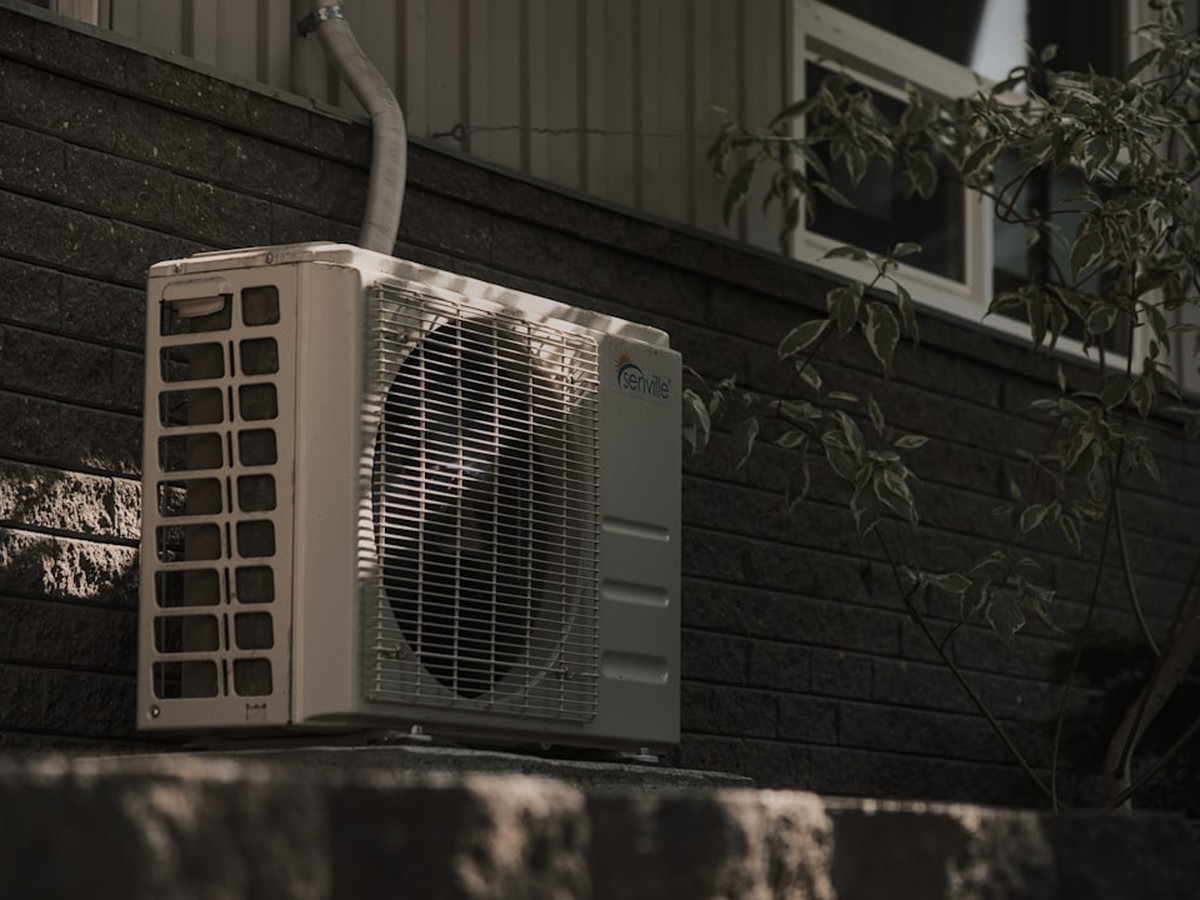
Winter works the same way in homes that heat with electricity. When temperatures drop toward freezing, a heat pump leans on its backup resistance heat strips, and those strips draw far more power than the heat pump does on a mild day. So a cold week can produce a bill that looks a lot like August's.
The good news is that Texas has a real safety net for households whose bill has outrun their paycheck. The four programs below either put money toward the bill or cut what you'll owe next time. They aren't just tip sheets.
What Are the 4 Assistance Programs That Actually Help Texans?
Here's the side-by-side view, in one place, so you can pick the right door to knock on first.
| Program | Who runs it | What it covers | Income limit | How to apply |
|---|---|---|---|---|
| CEAP (Texas's state energy-assistance program) | TDHCA, delivered through local community action agencies such as BakerRipley | Bill payment plus crisis assistance during extreme weather. Up to $12,600 heating and cooling and $1,800 crisis per year | 150% of Federal Poverty Guidelines | Call 877-541-7905 or find your local CEAP provider through TDHCA's Help for Texans search |
| Weatherization Assistance Program (WAP) | TDHCA, delivered through local agencies covering all 254 counties | Free energy audit plus insulation, weather-stripping and repair or replacement of inefficient heating and cooling systems | 200% of Federal Poverty Guidelines | Find your local agency through TDHCA's Help for Texans search |
| 2-1-1 Texas | Texas Health and Human Services referral network | Warm handoff to local nonprofits, faith-based groups, and emergency utility grants | Varies by referred program | Dial 2-1-1 (free, 24/7) or visit 211texas.org |
| Salvation Army utility rent assistance | The Salvation Army Texas Division and partner agencies | Emergency, limited-fund grants toward utility bills | Case-by-case, prioritized by need | Contact your local Salvation Army office or dial 2-1-1 for the nearest partner |
Program 1: CEAP (Texas's State Energy-Assistance Program)
CEAP is Texas's LIHEAP-funded bill-payment program, administered by the Texas Department of Housing and Community Affairs (TDHCA) and delivered through local agencies that together cover all 254 counties. According to the TDHCA CEAP program page, the program is designed to help low-income households meet their immediate energy needs and control energy costs over time.
The numbers are the reason to start here. According to the LIHEAP Clearinghouse Texas profile (updated April 20, 2026), Texas's LIHEAP funding for fiscal year 2026 is $202,298,015, including $9,496,375 from the Infrastructure Investment and Jobs Act. The maximum household benefit is $12,600 for heating and cooling, and the maximum crisis benefit is $1,800. According to the NuWatt Energy Texas income-eligible programs guide (2026), a typical CEAP bill-assistance award falls between $300 and $1,500 depending on household size, income, and how severe the crisis is.
Eligibility is straightforward. CEAP is open to households at or below 150% of the federal poverty guideline. With the 2026 HHS guideline at $33,000 for a family of four, the CEAP line is $49,500, which matches the income table BakerRipley publishes for its TDHCA-funded program. Renters qualify if they're responsible for the electric account.
To apply, call 877-541-7905 or find your local CEAP provider through TDHCA's Help for Texans search. In Harris, Brazoria and Galveston counties that's BakerRipley, which expects to reopen applications on November 9, 2026 (see the winter update above). Most agencies ask for a photo ID, proof of income for every adult in the household, a recent electric bill with the account number, and proof of residency. Processing typically takes a few business days to about two weeks, per the Texas utility-help resource summarized in the Powerwizard 2026 guide, though BakerRipley tells applicants to expect a written decision within six weeks.
Program 2: Weatherization Assistance Program
The Weatherization Assistance Program doesn't pay a bill. It makes the next ones smaller, which is why it belongs on a winter list. TDHCA runs it with U.S. Department of Energy and LIHEAP funding through local agencies that cover all 254 Texas counties, according to the TDHCA weatherization page.
An eligible home gets a free energy audit, then work like caulking, weather-stripping, ceiling, wall and floor insulation, duct work, and tune-up, repair or replacement of inefficient heating and cooling systems. Households at or below 200% of the federal poverty guideline qualify, according to the PUCT's help-paying-your-bill page. Priority goes to households with children under six, older residents, a resident with a disability, or the highest energy costs and lowest incomes.
Apply through the same Help for Texans search you'd use for CEAP. Some agencies run both programs (BakerRipley does), so ask about weatherization when you call about bill help.
Program 3: 2-1-1 Texas
2-1-1 Texas is the state's free, 24/7 referral line. It isn't a bill-payment program by itself, but it's the fastest way to find the local nonprofit, church, or partner agency near you that does write checks. According to the PUCT consumer-help page, 2-1-1 is the number PUCT itself directs Texans to call when they can't pay their electric bill. Dial 2-1-1 from any phone, or visit 211texas.org.
Use 2-1-1 when your CEAP agency is backed up or closed between application windows, the way BakerRipley is until November 9, or when you need something the state programs won't cover, like a partial-month deposit to keep service on.
Program 4: Salvation Army and Community Action Agencies
The Salvation Army offers emergency utility grants through its local Texas offices, and it partners with community action agencies across the state. According to the Salvation Army 2025 annual report, the organization provided financial assistance to 1,575,098 households nationwide that year.
Funds are limited and awarded case by case, but Salvation Army help is often the last-mile grant that closes the gap between your CEAP award and your actual balance. The fastest path is to dial 2-1-1 and ask for the nearest Salvation Army utility program.
What Should I Do First If I Already Have a Disconnection Notice?
Call your electric provider today, before you do anything else, and ask for a deferred payment plan. Texas rules require providers to offer one on request for bills that come due during an extreme weather emergency. They also have to make a payment plan available to many residential customers who say they can't pay a bill due in July, August or September, or a January or February bill when their county had five or more straight days of extreme weather the month before, under PUCT rule 16 TAC §25.480(j). Even when the rule doesn't require it, ask anyway.
There's also a legal safety net during extreme weather. Under 16 TAC §25.483(j), a provider can't authorize a disconnection for nonpayment in your county on a day that counts as an extreme weather emergency: a National Weather Service heat advisory that day or either of the two days before, or a day after a high that stayed at or below 32 degrees Fahrenheit with freezing temperatures forecast for the next 24 hours. That's a floor, not a permission slip. Your balance still stands, and disconnection risk returns once the weather breaks. Get on a deferred plan and apply for CEAP while the protection is in effect.
Ambit Energy customers who are worried about a seasonal bill spike can also call the Ambit customer care line printed on the bill to ask about payment arrangements and confirm the account is in good standing before applying to a program.
The $166 Million State Boost Starts January 1, 2027
On June 8, 2026, Governor Greg Abbott announced $166 million in new energy-assistance funding for low-income Texans, administered by TDHCA and available for utility bills and efficient heating, cooling, and refrigeration equipment. According to the TDHCA news release (2026), the funds are scheduled to begin January 1, 2027.

That money won't reach November or December bills, so the four programs above are still the doors to knock on this winter. For who qualifies and how the new funding is expected to work, read Texas Just Approved $166 Million in Energy Bill Assistance.
The 24-Hour Bill Relief Playbook
Here's the sequence I'd run through, in order, if a big bill just arrived and you can't pay all of it.
- Call your electric provider today. Ask for a payment extension, a deferred payment plan, or both. Get the confirmation number in writing.
- Dial 2-1-1 Texas. Ask for CEAP intake and for the nearest Salvation Army or community action agency that helps with utility bills.
- Apply to CEAP at 877-541-7905 or through your local agency. In Harris, Brazoria and Galveston counties, call BakerRipley at 713-590-2327 to book a November appointment. Ask the same agency about weatherization while you have them on the phone.
- Reset the plan for next season. Look at your kWh usage from your highest month, summer or winter, then choose a plan built for that kind of usage so this doesn't repeat.
Do all four in a day. That's the difference between a disconnection notice and a manageable payment plan.
Frequently Asked Questions
Am I eligible for CEAP, and what income counts?
CEAP eligibility is set at or below 150% of the federal poverty guideline, per TDHCA CEAP program guidance. Household income includes wages, self-employment income, Social Security, unemployment, and most other cash income for every adult member. For a family of four in 2026, 150% of the federal poverty guideline is $49,500.
How long does CEAP processing take?
Processing time varies by local agency. The Powerwizard Texas bill-help guide reports a typical range of a few business days to about two weeks, while BakerRipley tells Houston-area applicants to expect a written decision within six weeks. Applications marked as a crisis (imminent disconnection or broken heating or cooling equipment) are usually expedited.
Do renters qualify?
Yes. Renters qualify if they're responsible for the electric account and meet the income and residency requirements. This is confirmed by the Texas Law Help utility-assistance article (2026).
What documents do I need to apply?
Most agencies ask for a government-issued photo ID, proof of income for every adult in the household (recent pay stubs, benefits letters, or tax returns), a recent electric bill with the account number and balance, and proof of residency. Some agencies also request medical documentation if a household member has a life-support need. BakerRipley's list is stricter: income from the last 30 days, ID and a Social Security card for every household member, and proof of citizenship or legal residency.
Can my power be shut off during a Texas heat wave or freeze?
Not on a day that counts as an extreme weather emergency in your county. Under PUCT rule 16 TAC §25.483(j), that's a day with a National Weather Service heat advisory (or one in the two days before), or a day after a high that didn't get above 32 degrees Fahrenheit with freezing temperatures forecast for the next 24 hours. The protection is temporary, so use the window to apply for CEAP and lock in a deferred plan.
Is Texas Utility Help still taking applications?
No. TDHCA's Texas Utility Help website stopped accepting energy-assistance applications on September 15, 2023, and water-assistance applications on November 3, 2023. TDHCA now points people to its Help for Texans search to find the local agency that handles utility assistance in their county.
Is Lite-Up Texas still available?
No. Lite-Up Texas discounts ended on August 31, 2016, when the System Benefit Fund that paid for them ran out of money, according to Texas Tribune reporting at the time. CEAP is now the main statewide program for help with an electric bill.
Can I get electricity in Texas without a deposit?
Sometimes. PUCT rule 16 TAC §25.478 lists ways to establish satisfactory credit without paying a deposit, including being 65 or older and not currently behind on any electric account. Victims of family violence can have the deposit waived with a certification letter from the Texas Council on Family Violence, according to the PUCT. Otherwise, providers can ask for a deposit based on your credit history, so ask each provider what it requires before you enroll.
What if my income is normally above the limit but this bill is crushing me?
Talk to your provider about a deferred payment plan, then call 2-1-1. Community action agencies and Salvation Army partners often have discretionary emergency funds that aren't tied to the 150% FPL line and can bridge a one-time hardship.
Related Reading on VIP Energy Service
- Texas Power Grid Winter Storm: ERCOT's December Outlook
- Texas Just Approved $166 Million in Energy Bill Assistance. Here's Who Qualifies and How to Save Before It Starts.
- Texas Utility Shutoffs Are Rising: What Homeowners Should Know
- Texas Summer Electricity Bills: How to Stay Cool and Save Money
- How Many kWh Does a Texas Home Use Per Day in Summer
- How to Read Your Texas Electricity Bill: Every Line Item Explained
External Resources
- BakerRipley: Utility Assistance (Harris, Brazoria and Galveston counties)
- TDHCA: Help for Texans (find your local utility assistance provider)
- Texas Department of Housing and Community Affairs: CEAP program page
- TDHCA: Weatherization Assistance Program
- Public Utility Commission of Texas: Help Paying Your Electric Bill
- PUCT rule 16 TAC §25.483: Disconnection of Service (extreme weather, subsection j)
- LIHEAP Clearinghouse: Texas profile
- Administration for Children and Families: First LIHEAP Block Grant Funding Release, FY 2027
- TDHCA: Texas Utility Help website is closed
- Texas Tribune: Texas Stops Helping Poor Families Pay Their Electric Bills (2016)
- USA.gov: Get help with energy bills
- Texas Law Help: Help with Utilities
- 211 Texas
- TDHCA: Governor Abbott Announces $166 Million in Energy Assistance Funds
Ambit Energy plan details and rates subject to change. Energy facts label available on request. Subject to credit approval. Independent Consultant earnings vary. Rates, program funding, and eligibility rules current as of October 27, 2026. Program eligibility and benefit amounts are set by the administering agencies and can change. Always confirm current terms at the source before applying.

This is a plan-shopping guide for Texas households and small businesses in the deregulated ERCOT market. It is not financial advice, and it is not an income or business opportunity. All rate figures are illustrative and as of July 28, 2026. Plan details, availability, EFL, and Terms of Service vary by provider and ZIP code, and every enrollment is subject to credit approval.
TL;DR: A June 2026 Retail Energy Revealed report found Texas residential retail-choice customers overpaid about $4 billion in 2024 (roughly $480 per household) versus regulated default service. The cause is plan design, not usage. Five recurring tricks account for most of the gap: teaser rates, bill-credit thresholds, tiered pricing, silent auto-renewal to variable, and opaque free-nights plans. Six numbers on every Electricity Facts Label (EFL) catch every one of them: the average price at 500, 1000, and 2000 kWh, base charge, TDU delivery charges, and any minimum-usage fee or bill credit. This guide, using the Rule of 5-and-6 framework, walks through each trick and how to spot it before you sign.
A new report is putting a dollar figure on something Texas power shoppers have suspected for years: retail electricity plans are engineered to look cheap on the shelf and quietly cost more once the meter starts running.
The June 8, 2026 Retail Energy Revealed report found that Texas residential retail-choice customers paid about $4 billion more in 2024 than regulated default service would have cost, and more than $48 billion extra since deregulation began in the early 2000s. That works out to roughly $480 a year for a typical household. The findings were amplified on July 21, 2026 by the Dallas Morning News, Texas Standard, and a Forbes column by University of Houston energy economist Ed Hirs, all pointing at the same culprit: plan design, not usage.
At Ambit, we have been selling straightforward retail electricity in Texas since 2006, so this is our lane. Here is the Rule of 5-and-6 framework: the 5 plan tricks that drive most of the overpayment, and the 6 numbers on the Electricity Facts Label (EFL) that catch every one of them.
What Did the Retail Energy Revealed Report Actually Say?
The Retail Energy Revealed analysis, first reported by EnergyChoiceMatters on June 8, 2026, compared what residential retail-choice customers across the country actually paid to what regulated default service would have cost over the same years. Texas, the largest deregulated market in the United States, contributed the biggest slice of the $4 billion 2024 gap.
Ed Hirs, writing in Forbes on July 8, 2026, framed the same numbers as an ongoing consumer-protection problem: providers compete hard for you during a short promotional window, then monetize the relationship through renewal terms, credits tied to a narrow usage band, and rate structures that are hard to compare on a single dollar figure.
None of this is illegal. All of it is disclosed on the plan's Electricity Facts Label. But the tricks work because the average Texas shopper reads the marketing headline, not the EFL.
What Is the Teaser Rate Trick?
The rate you see on the ad is the rate for the first billing cycle or the first few months. After the promo ends, the price steps up, sometimes materially.
QuickElectricity and the Dallas Morning News both flag this as the single most common plan-design tactic in Texas. A plan advertised at 10.9 cents per kWh may be a 12-month contract that averages closer to 14 cents per kWh once the introductory period ends.
How to catch it: open the EFL. The "Average Price per kWh" figures at 500, 1000, and 2000 kWh are the contract-length averages, not the promo price. If those three numbers are noticeably higher than the marketing headline, you are looking at a teaser.
How Do Bill-Credit Thresholds Inflate Your Bill?
This is the most expensive trap of the five. The plan gives you a fixed dollar bill credit only if your monthly usage falls inside a narrow window, often 1000 to 2000 kWh. Use 999 kWh in a mild April, and the credit disappears. ElectricRates and Texas Electricity Ratings both note this can effectively double your rate in months where you miss the threshold.
Bill-credit plans reward one usage pattern and punish every other one. A family that goes on vacation for a week, a small business that closes for a holiday, or a household running efficient appliances all get penalized.
How to catch it: the EFL will list a "Minimum Usage Fee" or a bill credit line under "Other Key Terms and Questions." If either exists, calculate your effective rate at 500 kWh (a light month) and 750 kWh (a shoulder month), not just at the sweet spot.
What Is Tiered or Usage-Benchmark Pricing?
Similar to bill credits, but structured as different per-kWh rates at different usage bands. The plan quotes 9 cents per kWh at 1000 kWh, then 13 cents at 500 kWh and 11 cents at 2000 kWh. Looks attractive at exactly one benchmark, expensive everywhere else.
ElectricRates recommends always calculating your effective rate at your own historical monthly usage rather than at the benchmark the plan is designed around.
How to catch it: if the three "Average Price per kWh" numbers on the EFL vary by more than 1.5 cents across the 500, 1000, and 2000 kWh columns, the plan has tiered pricing. Pick the column closest to your actual bill.
How Does Silent Auto-Renewal to a Variable Rate Cost You?
Your fixed-rate contract ends. If you do not re-shop, most providers roll you onto a month-to-month variable plan at a materially higher price. The Dallas Morning News notes this as one of the main levers behind the $480 annual overpayment figure, because plenty of Texans forget the renewal date and stay on the variable rate for months.
Variable rates are legitimate in the right context (Ambit's own Lone Star Flex is a no-contract month-to-month plan for people who want that flexibility), but a variable-rate auto-renewal from a contract you thought was fixed is usually the most expensive rate the provider offers.
How to catch it: the EFL and the Terms of Service both disclose renewal treatment. Look for "Renewal Type" on the Terms of Service. If it says the plan renews to a "month-to-month variable rate," calendar the contract end date now and plan to re-shop 30 days before it hits.
When Do Free Nights or Free Weekends Plans Actually Cost More?
Time-of-use plans that give away a chunk of hours (nights, weekends, sometimes both) are excellent for the right household and expensive for the wrong one. The catch is that the on-peak rate that funds the free window is often 3 to 5 cents per kWh above a comparable fixed plan.
ElectricRates puts a rule of thumb on it: unless more than about 30 to 40 percent of your usage falls inside the free window, a straight fixed-rate plan is cheaper. A household that runs the dishwasher and laundry after 8 PM, charges an electric vehicle overnight, or runs a pool pump on a night schedule can win. A household that mostly cools an empty house during the day and cooks dinner at 6 PM usually loses.
Ambit's Free and Clear Nights is a genuine option in this category with published on-peak and off-peak windows, but even a good time-of-use plan is the wrong tool if your usage does not fit the window.
How to catch it: the EFL will show two "Energy Charge" lines instead of one, one for the free window and one for the paid window. Multiply your actual on-peak kWh (roughly 60 to 70 percent of usage for most Texas households) by the paid rate to see what you would really pay.
Which 6 EFL Numbers Catch Every Trick?
Every Texas retail electricity plan is required to publish an Electricity Facts Label. You can find it on Power to Choose or on the provider's own site. Six numbers on that label neutralize all 5 tricks:
| # | Number on the EFL | Where to find it | What it catches |
|---|---|---|---|
| 1 | Average Price per kWh at 500 kWh | Top of EFL, pricing box | Teaser rates, tiered pricing |
| 2 | Average Price per kWh at 1000 kWh | Top of EFL, pricing box | Baseline for typical household |
| 3 | Average Price per kWh at 2000 kWh | Top of EFL, pricing box | Heavy-usage months, bill-credit collapse |
| 4 | Base Charge | Pricing section, flat monthly fee | Hidden fixed cost that raises low-use bills |
| 5 | TDU Delivery Charges | Pricing section, pass-through wires cost | Confirms Oncor, CenterPoint, AEP, or TNMP is disclosed |
| 6 | Minimum Usage Fee or Bill Credit | Other Key Terms and Questions | Bill-credit thresholds and usage-cliff traps |
If those three "Average Price" numbers are close to each other, the plan is straight per-kWh pricing with no hidden usage cliff. If they vary widely, the plan is a threshold play. That single test filters out four of the five tricks.
Where Ambit Fits
We have been selling retail electricity to Texas households and small businesses since 2006, so we have watched every one of these tactics enter and exit the market. Our plans are built to survive the EFL test:
- Lone Star Classic is a fixed-rate plan with straight per-kWh pricing and no bill-credit thresholds. The "Average Price per kWh" numbers at 500, 1000, and 2000 kWh are close together on purpose.
- Free and Clear Nights is our time-of-use plan for households that actually shift load into the free window, with clearly published on-peak and off-peak hours on the EFL.
- Lone Star Flex is our month-to-month variable option for people who want no contract, priced as a straightforward variable plan (not a renewal trap).
We publish the EFL for every plan, we do not price to a bill-credit threshold, and we send renewal notices in advance so nothing rolls silently to a higher variable rate.
Bottom Line for August 2026 Shoppers
The $480 gap the Retail Energy Revealed report identified is a plan-design problem, not a rate-market problem. Every one of the 5 tricks above is disclosed on the EFL before you sign. Read the label. Calculate at your actual monthly usage, not the benchmark. Calendar your renewal date. Prefer straight per-kWh pricing unless a time-of-use plan genuinely fits your household.
If you would like someone to review a Lone Star Classic quote for your ZIP code, we can gladly assist you with that as well. You can request a quote and we will retrieve your EFL to compare.
Frequently Asked Questions
What is an Electricity Facts Label (EFL)?
This is one page document provided by Texas retail electricity providers for each plan. It includes the average price for 500, 1000, and 2000 kWh, the base charge, TDU delivery pass-through, length of the contract, renewal treatment, percentage of renewable energy, and the minimum usage fee or a bill credit. It is available for each plan on the provider's site or on Power to Choose.
What is a bill-credit threshold, and why is it a trap?
A bill-credit plan provides a fixed dollar amount as a credit only when your monthly usage falls within a specified range (typically, 1000 to 2000 kWh). If your usage is lower than that range, you will lose the credit. This means your rates may double during that month. Texas Electricity Ratings and ElectricRates have both cited this as the most costly tactic when designing electricity plans for Texas.
When does a free nights or free weekends plan actually make sense?
As a rule of thumb, you usually need more than 30 to 40 percent of your monthly usage to be free in order for a time-of-use plan to offer better value than a straight, fixed-rate plan of equivalent quality. Households doing dishwashing, laundry, EV charging, or pool pumping at night stand to benefit; those who predominantly cool an unoccupied house during the day do not.
How often should I re-shop my electricity plan?
Mark your contract end date on the calendar, and aim to re-shop around 30 days ahead of it. Most fixed-rate contracts in Texas auto-renew to a month-to-month variance which tends to be the highest price offered by the provider. The Dallas Morning News cites auto-renewal as a key contributor to the $480 annual overpayment.
Which TDU serves my ZIP code?
Texas is served by four regulated TDUs (Transmission and Distribution Utilities). For the majority of the DFW metroplex, it is Oncor. For Houston and the coastal areas around it, it is CenterPoint. AEP Texas serves the Rio Grande Valley, South Texas, and around Corpus Christi, while TNMP serves a mix of North, Central, and Gulf Coast areas. The TDU is a fixed pass-through charge listed on every EFL, and is the same across providers within your ZIP code.
Is the $480 overpayment figure applicable to my home?
This figure represents an average in the Texas market, so your actual gap may vary based on your current plan, usage pattern, and how long you have been on your current contract. A household that is stuck on a variable rate after an unnoticed auto-renewal will be well above the average. A household that reads the EFL and re-shops annually will be well below it.
Additional Information
- TDU Delivery Charges Explained: Oncor, CenterPoint, AEP, TNMP Line Items on Your Texas Bill
- Free Nights Energy Plans in Texas: How They Work and Who They Are For
- Ambit Lone Star Classic (fixed-rate)
- Ambit Free and Clear Nights (time-of-use)
- Request an Ambit Energy Quote
References
- Retail Energy Revealed report, reported by EnergyChoiceMatters, June 8, 2026: energychoicematters.com
- Ed Hirs, University of Houston, "Why Are Retail Choice Electricity Markets More Expensive?" Forbes, July 8, 2026: forbes.com
- Dallas Morning News, Watchdog column on Texas retail electricity overpayment, July 21, 2026: dallasnews.com
- Texas Standard, "How energy companies are getting away with overcharging consumers": texasstandard.org
- ElectricRates, guides on bill credits and Texas plan design: electricrates.org


