Commercial Battery Storage in Texas: What Every Business Needs to Know in 2026

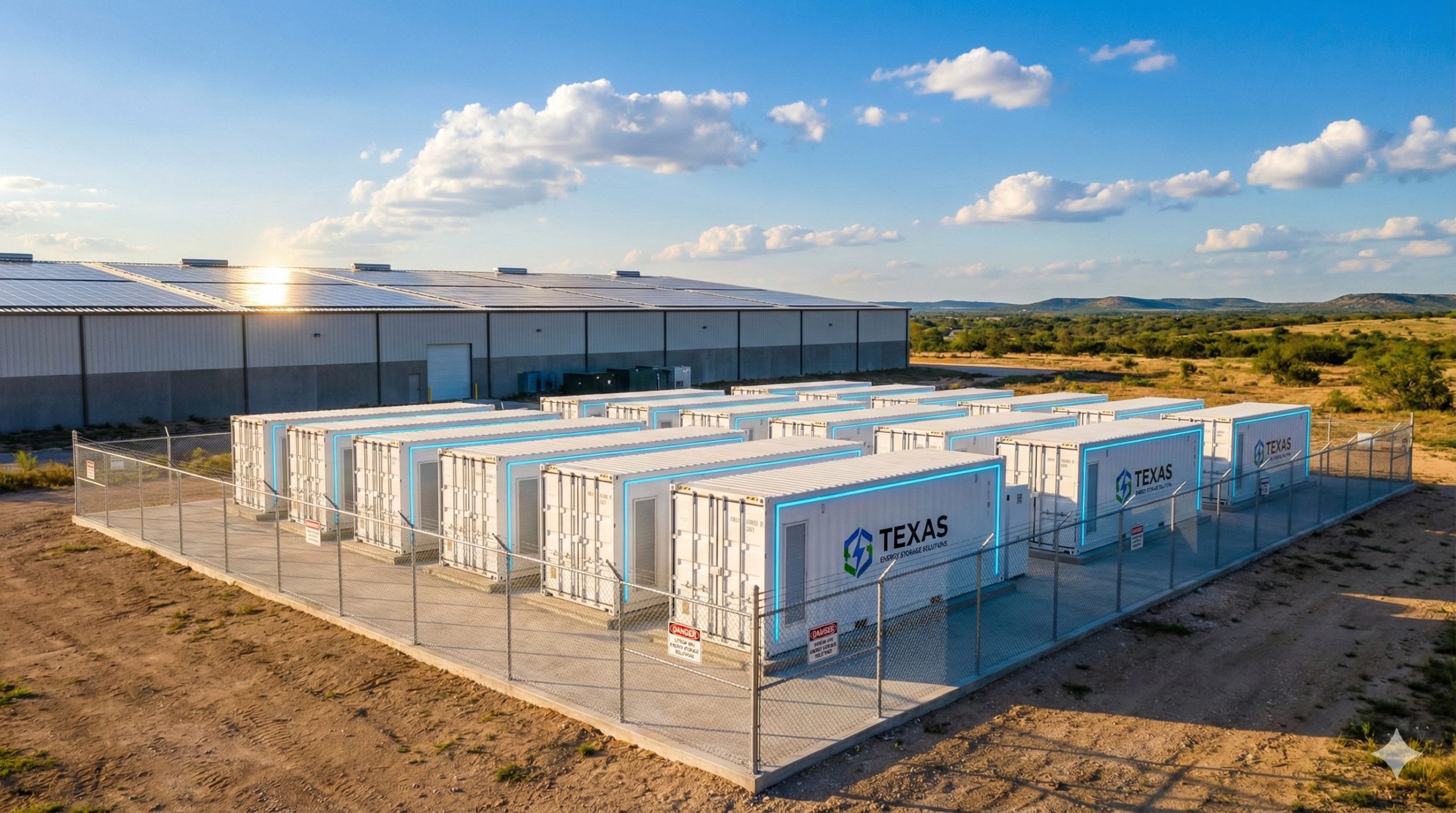
Commercial battery storage facility for business energy management

Commercial Battery Storage in Texas: What Every Business Needs to Know in 2026

December 3, 2025
by
Shawn Cornett

Commercial battery storage systems help Texas businesses reduce energy costs by 20-40% on demand charges while providing critical backup power during grid emergencies. With installation costs dropping 93% since 2010 and Texas offering property tax exemptions plus federal tax credits, commercial and industrial battery storage has never been more accessible for businesses seeking energy independence and resilience.

In this guide, we cover everything Texas business owners need to know about commercial battery storage, from costs and benefits to incentives and whether it makes sense for your facility. If you're exploring ways to pair battery storage with solar battery storage, you're in the right place.

What Is Commercial Battery Storage?

Commercial battery storage refers to Battery Energy Storage Systems (BESS) designed for business and industrial applications. Unlike residential systems, commercial battery storage systems typically range from 100 kWh to over 1 MWh in capacity.
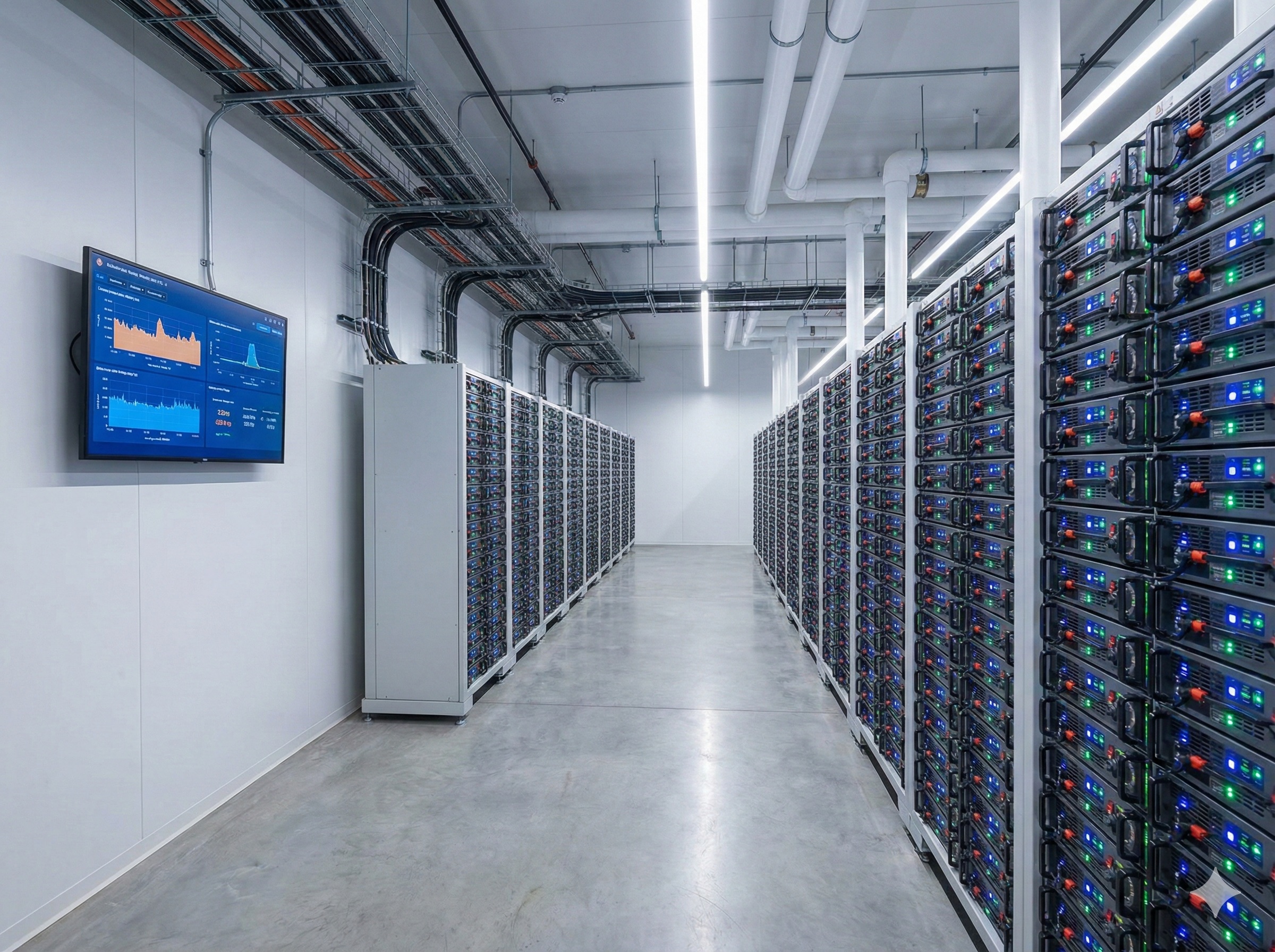
Interior view of commercial BESS technology components

These industrial battery storage solutions serve two primary functions: behind-the-meter applications (reducing your facility's grid demand) and front-of-meter applications (selling services back to the grid). According to the National Renewable Energy Laboratory's 2024 Annual Technology Baseline, lithium-ion batteries, particularly lithium iron phosphate (LFP) chemistry, dominate today's commercial and industrial energy storage market due to their safety profile and longevity.

Why Texas Businesses Are Investing in Commercial Battery Storage

The Texas Battery Boom

Texas leads the nation in battery storage deployment. According to Yes Energy's 2025 ERCOT analysis, Texas now has nearly 10 GW of commercial battery storage capacity, more than the other 48 states combined. The U.S. Energy Information Administration reports that 50% of all planned U.S. battery storage capacity will be built in Texas.

Business Drivers

Why the surge? Texas businesses face unique energy challenges:

  • Peak demand charges: The 4CP (Four Coincident Peak) system penalizes businesses during high-demand periods
  • Grid resilience: After Winter Storm Heather in January 2024, the Texas Comptroller reported that commercial battery storage units delivered $750 million in market savings
  • Rising electricity costs: Industrial energy storage offers price protection through energy arbitrage
  • ERCOT market structure: Texas's deregulated grid rewards battery flexibility with ancillary services payments

Key Benefits of Commercial Battery Storage Systems

Demand Charge Reduction

Peak demand management is the primary benefit for most Texas businesses. By discharging during 4CP periods, commercial battery storage systems can reduce transmission charges by 20-40%. For facilities with high demand charges, the savings alone often justify the investment.

Backup Power and Resilience

Commercial battery storage systems provide critical backup power for data centers, manufacturing facilities, healthcare operations, and retail businesses. When ERCOT issues grid emergencies, industrial battery storage keeps your operations online while competitors face costly downtime.

Solar Integration

Pairing commercial battery storage systems with solar PV maximizes your renewable energy investment. Industrial energy storage lets you store excess generation during peak production hours, then discharge during evening rate spikes. This time-shifting strategy amplifies your solar buyback in Texas returns and helps you turn excess power into savings.

Revenue Opportunities

Beyond cost savings, industrial battery storage creates revenue streams through:
  • Demand response program participation
  • Ancillary services payments from ERCOT
  • Energy arbitrage (charge during low wholesale prices, discharge during peaks)

Commercial Battery Storage Costs in 2025

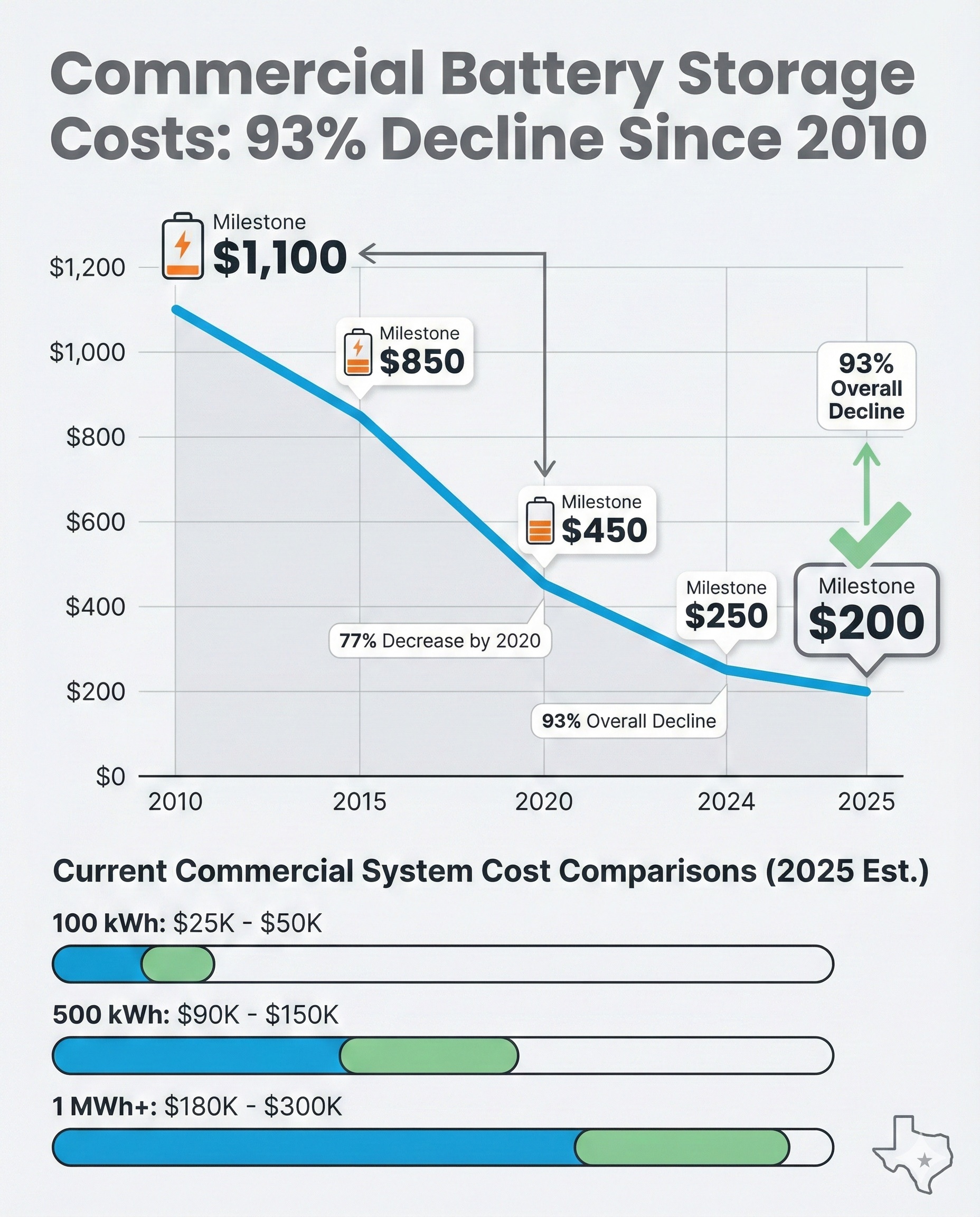
Commercial battery storage cost decline infographic 2025

Commercial battery storage costs have plummeted. According to IRENA's 2025 battery storage report, two-hour systems saw a 38% cost reduction in 2024 alone.

Current installed costs for commercial battery storage systems:

System Size Cost Range Best For
100 kWh $25,000-$50,000 Small businesses, retail
500 kWh $90,000-$150,000 Medium facilities, offices
1 MWh+ $180,000-$300,000 Large industrial operations

Per-kWh costs range from $280-$580 for standard commercial battery storage systems to $180-$300 for large containerized industrial energy storage installations. That's a 93% decline from 2010 prices, making industrial battery storage accessible for businesses of all sizes.

Texas Incentives for Commercial Battery Storage

Texas offers significant financial incentives for commercial battery storage investment:

  • Federal Investment Tax Credit (ITC): Now available for standalone battery storage under the Inflation Reduction Act
  • 40% Bonus Depreciation (2025): Immediate deduction on system value
  • MACRS Depreciation: 5-year accelerated depreciation schedule
  • Property Tax Exemption: 100% exemption on added appraised value for solar+storage systems
  • Local Abatements: Up to 10-year property tax abatements available in many Texas jurisdictions

Ready to calculate your savings? Our energy consultants can help you navigate available incentives and determine your potential ROI. Get your free energy quote to start the conversation.

Is Commercial Battery Storage Right for Your Business?

Texas business owner reviewing energy management dashboard

Commercial battery storage makes the most sense for Texas businesses that:

  • Face high demand charges on monthly utility bills
  • Need reliable backup power for critical operations
  • Have existing or planned commercial solar installations
  • Want to participate in ERCOT demand response programs
  • Seek long-term energy cost stability

If your facility experiences significant peak demand or operates in an area with unreliable grid service, industrial energy storage delivers both immediate savings and long-term resilience. Many Texas businesses combine commercial battery storage systems with our competitive solar buyback program for maximum returns.

Ready to explore your options? Our team provides free solar buyback analysis and can assess whether commercial battery storage systems fit your energy strategy.

Take the Next Step

Commercial battery storage represents a proven investment for Texas businesses seeking to reduce energy costs, enhance resilience, and capitalize on state and federal incentives. With Texas leading the nation in BESS deployment and costs at historic lows, now is the ideal time to evaluate your options.

Take the first step today. Get your free energy quote and discover how commercial battery storage can transform your business's energy future.


Sources

Your Texas Fixed Rate Can Still Change for 3 Reasons. The PUCT Is Now Weighing a Fourth

Fixed rate electricity plans in Texas can change only for TDU charges, ERCOT admin fees or new laws. The PUCT is now weighing a fourth: grid reserve costs.
Read More >>

Budget Billing Won't Lower What You Pay. Here's What Average Monthly Billing Does in Texas

Budget billing won't lower what you pay in Texas. See how Ambit's Average Monthly Billing works, when the carried balance peaks, and who should skip it.
Read More >>

Opening a New Business Location in Texas? How to Set Up Electricity Before Move-In Day

To set up electricity for a new Texas business location, find the ESI ID, confirm the TDU, estimate peak demand, choose a plan and schedule the move-in.
Read More >>

How to Use Smart Meter Texas to Price Your Next Electricity Plan

Smart Meter Texas holds up to two years of your usage. Here's how to register, download it and price any Texas plan's EFL at your real kWh, winter included.
Read More >>

$85.27 per 1,000 kWh: TNMP's New Delivery Rates Top the PUCT Table, and December Bills Add a One-Month Surcharge

TNMP TDU delivery charges are $7.56 a month plus 7.7710 cents per kWh as of October 1, 2026, or $85.27 at 1,000 kWh, the highest on the PUCT's table. Two September steps added $12.75, and December 2026 bills add a one-month Rider IS surcharge.
Read More >>

Texas Picked Its 2027-28 Backup Electricity Providers. How POLR Service Works If Your Provider Shuts Down

Texas approved its 2027-28 provider of last resort list on Oct. 9, 2026. Your power stays on if your provider fails, and you can leave POLR service any time.
Read More >>

ERCOT's December 2026 Outlook Puts Grid Emergency Odds at 2.95% in Its Riskiest Hour. What a Texas Winter Storm Can and Can't Do to Your Electric Bill

ERCOT's December 2026 outlook puts the riskiest hour, 8 a.m. on December's peak-load day, at a 2.95% chance of an Energy Emergency Alert, well under its 10% low-risk line. Here is what a Texas winter storm can and can't do to your electric bill.
Read More >>

Houston Delivery Charges Fell on August 15. They Jumped September 1 and Rose Again for Meters Read September 30. What That Does to Your October Bill.

CenterPoint delivery charges dipped on August 15, jumped back up September 1, and rose again for Houston meters read on or after September 30. Here's what it means for your October bill.
Read More >>

Lubbock Electricity Rates Change November 1: LP&L's New $2.50 Base Charge Means Smaller Homes Pay More and Bigger Homes Pay Less

LP&L adds a $2.50 monthly base charge and cuts delivery to 6.008 cents per kWh on Nov 1, 2026. Homes under 822 kWh a month pay more, bigger homes pay less.
Read More >>

How to Dispute an Electric Bill in Texas: What the PUCT's New Complaint Process Changes, and What It Doesn't

To dispute an electric bill in Texas, write to your provider first (21 days to answer), then file with the PUCT. On October 21, 2026 the PUCT ends formal complaints. Here is what changes and what stays the same.
Read More >>

Direct Energy Free Nights Review: What the EFL Actually Charges After the Free Window

Direct Energy free nights (Twelve Hour Power) is free 9 p.m. to 9 a.m. As of September 29, 2026, the 12-month EFLs charge 34.5 to 35.4 cents per kWh after the free window. Here is the break-even math.
Read More >>

27 Texas Electricity Plans Got Withdrawn on September 12 Alone. Here Is the Best Time to Renew Your Contract This Fall.

Best time to renew a Texas electricity contract: the fall shoulder window and the 14 days before your end date. 27 plans got pulled Sept 12. Here is the clock.
Read More >>

SmartEnergy Just Launched a $200 Bill Credit Plan on September 3. Here Is How Bill Credit Plans Actually Work in Texas (And When You Lose the Credit)

SmartEnergy launched a $200 bill credit plan on September 3, 2026. Here is how Texas bill credit plans actually work, and the four conditions that forfeit the credit.
Read More >>

No Deposit Light Companies in Texas: What You Actually Qualify For Without a Credit Check

Four legal ways to skip a Texas electricity deposit as of September 2026: soft-check plans, PUCT Rule 25.478 waivers, letters of credit, or prepaid Rule 25.498 plans. What each costs and who qualifies.
Read More >>

Every Ambit Energy Plan Compared for 2026: Rates, Terms, Fees and Who Each One Actually Suits

Compare every Ambit Energy plan in Texas for 2026 side by side: Lone Star Classic 12 and 24, Flex, Free and Clear Nights, Solar Buyback, small business TSC. Rates, fees, terms and who each one actually suits.
Read More >>

Oncor Delivery Charges Rose $8.38 on October 4, 2026. Here's What Changed on Your Bill.

As of October 4, 2026, Oncor's residential delivery charge is 6.8673 cents per kWh, about $8.38 more a month at 1,000 kWh. Here's the rider math, what August really did, and what you can control.
Read More >>
1 2 … 16

Important message regarding earnings: Ambit Energy makes no guarantee or promise of income or business. Anyone considering building a full-time or part-time Ambit business should have realistic expectations of their potential income. Learn more at goambit.com/disclaimer.