
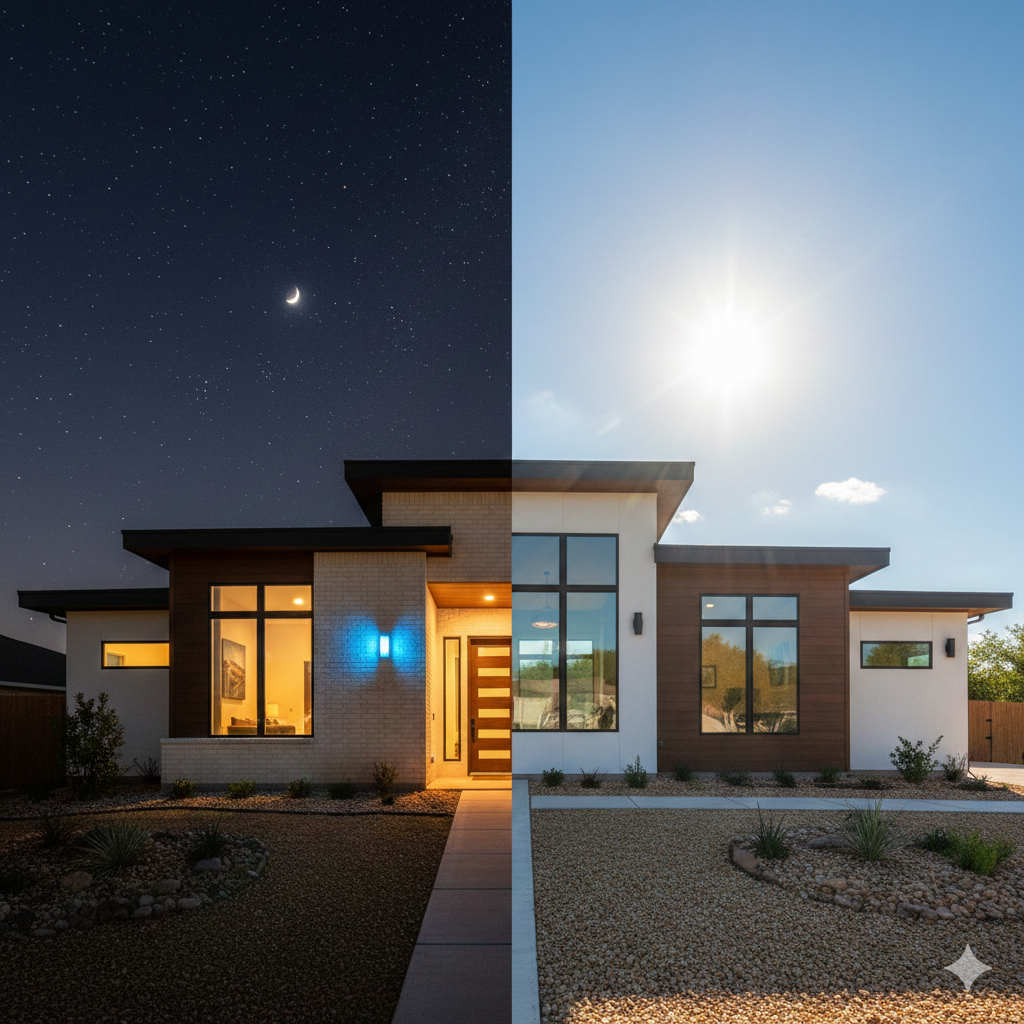
Both plans wave the same magic word at you: free. Free nights promises zero-cost power overnight, every night. Free weekends hands you Saturday and Sunday on the house. So the question that brings most Texans to a comparison like this one is simple, even if the answer is not: which one actually saves more money?
Here is the honest version up front. Neither plan is the winner for everyone. The free nights vs free weekends decision comes down to one thing, when your home uses the most electricity. Pick the plan whose free window lines up with your real habits and you can save real money. Pick the wrong one and you will quietly pay a premium for hours you are barely awake to use. We offer both plan types at VIP Energy Service, so we have no reason to push you toward one over the other. We would rather you land on the plan that fits. If you want the bigger picture first, start with our guide to free nights electricity plans in Texas, then come back here to settle the head-to-head.
Here is the side-by-side, so you can see the trade-off in one look.
| Free Nights | Free Weekends | |
|---|---|---|
| When power is free | Every night, a set overnight block | A continuous weekend window |
| Typical free hours | 8 or 9 p.m. to 6 or 9 a.m. | Friday evening to late Sunday or early Monday |
| Free hours per week | About 49 to 84 | About 48 to 72 |
| Daytime/weekday rate | Higher than a standard plan | Higher than a standard plan |
| Ideal for | Night owls, EV owners, daily late-evening chores | Weekend-heavy homes, lake houses, seasonal use |
| The catch | You pay more for weekday daytime power | You pay more for weekday power, Monday through Friday |
The free windows are wider than people expect. According to ElectricityPlans, Direct Energy's Twelve Hour Power gives free electricity 9 p.m. to 9 a.m., which adds up to 84 free hours a week, while Gexa Energy's Free 3-Day Weekends gives you a full 72-hour block from Friday midnight to Monday midnight. The hours sound generous either way. What matters is whether your usage actually falls inside them.
These are time-of-use plans, and there is a quiet trade baked into every one. Only the energy charge drops to zero during the free window. To pay for those free hours, the provider raises the rate you pay during everything else.
That gap is bigger than the word free suggests. According to Texas Electricity Ratings, the paid-hours rate on free plans often runs 50 percent or more above a standard plan. One well-known free nights product sits near 20 cents per kWh, and a free weekends version near 17 cents. For comparison, ChooseEnergy data puts the average Texas rate around 14.94 cents per kWh, with some affordable fixed-rate offers closer to 7 cents. So the free hours are not a gift. You pre-pay for them through a higher price on your daytime and weekday power.
None of that makes these plans a bad deal. It just means the math has to work in your favor. Used well, an electricity plan free nights and weekends structure can genuinely lower your bill. Used carelessly, it costs more than a plain rate would have.
This is the part most comparisons skip, and it surprises people on their first bill. The word free covers the energy charge only. Your delivery charges keep showing up.
Those delivery fees come from your TDU, the regulated utility that owns the poles and wires in your area, such as Oncor or CenterPoint. According to BKV Energy, TDU delivery charges still apply during the free window on most free nights plans. The utility sets these fees, and every customer pays them no matter which plan they choose. CleanSky Energy makes the same point: only the energy portion goes free, while delivery fees and fixed monthly charges stay on the bill.
A handful of plans go further and waive delivery charges during the free period too, which is a meaningful extra perk. The only way to know is to read the plan's Electricity Facts Label, the standard disclosure every Texas provider must give you. The label spells out the exact free hours and the full charge structure, so it is the document that settles any "is this really free" question before you sign.
Here is a simple tool you will not find on most comparison sites, and it removes the guesswork. A free plan saves you money only when enough of your usage lands in the free window to cover the higher rate you pay the rest of the time. We call that your break-even share.
The rule of thumb works like this: the bigger the daytime premium, the more of your usage you need to shift into the free hours just to break even.
| Paid-hours premium vs. a fixed plan | Example rate jump | Free-window share needed to break even |
|---|---|---|
| Plus 3 cents | 12 to 15 cents | About 20% |
| Plus 5 cents | 12 to 17 cents | About 29% |
| Plus 7 cents | 12 to 19 cents | About 37% |
| Plus 10 cents | 12 to 22 cents | About 45% |

So how much can a normal home realistically move into those free hours? Based on typical Texas usage patterns, a household lands roughly 25 to 35 percent of its electricity in nights and weekends with a little effort, running the dishwasher late, starting laundry after dark, putting the pool pump on a timer. Homes with an EV or a pool can push that to 40 to 60 percent, because overnight EV charging is a heavy, easily-shifted load.
The size of the prize is bigger in Texas than almost anywhere. According to the U.S. Energy Information Administration, a typical Texas home uses around 1,200 to 1,300 kWh a month, well above the roughly 900 kWh national average, thanks to our air-conditioning load. More usage means more to gain when you get the plan right, and more to lose when you get it wrong.
Match the plan to how you actually live, and the choice gets easy.
| Your situation | Better fit | Why |
|---|---|---|
| Night-shift worker or natural night owl | Free Nights | Your heaviest hours already fall in the free overnight window |
| Work from home, heavy weekday A/C | Usually a fixed-rate plan | Your peak usage hits during the expensive paid hours |
| EV owner who charges overnight | Free Nights | One scheduled charge captures a big block of free kWh nightly |
| Weekend-focused family or lake house | Free Weekends | Most meaningful usage clusters Friday night through Sunday |
| Snowbird or seasonal second home | Free Weekends | Light weekday load, with visits concentrated on weekends |
The pattern is clear. Free nights rewards people who are awake, charging, or running appliances after dark on a daily basis. The free weekends plan rewards homes whose real life happens Saturday and Sunday. And if your power use is steady through the weekday daytime, a straightforward fixed rate will usually treat you better than either free option.
You do not have to guess. Four quick steps get you to the right answer.
Whichever way the math points, we can set you up. Because VIP Energy Service offers both free nights or free weekends options alongside steady fixed-rate plans, you can request a free quote and we will help you match the plan to your usage rather than the other way around. You can also view current rates and plans any time.
Free nights vs free weekends is not a contest with one champion. Free nights wins for night owls, EV drivers, and anyone who can move daily chores past sunset. Free weekends wins for weekend-centric homes and seasonal properties. And if you cannot reliably shift your usage, an affordable fixed-rate plan is often the smarter call. Run the break-even test, read the label, and choose the window that fits your life. If you want to go deeper on how these plans work before you decide, our free nights electricity plans guide walks through it step by step, and our team is ready to help you get a free quote whenever you are.
The energy charge drops to zero during the free window, so that portion is genuinely free. You still pay TDU delivery charges, fixed monthly fees, and a higher rate during your paid hours, which is how the provider funds the free period.
It depends on the plan. Some free weekends offers start Friday evening, while others begin at midnight Saturday. The Electricity Facts Label lists the exact window, so check it before you enroll.
Yes, on most plans. Delivery charges are set by your local utility and apply no matter which plan you choose. A few plans waive them during the free window, so read the label to see if yours is one of them.
If most of your usage happens during weekday daytime hours, a fixed-rate plan is often the better fit, since both free plans charge more during those hours. A free plan only helps if you can shift heavy loads into the free window.
Usually yes, though switching mid-contract can trigger an early termination fee unless you are in the last few weeks of your term. At the end of your contract you can move to any plan type you like.
It combines both structures, giving you free energy every night plus a weekend block. The trade-off is typically an even higher weekday daytime rate, so the same break-even math applies.
Rates and plan details vary by location and usage and are subject to change. Review the Electricity Facts Label for each plan, and note that free electricity plans are available only in deregulated Texas (ERCOT) service areas.
Photos via Unsplash: Braden Egli, Zaptec, Aaron Lefler, Matthew LeJune.

Copyright © 2026 VIPEnergyService.com. All rights reserved | PUCT# 10117