Does a Whole House Generator Qualify for Energy Credit? | 2026 Guide

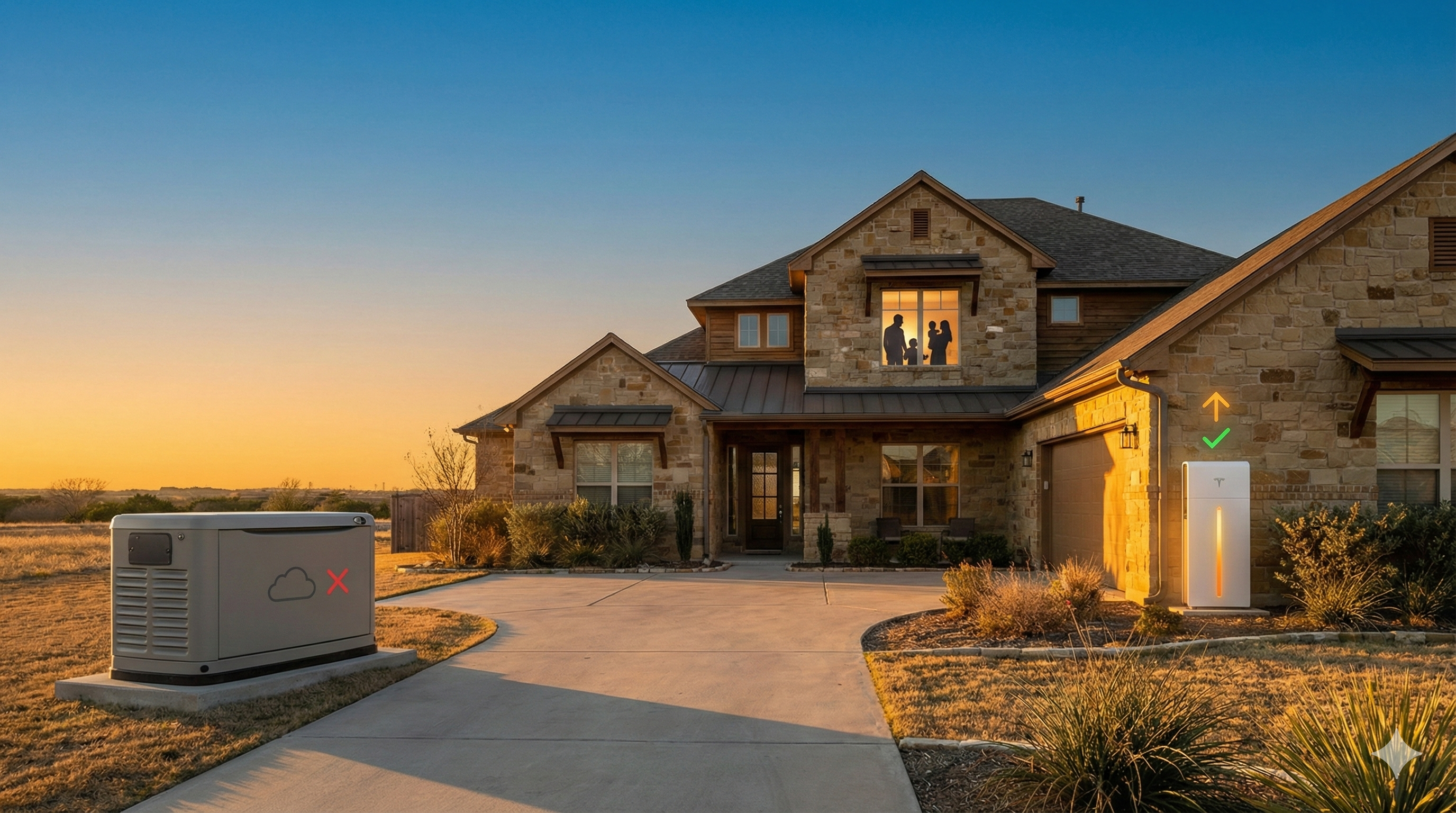
Texas home at sunset comparing whole house generator vs battery backup for energy tax credit eligibility

Does a Whole House Generator Qualify for Energy Credit? | 2026 Guide

December 26, 2025
by
Shawn Cornett

No, a whole house generator does not qualify for federal energy tax credits. The Residential Clean Energy Credit (Section 25D) and Energy Efficient Home Improvement Credit (Section 25C) specifically exclude backup generators powered by natural gas, propane, or diesel. However, battery storage systems with 3+ kWh capacity—like Tesla Powerwall or Enphase IQ Battery—do qualify for the 30% federal tax credit through December 31, 2025. If you're exploring battery backup rebate options in Texas, understanding what qualifies can save you thousands.

Frequently Asked Questions About Generator Energy Credits

After Hurricane Beryl left 2.2 million Houston households without power in 2024, many Texas homeowners started exploring backup power solutions. Federal tax credits can make clean energy more affordable—but not all backup systems qualify equally. Here's what you need to know about whole house generators and energy credits for 2026.

Does a Whole House Generator Qualify for Energy Credit?

No, whole house generators do not qualify for any federal energy tax credit. The IRS is clear on this: Section 25D (Residential Clean Energy Credit) only covers clean energy property that generates or stores renewable energy. Section 25C (Energy Efficient Home Improvement Credit) covers efficiency upgrades like heat pumps and insulation.

Traditional generators—whether Generac, Kohler, or Briggs & Stratton—run on fossil fuels. According to the IRS, only "qualified clean energy property" qualifies. Since generators combust natural gas, propane, or diesel, they're explicitly excluded from both credits.

The core issue comes down to energy source. Generators create electricity through combustion, producing emissions. Tax credits exist to incentivize clean, renewable alternatives—not fossil fuel systems.

What Backup Power Options DO Qualify for the Federal Tax Credit?

Several backup power solutions qualify for the 30% Residential Clean Energy Credit through December 31, 2025:

Battery Storage Systems (3+ kWh capacity):

  • Tesla Powerwall (13.5 kWh per unit)
  • Enphase IQ Battery (modular 5-10+ kWh)
  • LG Chem RESU (9.8-16 kWh models)

Solar Panel Systems:

Other Qualifying Systems:

  • Geothermal heat pumps (ENERGY STAR certified)
  • Small wind turbines (up to 100 kW residential)
  • Fuel cells (minimum 0.5 kW)

According to the Department of Energy, these credits help households "lower their energy bills while cutting climate pollution."
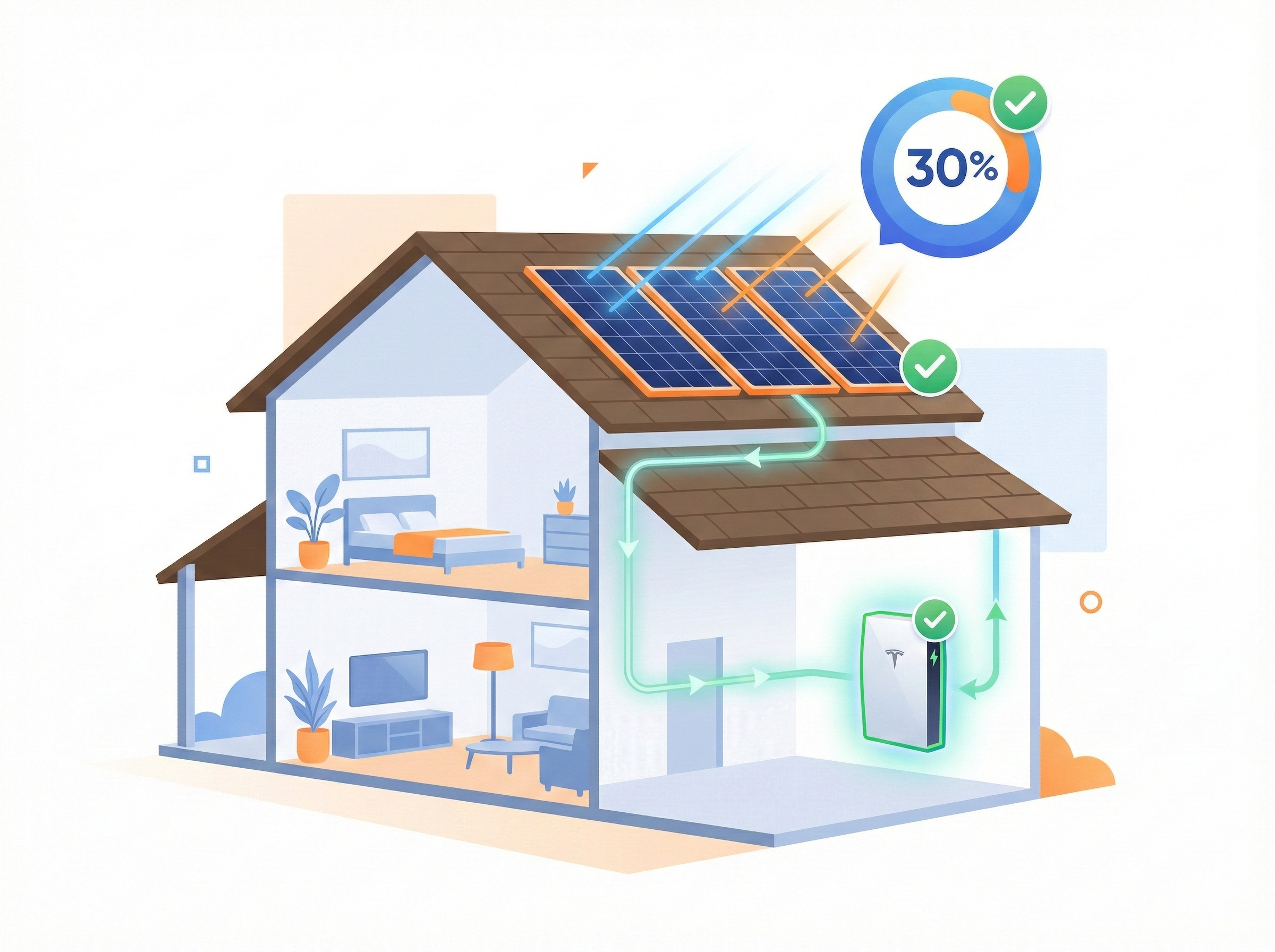
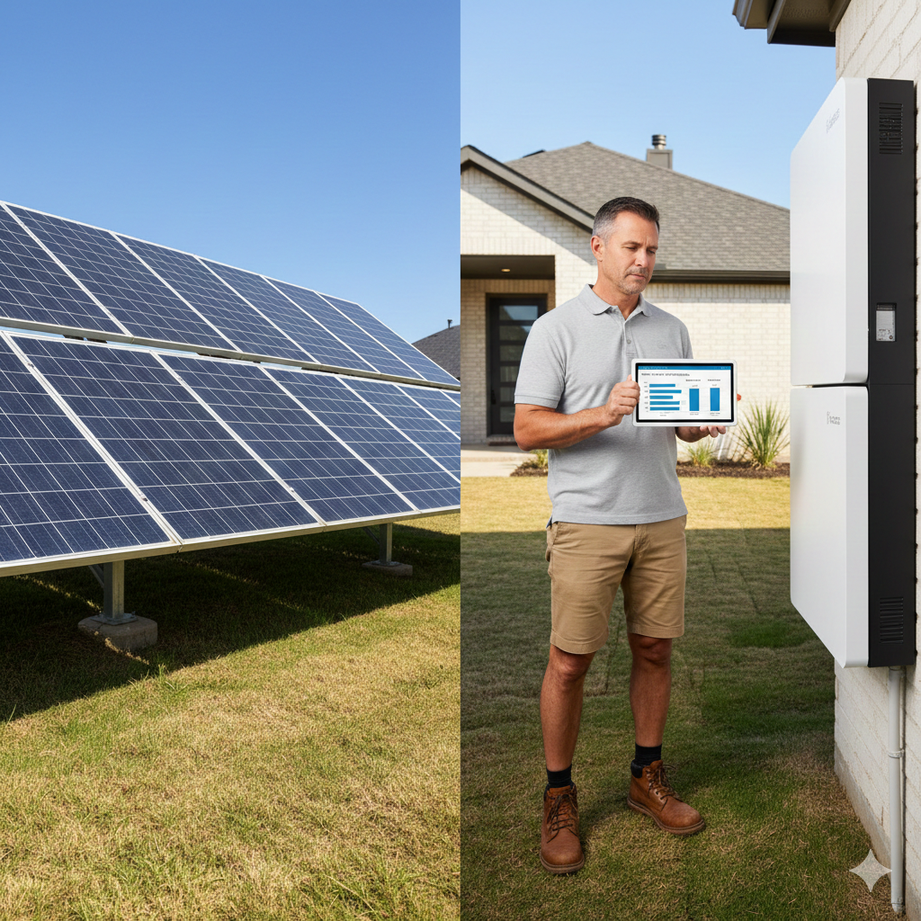
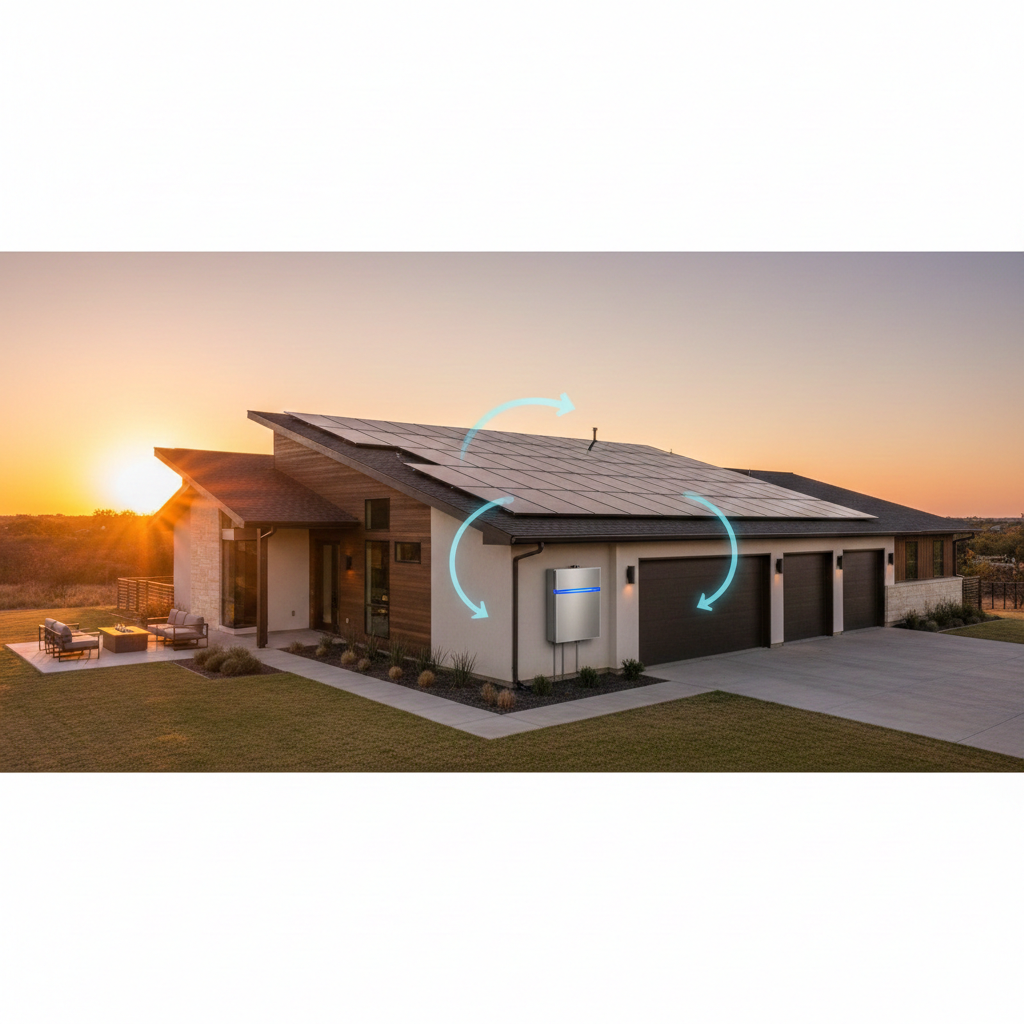
Clean energy systems qualifying for 30% federal tax credit: battery storage, solar panels, and energy flow visualization
Battery storage and solar panels qualify for the 30% federal Residential Clean Energy Credit

Can I Get a Tax Credit for a Generac Generator?

No—the brand doesn't change eligibility. Generac, Kohler, Briggs & Stratton, and all other fossil fuel generator manufacturers produce equipment that doesn't qualify for federal energy tax credits. The credit applies to technology type, not brand name.

However, Generac does manufacture battery storage products like the PWRcell system. These battery systems, not generators, can qualify for the 30% credit if they meet the 3 kWh minimum capacity requirement.

If backup power with tax benefits matters to you, consider exploring battery backup for home options instead of traditional generators.

What's the Difference Between Generators and Battery Backup for Tax Purposes?

The IRS distinguishes these systems based on how they produce and store energy:

Feature Whole House Generator Battery Backup System
Federal Tax Credit No 30% (through 2025)
Fuel Required Yes (gas/propane/diesel) No
Emissions Yes None
Silent Operation No Yes
Clean Energy No Yes

Generators create electricity through combustion—a process that produces emissions and requires ongoing fuel costs. Battery storage systems store electricity electrochemically, producing zero emissions during operation.

For Texas homeowners, understanding this distinction matters. The home battery wall approach offers both backup power and significant tax savings that generators simply cannot provide.
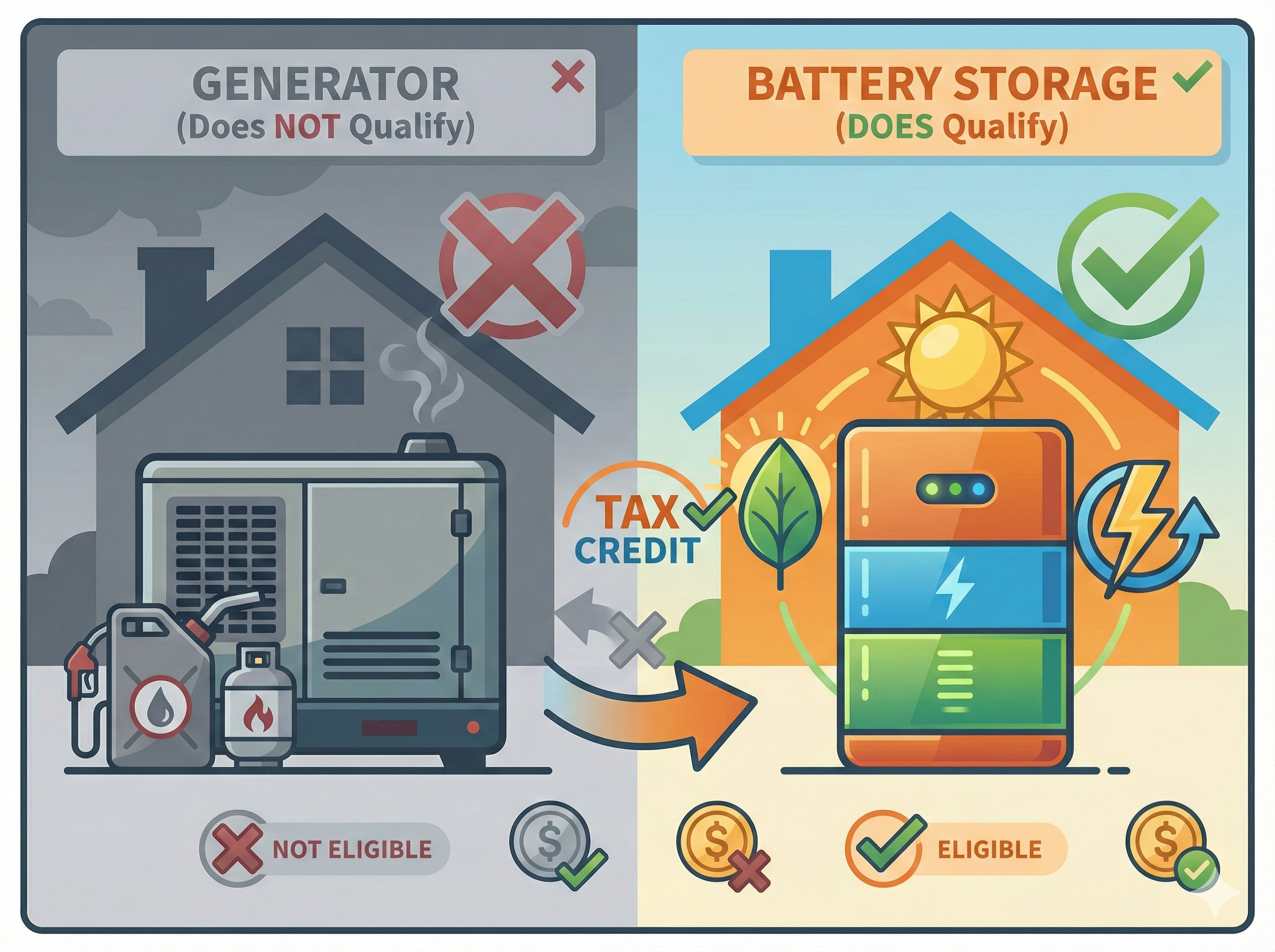
Side-by-side comparison of generators vs battery backup systems for tax credit eligibility
The key difference: generators use fossil fuels (no credit), batteries store clean energy (30% credit)

How Much Is the Federal Tax Credit for Battery Storage?

The Residential Clean Energy Credit provides 30% of qualified installation costs with no annual cap for residential systems.

Example calculation:

  • Battery system cost: $15,000
  • Tax credit (30%): $4,500
  • Net cost after credit: $10,500

According to Misty Erickson, CPA and Senior Manager at AICPA, "The expanded credits are likely to make consumer energy-efficient purchases even more common in the coming years."

The credit is non-refundable but carries forward if you can't use it all in one year. Claim it using IRS Form 5695.

What's the Deadline for Energy Tax Credits?

The current 30% rate expires December 31, 2025 for residential installations. After that, the Inflation Reduction Act originally planned this phase-out:

Year Credit Percentage
2022-2032 30%
2033 26%
2034 22%
2035+ 0%

However, pending legislation may accelerate this timeline. Paul Rasor, CPA and Partner at Plante Moran, notes: "Taxpayers who plan ahead can potentially claim up to $3,200 in credits each year through 2032 for qualifying energy-efficient home improvements."

If you're considering battery backup, acting before the 2025 deadline locks in the full 30% credit rate.

Are There Texas Rebates for Generators or Battery Backup?

Texas currently has no state-level rebates for whole house generators. Utility programs are limited:

  • Oncor: Rebates for high-efficiency A/C ($300-$3,500), but not generators or batteries
  • CenterPoint Energy: Occasional generator promotions, not ongoing programs
  • Generac Grid Support Program: Earn $5/hour for grid support runtime (not a rebate)

Texas has allocated $690 million for HOMES/HEAR efficiency rebates, though these programs haven't launched yet and likely won't cover traditional generators.

The federal 30% credit remains the primary incentive for Texas homeowners considering battery backup in Texas.

Is a Generator Tax Deductible for Any Other Reason?

While generators don't qualify for energy credits, limited deduction scenarios exist:

Medical Necessity (Section 213):
If a physician documents that backup power is medically necessary (life support equipment, medication refrigeration), a portion may qualify as a medical expense deduction.

Business Use (Section 179):
Home-based businesses may depreciate generator costs proportional to business use.

Home Office Deduction:
If you work from home, a percentage might be deductible based on office square footage.

These require proper documentation and professional tax guidance—they're exceptions, not standard deductions.
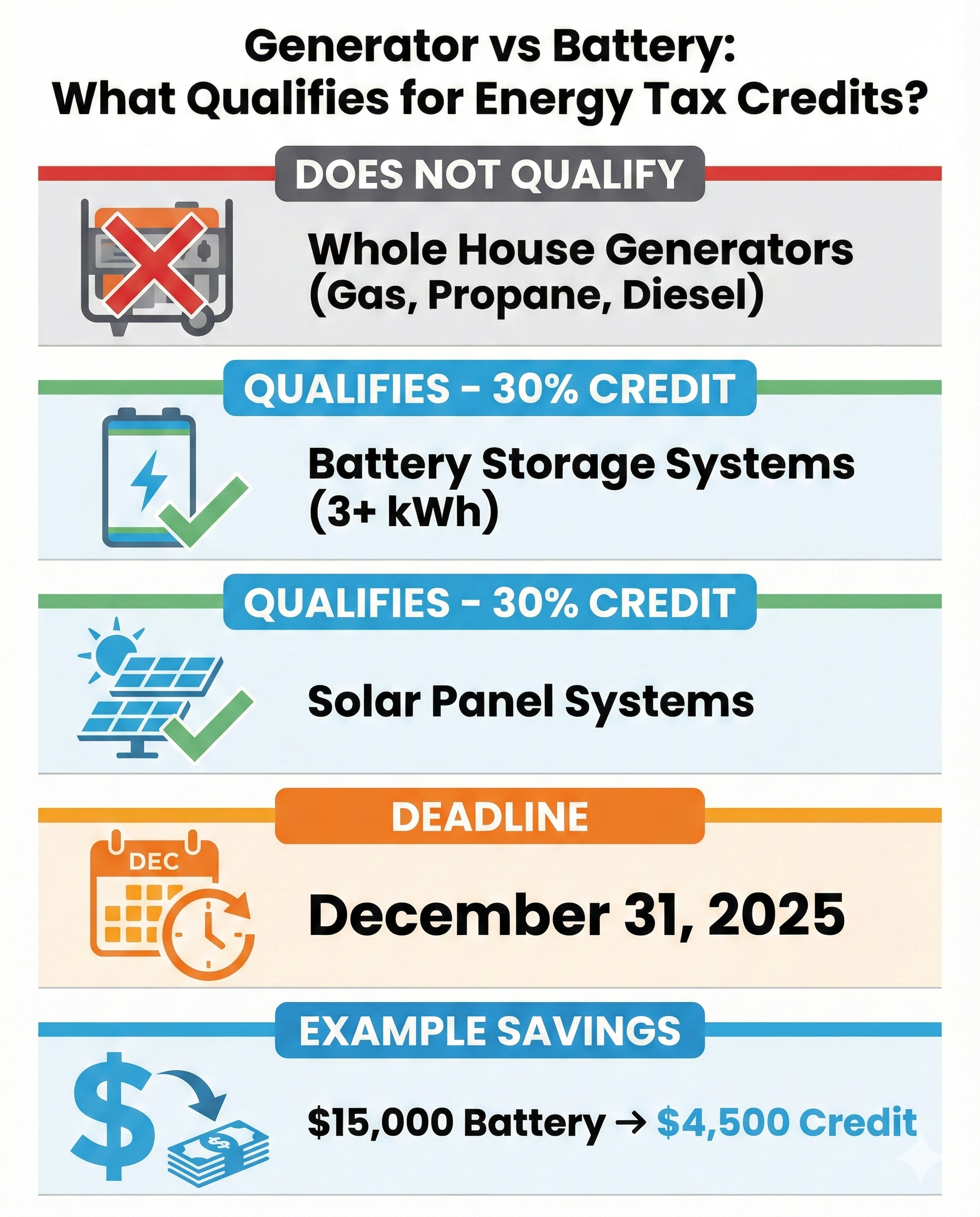
Energy tax credit infographic showing what qualifies, deadline December 31 2025, and example $4500 savings
Quick reference guide: what qualifies for energy tax credits and the December 31, 2025 deadline

What Should Texas Homeowners Do?

The bottom line: whole house generators don't qualify for federal energy tax credits, but battery storage systems do. With the 30% credit deadline approaching December 31, 2025, Texas homeowners have limited time to maximize savings on qualifying backup power.

If you're evaluating whether solar batteries are worth it for your situation, consider:

  1. Calculate potential savings: A $15,000 battery system yields $4,500 in tax credits
  2. Act before 2025 deadline: Lock in the full 30% rate
  3. Explore your options: Battery backup provides silent, clean power with tax benefits generators can't match

Ready to explore backup power solutions that qualify for federal tax credits? Get your free energy quote from our Texas energy consultants today.


Sources

Free Nights Plans for EV Owners in Texas: The Smartest Way to Charge

Texas EV owner? A free nights electricity plan can zero out your home charging bill. Here is the break-even math, top providers, and the setup that works.
Read More >>

Texas Summer Electricity Bills: How to Stay Cool and Save Money

TXU's Beat the Heat program signals summer bill season in Texas. Here are practical homeowner tips to compare plans, lock a fixed rate, and lower cooling costs.
Read More >>

How to Shift Your Energy Usage to Nights and Maximize a Free Nights Plan

A step-by-step playbook to shift energy usage to nights and maximize a Texas free nights plan: which appliances to run when, the break-even math, and how to verify savings.
Read More >>

Free Nights vs. Free Weekends: Which Texas Energy Plan Saves More?

Free nights vs free weekends in Texas: a side-by-side comparison, the break-even math, and who saves more on each plan.
Read More >>

Free Nights Energy Plans in Texas: How They Work and Who They're For

Free nights electricity plans in Texas: how they work, who actually saves money, the hidden costs, and the break-even math before you switch.
Read More >>

Solar Buyback vs. Battery Storage: Which Saves Texas Homeowners More Money?

Home › Solar Buyback Plans in Texas › Solar Buyback vs. Battery Storage Which saves more? For Texas homeowners with a competitive solar buyback rate like Ambit Energy's 1:1 at 12.5¢/kWh, buyback-only delivers $934/year with zero capital investment. Battery storage delivers $1,038–$1,376/year but requires $6,400–$7,779 after Oncor rebates. The hybrid approach — both together — […]
Read More >>

Texas Utility Shutoffs Are Rising: What Homeowners Should Know

A new federal report shows Texas leads the nation in electricity shutoffs. Here is what Houston and DFW homeowners can do to protect their service before summer.
Read More >>

Best Solar Buyback Plans in Texas: How to Compare and Choose

Home › Solar Buyback Plans in Texas › Best Solar Buyback Plans in Texas The best solar buyback plan in Texas depends on five factors: rate type (fixed vs. variable vs. 1:1), credit structure, contract length, TDU delivery charges, and your production-to-consumption ratio. As of 2026, Ambit Energy offers the highest fixed buyback rate at […]
Read More >>

Texas $0-Down Home Battery Plan: What Homeowners Should Know

The new Octopus Energy PowerStore plan offers Texas homeowners a 30 kWh battery with no down payment. We break down the real all-in cost for a Houston home and the four questions to ask before signing a 36-month contract.
Read More >>

Beyond Buyback: Why Texas Solar Owners Are Adding Battery Storage Instead

Home › Solar Buyback › Beyond Buyback: Battery Storage Battery backup for solar panels captures 2–6x more value per kilowatt-hour than exporting surplus energy for buyback credits. With buyback rates compressed to 3–7¢/kWh while retail electricity costs 12–18¢/kWh during peak hours, storing solar energy in a battery and using it yourself is the smarter economic […]
Read More >>

Solar Buyback Plans in Texas: A Complete Guide for Solar Homeowners

Home › Solar Buyback › Solar Buyback Plans in Texas Solar buyback plans let Texas homeowners sell surplus solar energy back to their REP for bill
Read More >>

Oncor Rate Increase 2026: What Texas Homeowners Need to Know Before Summer

Oncor filed for a rate increase adding approximately $7 per month to DFW electricity bills. Learn what is driving the increase, how it affects your bill, and the steps Texas homeowners can take to lock in competitive rates before summer 2026.
Read More >>

Solar + Battery + Free Nights: The Texas Triple Play for Lower Electric Bills

Home › Energy Plans › Solar + Battery + Free Nights Triple Play Combining solar panels, battery storage, and a free nights electricity plan create
Read More >>

Are Free Nights Electricity Plans Worth It? A Texas Homeowner's Analysis

Home › Energy Plans › Are Free Nights Plans Worth It? Are free nights electricity plans worth it? For most Texas homes, no. A study of 501 consume
Read More >>

Free Nights Electricity Plans in Texas: The Ultimate Guide to Saving More

Home › Energy Plans › Free Nights Electricity Plans in Texas Free nights electricity plans in Texas charge $0 for energy during off-peak hours (ty
Read More >>

How to Size a Home Battery: How Much Storage Do You Actually Need?

Home › Energy Storage › How to Size a Home Battery: How Much Storage Do You Actually Need? Most Texas homes need a battery energy storage system f
Read More >>
1 2 14