Whole House Battery Backup Cost: Your Complete 2025 Guide to Home Energy Storage

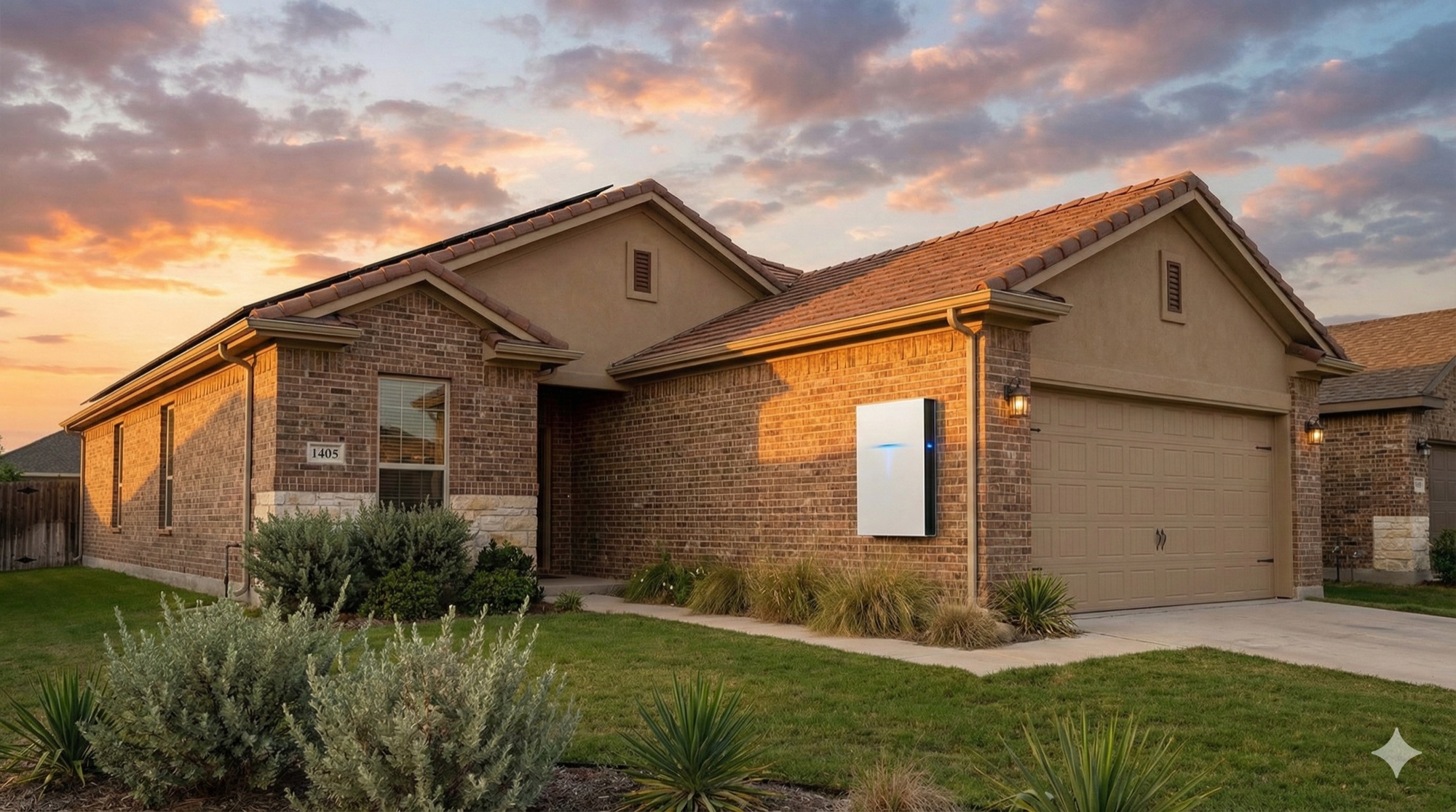
Modern Texas home with whole house battery backup system installed on garage wall during golden hour sunset

Whole House Battery Backup Cost: Your Complete 2025 Guide to Home Energy Storage

December 30, 2025
by
Matt Kundo

When Winter Storm Uri left 4.5 million Texas homes without power in 2021, many homeowners realized the true value of energy independence. Today, whole house battery backup cost has become one of the most searched topics among Texans seeking reliable backup power solutions. Whether you're preparing for the next grid emergency or simply want to reduce your electricity bills, understanding what you'll pay for a home battery system is essential.

According to EnergySage, the median whole house battery backup cost in 2025 is $1,037 per kilowatt-hour of storage capacity. For a typical 13.5 kWh system that can power essential home loads, expect to pay around $14,000 before incentives—or approximately $9,800 after the 30% federal tax credit. This guide breaks down everything you need to know about battery backup costs, from brand comparisons to Texas-specific incentives.

What Does Whole House Battery Backup Cost in 2025?

The whole house battery backup cost varies significantly based on system size, brand, and installation requirements. Current market data shows prices ranging from $1,000 to $1,600 per kWh, with 2025 marking record-low pricing at $1,133 per kWh according to Solar Builder Magazine.

For perspective, here's what typical system costs look like:

System Size Before Tax Credit After 30% ITC
10 kWh $10,000-$12,000 $7,000-$8,400
13.5 kWh (most common) $13,000-$15,500 $9,100-$10,850
20 kWh $18,000-$22,000 $12,600-$15,400
27 kWh (2 batteries) $24,000-$30,000 $16,800-$21,000

These prices include the battery unit, installation, gateway or controller, and standard electrical work. Additional costs may apply if your electrical panel needs upgrading or if complex installation conditions exist.

Breaking Down Your Battery Backup Investment

Understanding what goes into your whole house battery backup cost helps you make informed decisions and spot fair pricing. Let's examine each component.

Battery Unit Costs

The battery itself represents 50-60% of total system cost. Per-kWh pricing varies dramatically by manufacturer, from budget options like Pytes USA at $651/kWh to premium brands like Enphase at $1,510/kWh. This price difference reflects variations in technology, warranty coverage, and performance characteristics.

Installation Costs

Professional installation typically runs $2,000 to $4,000, depending on:

  • Complexity of electrical connections
  • Distance from main panel
  • Whether indoor or outdoor mounting
  • Local labor rates in your area
  • Permit requirements

Additional Components

Beyond the battery, you'll need:

  • Gateway or controller: $1,000-$2,000 (manages power flow and grid connection)
  • Transfer switch: Often included, but may add $500-$1,500
  • Monitoring system: Usually included in modern battery systems
  • Electrical upgrades: $500-$3,000 if your panel needs updating

Tesla Powerwall Cost Example

Component Cost Range
Battery unit (13.5 kWh) $6,700
Installation $2,000-$4,000
Gateway and extras $3,000-$4,000
Total before incentives $11,700-$14,700
After 30% ITC $8,190-$10,290

Best Home Battery Brands and Their Costs

Choosing the right battery system affects both your upfront whole house battery backup cost and long-term value. Here's how popular brands compare in 2025.

Tesla Powerwall

The most recognized name in home batteries, Tesla Powerwall offers:

  • 13.5 kWh usable capacity
  • $9,400 average installed cost after tax credit (EnergySage)
  • 10-year warranty with 70% capacity retention
  • Seamless solar integration
  • Storm Watch feature for automatic charging before weather events

Enphase IQ Battery

Enphase commands premium pricing but delivers exceptional quality:

  • Modular design (scalable from 5 to 15+ kWh)
  • $1,510/kWh (highest market pricing)
  • 10-15 year warranty
  • LFP chemistry for better heat tolerance
  • Best-in-class monitoring and support

FranklinWH

A growing competitor with strong value:

  • 15 kWh standard capacity
  • $18,300 total installed
  • 12-year warranty
  • Integrated whole-home management system
  • Excellent for complex installations

Budget-Friendly Options

For cost-conscious homeowners:

  • Pytes USA: $651/kWh (most affordable on EnergySage)
  • EG4: $986/kWh for 12.9 kWh systems ($12,719 total)
  • SolarEdge: $1,336/kWh with excellent solar integration

Brand Comparison Table

Brand Cost/kWh Capacity Total Cost* Warranty
Pytes USA $651 Various Lowest 10 years
EG4 $986 12.9 kWh $12,719 10 years
Tesla ~$725 13.5 kWh $9,800 10 years
FranklinWH $1,220 15 kWh $18,300 12 years
SolarEdge $1,336 9.7 kWh $12,959 10 years
Enphase $1,510 Various Highest 10-15 years
*After federal tax credit where applicable
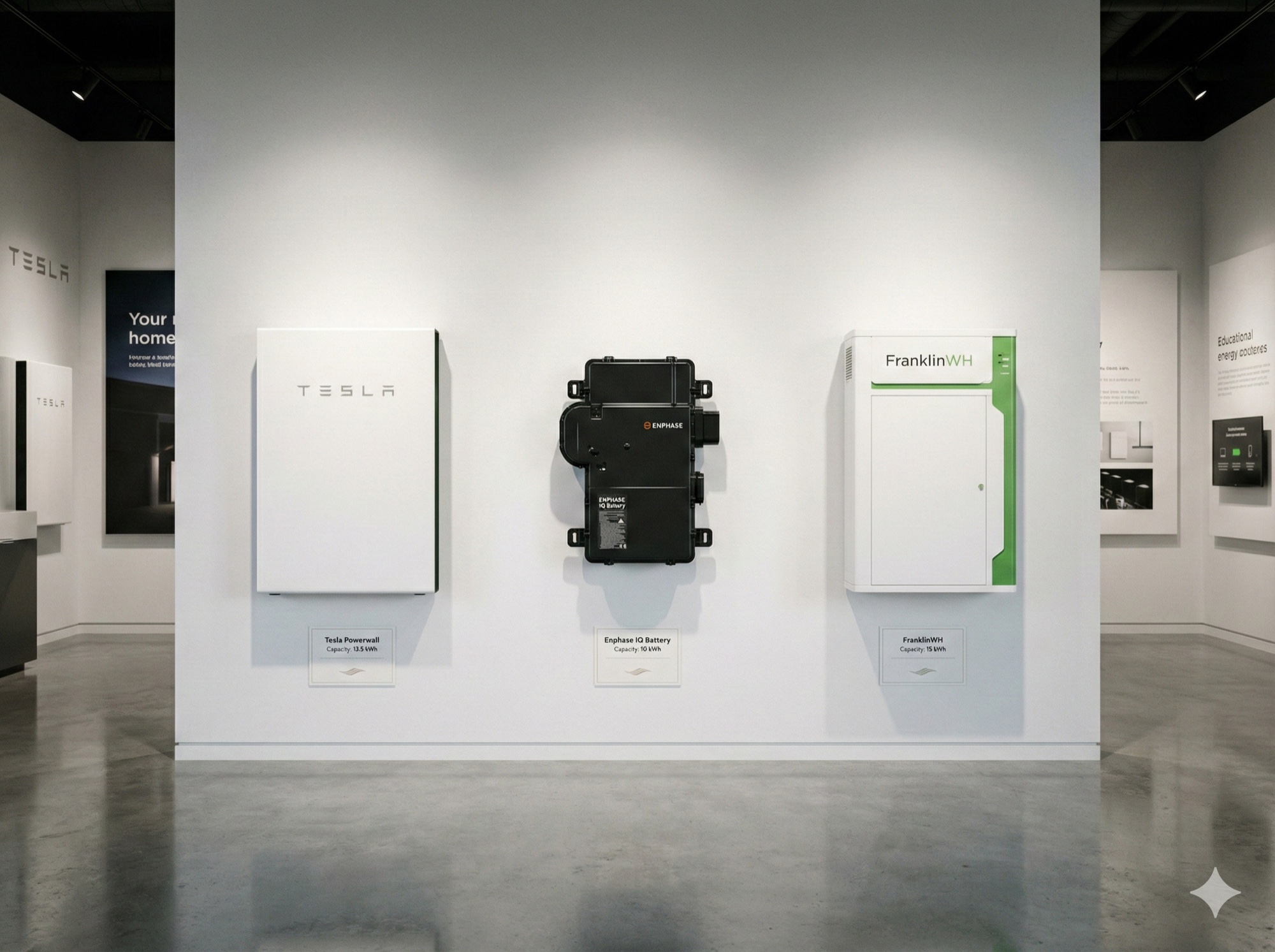
Three leading home battery brands compared: Tesla Powerwall, Enphase IQ Battery, and FranklinWH systems displayed in showroom
Leading battery brands offer different capacities and features to match your home's backup power requirements.

What Determines Your Whole House Battery Backup Cost?

Several factors influence your final investment. Understanding these helps you budget accurately and potentially reduce costs.

Capacity Requirements

Larger homes with higher energy consumption need more battery capacity. A 2,000 square foot home with average usage might function well with 13.5 kWh, while a 4,000 square foot home may require 27+ kWh for adequate backup power.

Brand and Technology Choice

Premium brands like Enphase cost more upfront but often provide:

  • Longer warranties
  • Better thermal management
  • Superior monitoring
  • Higher round-trip efficiency

Budget brands may save money initially but could have shorter lifespans or fewer features.

Installation Complexity

Your installation cost increases if:

  • Your electrical panel is outdated (requires upgrade)
  • The battery location is far from your panel
  • You need trenching for outdoor installation
  • Local permitting is complex
  • Your home has unique electrical requirements

Geographic Location

Texas homeowners generally benefit from:

  • Competitive installer markets keeping labor costs reasonable
  • Faster permitting than many other states
  • Strong installer network due to high demand
  • Deregulated utility market simplifying interconnection

How to Reduce Your Battery Backup Cost with Incentives

Smart homeowners can significantly reduce their whole house battery backup cost through available incentives. Here's what's available in 2025.

Federal Investment Tax Credit (30%)

The most significant incentive, the federal ITC offers:

  • 30% credit on total battery system cost
  • Applies to standalone batteries (no solar required)
  • Minimum 3 kWh capacity to qualify
  • Critical deadline: December 31, 2025
  • Dollar-for-dollar reduction in federal tax liability
  • Excess credit carries forward to future years

Example calculation:

  • Battery system cost: $14,000
  • 30% ITC: $4,200
  • Your cost after credit: $9,800

Texas-Specific Incentives

While Texas lacks a statewide battery rebate, several programs exist:

Property Tax Exemption: The added home value from your battery system is exempt from property taxes statewide—automatic, no application needed.

Austin Energy: Offers up to $2,500 in rebates for qualifying battery installations.

CPS Energy (San Antonio): Provides $10 bill credits each time your battery supports grid events.

Reliant Octo GridBoost: Pays $40 monthly credits plus market-rate exports for participating batteries.

Ready to maximize your savings? Get your free energy quote to discover which incentives apply to your situation.

Understanding Battery Technology: LFP vs Lithium-Ion

The chemistry inside your battery affects performance, longevity, and safety—all factors in your whole house battery backup cost over time.

Lithium-Ion (NMC/NCA)

Traditional lithium-ion batteries using nickel-manganese-cobalt or nickel-cobalt-aluminum chemistry:

  • 3,000-5,000 cycle lifespan (10-15 years)
  • 90-95% round-trip efficiency
  • Higher energy density (smaller footprint)
  • More sensitive to heat
  • Lower upfront cost ($500-800/kWh)

LFP (Lithium Iron Phosphate)

The newer standard for home batteries:

  • 6,000-10,000 cycle lifespan (15-20 years)
  • 95-98% round-trip efficiency
  • Better thermal stability
  • Safer chemistry (no thermal runaway)
  • Slightly higher cost ($600-1,000/kWh)
  • Recommended for Texas due to excellent heat tolerance

Technology Comparison

Feature NMC/NCA LFP
Cycle life 3,000-5,000 6,000-10,000
Lifespan 10-15 years 15-20 years
Efficiency 90-95% 95-98%
Heat tolerance Moderate Excellent
Fire safety Good Better
Cost Lower Slightly higher

For Texas homeowners, LFP chemistry provides better long-term value despite slightly higher upfront costs. The extreme summer heat can degrade NMC batteries faster, while LFP maintains performance in high temperatures.
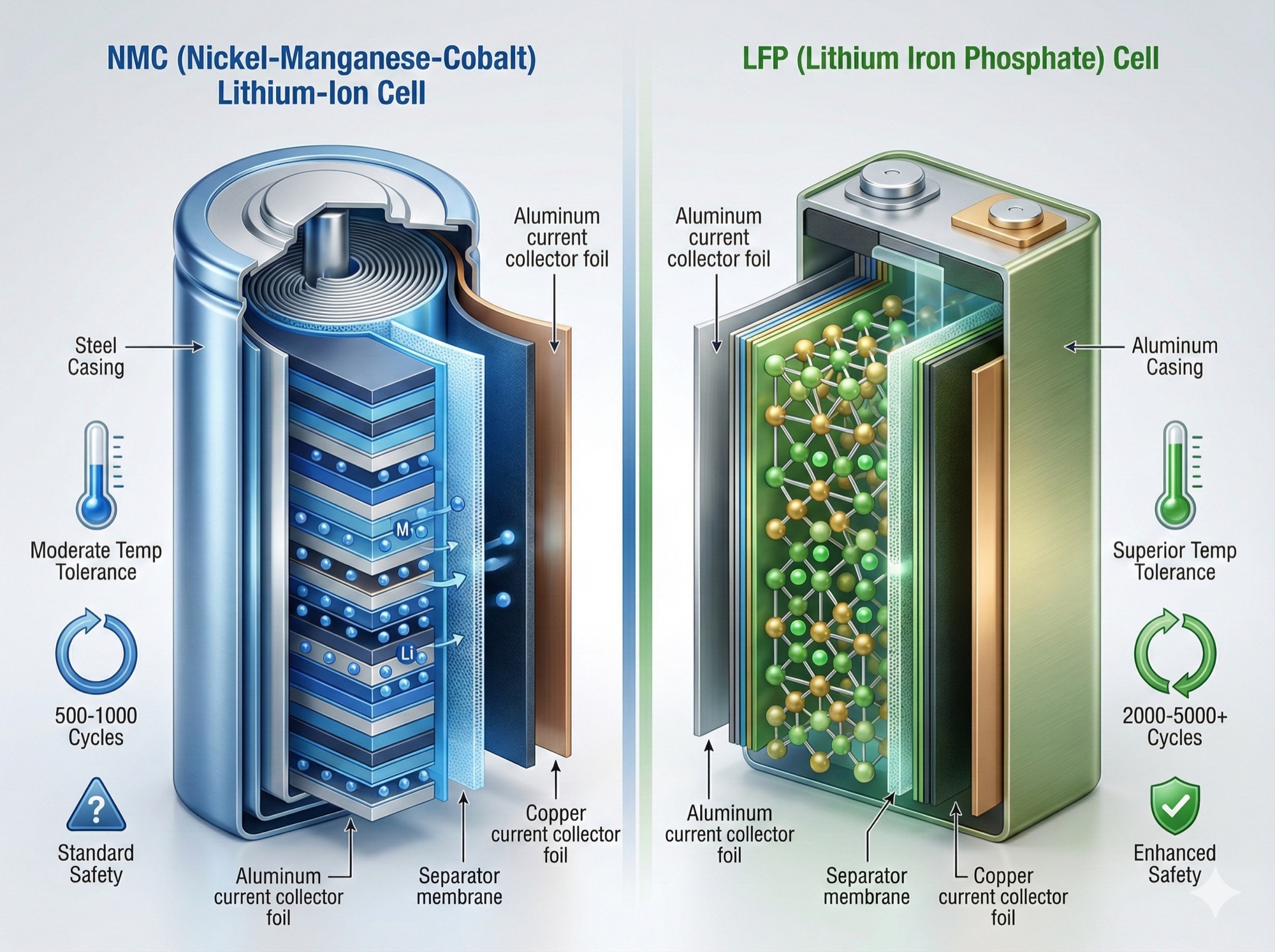
LFP vs lithium-ion battery technology comparison showing cell structure and performance differences
LFP (lithium iron phosphate) batteries offer superior heat tolerance and longer lifespan - ideal for Texas climates.

How Much Battery Capacity Does Your Texas Home Need?

Properly sizing your battery system ensures you get adequate backup power without overspending. Here's how to calculate your needs.

Understanding Texas Home Energy Usage

The average Texas home consumes:

  • 10,000-15,000 kWh annually
  • 30-40 kWh daily (average)
  • 40+ kWh daily during summer (air conditioning peak)
  • 5-10 kW peak demand

Essential vs Whole Home Backup

Essential loads backup (refrigerator, lights, fans, phones, internet):

  • Requires 15-20 kWh per day
  • 1 battery (13.5 kWh) provides 8-12 hours
  • Most cost-effective approach

Whole home backup (including air conditioning):

  • Requires 30-40 kWh per day
  • 2-3 batteries (27-40 kWh) needed
  • Significantly higher cost
  • May require electrical panel modifications

Sizing Recommendations

Backup Goal Daily Load Recommended Capacity Approx. Cost*
Essentials (1 day) 15-20 kWh 20-27 kWh $14,000-$18,900
Whole home (12 hrs) 20-25 kWh 27-35 kWh $18,900-$24,500
Whole home (1 day) 30-40 kWh 40-54 kWh $28,000-$37,800
Extended backup (2 days) 40+ kWh 54+ kWh $37,800+
*After 30% federal tax credit

Sizing Formula

For precise calculations:

Required Capacity = (Daily Needs × Backup Days) / (DoD × Efficiency × 0.85)

Where:

  • DoD = Depth of Discharge (typically 80-90%)
  • Efficiency = Round-trip efficiency (90-95%)
  • 0.85 = Derating factor for Texas heat and battery aging

Whole House Battery Backup vs Traditional Generator

Understanding how battery systems compare to generators helps justify the whole house battery backup cost.

Upfront Investment

System Type Cost Range
Battery backup (13.5 kWh) $9,800-$14,000
Portable generator (3-5 kW) $500-$1,500
Standby generator (10-20 kW) $5,000-$15,000

Ongoing Costs

Battery Systems:

  • Fuel: $0
  • Maintenance: Minimal (monitoring only)
  • Expected annual cost: Near zero

Generators:

  • Fuel: $50-$200 per outage event
  • Maintenance: $200-$500 annually
  • Oil changes, filter replacements required

When Each Makes Sense

Choose Battery Backup If:

  • You want silent operation
  • Solar panels are installed or planned
  • You prefer zero-emission backup
  • You value automatic, seamless transition
  • Long-term cost savings matter

Choose a Generator If:

  • Budget is extremely limited
  • You need unlimited runtime
  • Rural location with extended outages
  • Whole-home AC backup is essential
  • Fuel storage is not a concern

Comparison Summary

Factor Battery Generator
Upfront cost $9,800-$14,000 $5,000-$15,000
Fuel costs $0 $50-200/event
Noise Silent 65-75 dB
Maintenance Minimal Regular
Solar integration Yes No
Automatic operation Yes Some models
Runtime 4-12+ hours Unlimited
Emissions Zero High

The Case for Battery Backup in Texas

Texas presents unique circumstances that make battery backup particularly valuable—and help justify the whole house battery backup cost.

ERCOT Grid Vulnerabilities

The Texas grid (managed by ERCOT) operates in isolation from the rest of the country. This means:

  • No interstate power sharing during emergencies
  • Higher vulnerability to extreme weather
  • Growing demand straining infrastructure
  • 10+ emergency alerts issued in 2024-2025

Growing Reliability Concerns

ERCOT projects energy demand to nearly double by 2030, with potential supply shortages during peak periods as early as 2026. Population growth, extreme weather patterns, and increasing electrification all stress the system.

Winter Storm Uri Impact

The February 2021 disaster demonstrated Texas grid fragility:

  • 4.5 million homes and businesses lost power
  • Outages lasted days for many families
  • Over 240 deaths attributed to the event
  • $195 billion in total damages

"Home battery storage systems in Texas... provide essential backup power during grid outages while reducing your monthly electricity bills." — Lone Star Solar Services

Maximizing Value with Solar

For Texas homeowners considering solar, Ambit Energy offers a solar buyback program that credits excess energy at retail rates rather than wholesale. Combined with battery storage, this creates a powerful energy independence solution.
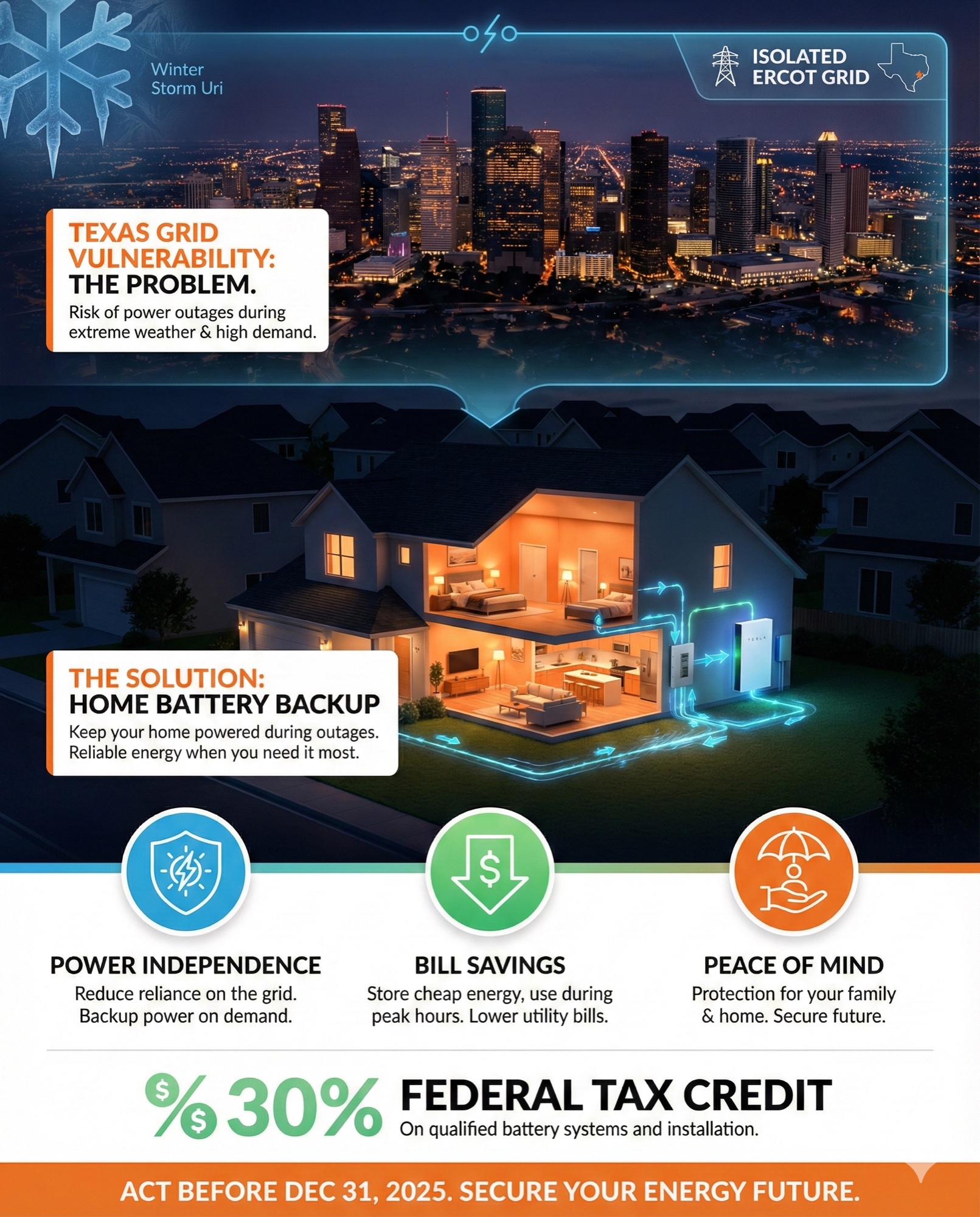
Texas grid reliability infographic showing battery backup benefits: protection during outages, bill savings, and federal tax credit deadline
The isolated Texas grid and increasing extreme weather events make battery backup an essential investment for energy independence.

What to Expect During Battery Installation

Understanding the installation process helps you plan around the whole house battery backup cost timeline.

Overall Timeline: 6-12 Weeks

Phase Duration
Site assessment and quote 1-2 weeks
Permitting 2-4 weeks
Equipment delivery 2-4 weeks
Installation 1-3 days
System commissioning 1 day
Utility interconnection 1-4 weeks

Step-by-Step Process

  1. Free consultation: Assess your needs and home requirements
  2. Site assessment: Evaluate electrical panel, installation location, and complexity
  3. System design: Customize capacity and configuration for your goals
  4. Permitting: Submit plans to local building department
  5. Equipment delivery: Battery, gateway, and components arrive
  6. Professional installation: Licensed electricians mount and wire system
  7. Commissioning: Test all functions and configure settings
  8. Utility approval: Final interconnection authorization

Texas's deregulated market generally speeds the interconnection process compared to other states.

Frequently Asked Questions About Battery Backup Costs

How much does a whole house battery backup cost in Texas?

A typical 13.5 kWh system costs $13,000-$15,500 before incentives. After the 30% federal tax credit, expect to pay $9,100-$10,850. Larger systems for whole-home backup range from $18,000 to $30,000+ before credits.

Is there a tax credit for home batteries in 2025?

Yes. The 30% federal Residential Clean Energy Credit applies to standalone battery systems with 3+ kWh capacity through December 31, 2025. This deadline is critical—after 2025, the credit may phase down or requirements may change.

How long do home batteries last?

Lithium-ion batteries typically last 10-15 years, while LFP (lithium iron phosphate) batteries can last 15-20 years. Most manufacturers offer 10-year warranties guaranteeing at least 70% capacity retention.

Can I install a battery without solar panels?

Absolutely. Standalone batteries qualify for the federal tax credit and can charge from grid power. They provide backup during outages and enable time-of-use arbitrage (charging during cheap hours, using stored power during expensive peaks).

How many batteries do I need for whole house backup?

Most Texas homes need 2-3 batteries (27-40 kWh) for adequate whole-home backup during outages. For essential loads only (refrigerator, lights, internet), one 13.5 kWh battery often suffices for 8-12 hours.

Which battery brand is best for Texas?

LFP chemistry batteries perform best in Texas heat. Top choices include Tesla Powerwall, Enphase IQ Battery, and FranklinWH—all using heat-tolerant LFP technology that maintains performance in extreme temperatures.

How much can I save with battery backup?

Beyond outage protection, batteries enable time-of-use savings of $20-$50 monthly by shifting consumption to off-peak hours. Combined with solar and programs like Reliant's GridBoost ($40 monthly credits), savings can exceed $100 monthly.

Do batteries work during power outages?

Yes. Home batteries automatically detect outages and switch to backup power within milliseconds—fast enough that you won't notice the transition. Your home operates normally on stored battery power until grid service returns.

Take Control of Your Energy Future

The whole house battery backup cost represents an investment in energy independence, bill savings, and peace of mind. With 2025 prices at record lows and the 30% federal tax credit deadline approaching December 31, 2025, now is an optimal time to act.

Key takeaways:

  • Median cost: $1,037/kWh ($9,800-$14,000 for typical systems after tax credit)
  • 30% federal ITC reduces costs significantly
  • LFP technology offers best value for Texas climate
  • Size based on essential loads for cost-effective backup
  • Installation takes 6-12 weeks from quote to operation

Ready to protect your Texas home with reliable backup power? Our energy consultants can help you calculate costs, maximize available incentives, and select the right battery system for your needs.

Get Started Today

Request your free energy quote or call (817) 402-2664 to speak with a VIP Energy Service consultant about battery and solar solutions for your home.

Last updated: December 2025

How to Shift Your Energy Usage to Nights and Maximize a Free Nights Plan

A step-by-step playbook to shift energy usage to nights and maximize a Texas free nights plan: which appliances to run when, the break-even math, and how to verify savings.
Read More >>

Free Nights vs. Free Weekends: Which Texas Energy Plan Saves More?

Free nights vs free weekends in Texas: a side-by-side comparison, the break-even math, and who saves more on each plan.
Read More >>

Free Nights Energy Plans in Texas: How They Work and Who They're For

Free nights electricity plans in Texas: how they work, who actually saves money, the hidden costs, and the break-even math before you switch.
Read More >>

Solar Buyback vs. Battery Storage: Which Saves Texas Homeowners More Money?

Home › Solar Buyback Plans in Texas › Solar Buyback vs. Battery Storage Which saves more? For Texas homeowners with a competitive solar buyback rate like Ambit Energy's 1:1 at 12.5¢/kWh, buyback-only delivers $934/year with zero capital investment. Battery storage delivers $1,038–$1,376/year but requires $6,400–$7,779 after Oncor rebates. The hybrid approach — both together — […]
Read More >>

Texas Utility Shutoffs Are Rising: What Homeowners Should Know

A new federal report shows Texas leads the nation in electricity shutoffs. Here is what Houston and DFW homeowners can do to protect their service before summer.
Read More >>

Best Solar Buyback Plans in Texas: How to Compare and Choose

Home › Solar Buyback Plans in Texas › Best Solar Buyback Plans in Texas The best solar buyback plan in Texas depends on five factors: rate type (fixed vs. variable vs. 1:1), credit structure, contract length, TDU delivery charges, and your production-to-consumption ratio. As of 2026, Ambit Energy offers the highest fixed buyback rate at […]
Read More >>

Texas $0-Down Home Battery Plan: What Homeowners Should Know

The new Octopus Energy PowerStore plan offers Texas homeowners a 30 kWh battery with no down payment. We break down the real all-in cost for a Houston home and the four questions to ask before signing a 36-month contract.
Read More >>

Beyond Buyback: Why Texas Solar Owners Are Adding Battery Storage Instead

Home › Solar Buyback › Beyond Buyback: Battery Storage Battery backup for solar panels captures 2–6x more value per kilowatt-hour than exporting surplus energy for buyback credits. With buyback rates compressed to 3–7¢/kWh while retail electricity costs 12–18¢/kWh during peak hours, storing solar energy in a battery and using it yourself is the smarter economic […]
Read More >>

Solar Buyback Plans in Texas: A Complete Guide for Solar Homeowners

Home › Solar Buyback › Solar Buyback Plans in Texas Solar buyback plans let Texas homeowners sell surplus solar energy back to their REP for bill
Read More >>

Oncor Rate Increase 2026: What Texas Homeowners Need to Know Before Summer

Oncor filed for a rate increase adding approximately $7 per month to DFW electricity bills. Learn what is driving the increase, how it affects your bill, and the steps Texas homeowners can take to lock in competitive rates before summer 2026.
Read More >>

Solar + Battery + Free Nights: The Texas Triple Play for Lower Electric Bills

Home › Energy Plans › Solar + Battery + Free Nights Triple Play Combining solar panels, battery storage, and a free nights electricity plan create
Read More >>

Are Free Nights Electricity Plans Worth It? A Texas Homeowner's Analysis

Home › Energy Plans › Are Free Nights Plans Worth It? Are free nights electricity plans worth it? For most Texas homes, no. A study of 501 consume
Read More >>

Free Nights Electricity Plans in Texas: The Ultimate Guide to Saving More

Home › Energy Plans › Free Nights Electricity Plans in Texas Free nights electricity plans in Texas charge $0 for energy during off-peak hours (ty
Read More >>

How to Size a Home Battery: How Much Storage Do You Actually Need?

Home › Energy Storage › How to Size a Home Battery: How Much Storage Do You Actually Need? Most Texas homes need a battery energy storage system f
Read More >>

How Much Does Home Battery Storage Cost in 2026?

Home battery storage costs $9,000-$18,000 installed. Texas averages $17,472 for 13 kWh. Compare top systems, incentives, and payback periods for 2026.
Read More >>

Home Battery Backup Without Solar: What Texas Homeowners Need to Know

Learn how home battery backup works without solar panels. Texas homeowners can charge from the grid, use Free Nights plans for savings, and get instant outage p
Read More >>
1 2 14