Oncor Rate Increase 2026: What Texas Homeowners Need to Know Before Summer
If you live in the Dallas-Fort Worth area and haven't looked at your electricity plan lately, there's a rate change coming that could affect your monthly bill. Oncor has filed for a rate increase of approximately $7 per month for households using 1,000 kWh, driven by surging demand from AI data centers, crypto mining, and industrial expansion across the ERCOT grid. That works out to roughly $84 per year in additional delivery charges. TDU charges like these are a pass-through on every Texas electricity bill, meaning your retail electric provider (REP) cannot control them. But you can control the supply side of your bill by locking in competitive rates now, before the increase compounds your monthly costs heading into summer.
What Happened: Oncor's Filing and the National Rate Trend
Oncor's rate increase filing reflects a broader trend hitting Texas homeowners from two directions at once. The national average residential electricity rate reached 18.05 cents per kWh in April 2026, up 5.4% year over year. In Texas, Oncor's blended residential rate currently sits at about 14 cents per kWh, which remains below the national average but has climbed 10% over the past five years.
The driver behind this filing is infrastructure investment. ERCOT is currently managing over 410 GW of load applications, primarily from data centers, which is nearly five times the grid's current capacity. To fund the transmission upgrades needed to serve this demand, utilities like Oncor file rate cases with the Public Utility Commission of Texas (PUCT). The timeline puts the rate impact squarely in the summer 2026 window, when Texas electricity usage peaks.
There is a silver lining. The PUCT is actively creating rules that require data center developers to prove land ownership, financial security, and real equipment procurement before ERCOT reserves transmission capacity for them. Chairman Thomas Gleeson has described an "80% claw back" mechanism: if a project is downsized or withdrawn, roughly 80% of the posted security is forfeited and credited directly to buy down residential customer charges. This is designed to filter out speculative projects and limit how much of the infrastructure bill lands on homeowners.
What This Means for Your Home Energy Bill
Every Texas electricity bill has two main components: TDU (delivery) charges and REP (supply) charges. Oncor's increase affects the delivery side. For a typical DFW household using 1,000 kWh per month, that adds about $7 to your monthly bill regardless of which REP you use. You cannot shop around to avoid this charge.
The REP supply charge, however, is where Texas homeowners have real control. In ERCOT's deregulated market, you can choose your provider and plan type. Fixed-rate plans in the Oncor service area are currently averaging between 14.2 and 16.3 cents per kWh all-in, which means locking in now, before summer demand pushes rates higher, protects the portion of your bill you can actually influence.
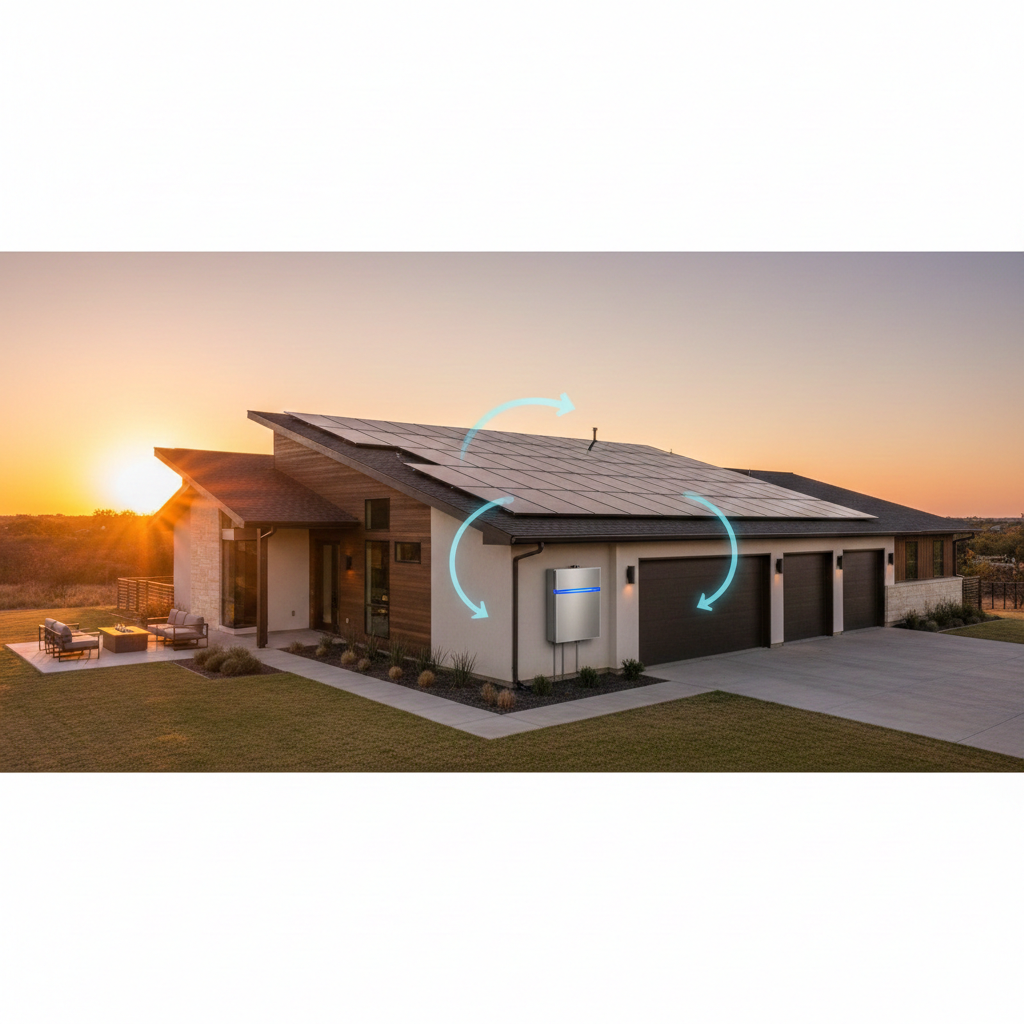
For solar homeowners, rising TDU costs make your solar investment even more valuable. Every kilowatt-hour your panels produce is one you don't have to buy from the grid at increasingly higher rates. If your current plan doesn't offer full-value solar buyback, the math has shifted further in favor of switching to a plan that does. And for homeowners considering home battery backup, pairing storage with solar lets you use your own energy during peak evening hours instead of buying from the grid at the highest rates.
Houston homeowners served by CenterPoint face similar dynamics. While this specific filing is Oncor's (serving Dallas, Fort Worth, Arlington, Plano, and Irving), CenterPoint has its own infrastructure investment cycles that put upward pressure on delivery charges. The same strategy applies: control what you can by locking in competitive supply rates.
The 4-Question Rate Lock Checklist
Before you make any changes to your electricity plan, run through these four questions to understand where you stand. This checklist takes about five minutes and can save you hundreds of dollars over the next year.
- Are you on a variable or fixed-rate plan? Variable-rate plans expose you to ERCOT wholesale price spikes, which can be extreme during Texas summers. If you're on a variable plan, locking in a fixed rate before the Oncor increase takes effect is especially important.
- When does your current contract expire? Switching mid-contract may trigger an early termination fee (ETF). Check your Electricity Facts Label (EFL) for the exact amount. If your contract expires in the next 60 days, you're in the ideal window to shop for a new plan.
- Which TDU serves your home? Oncor serves DFW. CenterPoint serves Houston. AEP covers West and Central Texas. Knowing your TDU helps you understand which delivery charges apply to your bill and which rate comparisons are relevant.
- Is your current rate above or below 18.05 cents per kWh? That's the current national average. If you're paying more, you may be overpaying even before the Oncor increase. If you're paying less, locking in that rate protects you against further escalation.
Three additional steps for a complete energy review:
- Have you compared rates on Power to Choose in the last six months? Rates shift frequently in the Texas market.
- If you have solar panels, does your plan offer solar buyback or net metering? Plans with 1:1 buyback return significantly more value than those with reduced "avoided cost" credits.
- Is your household sensitive to rate spikes during summer? Free Nights plans let you shift heavy usage (laundry, dishwasher, EV charging) to off-peak hours, reducing your effective rate.
Questions to Ask Your REP or Energy Consultant
Whether you're evaluating your current provider or shopping for a new one, these questions will help you make an informed decision ahead of the Oncor rate increase.
- How will the Oncor rate increase affect your monthly bill on your current plan?
- Do you offer fixed-rate plans that lock in supply charges before the increase takes effect?
- If I have solar panels, does your plan include 1:1 solar buyback, or just a retail-minus buyback rate?
- Can you switch plans without an early termination fee if your contract is near expiration?
- What Free Nights options do you have that could help offset rising TDU delivery charges?
How Ambit Can Help
We offer competitive fixed-rate plans designed to help DFW and Houston homeowners lock in supply costs now, before additional TDU increases compound your monthly bills. Our plans are built for the Texas market, with options that fit different household needs.
For solar homeowners, our 1:1 solar buyback plan returns full retail credit for every excess kilowatt-hour your panels send back to the grid. That's the full value of your energy, not the reduced "avoided cost" rate that many plans offer. For homeowners concerned about upfront costs when switching providers, we offer no-deposit electricity plans, meaning you can switch without a large deposit even if your credit history is less than perfect.
We also offer Free Nights plans that let you shift heavy electricity usage to nighttime hours at no additional charge, which can meaningfully reduce your effective rate during summer months when air conditioning drives bills higher. Rates and plans vary by location and usage. Review the Electricity Facts Label (EFL) for full details on any plan before enrolling.
Get your free energy quote to see how our plans compare to your current rate.
Frequently Asked Questions
What is the Oncor rate increase and when will it affect your Texas electricity bill?
Oncor has filed for a rate increase that adds approximately $7 per month for households using 1,000 kWh of electricity. This increase covers TDU (Transmission and Distribution Utility) delivery charges, which appear on every electricity bill in Oncor's service area regardless of your retail electric provider. The increase is expected to take effect in the summer 2026 rate window. Oncor serves the Dallas-Fort Worth metroplex, including Dallas, Fort Worth, Arlington, Plano, and Irving.
Why are Texas electricity rates rising in 2026?
Two factors are driving rate increases. First, AI data centers and crypto mining operations are requesting more ERCOT grid capacity than currently exists (over 410 GW in pending load applications, nearly five times current capacity). Utilities like Oncor file for rate increases with the PUCT to fund the transmission upgrades needed to serve this demand. Second, the national average residential electricity rate has climbed to 18.05 cents per kWh, up 5.4% year over year, reflecting broader infrastructure and fuel costs across the country.
What can Texas homeowners do to reduce their electricity bills before rate increases hit?
Start by locking in a competitive fixed-rate electricity plan, which protects the supply portion of your bill from further increases. Compare rates on Power to Choose or through an energy consultant. If you have solar panels, switch to a plan with 1:1 solar buyback to maximize your credit. Consider Free Nights plans to shift usage to off-peak hours. And run through the 4-Question Rate Lock Checklist in this article to assess whether your current plan still makes financial sense.
Does the Oncor rate increase affect Houston homeowners?
The Oncor rate increase specifically applies to the DFW service area. Houston is served by CenterPoint Energy, a different TDU. However, Houston homeowners face similar cost pressures from CenterPoint's own infrastructure investment cycles and TDU rate cases. The same strategy applies: control what you can by shopping for competitive supply rates from your REP, reviewing your EFL, and considering whether a fixed-rate or solar buyback plan could reduce your overall costs.