
A Texas free nights electricity plan is only as honest as the Electricity Facts Label (EFL) that defines it. Under Public Utility Commission of Texas Substantive Rule 25.475, every retail electric provider in the deregulated ERCOT market must publish a standardized EFL that lists the average price per kilowatt-hour (kWh) at 500, 1,000, and 2,000 kWh. For a free nights plan, that headline price embeds an assumed split between daytime and overnight usage; as of mid-2026 SaveOnEnergy filings, the energy charge during paid daytime hours commonly runs in the $0.18 to $0.25 per kWh range. Read the EFL line by line before you sign and you will know in under ten minutes whether the plan saves your Texas household money or quietly costs more than a fixed rate alternative. Plan details and rates are subject to change, and the Energy Facts Label is available for every plan on Power to Choose or the provider's website.
An Electricity Facts Label (EFL) is a one to two page document that every retail electric provider (REP) has to publish for each plan it sells in the deregulated ERCOT market. The Public Utility Commission of Texas (PUCT) created the EFL so Texas residents can evaluate competing plans on a uniform scorecard rather than on advertising promotions.
A compliant EFL must include the average price per kWh at 500, 1,000, and 2,000 kWh, the energy charge, the transmission and distribution utility (TDU) delivery charges, base or minimum usage fees, bill credit thresholds, contract length, the early termination fee, and the percentage of renewable content. All numbers on the label must be consistent with the Terms of Service and Your Rights as a Customer documents. The PUCT enforces compliance through complaint investigations and through the Power to Choose database.
For Texas households in deregulated TDU territory served by Oncor, CenterPoint, AEP Texas, or Texas New Mexico Power, the EFL is the only legal pricing document. Households inside municipal utility cities (the largest examples being the capital city and the city of San Antonio) do not shop EFLs at all because those markets are not deregulated, so this guide does not apply to those Texas households.
At VIP Energy Service we apply a Seven Section EFL Audit when guiding a Texas household through a free nights comparison. This is the named framework we teach the consultants in our organization to use with every prospect, and it is the same checklist we apply to any plan we review.
Running these seven checks in parallel on two or three competing EFLs makes the right answer for a Texas household very clear.
The most overlooked line on a free nights EFL is the daytime energy charge. The marketing headline average price at 1,000 kWh gets all the attention, but that average already assumes a specific share of the household's usage falls inside the free window. If real usage skews more daytime than the EFL's assumption, the household pays the daytime energy charge on more kWh than the headline price suggests.
For most Texas free nights plans, the daytime energy charge appears in the pricing section as a line that reads something like, as of the EFL effective date, "Energy Charge (Monday to Sunday, 6 a.m. to 8 p.m.): $0.215 per kWh." PUCT rule requires the EFL to spell that out. What happens in practice is that consumers see the bolded headline number and skip the table that produced it.
The Constellation Energy 101 guide to reading EFLs makes this point plainly: the average price you see depends on how much electricity you use during specific times. Without evaluating the underlying energy charge, the household cannot tell whether the headline average is realistic.
To determine the household's real monthly cost, six inputs are required from the EFL plus the last bill.
The formula is simple.
Monthly cost = (kWh times daytime share) times (daytime energy charge plus TDU per-kWh delivery) plus the TDU monthly fixed charge plus any base or minimum usage fee, minus any earned bill credit.
Compare the answer to the same calculation against a fixed rate plan's EFL at the household's usage level. The plan with the lower honest number wins, not the one with the catchier marketing. Plan details and rates are subject to change after the EFL effective date.
Hidden is the wrong word, because every fee we are about to list is disclosed on the EFL itself. They are simply easy to miss when the eye chases the headline. The four we see most often:
Any of these four can flip the breakeven on a free nights plan. A Texas household that lands at 950 kWh in a mild April can lose a 50 dollar bill credit and pay a 9.99 dollar minimum usage fee in the same statement, swallowing the savings the free window earned the rest of the year.
Free window times appear in the pricing or plan description section of the EFL in plain text. A compliant EFL states the exact start time, end time, time zone, and days of the week the free window applies. Common phrasings include "Free electricity Monday through Sunday, 9 p.m. to 7 a.m. Central Time" or "Free Nights, 8 p.m. to 6 a.m. CT."
Three details to verify before signing:
If the EFL is vague on any of these, request the Terms of Service. PUCT rules require every claim on the EFL to be matched in the Terms of Service.
Substantive Rule 25.475 is the master rule, codified in 16 Texas Administrative Code and enforced by the PUCT's Customer Protection Division. The essential elements:
In 2024 retail market oversight reporting, PUCT staff noted that pricing disclosures on time of use products, including free nights and free weekends plans, remain a continuing area of complaint volume from Texas consumers. That is one reason we recommend the line by line audit before any switch.
For consumers who want to file a complaint, the PUCT Customer Protection Division at 1-888-782-8477 handles EFL related disputes directly.
We are a Texas based Ambit Energy independent consultant organization, and EFL review is part of every household consultation we run. When a Texas homeowner asks whether a free nights plan saves money, we apply our Seven Section EFL Audit to three plans side by side: the free nights plan in question, a comparable fixed rate plan from another REP, and a free weekends plan if the household's usage skews to Saturday and Sunday.
We pull each plan's EFL directly from the Power to Choose database or the REP's website. We rebuild the average price calculation against the household's actual usage from the last twelve bills, not against the EFL's assumed split. We flag every base charge, minimum usage fee, and bill credit threshold. Then we hand the Texas homeowner a one page side by side comparison they can take to any provider for a second opinion. (We are an independent consultant organization and individual consultant earnings vary; results are not guaranteed.)
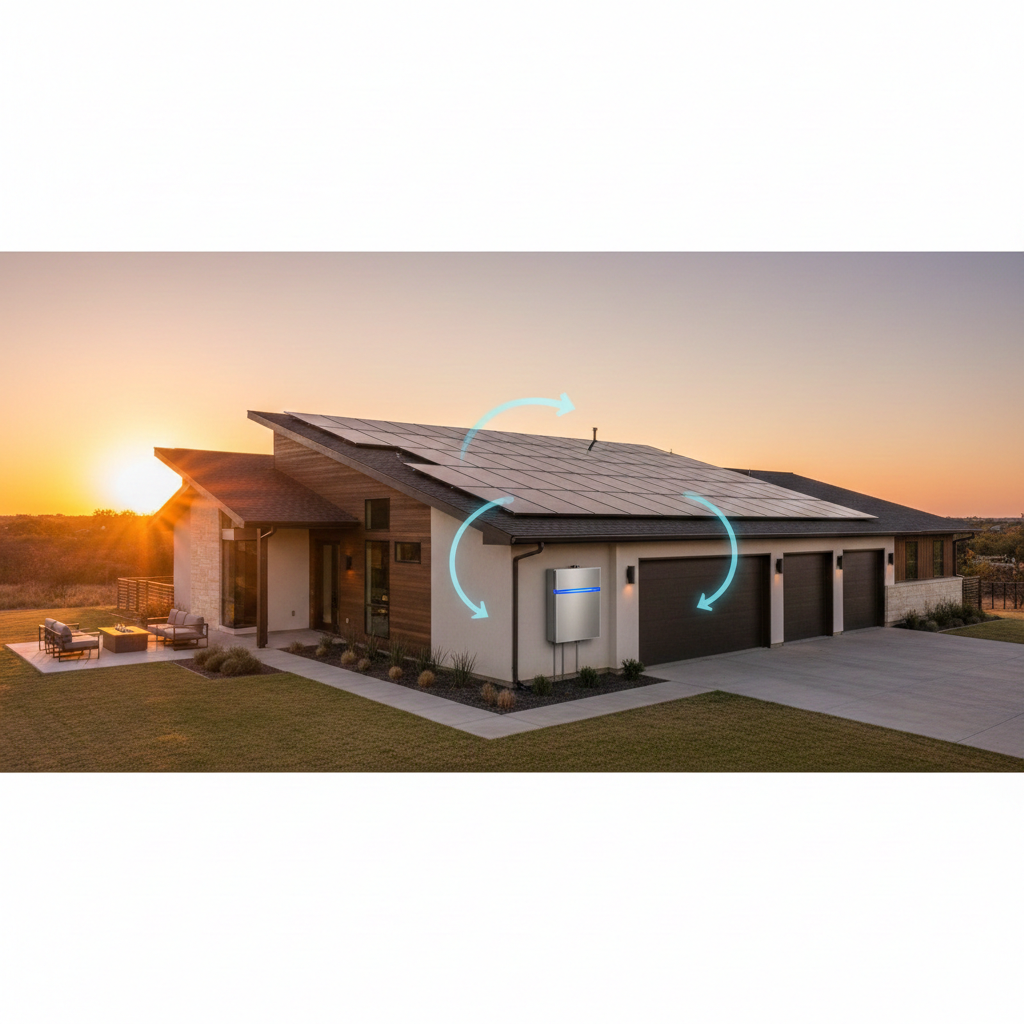
We also tell homeowners when a free nights plan is genuinely the right answer. EV owners who can shift most charging overnight, work from home households with smart thermostats and pool pumps on timers, and battery storage owners all tend to land on the affordable side of a free nights EFL. Households with daytime weekday occupants, electric resistance heat in winter, or west facing peak afternoon cooling load usually do not.
For deeper context on when a free nights plan does and does not pay off, our companion guides cover free nights versus free weekends math, how free nights energy plans work and who they fit, whether free nights plans are worth it overall, and the solar, battery, and free nights triple play.
If you would like a free EFL review on a plan you are considering, you can request one through our contact form. We do not charge for the analysis and we give you the honest answer even when the honest answer is that a fixed rate plan from another REP wins. Plan details and rates are subject to change, and the Energy Facts Label is available for every plan on Power to Choose or the provider's website. Subject to credit approval.
An Electricity Facts Label is a standardized one to two page disclosure required by Public Utility Commission of Texas Substantive Rule 25.475 that lists every price, fee, and contract term of a retail electricity plan in a fixed format so Texas consumers can compare plans on identical criteria.
The daytime energy charge appears in the pricing section as a per-kWh figure; as of mid-2026 plan filings reviewed by SaveOnEnergy, the typical range on Texas free nights plans is $0.18 to $0.25 per kWh. It is not hidden, but it is overshadowed by the bold average price at 1,000 kWh headline, which already embeds an assumed share of free window usage.
Multiply monthly kWh by the daytime usage share, multiply that by the daytime energy charge plus the TDU per-kWh delivery rate, add the TDU monthly fixed charge and any base or minimum usage fee, then subtract any earned bill credit. Compare the result to the same calculation on a fixed rate EFL.
Monthly base charges, minimum usage fees triggered below a threshold, bill credit thresholds that vanish in lower usage months, and early termination fees of 150 to 295 dollars (as of recent filings).
The EFL spells out the exact start time, end time, time zone (Central Time in Texas), and days of the week the free window applies. The Terms of Service must match.
PUCT Substantive Rule 25.475 sets the EFL format, the average price calculation, the two-page maximum, the minimum font size, the unique-per-product requirement, and the obligation to issue a new EFL for any plan change. The Customer Protection Division investigates complaints at 1-888-782-8477.
We rebuild the average price calculation against the household's actual twelve month usage, flag every base charge and minimum usage fee, and hand back a one page side by side comparison of the free nights plan, a fixed rate plan, and a free weekends plan, with an honest recommendation. We are an independent Ambit Energy consultant organization; earnings of individual consultants vary.
Sources and further reading:
Plan details and rates are subject to change. Energy Facts Label is available for every plan on Power to Choose. Subject to credit approval.



Copyright © 2026 VIPEnergyService.com. All rights reserved | PUCT# 10117