
Are you tired of your energy bills in Texas reaching astronomical heights every month? You're not alone. In the vast expanse of Texas, the Lone Star State, energy bills can often cast a daunting shadow over your household budget.
But fear not, as we introduce you to a comprehensive guide that promises to bring clarity and control to this electric conundrum.
By the end of this article, you'll be equipped with the knowledge and tools to make informed decisions, lower your energy expenses, and contribute to a more sustainable energy future.
Understanding how to find the cheapest and best energy in Texas doesn't have to be a huge chore. Keep reading to find out all about it.
If you want to understand how to get the best Texas energy rates, then you need to first understand the different types of plans available to you. We need to look at these one by one to fully get to grips with them.
With a fixed-rate energy plan, you lock in a set electricity rate for a specified period, usually 12, 24, or 36 months.
This offers stability and predictability, ensuring that your energy rate won't fluctuate with market changes. It's an excellent choice if you prefer budget consistency and protection against price spikes.
Variable-rate plans, on the other hand, don't offer the same predictability. Your energy rate can vary from month to month based on market conditions.
While you might benefit from lower rates during favorable periods, you could also face higher bills when energy prices rise. This option suits those comfortable with market fluctuations.
Indexed plans are a hybrid of fixed and variable plans. They are tied to an index, such as natural gas prices, and can change with market conditions. These plans may offer some savings but come with more risk and uncertainty.
Selecting the right energy provider in Texas is a critical decision that can significantly impact your electricity experience. To make an informed choice
Start by researching the options available in your area.
Online resources, including comparison websites and the official Public Utility Commission of Texas website, can be invaluable for gathering information on different providers and their plans. Pay attention to plan details, terms, and any hidden fees to ensure a transparent and fair deal.
Seek out customer reviews and ratings to gauge the reputation of potential energy providers. A company with a history of excellent service and customer satisfaction is likely to provide a better experience.
Compare the pricing structures of different plans. Look beyond the advertised rates and consider any additional charges, contract lengths, and billing options. Make sure the plan aligns with your budget and energy consumption patterns.
Assess the quality of customer service provided by the energy company. Reliable customer support can be a lifesaver in case of billing issues or power outages. Look for providers with a reputation for responsive and helpful customer service.
Understanding your electricity bill is the first step towards managing your energy expenses effectively.
In Texas, an electric bill consists of several components that contribute to the total amount you owe. These key components include the following.
Supply charges, often referred to as the energy charge, make up the cost of the electricity you consume. They are calculated based on your usage in kilowatt-hours (kWh) and the rate charged by your energy provider.
This is the portion of your bill where you have the most control, as it can be influenced by your choice of energy plan and usage habits.
Delivery charges cover the cost of transmitting and distributing electricity from power plants to your home.
These charges are set by the utility company or Transmission and Distribution Service Provider (TDSP) serving your area and are typically fixed. They are not negotiable, and you pay them regardless of your energy provider.
Taxes and various fees, such as regulatory charges and surcharges, are typically added to your bill.
These are mandated by state and local governments and help fund infrastructure, energy efficiency programs, and more.
To manage your electricity bill effectively, it's crucial to understand your consumption patterns. Most electricity bills provide historical usage data, which can be valuable for recognizing trends and planning your energy usage.
Look for patterns related to seasonal changes, peak usage times, and any spikes in consumption.
This information can help you make informed decisions, such as adjusting your thermostat, upgrading to energy-efficient appliances, or shifting energy-intensive tasks to off-peak hours.
Reducing your electricity bill in Texas requires a combination of smart energy usage and prudent choices. Here are some practical tips.
Selecting the right energy plan is crucial for managing your electricity costs effectively. Consider your consumption patterns and preferences when choosing between fixed-rate and variable-rate plans.
Fixed-rate plans provide price stability, making it easier to budget your monthly expenses. Variable-rate plans, on the other hand, can offer savings during low-demand periods, but they come with fluctuating rates.
Assess your risk tolerance and energy usage to make an informed choice.
One of the most impactful ways to reduce your electricity bill is by investing in energy-efficient appliances and lighting. Look for appliances with the ENERGY STAR label, which signifies high energy efficiency.
These appliances are designed to consume less electricity while delivering the same or better performance. Additionally, consider switching to LED or CFL (compact fluorescent lamp) lighting, which consumes significantly less energy compared to traditional incandescent bulbs.
Over time, these upgrades will not only lower your energy bills but also reduce your carbon footprint.
Your thermostat settings have a substantial impact on your energy consumption.
During the summer, set your thermostat to a slightly higher temperature when you're at home and increase it when you're away. In the winter, lower your thermostat to a comfortable yet cooler temperature.
You can further optimize your heating and cooling by investing in a programmable or smart thermostat. These devices allow you to schedule temperature adjustments, ensuring you use energy efficiently without compromising comfort.
Phantom loads, also known as standby power, occur when electronic devices and chargers continue to draw energy even when turned off or in standby mode.
Unplug devices like phone chargers, gaming consoles, and kitchen appliances when they're not in use. Alternatively, use power strips to easily disconnect multiple devices at once.
By eliminating phantom loads, you can save a significant amount of electricity and reduce your monthly bill.
Proper insulation and sealing air leaks in your home can lead to substantial energy savings. Inspect your doors and windows for gaps, and apply weather-stripping to seal them.
Check for cracks and openings in walls, ceilings, and floors, and use caulk or foam sealant to address them. Adequate insulation in your attic and walls can also help maintain a consistent indoor temperature, reducing the need for heating and cooling.
By preventing conditioned air from escaping and outdoor air from infiltrating, you'll use less energy to maintain a comfortable climate inside your home.
If you're on a time-of-use (TOU) energy plan, which charges different rates depending on the time of day, consider shifting energy-intensive activities to off-peak hours.
Many TOU plans offer lower rates during times of reduced demand, typically during evenings, nights, or weekends.
By running your dishwasher, washing machine, and other high-energy devices during these periods, you can take advantage of the lower rates and reduce your overall electricity costs.
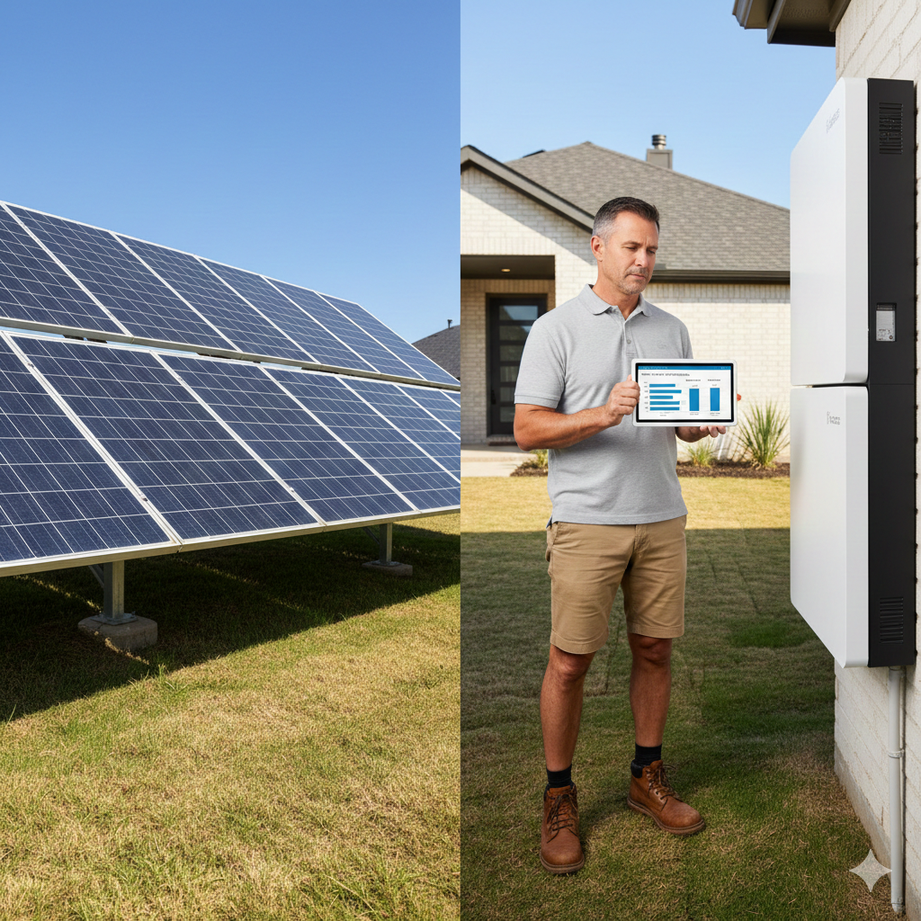
Installing solar panels on your property is a long-term investment that can substantially reduce your reliance on the grid and lower your electricity bills.
Texas benefits from abundant sunlight, making it an ideal location for solar power generation. By harnessing the sun's energy, you can produce your own electricity, potentially even selling excess power back to the grid.
Solar power systems not only save you money over time but also contribute to a greener, more sustainable energy future.
If you've been on the same energy plan for a while, it's worth considering a switch. First, compare available plans and providers to find one that better aligns with your current energy needs and budget.
Make sure to check the terms of your current plan, including any early termination fees, before making a move. Once you've selected a new plan, contact the new provider to initiate the switch.
Understanding your electricity bill and adopting energy-saving strategies are a great start when it comes to reducing your energy bill. But if you want real change to your energy in Texas, then you're going to need to start shopping around.
Well, there's no need to shop around for long because Ambit Energy is here to help you. With our transparent, customer-centric approach, we're committed to delivering the best energy solutions tailored to your needs.











Copyright © 2026 VIPEnergyService.com. All rights reserved | PUCT# 10117