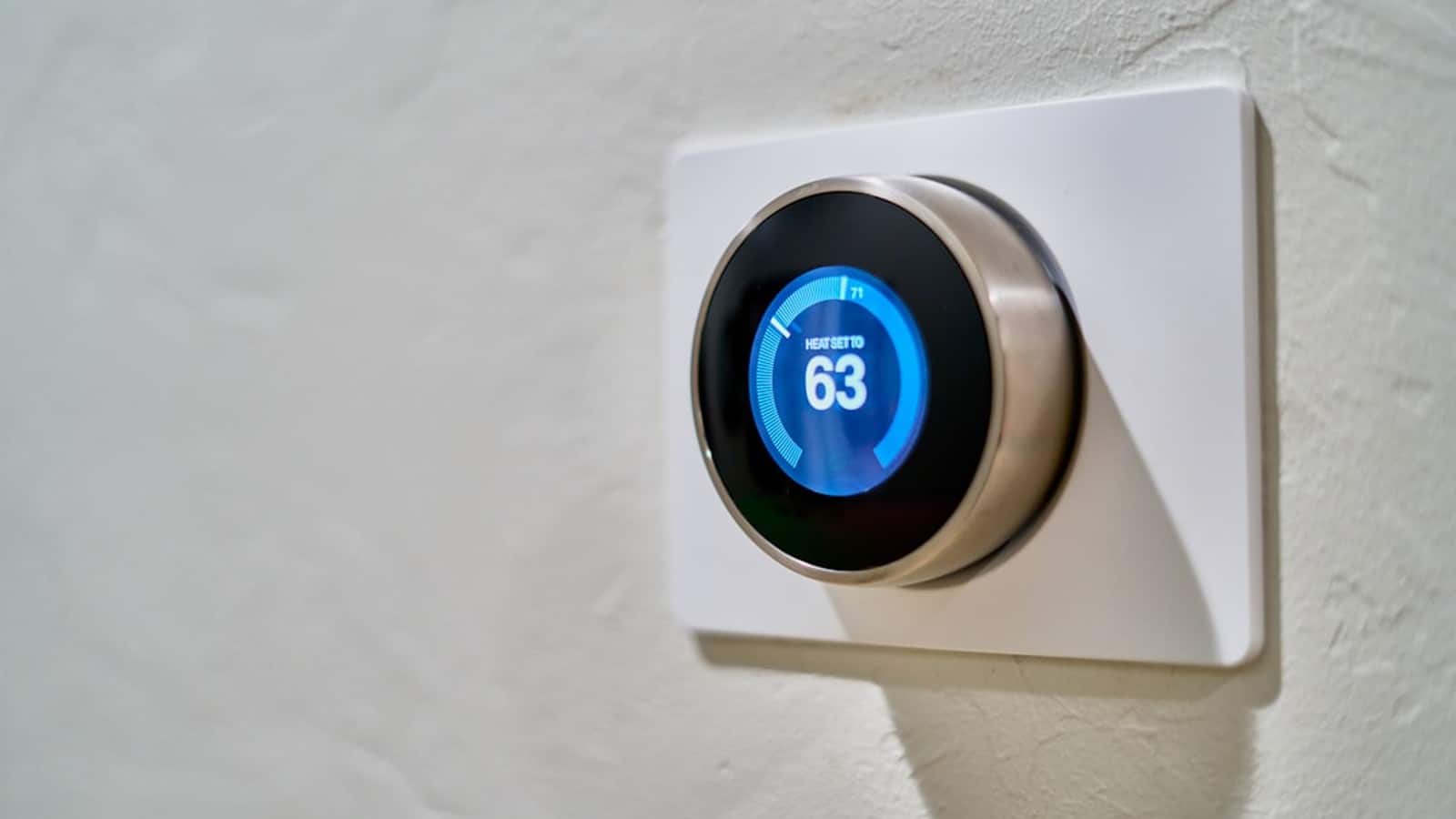
A smart thermostat can help a Texas household cut costs on the home electricity bill by $40 to $60 a year on its own. A Nest, ecobee, or Honeywell will net an average of 8 percent savings on heating and cooling for the typical Texas home, and cost about $250 up front. The bigger opportunity is that a smart thermostat can save you a lot more when it is paired with utility rebates, a Free Nights plan, and a home battery, lowering your summer electricity bill significantly. This guide walks through how to build the stack, what each layer is worth, and where the numbers come from.
Let me start with the honest baseline. ENERGY STAR, a partner program of the U.S. Environmental Protection Agency and the Department of Energy, reports that smart thermostats average 8 percent savings, or about $50, on annual heating and cooling costs for the typical American home. The U.S. Department of Energy says programmable setbacks can push savings closer to 10 percent. Ecobee's own research shows that well configured schedules can save up to 23 percent on HVAC energy.
Texas homes have unique concerns. Air conditioning consumes about 28 percent of home electricity use in the state, and every Texas home is a meaningful contributor to ERCOT peak demand. As of July 2026, Texas homeowners pay approximately $0.14 to $0.19 per kWh on typical residential fixed rate plans, and a three month stretch from June to August will result in total cooling costs of about $220 to $280 for a typical home. If you want to cut a $260 bill by $20 to $30 during the summer, trim the cooling costs by 8 to 10 percent.
That baseline is real, but a thermostat alone will only take you so far. It is the only device on your wall that can talk to a rebate program, a Free Nights plan, and a home battery all at once. That is why I recommend one in every Texas home I work with.
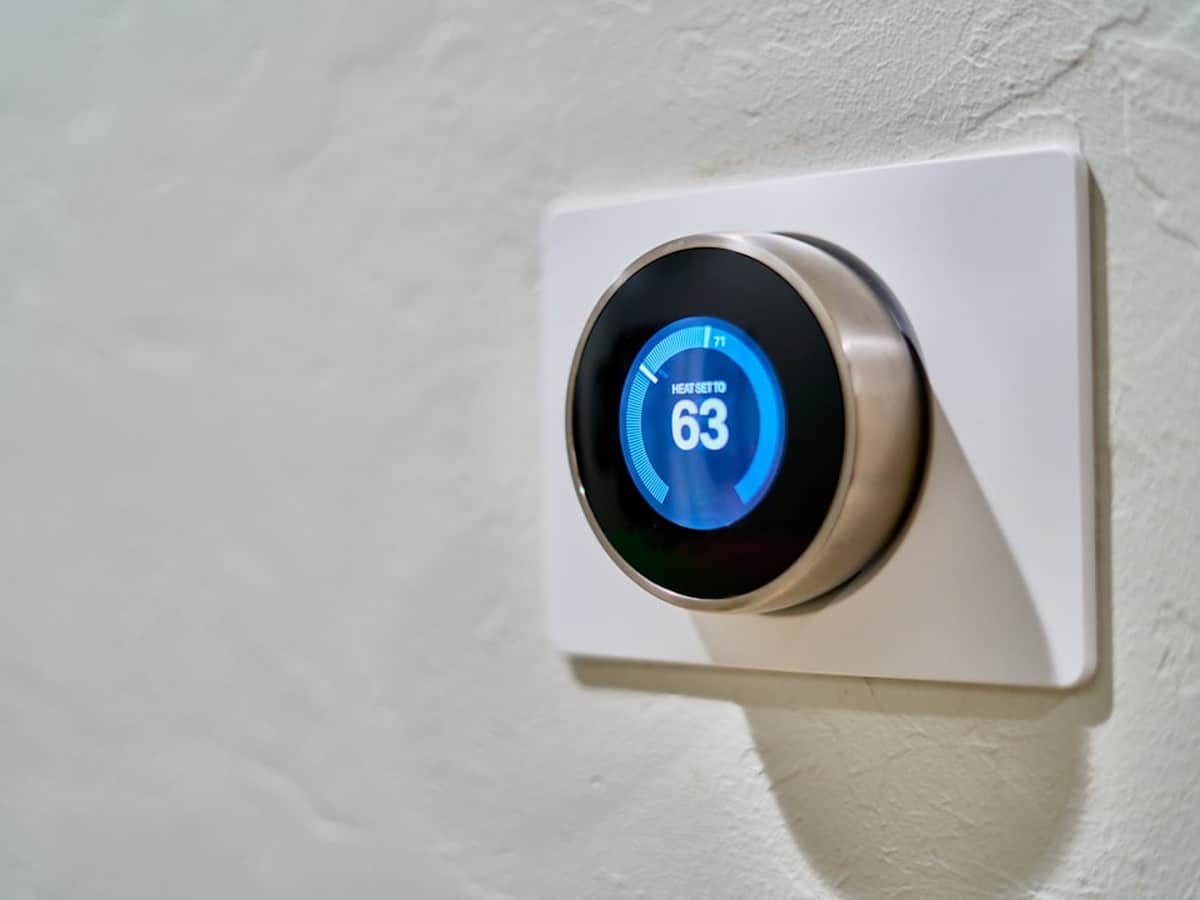
Most Texas homeowners stop at "install a Nest and set a schedule." That misses the point in a deregulated ERCOT market, where the utility, the hardware, and the retail plan can each pay you separately for the same behavior. I call this pattern the Texas Thermostat Stack because each of the four layers has real dollar value on its own.
The first layer is the setpoint schedule itself. Guided by DOE Energy Saver, widen the setback window by at least 7 degrees Fahrenheit from your comfort temperature when the house is unoccupied, or when everyone is sleeping for 8 hours. The Texas summer occupied setpoint is generally between 76 to 78 degrees. The unoccupied setpoint is between 83 to 85 degrees. The intention becomes reality through the unit's motion sensors, geofencing, and learning algorithms. That is where the 8 to 23 percent range comes from.
The second layer is the cash you can earn just for owning the thermostat. In Texas, where the retail market is deregulated, the transmission and distribution utilities and the retail providers each have their own thermostat incentives. The most recent documented figures include: Oncor, inside its Take a Load Off Texas program, provides an instant discount of $50 on qualifying smart thermostats. CenterPoint Energy offers a smart thermostat instant discount of up to $50 to eligible residential customers. In the Connected Conservation program, TXU Energy's customers can receive up to $150 in prepaid card, gift card, or energy product value in exchange for allowing brief demand response adjustments. Enrollees in Reliant Energy's Degrees of Difference program receive a one-time $50 bill credit at enrollment and are eligible for recurring reward value based on their participation.
In response programs, utilities or retailers shift your setpoint a few degrees during stress events on the grid. In ERCOT's 2026 filing with the Public Utility Commission of Texas, ERCOT estimated that smart thermostat participants earned an average of $63 per participant per year from 2019 to 2024 in energy and ancillary service benefits. The PUCT stated the obvious in its 2024 residential demand response goals memo: broader participation means more savings for electric customers, and a reduced burden on the ERCOT grid.
To keep this layer clean, follow two rules. First, check compatibility before buying. Each program has a limited list of accepted brands and models. Second, confirm your ability to opt out of any single event. Most Texas programs allow you to override in the app, but you have to know where the button is before a heat wave hits.
The third layer is where the retail plan you buy starts talking to the hardware. A Free Nights electricity plan gives you a zero charge overnight window in exchange for a higher daytime rate. Without a smart thermostat, you have to remember to run the dishwasher and dryer at 10 p.m. With one, you can schedule automatic pre-cool cycles that drop the house 2 to 4 degrees during the free window, then let the setpoint drift back up during the expensive daytime hours.
Layer 3 is working when you notice that your peak hour kWh usage (check your EFL for the exact hours) trends down every week while your overnight usage grows. That is exactly what a smart thermostat does on autopilot for an Ambit Free Nights plan.
Most Texas households have not built this layer, and this is where a smart thermostat goes from a savings device to a control system. Paired with a Free Nights plan or rooftop solar, a home battery can store cheap kilowatt hours overnight and discharge them during the very high priced afternoon peak hours. The smart thermostat is essential because it decides when to pull from the battery, when to pre-cool, and when to let ERCOT's real time price coast.
Texas is pushing distributed batteries and demand response in anticipation of its projected 2026 summer peak demand of 95 GW, up from 83.9 GW in 2025. The purpose of the top layer is simple. Without a smart thermostat that manages the discharge schedule, the battery is just an expensive UPS. With one, your battery functions as a peak shaving asset that stacks on top of your retail plan and the rebate.
Picture a Houston home currently on a standard fixed rate plan, no rebate enrollment, no battery, on a $260 July bill. Layer 1 alone: an 8 to 10 percent cut on the cooling share (about 28 percent of the bill). That is about $6 to $9 monthly. Layer 2 added: an Oncor or CenterPoint instant $50 rebate plus TXU Connected Conservation's rewards of up to $150 blended to about $40 to $80 in annual value. Averaged monthly, that is an additional $3 to $7. Layer 3 added: with a Free Nights plan and disciplined pre-cool cycles, most Texas homes shift 25 to 40 percent of load into the free window. As of July 2026, for a 900 kWh summer month at an illustrative daytime rate of $0.16 per kWh (for modeling only), that is $36 to $58 avoided at daytime rates. Layer 4 added: a 10 to 13 kWh battery cycling through peak hours can offset an additional $25 to $60 in high priced kWh, depending on the retail rate and the number of discharge cycles.
Add all four layers and the same $260 bill can be reduced to $150 to $180 in a well tuned month. Not every home hits every layer. That is the point of a stack: pick the layers you can achieve, then build the next.
The Texas market is dominated by three units: Google Nest Learning Thermostat, ecobee Smart Thermostat Premium, and Honeywell Home T-Series (Resideo). Each offers ENERGY STAR certified options, and each is accepted in at least one major Texas rebate or demand response program. Adoption continues to grow, though many Texas homes still have not built even Layer 1. According to Parks Associates, approximately 16 to 17 percent of U.S. internet households own a smart thermostat.
When shopping, check three things in order. First, rebate compatibility with your TDU (Oncor, CenterPoint, AEP Texas, or TNMP) and your retail plan. Second, native support for the demand response protocol you intend to use (OpenADR, or the retailer's app based enrollment). Third, whether the unit can integrate with your battery or solar inverter's API. Nest and ecobee provide the most integrations for this.
If you already know your HVAC system is oversized or not properly maintained, the thermostat is not going to fix that. Get the HVAC properly sized and serviced first.
Purchasing the unit without checking the rebate eligibility. Rebates cannot be added retroactively after purchase. Setting less than the recommended setback. Leaving it at 4 degrees instead of the recommended 7 to 10 feels safer, but you miss most of the Layer 1 savings. Not using the Free Nights window. If your plan offers a free window between 8 p.m. and 6 a.m., your schedule should pre-cool at 7 p.m., not 3 p.m. Opting out of every demand response event. A few overrides are tolerated, but complete opt outs often get people removed from the program and cost them the credit. Ignoring humidity. It is more important than temperature in coastal Texas and Houston. If you have an ecobee or Honeywell model, use humidity setpoints.
What is the smart thermostat rebate in Texas? As of 2026, Oncor offers an instant $50 discount, CenterPoint Energy offers up to $50, TXU Energy's Connected Conservation program offers up to $150 in rewards to enrolled participants, and Reliant Energy's Degrees of Difference program offers a $50 bill credit at enrollment. Rebate amounts change every program year, so check with the utility or retailer before purchase.
Do smart thermostats save Texas homeowners money? Yes, but the size of the savings depends on how many layers of the stack you build. Layer 1 alone is worth about 8 to 10 percent of your cooling bill per DOE and ENERGY STAR. Adding the rebate, a Free Nights plan, and a home battery compounds the savings for a Texas household.
What smart thermostats work with Free Nights? Any Wi-Fi thermostat with programmable schedules will work. This includes thermostats from Nest, ecobee, and Honeywell Home. You just have to schedule a pre-cool cycle 30 to 60 minutes before the free window starts, and then a setback during the paid window.
How much can a smart thermostat plus a home battery save in Texas? With the full stack and a 10 to 13 kWh battery, a $260 summer bill can get tuned down to about $150 to $180 in a well tuned month. Actual savings depend on home size, condition of the HVAC, roof orientation, and the number of cycles the battery has used.
Are smart thermostats eligible for federal tax credits? Smart thermostats will typically not qualify for the federal Energy Efficient Home Improvement Credit alone, however, they may be eligible as part of an HVAC or heat pump project that qualifies. Speak to a tax pro to determine eligibility.
Details of the plan and rates may change. Before purchasing, check with your utility or retail provider for the most up-to-date information on rebate amounts, terms of demand response, and eligible models of smart thermostats, as these things change every program year. Each plan from Ambit Energy has an energy facts label available at ambitenergy.com.




Copyright © 2026 VIPEnergyService.com. All rights reserved | PUCT# 10117