Home Battery Backup Without Solar: What Texas Homeowners Need to Know

Hero Battery Backup Without Solar

Home Battery Backup Without Solar: What Texas Homeowners Need to Know

March 9, 2026
by
Shawn Cornett

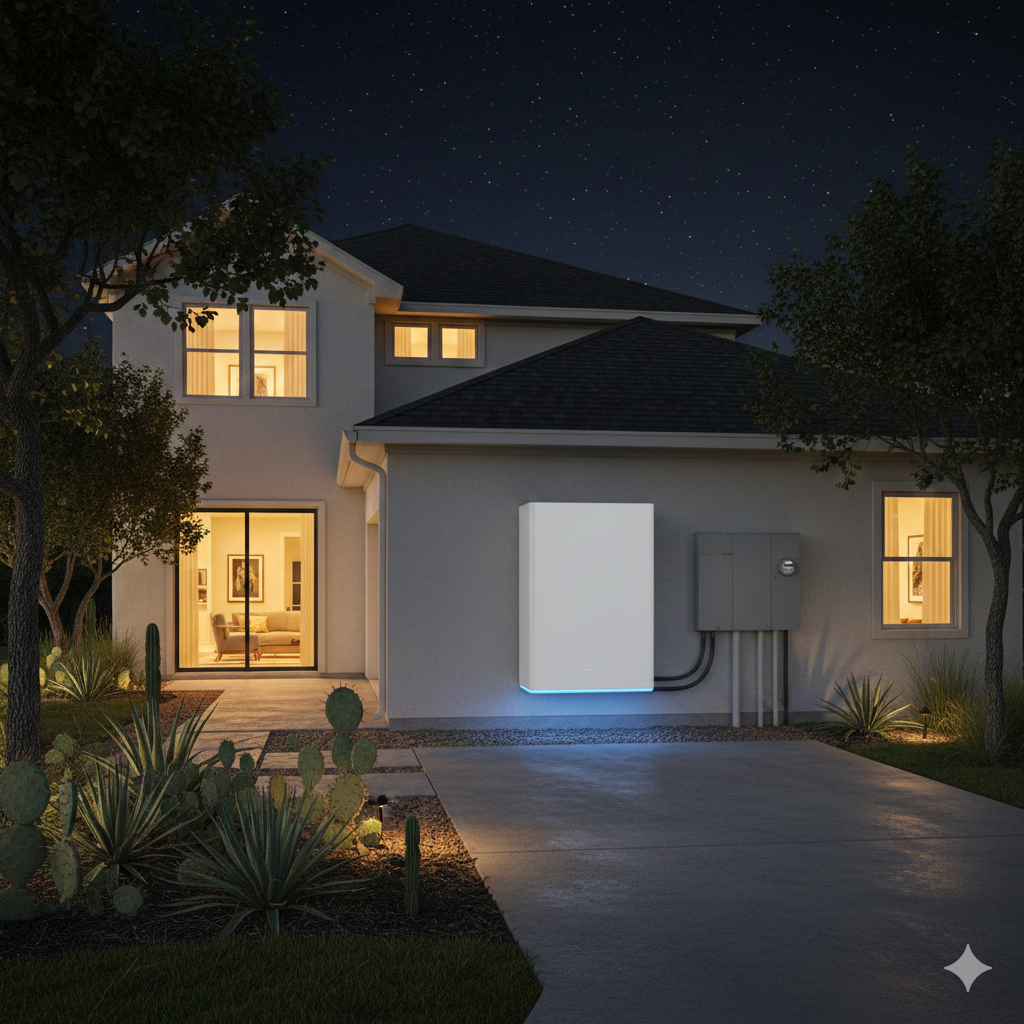
A home battery backup without solar connects directly to your home's electrical panel and charges from the grid. In Texas, homeowners can charge the battery for free overnight on Free Nights electricity plans and use stored energy during expensive daytime hours — saving over $1,500 per year while maintaining automatic backup power during outages.

You don't need solar panels to benefit from a home battery backup. If you've been exploring home battery storage but don't have — or don't want — rooftop solar, a grid-charged battery system can still protect your home during outages, lower your electricity bills, and pair perfectly with Texas Free Nights energy plans.

Here's what every Texas homeowner should know about home battery backup without solar.

How a Home Battery Works Without Solar

A home battery backup without solar connects directly to your home's electrical panel and charges from the grid — the same electricity you already use every day. During off-peak hours, the battery draws low-cost power from the grid and stores it. When rates climb or the power goes out, the battery discharges stored energy to keep your home running.

Tesla calls this "Time-Based Control" mode. The Powerwall charges when electricity is cheapest and discharges when rates are highest — all automatically, with no solar panels required.

"When Powerwall is installed without solar, it charges from the grid to power your home during grid outages, to save you money on your electricity bill using Time-Based Control mode, and to support the Tesla Virtual Power Plant."

— Tesla Support Documentation (Tesla)

Why Grid-Only Batteries Make Sense in Texas

Texas is one of the best states for home battery storage without solar — thanks to the deregulated energy market and Free Nights electricity plans.

Free Nights arbitrage. Texas Free Nights plans charge $0 for energy used between approximately 9 PM and 7 AM. With a whole house battery backup without solar, you charge the battery for free overnight and use that stored energy during the day when rates are significantly higher. According to EcoFlow, energy arbitrage with a home battery can save over $1,500 per year.

Outage protection. The ERCOT grid remains vulnerable — winter reserve margins have dropped to 10.1%, well below the 15% industry standard. A home battery backup without solar provides instant backup power when the grid fails, switching to battery in less than one second. A 13.5 kWh battery can power essential circuits for 24 to 72 hours during an outage.

Cost efficiency. Battery-only installations cost $9,000 to $18,000 before incentives, according to EnergySage. Battery pack prices fell to a record low of $108/kWh in 2025 — a 93% decline over the past decade. For a closer look at costs, see our guide to the cost of battery storage per kWh.

Who Should Consider a Battery Without Solar?

A whole home battery backup without solar makes sense for Texas homeowners who:

  • Want outage protection now — without waiting for a solar installation
  • Have shading or roof limitations — tree cover, north-facing roof, or HOA restrictions that prevent solar
  • Rent their home — portable battery systems require no permanent modifications
  • Want to optimize Free Nights plans — charge for free at night, use during the day
  • Plan to add solar later — most modern batteries (Tesla Powerwall, FranklinWH, Enphase) are designed to integrate with solar panels when you're ready

Home battery storage without solar is a practical first step toward energy independence. You get immediate backup protection and bill savings while keeping the option to add solar panels in the future.

Best Batteries for Grid-Only Use

The leading home battery systems that work without solar include:

  • Tesla Powerwall 3 (13.5 kWh) — Time-Based Control mode for automated grid arbitrage. ~$9,800 installed after tax credit.
  • FranklinWH aPower 2 (15 kWh) — aGate controller manages grid-only operation with intelligent peak-rate avoidance.
  • Enphase IQ Battery 5P (5 kWh modular) — Start small and scale up. Best for targeted backup of specific circuits.

All three systems charge from the grid, provide automatic outage backup, and can integrate with solar panels later.

Take the Next Step

Whether you're looking for outage protection, Free Nights plan savings, or a stepping stone to solar, a home battery backup without solar gives you energy security and savings starting day one.

At Ambit Energy VIP Energy Service, we help you pair the right battery with the right electricity plan. Our Free Nights plans and no-deposit options make it easy to get started.

Ready to Protect Your Home With Battery Backup?

Get a free energy quote and find the right plan for your home.

Get Your Free Quote
Enroll Online

Frequently Asked Questions

Can I use a home battery without solar panels?

Yes. Home battery backup systems charge directly from the grid. You don't need solar panels to use a battery for outage protection or to lower your electricity bills.

How much does a battery-only system cost?

A typical home battery installation costs $9,000 to $18,000 before incentives and $6,000 to $12,000 after the 30% federal tax credit. Costs continue to fall as battery technology improves.

Will a home battery work with Free Nights electricity plans?

Yes. A home battery charges for free during nighttime hours on Texas Free Nights plans and uses that stored energy during expensive daytime rates — maximizing your savings.

Sources

How Many kWh Does a Texas Home Use Per Day in Summer

A typical Texas home uses about 50 to 65 kWh per day in summer, up from the yearly average of 36 kWh per day. Here is what drives the spike, how home size shifts the number, and how to lower it.
Read More >>

Smart Thermostats in Texas: How They Stack With Storage and Free Nights Plans

A Texas homeowner's guide to stacking a smart thermostat with a Free Nights plan, utility rebates, and home battery storage to cut summer electricity bills.
Read More >>

What's the Average Electricity Bill in Texas? And How High-Usage Homes Pay Less

The average Texas electric bill is $186.21 per month as of July 2026. See how it varies by home size, city, and season, and how high-usage homes pay less.
Read More >>

How to Read Your Texas Electricity Bill: Every Line Item Explained

Every Texas electricity bill breaks into three buckets: supply, delivery, and taxes. Here is what each 2026 line item means, plus a 6-point audit to catch overcharges.
Read More >>

Cheapest Electricity Rates in Texas Right Now: How to Spot a Real Deal

Texas' cheapest advertised electricity rate is 6.4 cents per kWh in July 2026, but bill credit tiers can double your rate. Use the 5-Signal Real Deal Test.
Read More >>

ERCOT Called for Conservation on July 13. Here's What It Means for Your Texas Bill (And Which Plans Take the Hit)

ERCOT called Conservation on July 13, 2026. Here is what it means for Texas households and which retail electricity plans take the hit.
Read More >>

Texas Just Approved $166 Million in Energy Bill Assistance. Here's Who Qualifies and How to Save Before It Starts.

Governor Abbott's $166M energy assistance award funds Texas utility bill help, weatherization, and equipment repair beginning January 1, 2027. Here is who qualifies, how to apply through TDHCA and 2-1-1, and five moves any Texas household can make this week to lower the summer electricity bill.
Read More >>

No-Contract & Month-to-Month Electricity in Texas: How Lone Star Flex Works

Texas no-contract month-to-month electricity, explained. How Ambit's Lone Star Flex works, when it beats a fixed plan, and the ETF math for switching.
Read More >>

Fixed-Rate vs Variable-Rate Electricity in Texas: Which Is Right for You

Fixed vs variable electricity in Texas: compare plan types, real 2026 price ranges by TDU, and use the five-question Texas Rate Reality Check to pick the right plan.
Read More >>

Texas Electricity Plans Explained: How to Pick the Right Rate Plan in 2026

Compare Texas electricity plans in 2026. Fixed vs variable vs indexed vs free nights vs prepaid, TDU delivery charges, bill credit traps, and the 7 questions to ask before you enroll.
Read More >>

Free Nights Plan Calculator: Are Free Nights Plans Right for You?

A reusable 5-Number Fit Test framework, three worked Texas household examples, and the actual calculator tools available in 2026 to tell whether a free nights electricity plan beats a fixed-rate plan for your home.
Read More >>

Best Free Nights Plans in Texas by ZIP Code

Free nights plans in Texas vary by ZIP code because your TDU (Oncor, CenterPoint, AEP Texas, TNMP) decides which retail plans you can buy. Here is the 3-step ZIP-to-Match Framework I use to land on the best one.
Read More >>

The Real Cost of Free Nights Plans: Reading the EFL Line by Line

A line-by-line, 7-section audit of any Texas Free Nights Electricity Facts Label, with a worked breakeven example at 1,000 kWh and a quick fit test for your household.
Read More >>

Why Your Texas Electric Bill Jumped in June 2026: TDU Delivery Charges Changed

As of June 1, 2026, Texas TDU residential delivery rates changed, and Oncor was the biggest mover. We walk Texas homeowners through what changed, why it is outside your REP's control, how much it adds to a summer bill, and four steps to cushion the hit.
Read More >>

Free Nights Plans for EV Owners in Texas: The Smartest Way to Charge

Texas EV owner? A free nights electricity plan can zero out your home charging bill. Here is the break-even math, top providers, and the setup that works.
Read More >>

Texas Summer Electricity Bills: How to Stay Cool and Save Money

TXU's Beat the Heat program signals summer bill season in Texas. Here are practical homeowner tips to compare plans, lock a fixed rate, and lower cooling costs.
Read More >>
1 2 15