Ambit Brand audience: Texas homeowners with rooftop solar shopping REP plans.
The best solar buyback plan in Texas in 2026 depends on how much surplus your panels send back to the grid and how you want to be paid for it. For homeowners who oversize and want the simplest math, TXU Energy's Solar Buyback Match 12 and Green Mountain Energy's Renewable Rewards Solar Buyback 36 pay a 1:1 retail match on every exported kilowatt-hour. For heavier exporters who want a high fixed rate, Ambit Energy's Total Solar Buyback 12 pays 14.5 cents per kWh (as of July 2026) on exports and Green Mountain's Pollution Free Solar Buyback 36 pays 8.5 cents fixed (as of July 2026). For solar-plus-battery households in ERCOT, Chariot Energy's Shine plans pay real-time wholesale prices that can spike past 25 cents per kWh (as of July 2026) during summer peaks. This guide is the side-by-side rate comparison I wish I had when first shopping these plans. Plan details and rates subject to change, and every Energy Facts Label is available on the provider's site.

Key takeaways
- The top three 1:1 retail-match plans in 2026 are TXU Solar Buyback Match 12/24/36 and Green Mountain Renewable Rewards Solar Buyback 36.
- The top three fixed cents-per-kWh export rates are Ambit Total Solar Buyback 12 at 14.5 cents (as of July 2026), Gexa Battery Benefits 12 at 16.9 cents (as of July 2026, battery required), and Green Mountain Pollution Free Solar Buyback 36 at 8.5 cents (as of July 2026).
- Chariot Shine ties your export rate to the ERCOT wholesale market, which can hit 25 cents per kWh (as of July 2026) in a hot Texas afternoon but drops sharply overnight.
- Almost every Texas buyback plan caps you in some way: monthly credit rollover without cash-out, system-size limits (Ambit tops out at 25 kW), or export-to-usage ratio limits (Ambit caps you at 110% of consumption).
- Municipal customers in Austin still lead the state, with Austin Energy's Value of Solar tariff paying 9.91 cents per kWh (as of July 2026) plus a rebate program worth up to $2,500 for qualifying installs, per NuWatt Energy's 2026 Texas roundup.
How solar buyback actually works in Texas
Texas is a deregulated ERCOT market, and it does not have a state net metering law. So instead of a utility crediting you at retail for every exported kWh, a retail electricity provider (REP) sells you a plan that bundles an energy charge for the power you import with a separate export credit for the power your panels send back. Sylvia Leyva Martinez at Wood Mackenzie and SEIA has tracked how much this REP-run structure varies across states, and Texas is one of the most fragmented markets in the country.
Three export structures dominate the 2026 shortlist.
Retail match (1:1 net metering) credits your exports at whatever cents per kWh you pay to import that month. It is the simplest structure and the closest thing to true net metering in ERCOT.
Fixed cents per kWh pays a set export rate for the entire term, regardless of what the market does. A 14.5 cent Ambit export rate (as of July 2026) stays 14.5 cents even if wholesale prices collapse.
Wholesale-linked ties your export rate to the ERCOT real-time market, so a hot August afternoon at $250 per MWh in the North Zone means Chariot Shine pays roughly 25 cents per kWh (as of July 2026) for that hour. A mild spring midnight pays pennies.

The 2026 Texas solar buyback rate table
Below is the current provider-by-provider comparison, as of July 2026. Rates are pulled from each provider's public Electricity Facts Label (EFL) and from independent 2026 comparisons at NuWatt Energy, EnergyBot, and ElectricityPlans. Plan details and rates are subject to change; the EFL on the provider's site is the contract.
| Provider | Plan | Export credit | Term | Energy charge | Base fee | Notable restriction |
|---|---|---|---|---|---|---|
| TXU Energy | Solar Buyback Match 12 | 1:1 retail match | 12 mo | Per EFL | Per EFL | Credits roll over, no cash-out |
| TXU Energy | Solar Buyback Match 24 / 36 | 1:1 retail match | 24 or 36 mo | Per EFL | Per EFL | Oncor and CenterPoint territories |
| Green Mountain | Renewable Rewards Solar Buyback 36 | 1:1 retail match | 36 mo | Per EFL | Per EFL | 100% renewable content |
| Green Mountain | Pollution Free Solar Buyback 36 | 8.5 cents / kWh fixed | 36 mo | Per EFL | Per EFL | Highest fixed rate in CenterPoint |
| Chariot Energy | Solar Buyback 24 | 7.0 cents / kWh fixed | 24 mo | Per EFL | Per EFL | Available in all four TDU territories |
| Chariot Energy | Shine 12 / 18 / 24 / 36 | ERCOT wholesale, up to 25 cents | 12 to 36 mo | ~9.7 cents / kWh | $9.95 | Credits roll over, no cash-out |
| Gexa Energy | Solar Export Saver 12 | 3 cents / kWh fixed | 12 mo | 10.8 cents / kWh | $19.95 | Credits usable on Gexa bill only |
| Gexa Energy | Battery Benefits 12 | 16.9 cents / kWh fixed | 12 mo | Per EFL | Per EFL | Requires a home battery |
| Rhythm Energy | PowerShift Solar Buyback 12 | Time-of-use, see EFL | 12 mo | Per EFL | $14.95 | Peak-hour credit structure |
| Ambit Energy | Total Solar Buyback 12 | 14.5 cents / kWh | 12 mo | 14.5 cents / kWh | Per EFL | 25 kW system cap, 110% of usage |
| Ambit Energy | Total Solar Buyback 24 | 14.0 cents / kWh | 24 mo | 14.0 cents / kWh | Per EFL | Same 25 kW and 110% caps |
| Champion Energy | Champ Silver 24 | Real-time price | 24 mo | 7.6 cents / kWh | None | Credits roll over, no expiration |
| Think Energy | Think Shine | 4.0 cents / kWh | Per EFL | 9.2 cents / kWh | Per EFL | 50 kW cap, monthly cash-out |
Always confirm the EFL on the provider's site before enrolling.

Which plan pays the highest 1:1 retail match?
TXU Solar Buyback Match 12/24/36 and Green Mountain Renewable Rewards Solar Buyback 36 are the two retail-match plans that show up on every 2026 shortlist. A retail match is worth the most when your import price is high, since your export credit rises with it. NuWatt's 2026 guide flags TXU's Match 12 as the strongest Oncor territory pick for households that expect to import a lot during winter and export heavily in summer.
Which plan pays the highest fixed cents per kWh?
Fixed-rate export is the right play for homeowners who want zero market exposure. Ambit's Total Solar Buyback 12 at 14.5 cents per kWh (as of July 2026) is the highest fixed export rate on a standard solar plan, which is why it appears alongside TXU and Green Mountain on 2026 comparison pages at EnergyBot and NuWatt. Gexa Battery Benefits 12 pays a higher 16.9 cents per kWh (as of July 2026), but that plan requires a home battery. Green Mountain Pollution Free Solar Buyback 36 pays 8.5 cents per kWh fixed (as of July 2026) for 36 months, the longest fixed-rate term on the shortlist.
Which plan works best for wholesale-market exporters?
Chariot Shine plans link your export credit to the ERCOT real-time market. Zoë Gaston at Wood Mackenzie has pointed out in SEIA's Q2 2026 Solar Market Insight report that the same summer conditions that push ERCOT prices into the 25 cent range are exactly when a rooftop system is exporting the most. The upside is real. The downside is that mild months pay very little, so Chariot Shine works best for households that pair solar with a battery and can time-shift exports into peak hours.

The three-question match
Picking the best solar buyback plan for your home comes down to three questions.
- How big is your system relative to your usage? If you regularly export more than 110 percent of what you import, Ambit's cap disqualifies its plan for you, and a retail match or a wholesale-linked plan makes more sense.
- Do you want predictability or upside? A retail match or a fixed cents plan gives predictable monthly credit math. Wholesale-linked plans reward exporters who can shift into peak hours with a battery.
- What TDU territory are you in? Oncor, CenterPoint, AEP, and TNMP each have different plan availability. Chariot Solar Buyback 24 is the only plan on this list confirmed in all four.
Watch-outs before you sign
Every plan on the table above has restrictions worth reading in the EFL. Most Texas REP buyback plans do not cash out unused credits at contract end. Ambit caps the system at 25 kW and the export at 110 percent of your consumption. Gexa Solar Export Saver credits can only be applied to a Gexa bill. Rhythm's PowerShift plan uses a time-of-use structure that pays more during defined peak hours and less at other times. William Malmstrom at PV Magazine reported in November 2025 that over 13 GW of planned Texas solar and storage projects were at risk of missing 2026 interconnection, which is one reason REPs are building tighter caps into buyback contracts. Enrollment is subject to credit approval, and plan details and rates are subject to change.
Frequently asked questions
Does Texas have net metering in 2026? No. Texas does not have a statewide net metering law. Every buyback structure in ERCOT is a private contract between you and your REP.
What is a 1:1 retail match? It means your REP credits you the same cents per kWh for exports that you pay for imports that month. TXU and Green Mountain are the two providers with 1:1 retail-match plans on the 2026 shortlist.
Can I cash out unused solar credits at the end of my Texas plan? On most REP plans, no. Credits roll over month to month and expire at contract end. Think Shine is the one plan on this comparison that offers a monthly cash-out.
Which Texas REP has the highest export rate? Gexa Battery Benefits 12 pays the highest fixed export rate at 16.9 cents per kWh (as of July 2026), but it requires a home battery. Ambit Total Solar Buyback 12 pays the highest fixed rate on a standard solar-only plan at 14.5 cents per kWh (as of July 2026).
How often do these rates change? New EFLs are filed by REPs on a regular basis, and 2026 rate cards are updated monthly. Check the EFL on the provider's site prior to enrolling.
Sources: NuWatt Energy 2026 Texas Solar Buyback Rates, EnergyBot Texas Solar Buyback Comparison, ElectricityPlans Texas Solar Buyback Plans, SEIA Solar Market Insight Q2 2026, PV Magazine Texas Solar and Storage Analysis (Nov 2025), PUCT Solar consumer information page. Plan details and rates are subject to change; Energy Facts Label available on each provider's site.
Rates and plan details cited as of July 2026 from Ambit's published Electricity Facts Label and third-party plan comparison sources (MeterPlan, EnergyBot, TexasPowerGuide). Plan details and rates subject to change. Energy Facts Label available at ambitenergy.com.
Ambit Energy's Total Solar Buyback plan credits your excess solar exports at a fixed 3.5 cents per kilowatt-hour (as of July 2026), with an import rate near 12.6 to 14.5 cents per kWh, a $9.95 monthly base fee, and a $199 early termination fee. It is a straightforward, no-frills solar plan that works well for households that self-consume most of what they produce, and works poorly for oversized rooftops that push a lot of energy back to the grid. I sell Ambit through VIP Energy Service, and I will walk you through the actual numbers, the plan mechanics, and how it stacks up against TXU, Chariot, Reliant, and Green Mountain so you can decide with clear eyes.
Key takeaways
- Ambit's current Total Solar Buyback plan pays a fixed 3.5 cents per kWh for solar exports and charges roughly 12.6 to 14.5 cents per kWh for imports (as of July 2026, per plan comparison data from MeterPlan and EnergyBot).
- It is NOT a 1:1 buyback plan. Retail-match plans like TXU Solar Buyback Match 12 and Green Mountain Renewable Rewards Essential 12 pay the same rate for exports as they charge for imports.
- The $9.95 monthly base fee and Oncor or CenterPoint TDU delivery charges are NOT offsettable by your solar credits.
- Ambit Total Solar Buyback is available in Oncor (Dallas-Fort Worth) and CenterPoint (Houston) TDU areas, for solar systems up to 25 kW, and covers export credits up to 110% of your consumption.
- The plan makes sense if your solar system is right-sized for your usage. If you regularly export more than 30% of production, a retail-match plan like TXU or Green Mountain will keep more money in your pocket.
What is Ambit's solar buyback plan?
Ambit's solar buyback plan is a retail electricity contract for Texas homes with rooftop solar that credits you at a fixed rate for every kilowatt-hour of excess solar you send to the grid. Your solar panels power your home first. When your panels produce more than you use, the surplus flows back through your smart meter, and Ambit posts a credit to your bill at the plan's published export rate.
The mechanic is simple. Your monthly statement shows the kWh you imported from the grid at Ambit's energy rate, plus the fixed base fee, plus the TDU delivery charges from Oncor or CenterPoint. Then Ambit multiplies your exported kWh by the export credit rate and subtracts that amount from your energy charges. If your credit exceeds your energy charges in a given month, the surplus rolls over to the next bill.
This is not net metering in the classic California or Massachusetts sense. Texas is a deregulated ERCOT market and does not require utilities to offer true one-to-one net metering. Each retail electric provider (REP) sets its own buyback rules, its own credit rate, and its own eligibility limits, which is why plan-to-plan comparisons matter so much for solar homeowners here. As MeterPlan notes in its April 2026 market update, no Texas REP currently offers a true statewide 1:1 solar buyback that survives after credits are applied.
Which Ambit plans include solar buyback in 2026?
Ambit currently offers two solar-specific plan families in Texas plus a night-of-use option that some solar owners use as a workaround. Here is what each one does:
Total Solar Buyback 12
Ambit's flagship solar plan is a 12-month fixed-rate contract with a 3.5 cent per kWh export credit (as of July 2026). The import rate on the current EFL is in the 12.6 to 14.5 cent range depending on TDU territory and month of enrollment, per plan snapshots from MeterPlan and EnergyBot. Base fee is $9.95 per month and the early termination fee is $199. Plan details and rates subject to change.
Total Solar Buyback 24
The 24-month version locks in a slightly lower import rate (typically 14.0 cents per kWh versus 14.5 cents on the 12-month plan as of July 2026, per EnergyBot's September 2025 comparison table) with the same 3.5 cent export credit, $9.95 base fee, and $199 ETF. The 24-month term is the play if you expect Texas retail electricity rates to keep drifting up and want to lock in longer.
Free & Clear Nights
Ambit's Free & Clear Nights plan is not marketed as a solar plan, but some solar owners with home batteries use it strategically. Nights are free (typically 9 pm to 7 am), which lets a battery-plus-solar home charge for free overnight and export during the day. The tradeoff is a higher daytime import rate, so it only pencils out for solar-plus-battery homes with heavy nighttime shifting.
For most solar-only Texas homes without a battery, the Total Solar Buyback 12 or 24 is the right Ambit plan.
What is the Ambit solar buyback rate in 2026?
Ambit's current solar buyback rate is a fixed 3.5 cents per kilowatt-hour (as of July 2026, per plan detail from MeterPlan's 2026 Ambit review page). That rate does not float with the ERCOT wholesale market, does not step up seasonally, and does not scale with system size. Every exported kWh earns you 3.5 cents in bill credit.
To put that number in context, EnergyBot's comparison of Texas solar buyback plans lists the current market range from 3.0 cents per kWh (Gexa Solar Export, Amigo Nights Free, David Energy Smart Battery) at the low end, to real-time wholesale rates that can spike above 25 cents per kWh on Chariot's Shine plans during peak-demand hours, to 14.0 cents on TXU's Solar Buyback Match 12 which credits at the same rate as its import price.
Ambit's 3.5 cent export credit is near the bottom of that market range for fixed-rate plans. That is the most important fact in this review.
Does Ambit offer 1:1 solar buyback?
No, Ambit does not offer a 1:1 solar buyback plan. Its Total Solar Buyback plans use a fixed 3.5 cent per kWh export rate (as of July 2026) that is well below the 12.6 to 14.5 cent import rate. The gap between what you pay to import and what you earn to export is typically 9 to 11 cents per kWh on Ambit.
If a true retail-match buyback is your priority, TXU's Solar Buyback Match 12 credits exports at the same rate as its imports (currently around 14.0 cents per kWh both directions per EnergyBot's plan data). Green Mountain's Renewable Rewards Essential 12 also currently prices export credits at 12.8 cents per kWh to match its import rate.
The tradeoff with retail-match plans is that the underlying import rate is often higher than a fixed-rate plan like Ambit, so the math only works if you are pushing enough exports to make the higher import rate worthwhile. That is exactly the modeling I walk through below.
Total Solar Buyback fees and credit rules
Beyond the headline rates, three fee and credit rules materially change what Ambit's Total Solar Buyback actually costs you month to month.
$9.95 monthly base fee is NOT offsettable
Ambit's base fee is a flat $9.95 charged every billing cycle, regardless of your solar exports. Even if your solar credit wipes out your entire energy charge, you still owe the base fee, per Ambit's published plan terms. Over a 12-month contract that is $119.40 in fixed costs that your solar production cannot touch.
TDU delivery charges are NOT offsettable
Your Oncor or CenterPoint delivery charges (transmission, distribution, and other utility line-item charges) are billed through Ambit but are set by your TDU. On Ambit's Total Solar Buyback plan, your export credits reduce only the energy portion of your bill, NOT the delivery portion. This is a critical structural point that MeterPlan calls out explicitly in its Ambit review: on many other Texas solar plans (Direct Energy, Gexa, Reliant, Green Mountain, Chariot) the credit absorbs both energy AND delivery charges, which is real money over 12 months.
Credit rollover but no cash out and no contract-end payout
Ambit does roll over unused solar credits from one billing cycle to the next. But those credits expire at the end of your contract with no cash-out option, and they never convert to a check. If you cancel or switch providers with a $200 solar-credit balance, that balance is gone. Plan your enrollment date and contract end to line up with your production trough (typically December in Texas) so you spend the credits before they expire.
Real bill math: what a 1,500 kWh Texas solar home actually pays

The best way to see how Ambit compares to alternatives is to run the numbers on a realistic Texas solar home. Say you are in Oncor territory (Dallas-Fort Worth), your household consumes 1,500 kWh per month, your rooftop solar generates 1,800 kWh in a good production month, you self-consume 1,000 kWh directly (never touching the grid), you import 500 kWh from the grid, and you export 800 kWh back to the grid.
Here is what your bill looks like on Ambit Total Solar Buyback 12 versus TXU Solar Buyback Match 12 versus Chariot Shine 12, using current published plan rates (as of July 2026) and typical Oncor delivery charges of $47 per month for a 1,500 kWh home:
| Line item | Ambit Total Solar Buyback 12 | TXU Solar Buyback Match 12 | Chariot Shine 12 |
|---|---|---|---|
| Import (500 kWh) | $72.50 (500 x 14.5 cents) | $70.00 (500 x 14.0 cents) | $48.50 (500 x 9.7 cents) |
| Base fee | $9.95 | ~$9.95 (varies by plan) | $0.00 (Chariot has no base) |
| TDU delivery (Oncor) | $47.00 | $47.00 | $47.00 |
| Export credit (800 kWh) | -$28.00 (800 x 3.5 cents) | -$112.00 (800 x 14.0 cents) | -$36.00 (800 x avg 4.5 cent ERCOT wholesale) |
| Monthly total | $101.45 | $14.95 | $59.50 |
At this export ratio (roughly 53% of production sent to the grid), TXU's retail-match plan saves this household roughly $86 per month versus Ambit, or about $1,033 over the year. Chariot lands in between and depends heavily on ERCOT wholesale prices in any given month.
Now flip the scenario. Say your solar system is right-sized and you self-consume 90% of production, so you import 500 kWh and export only 150 kWh. Rerun the math:
| Line item | Ambit Total Solar Buyback 12 | TXU Solar Buyback Match 12 |
|---|---|---|
| Import (500 kWh) | $72.50 | $70.00 |
| Base fee | $9.95 | ~$9.95 |
| TDU delivery | $47.00 | $47.00 |
| Export credit (150 kWh) | -$5.25 (150 x 3.5 cents) | -$21.00 (150 x 14.0 cents) |
| Monthly total | $124.20 | $105.95 |
The gap narrows to about $18 per month, or roughly $220 per year. At smaller export ratios, Ambit becomes competitive because the fixed-rate math punishes you less when you are not exporting much.
The lesson: your export ratio (kWh exported divided by kWh generated) is the single most important variable in choosing a Texas solar buyback plan. Below 20%, Ambit's numbers get respectable. Above 40%, a retail-match plan almost always wins.
Ambit vs TXU vs Chariot vs Reliant vs Green Mountain

Here is a side-by-side comparison of the major Texas solar buyback plans available as of July 2026, drawn from EnergyBot's provider table and MeterPlan's plan-detail pages. Plan details and rates subject to change; confirm current rates on each provider's Electricity Facts Label before enrolling.
| Provider | Plan | Import rate (c/kWh) | Export credit rate | Base fee | Notes |
|---|---|---|---|---|---|
| Ambit Energy | Total Solar Buyback 12 | 12.6 to 14.5 | Fixed 3.5 c/kWh | $9.95/mo | Credit offsets energy only, not base or TDU |
| Ambit Energy | Total Solar Buyback 24 | ~14.0 | Fixed 3.5 c/kWh | $9.95/mo | Longer term, same credit rules |
| TXU Energy | Solar Buyback Match 12 | ~14.0 | 14.0 c/kWh (1:1) | Varies | True retail match |
| Chariot Energy | Shine 12 | ~9.7 | ERCOT wholesale, up to 25 c/kWh | None | Wholesale-linked, upside + downside |
| Reliant Energy | Solar Payback Plus 12 | ~10.9 | 5.9 c/kWh | Varies | Mid-range fixed |
| Green Mountain | Renewable Rewards Essential 12 | ~12.8 | 12.8 c/kWh (1:1) | Varies | Buyback subject to change |
| Gexa Energy | Solar Export 12 | ~7.9 | 3.0 c/kWh | Varies | Cheapest import, low export |
| Rhythm Energy | Powershift Solar Buyback 12 | ~21.9 | 10.2 c/kWh | Varies | High import, high credit |
None of these plans are objectively the "best." The best plan for you depends on your export ratio, your TDU territory, and whether you value stable fixed rates or want upside on ERCOT wholesale spikes.
Who should choose Ambit's Total Solar Buyback? The Solar Export Fit Framework
I use a simple five-factor check with every Texas solar customer before recommending Ambit. Call it the Solar Export Fit Framework. If you score three or more yeses, Ambit's Total Solar Buyback is a reasonable pick. Two or fewer, and a retail-match or wholesale-linked plan will probably serve you better.
- Right-sized system. Your solar array is sized to roughly match annual consumption, not oversized for future EV or pool needs. Your export ratio is under 25% in a typical month.
- Stable rate preference. You want a fixed, predictable export credit so your bill math is boring, not a variable rate that swings with ERCOT.
- Oncor or CenterPoint TDU. You live in the Dallas-Fort Worth or Houston metro. Ambit Total Solar Buyback is not currently offered in AEP Texas Central, AEP Texas North, or TNMP territories.
- 12 to 24 month contract fit. You are comfortable committing for a year or two and are not planning to sell your home or make major solar changes in that window.
- Simplicity over maximum yield. You would rather have a plan you understand at a glance than squeeze out an extra $50 per month optimizing against ERCOT wholesale.
If you scored two or fewer, look at TXU Solar Buyback Match 12 (for maximum export credit on a right-sized system), Chariot Shine (for wholesale exposure), or Green Mountain Renewable Rewards Essential (for 1:1 credit with a longer track record).
How to enroll in Ambit solar buyback (5 steps)

If Ambit is the right fit, here is the enrollment path from start to first solar credit on your bill. Give yourself 4 to 8 weeks total for a first-time solar install, or about 2 weeks if you already have Permission to Operate.
- Confirm your interconnection status. Your solar system needs an interconnection agreement with your TDU (Oncor or CenterPoint) and Permission to Operate (PTO). Without PTO, no REP can pay you for exports. Your solar installer files this paperwork.
- Get your ESID and current EFL. Your Electric Service Identifier (ESID) is on your current electricity bill. Note your current provider, plan name, and contract end date. If you switch mid-contract with another REP, they may charge you an early termination fee.
- Compare your options honestly. Use the Solar Export Fit Framework above, run the bill math for your export ratio, and confirm Ambit is genuinely the best fit for your situation before enrolling.
- Enroll in Total Solar Buyback 12 or 24. You can enroll directly through Ambit Energy, through a VIP consultant like me, or via a Texas Power to Choose listing. Have your ESID, address, and government ID ready. Read the Electricity Facts Label (EFL) carefully so the import rate, export credit, base fee, and ETF match what you expect.
- Confirm meter type and first-bill review. Your smart meter must be set to interval-read mode so your TDU reports exports to Ambit. Check your first bill line by line: import kWh, export kWh, base fee, TDU delivery, and the credit amount. If any line item looks off, call Ambit customer service (or your consultant) inside the 14-day rescission window when you can still switch without penalty.
What happens to unused credits at the end of your contract?
Unused Ambit solar credits expire when your Total Solar Buyback contract ends, with no cash-out and no rollover to a new plan. This is the single biggest gotcha on the plan and it costs Ambit customers real money every year.
Time your contract intentionally. Texas solar production peaks March through September and dips in November through January. If you enroll in the spring, your credits build up during high-production summer months. If your contract ends in October, you will likely have a positive credit balance that Ambit does not refund.
Two practical workarounds. First, when your contract is roughly 60 days from ending, calculate your rolling credit balance and reduce self-consumption strategically (run the pool pump longer, precool the house) to draw the balance down before it evaporates. Second, renew or switch to your next Ambit Total Solar Buyback contract on the day the old one ends. That preserves the credit continuity in some cases per Ambit's stated policy, but confirm with the enrollment rep before assuming.
Ambit Total Solar Buyback: my honest verdict
Ambit Total Solar Buyback is a solid, no-drama solar plan for the right household. It is a bad plan for the wrong household. The 3.5 cent per kWh export credit is well below the market for retail-match plans, and the fact that credits do not offset the base fee or Oncor and CenterPoint TDU delivery charges is a real structural limitation.
That said, it is one of the simpler plans on the Texas market to understand. There is no wholesale price swing, no seasonal step-down, no complicated tier logic. If your solar system is right-sized (export ratio under 25%), you are in Oncor or CenterPoint territory, and you value predictability over optimization, Ambit's Total Solar Buyback 12 or 24 will do what it says on the label.
If your export ratio is over 40%, TXU's Solar Buyback Match 12 or Green Mountain's Renewable Rewards Essential 12 will keep several hundred dollars a year more in your pocket. And if you have a home battery and want to arbitrage ERCOT wholesale prices, Chariot Shine or Octopus Energy's Octo 12 are worth a look.
I run the Solar Export Fit math for anyone who is thinking about signing up, so if you want a second set of eyes on your bill before you enroll, I am happy to help. You can also compare Ambit head-to-head against every current Texas solar buyback plan on our Best Solar Buyback Plans in Texas breakdown, or read our foundational Solar Buyback Plans in Texas Complete Guide if you are new to how these plans work. Solar owners weighing a battery upgrade instead of a new buyback plan should also read our Solar Buyback vs Battery Storage comparison.
Rates and plan details cited throughout this article are as of July 2026. Plan details and rates subject to change. Energy Facts Label available at ambitenergy.com. Always confirm current plan rates and terms on the provider's official EFL before enrolling. This article is written for Texas residential solar homeowners shopping Ambit brand plans; VIP Energy Service is an authorized Ambit Independent Consultant organization.
Frequently asked questions
Does Ambit have a 1:1 solar buyback plan?
No. Ambit's Total Solar Buyback plans pay a fixed 3.5 cent per kWh export credit versus a 12.6 to 14.5 cent per kWh import rate (as of July 2026). TXU Solar Buyback Match 12 and Green Mountain Renewable Rewards Essential 12 are the two mainstream retail-match (1:1 or near-1:1) alternatives available in Texas.
Can Ambit solar credits offset my base fee or TDU delivery charges?
No. Ambit's export credits reduce only the energy portion of your bill, not the $9.95 base fee and not your Oncor or CenterPoint TDU delivery charges. Several competing plans (Direct Energy, Gexa, Reliant, Green Mountain, Chariot) do let credits offset both energy and delivery, which is a meaningful economic difference on a typical Texas solar bill.
What is the maximum solar system size for Ambit buyback?
Ambit's Total Solar Buyback plan is written for solar systems up to 25 kW, with export credits capped at 110% of your consumption in a billing cycle, per plan comparison data from EnergyBot. If your system is larger than 25 kW or you are a commercial customer, contact Ambit or a VIP consultant to confirm eligibility.
Can I cash out unused Ambit solar credits when I cancel?
No. Ambit solar credits have no cash-out value at any point in the contract, and they expire when the contract ends. Plan your enrollment date and contract end date to align with your annual production trough so you use up any positive credit balance before it evaporates.
Which TDU territories offer Ambit solar buyback?
Oncor (Dallas-Fort Worth) and CenterPoint (Houston) are the two TDU territories where Ambit Total Solar Buyback is currently sold (as of July 2026). Homeowners in AEP Texas Central (Corpus Christi, Rio Grande Valley), AEP Texas North (Abilene), or TNMP (parts of North and East Texas) will need to look at other REPs that serve their utility.
Can I switch buyback plans mid-contract?
You can switch from one Ambit plan to another (for example, from Total Solar Buyback 12 to 24) but the $199 ETF may apply if the switch happens before your contract end date. Confirm the switch terms with Ambit customer service or your consultant before initiating the change so you do not get surprised on your final bill.
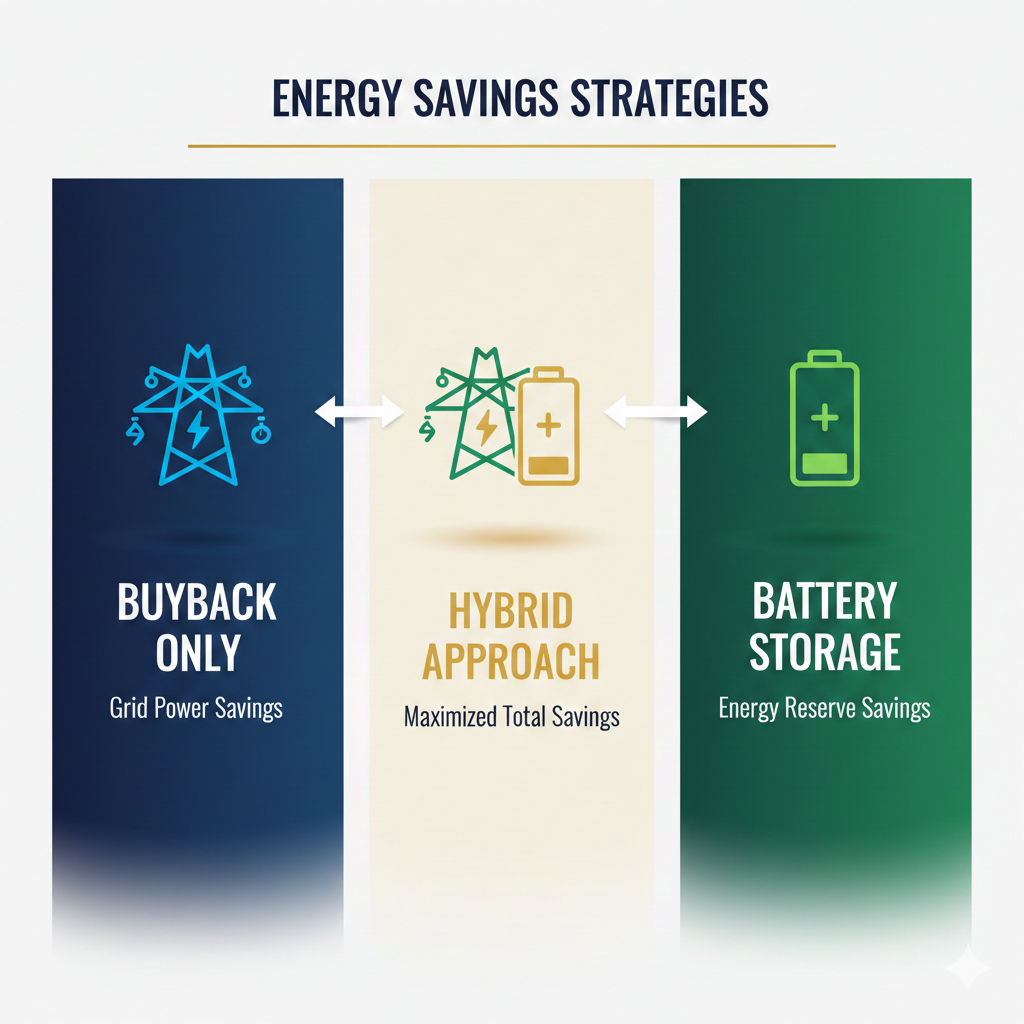
Which saves more? For Texas homeowners with a competitive solar buyback rate like Ambit Energy's 1:1 at 12.5¢/kWh, buyback-only delivers $934/year with zero capital investment. Battery storage delivers $1,038–$1,376/year but requires $6,400–$7,779 after Oncor rebates. The hybrid approach — both together — produces the highest savings at $1,311–$1,649/year. The right choice depends on your buyback rate, system size, and whether you need backup power.
If you have solar panels in Texas, you face a critical financial decision: sell surplus energy back through a solar buyback plan, store it in a battery, or combine both strategies. Our solar buyback plans in Texas complete guide breaks down how solar buyback programs work. But which approach actually saves you the most money? The answer depends on your solar buyback rates, system size, and whether grid reliability matters to your household. Here are the real numbers.
The Side-by-Side Comparison
For a typical 8 kW solar system in Texas producing approximately 11,500 kWh per year, here is how the three strategies compare:
| Factor | Buyback-Only | Battery-Only | Hybrid (Both) |
|---|---|---|---|
| Annual Savings | $934 | $1,038–$1,376 | $1,311–$1,649 |
| Additional Cost | $0 | $6,400–$7,779* | $6,400–$7,779* |
| Payback Period | Immediate | 4.6–7.5 years | 3.9–5.9 years |
| Backup Power | No | Yes | Yes |
| Self-Consumption | 25–40% | 60–90% | 60–90% |
*After Oncor rebate of up to $9,000. Without rebate: $12,000–$16,779.
The solar buyback column uses Ambit Energy's 1:1 rate of 12.5 cents per kWh — the highest fixed solar buyback rate in Texas. At wholesale solar buyback rates of 3 to 5 cents per kWh, buyback-only annual savings drop to $224 to $374, according to Quick Electricity.
When Solar Buyback Programs Win
Solar buyback programs deliver the strongest return when three conditions align: you have a small-to-medium solar system (5 to 7 kW), you've secured a competitive solar buyback rate above 10 cents per kWh, and you cannot or prefer not to invest $12,000 to $16,779 in battery storage.
This math is especially clear in 2026. The federal 30 percent Residential Clean Energy Credit expired December 31, 2025, meaning homeowners now pay full retail for batteries, according to EnergySage. Without that credit, the battery investment takes longer to recover. Budget-conscious homeowners on a strong solar power buyback plan like Ambit's 1:1 program earn $934 per year in credits with zero additional capital.
For help evaluating solar buyback programs, see our guide on how to compare and choose the right buyback plan.
When Battery Storage Wins
Battery storage pulls ahead when solar buyback rates are low and your system is large enough to generate significant surplus. At wholesale solar buyback rates of 3 to 5 cents per kWh — which is what most Texas solar power buyback plans now pay — you are selling energy worth 12 to 18 cents for a fraction of its value.
A battery changes that equation. Instead of exporting at a discount, you store surplus solar and use it during peak evening hours, avoiding both the energy charge and the TDU delivery charge of 5.58 to 6.00 cents per kWh, according to Quick Electricity. Battery owners in Oncor territory can claim up to $9,000 in rebates, and virtual power plant programs pay $400 to $600 per year in additional income.
For homeowners who experienced Winter Storm Uri, batteries also provide backup power during ERCOT grid events. Battery storage delivered over 7,000 MW during Winter Storm Fern in January 2026, according to the Dallas Federal Reserve. For a deeper look at the battery case, read our analysis on adding battery storage to your solar system.
The Break-Even Math
Here is the question that determines your best path: at what solar buyback rate does battery storage become the better investment?
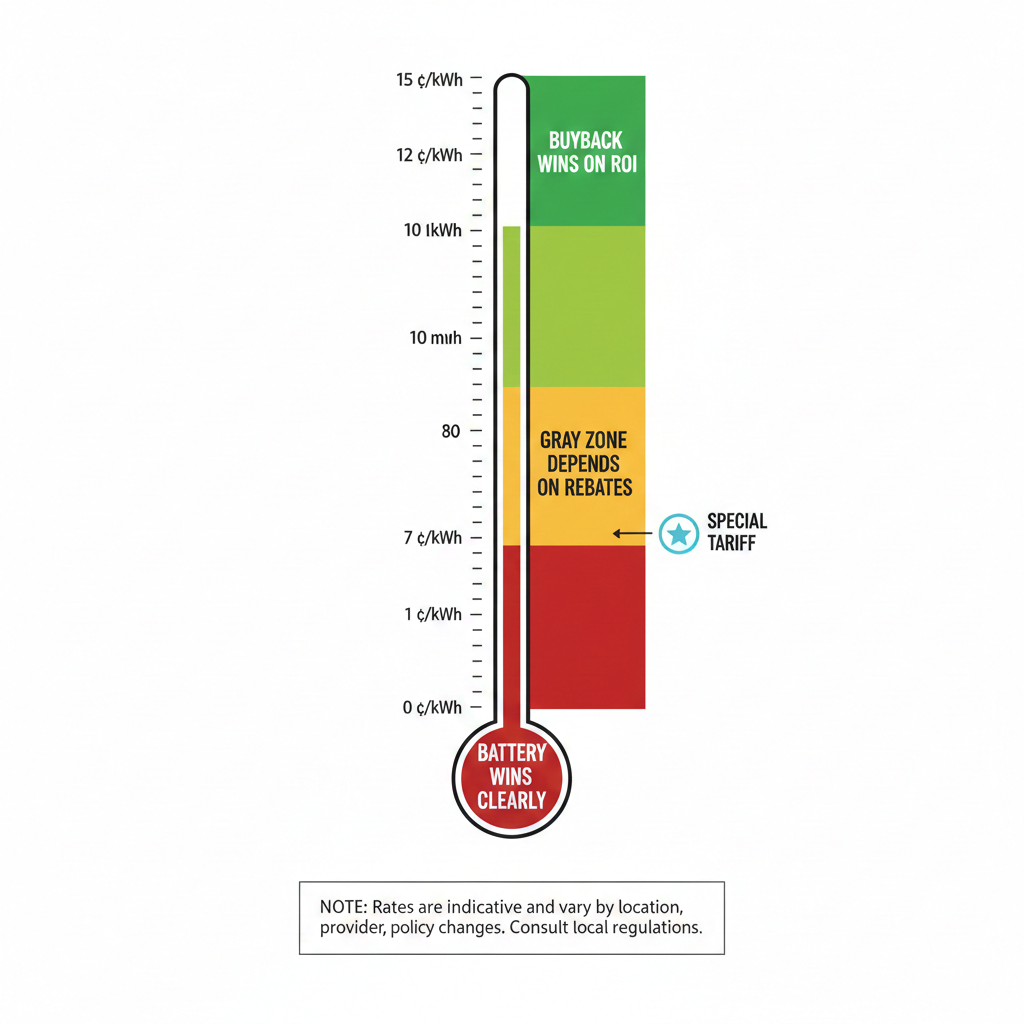
Using 10-year cost analysis with Oncor rebates, battery storage wins when your solar buyback rate falls below approximately 10 cents per kWh. Above 12.5 cents — like Ambit's 1:1 solar power buyback — buyback-only is difficult to beat on pure ROI because the additional capital requirement is zero.
But the hybrid approach wins at every solar buyback rate. With Ambit's 1:1 program plus battery storage, you earn full-value credits on exports that exceed battery capacity while self-consuming 60 to 90 percent of your production. Battery costs have fallen to $108 per kWh in 2025, a 93 percent decline since 2010, according to BloombergNEF. Texas homes averaging 1,146 kWh per month in consumption have significant room to optimize with the right combination of solar buyback programs and current battery storage costs, according to the EIA.
Start with the Right Solar Buyback Foundation
Whether you choose solar buyback alone, battery storage, or a hybrid approach, the foundation is the same: a competitive solar buyback rate. Ambit Energy's 1:1 solar power buyback at 12.5 cents per kWh ensures every exported kilowatt-hour earns full retail value — the strongest baseline for any solar strategy in Texas.
Maximize your solar energy credits in Texas by starting with the right plan. Compare Ambit Energy rates and plans to find the best fit for your home.
Ready to Maximize Every Kilowatt-Hour?
Compare solar buyback, battery storage, or both — and start with Ambit Energy's 1:1 buyback at 12.5¢/kWh.
Frequently Asked Questions
Is solar buyback or battery storage better for a small solar system?
For systems under 7 kW with moderate export volume, solar buyback programs generally deliver better ROI — especially at competitive solar buyback rates like Ambit's 12.5 cents per kWh. The additional $12,000 to $16,779 battery investment is harder to justify when export volume is limited. Focus on securing the highest solar buyback rate available and monitor battery prices as they continue declining.
Can I use both solar buyback and battery storage together?
Yes, and this hybrid approach produces the highest total savings. Your battery stores surplus solar for peak self-consumption while any excess beyond battery capacity exports to the grid at your solar buyback rate. With Ambit's 1:1 program, the hybrid strategy delivers $1,311 to $1,649 per year in combined value — 40 to 76 percent more than buyback alone.
How much does battery storage cost without the federal tax credit in 2026?
A typical 13.5 kWh home battery like the Tesla Powerwall 3 costs approximately $15,400 installed. The federal 30 percent ITC expired December 31, 2025, so homeowners pay full retail in 2026. However, Oncor offers up to $9,000 in rebates for qualifying new solar-plus-battery installations, reducing the net cost to $6,400 to $7,779. The program closes November 2026 or when budget is depleted.
Sources: BloombergNEF · EIA · Quick Electricity · Oncor · Dallas Federal Reserve · EnergySage
Rates and incentives referenced above are subject to change. Verify current offers with your Retail Electric Provider and check the Public Utility Commission of Texas for the latest Electricity Facts Labels.
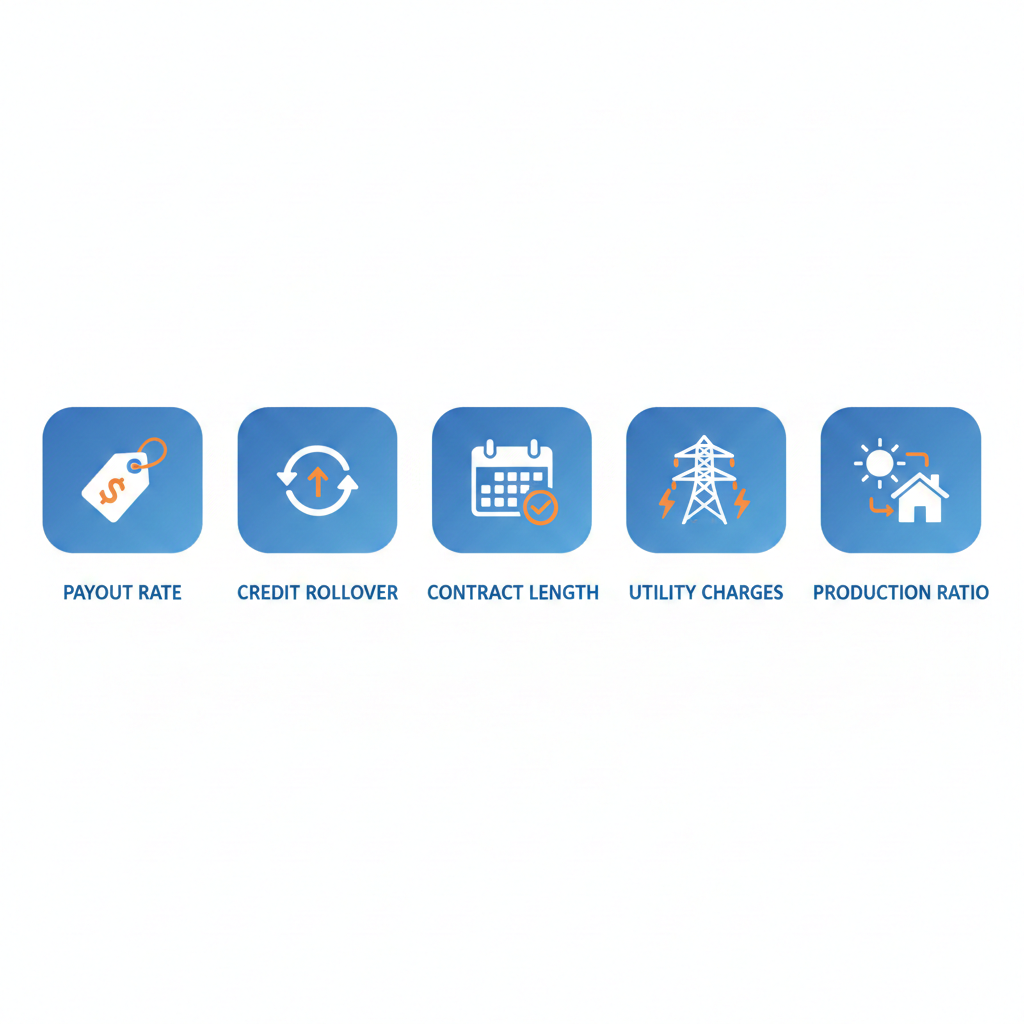
The best solar buyback plan in Texas depends on five factors: rate type (fixed vs. variable vs. 1:1), credit structure, contract length, TDU delivery charges, and your production-to-consumption ratio. As of 2026, Ambit Energy offers the highest fixed buyback rate at 12.5 cents per kWh in true 1:1 net metering, while real-time wholesale plans from Octopus and Chariot offer variable rates that peak higher but average lower.
With over a dozen Retail Electric Providers offering solar buyback electricity plans in Texas, finding the best solar buyback plans in Texas feels overwhelming. Our solar buyback plans in Texas complete guide compares 12 providers side by side — but which plan is best for your home depends on five critical factors that most comparison sites skip entirely. Without understanding these factors, you could lose hundreds of dollars per year on the wrong plan. This guide teaches you the comparison methodology so you can evaluate any best solar buyback plans in Texas and choose confidently.
5 Factors That Determine the Best Solar Buyback Plan
Every list of best solar buyback plans Texas focuses on rates. Rates matter, but they are only one piece. Here are the five factors that actually determine your net savings from solar buyback electricity plans:
1. Rate Type: Fixed vs. Variable vs. 1:1 Net Metering
Fixed credit plans pay a set rate (typically 3 to 5 cents per kWh) for your exports. Real-time wholesale plans pay ERCOT market prices that ranged from negative 2 cents to 45 cents per kWh during 2025, according to ERCOT. True 1:1 plans credit exports at the same rate you pay for consumption — Ambit Energy offers 1:1 at 12.5 cents per kWh.
2. Credit Structure: Rollover, Caps, and Cash-Out
Some plans cap credits at $1,000 (TXU), while others roll over indefinitely. Octopus sends a check when monthly credits exceed $50. Ambit credits roll over monthly with no cap. Your solar energy credits in Texas strategy depends on which structure matches your export volume.
3. Contract Length and Early Termination Fees
Most solar buyback electricity plans run 12 to 24 months with ETFs ranging $150 to $295. The average Texas home pays $2.16 per watt for a solar system totaling approximately $30,887 before incentives, according to EnergySage. With the federal 30 percent tax credit expired since December 31, 2025, payback periods have extended to 8 to 11 years — making long-term plan economics critical.
4. TDU Delivery Charges
Here is the factor most comparison sites ignore: TDU delivery charges are not offset by solar credits. These add 4.5 to 6.3 cents per kWh plus monthly base charges on every kilowatt-hour you consume from the grid, regardless of how much you export. Oncor charges 5.58 cents per kWh, while CenterPoint charges 6.00 cents, according to Quick Electricity.
5. Your Production-to-Consumption Ratio
A home that exports 20 percent of its solar generation needs a different plan than one that exports 50 percent. Texas homes average 1,096 kWh per month in electricity consumption, according to the EIA. Compare that to your solar production to determine which solar electricity plans deliver the most value.
How to Read an EFL for Solar Buyback Plans
The Electricity Facts Label is a PUCT-mandated disclosure document every Texas REP must publish. For the best solar buyback plans Texas homeowners need to evaluate, here are the three lines that matter:
First, look for "Does the REP purchase excess distributed renewable generation?" — this confirms the plan offers solar buyback. Second, check the average price at 1,000 kWh — this is your all-in consumption cost including TDU charges. Third, find the export or buyback rate in the terms of service.
What is hidden in the EFL matters just as much. Minimum usage charges penalize solar homes that offset most consumption — some plans add fees when usage drops below 1,000 kWh. Tiered pricing means your actual rate changes at different consumption levels. And credit expiration terms buried in the Terms of Service document can wipe out accumulated credits when you switch providers. Always pull EFLs for your top three best solar buyback plans in Texas choices and compare them at your actual monthly usage, not the 1,000 kWh benchmark.
Solar Buyback Plans Houston: The CenterPoint TDU Factor
Houston-area homeowners face a unique challenge when searching for the best solar buyback plans in Texas. CenterPoint Energy's TDU delivery rate of 6.001 cents per kWh — among the highest in Texas — plus a $4.90 monthly base charge means that on 1,000 kWh of grid consumption, TDU charges alone total approximately $65, according to Quick Electricity. This includes a surcharge from CenterPoint's $2.9 billion grid resiliency program approved after Hurricane Beryl.
Because solar credits do not offset delivery charges, Houston solar buyback plans homeowners choose should prioritize low consumption rates over high buyback rates. For large overproducers, battery storage may capture more value than exporting to the grid at a discount.

3 Costly Mistakes When Choosing a Buyback Plan
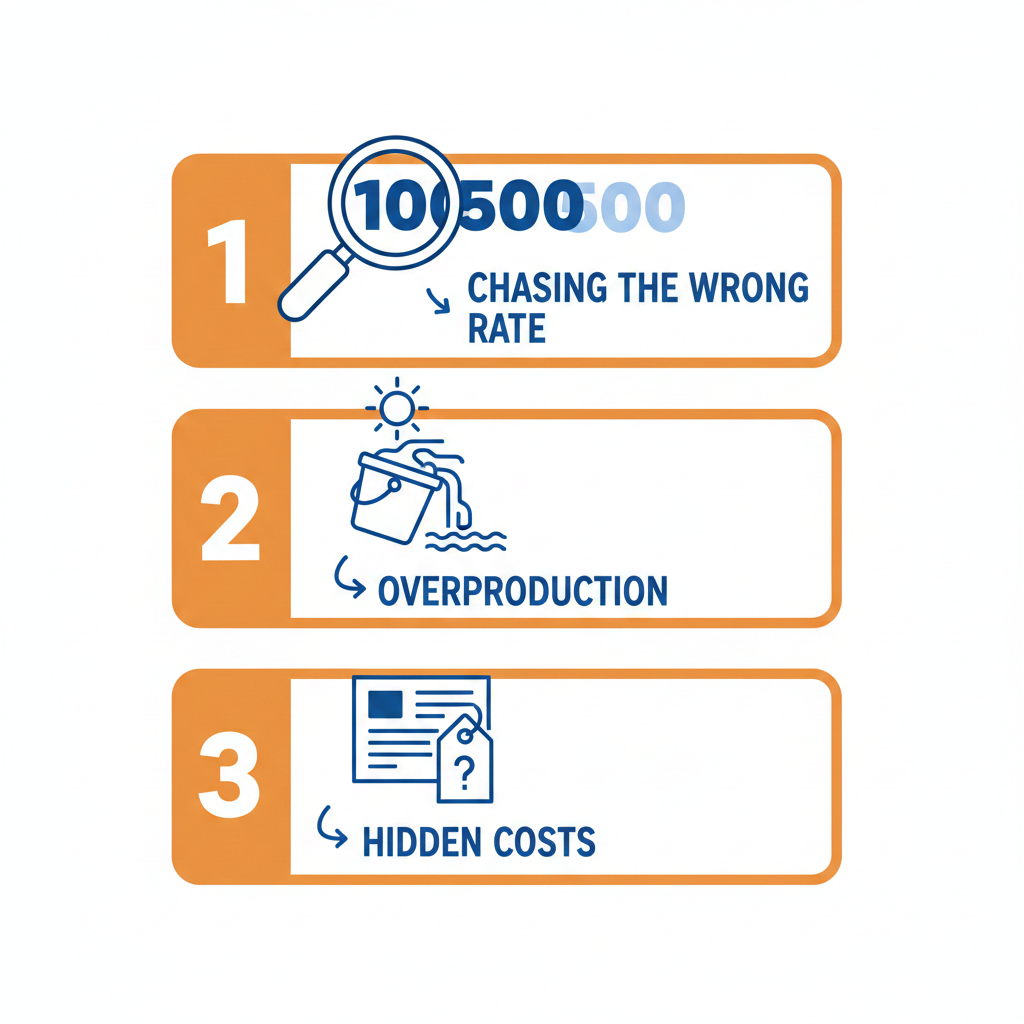
Mistake 1: Chasing the Highest Buyback Rate
A plan paying 12 cents per kWh for exports but charging 18 cents for consumption costs more than a 1:1 plan at 12.5 cents for both. Compare the net cost — buyback rate minus consumption rate — not just the buyback number alone. Solar surpassed coal in Texas grid generation share during summer 2025, accounting for 15.2 percent of demand at a record 29.8 GW peak, according to the Dallas Federal Reserve. More solar on the grid means buyback rates face continued downward pressure.
Mistake 2: Assuming 1:1 Is Always Best
True 1:1 net metering is excellent when your production roughly matches consumption. But if you significantly overproduce — exporting 40 percent or more of your generation — those credits may accumulate faster than you use them. In that scenario, a plan with a lower rate but cash-out option (like Octopus or David Energy) could deliver more actual value. Check the cost of battery storage per kWh to see if self-consumption beats export credits entirely.
Mistake 3: Ignoring TDU Pass-Through Costs
Two plans with identical energy rates can have dramatically different total costs depending on your TDU territory. TDU rates change twice per year — in March and September — and the trend has been consistently upward across all six Texas TDUs, according to Quick Electricity. Always calculate your total bill including delivery charges, not just the energy rate shown in plan advertisements.
Why Ambit's 1:1 Buyback Stands Out
Among the best solar buyback plans Texas homeowners can choose, Ambit Energy's structure is built for simplicity. At 12.5 cents per kWh in true 1:1 buyback, every kWh you export earns the same credit as what you pay for grid consumption — no complex tiers, no minimum usage requirements, and no hidden fee structures. Credits roll over monthly with no cap.
While most Texas REPs have shifted to paying 30 to 70 percent of the retail rate for exports, Ambit maintains full-value crediting. For moderate producers whose solar generation roughly matches their consumption, this straightforward structure consistently delivers the highest net savings. Compare Ambit Energy rates and plans to see current options for your area.
Find the Best Solar Buyback Plan for Your Home
Compare Ambit Energy's 1:1 solar buyback with your current plan and see how much more you could save.
Frequently Asked Questions
What is the highest solar buyback rate in Texas?
As of 2026, Ambit Energy offers the highest fixed solar buyback rate at 12.5 cents per kWh in true 1:1 net metering. Real-time wholesale plans from providers like Chariot and Octopus can briefly exceed 25 cents per kWh during summer peak demand, but these rates are highly variable and can drop below 2 cents during mild weather months. For consistent value, 1:1 fixed-rate plans deliver the most predictable returns.
Do solar credits offset TDU delivery charges?
No. Solar buyback credits only offset the energy supply portion of your bill. TDU delivery charges — ranging from 4.5 to 6.3 cents per kWh depending on your territory — still apply on every kilowatt-hour you consume from the grid. This is why evaluating total bill cost matters more than comparing buyback rates alone.
How do I compare solar buyback plans for my home?
Pull the Electricity Facts Label for your top three plan choices and compare the average price at your actual monthly usage level, not the 1,000 kWh benchmark. Factor in TDU delivery charges for your service territory, check credit rollover policies, and calculate your production-to-consumption ratio using 12 months of Smart Meter Texas data to determine how much you actually export.
Sources: ERCOT, EnergySage, Quick Electricity, EIA, Dallas Federal Reserve. Rates and plan details subject to change. Always verify current rates on the provider's website and review the Electricity Facts Label before enrolling.
Battery backup for solar panels captures 2–6x more value per kilowatt-hour than exporting surplus energy for buyback credits. With buyback rates compressed to 3–7¢/kWh while retail electricity costs 12–18¢/kWh during peak hours, storing solar energy in a battery and using it yourself is the smarter economic play for Texas homeowners in 2026.
Most Texas solar homeowners start with a solar buyback plan in Texas — and that’s a smart first step. But the numbers in 2026 tell a clear story: relying on buyback credits alone leaves money on the table. Battery backup for solar panels changes the math entirely. Instead of exporting surplus energy at 3 to 7 cents per kWh and buying it back at 12 to 18 cents during peak hours, a battery lets you store that power and use it when it’s worth the most. The result? Two to six times more value from every kilowatt-hour your panels produce.
The “Sell Low, Buy High” Problem
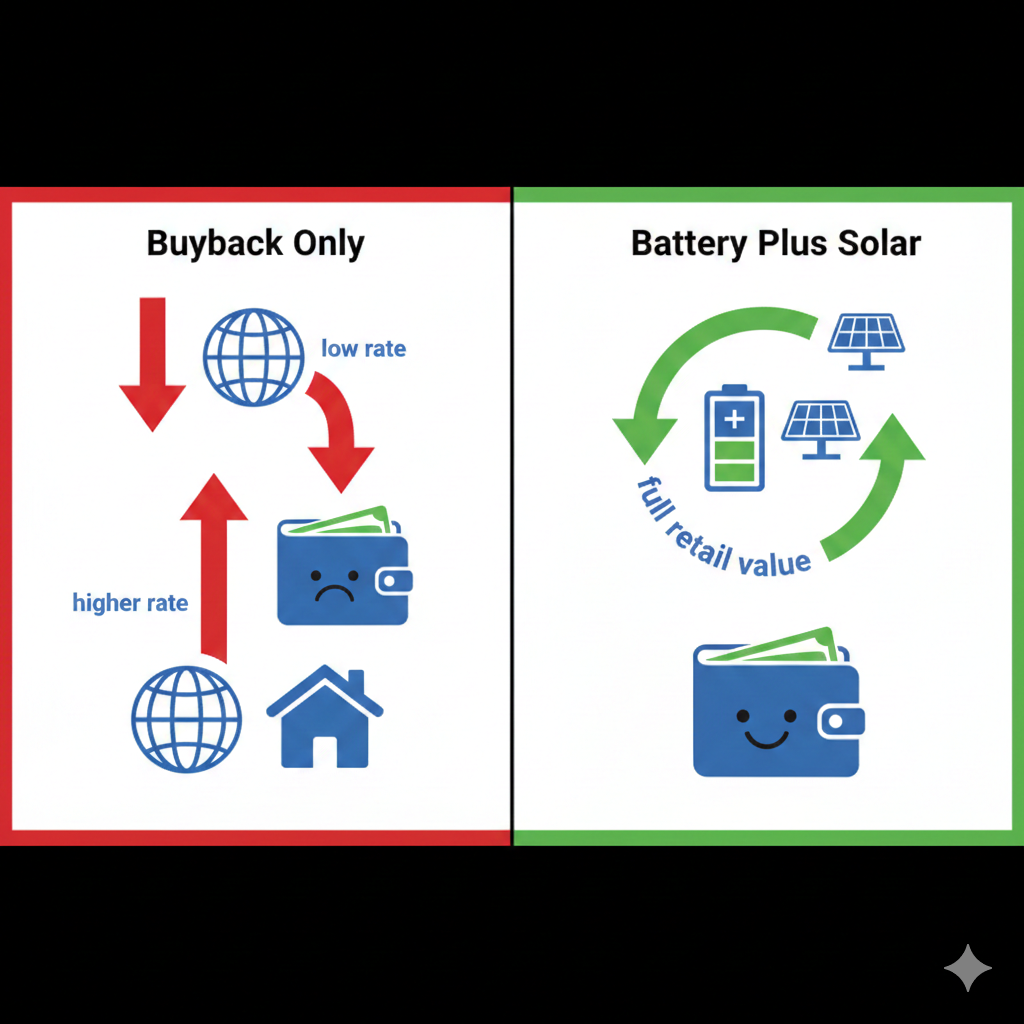
Here’s the uncomfortable truth about solar buyback plans in 2026: most Texas providers pay just 3 to 5 cents per kWh for your exported solar. Meanwhile, you’re buying electricity back from the grid at 12 to 18 cents during evening peak hours when your panels aren’t producing. Without backup batteries for a solar system, a typical home only uses 25 to 40 percent of its own solar generation directly, according to SolarTech. The rest goes to the grid at a fraction of retail value.
This gap is getting worse, not better. Buyback rates are compressing as more solar floods the ERCOT market during midday hours, driving wholesale prices lower. And the shift is showing in installation data: 40 percent of new residential solar installations in 2025 were paired with battery storage, according to Wood Mackenzie. Texas solar owners are voting with their wallets.
For a deeper look at maximizing your solar energy credits in Texas, see our dedicated guide.
Why the Math Favors Battery Storage in 2026
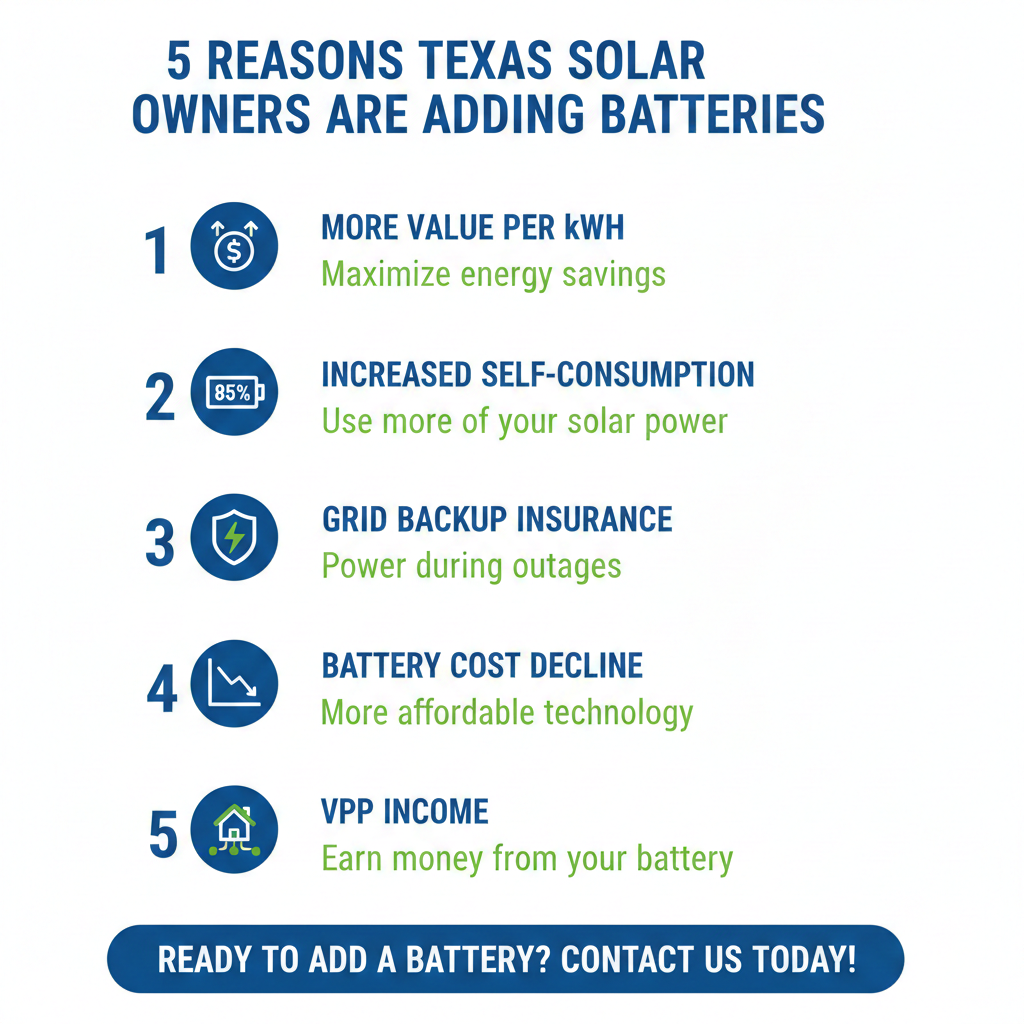
Solar panels with battery backup flip the economics. Instead of 25 to 40 percent self-consumption, battery owners achieve 60 to 90 percent — keeping power for evening peak hours rather than selling it at a discount, according to SolarTech. In real dollars, that translates to roughly $445 per year in additional savings compared to buyback alone.
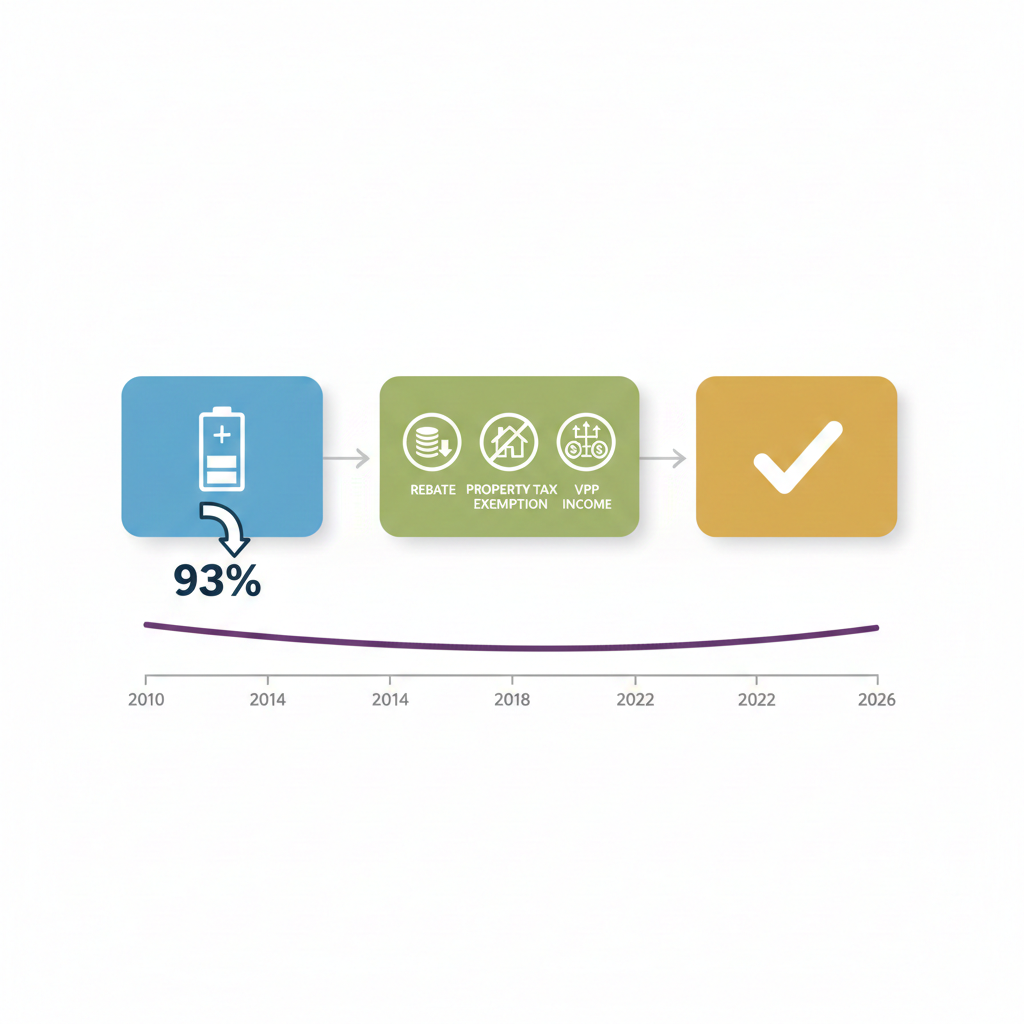
The timing has never been better. Battery storage costs have fallen 93 percent since 2010, with lithium-ion pack prices reaching a record low of $108 per kWh in 2025, according to BloombergNEF. Ember analyst Kostantsa Rangelova called the economics of battery storage “unrecognizable” compared to recent years.
Financial incentives sweeten the deal further. Oncor offers up to $9,000 in rebates for new solar-plus-battery installations in the Dallas-Fort Worth area, with the program closing November 2026, according to Quick Electricity. And emerging virtual power plant programs in Texas pay battery owners $400 to $600 annually for sharing stored energy during peak demand — turning your battery backup for solar panels into an income-producing asset.
For detailed pricing, see our cost of battery storage per kWh breakdown, or explore available battery backup rebates in Texas.
Grid Reliability Is the Clincher
If economics alone aren’t convincing, consider reliability. Winter Storm Uri in 2021 left 4.5 million Texas homes without power. When Winter Storm Fern hit in January 2026, the grid held — and battery storage played a key role. Batteries delivered over 7,000 MW during peak demand, accounting for 9.5 percent of total grid power, according to Inside Climate News.
But the underlying vulnerability hasn’t disappeared. ERCOT’s winter reserve margin has dropped from 17.5 percent in 2021 to a projected 10.1 percent in 2026, well below the 15 percent target, according to the Texas Policy Foundation. A solar with backup battery texas homeowners can rely on isn’t just a financial play — it’s an insurance policy that pays dividends.
Pair your battery system with the right electricity plan. Compare Ambit Energy Texas rates and plans to find the best fit for solar-plus-storage.
What to Do If You Already Have Solar
If you already have solar panels, adding backup batteries for your solar system is straightforward. AC-coupled batteries like the Tesla Powerwall 3 or Enphase IQ Battery 5P connect directly to your electrical panel without replacing your existing inverter — making them the easiest retrofit option, according to EnergySage.
Expect to pay $12,000 to $20,000 for a retrofit before incentives. One important note: the Oncor rebate program applies only to new installations, not retrofits. But the Texas property tax exemption on solar and battery systems still applies regardless.
The bottom line? Whether you’re installing a new system or retrofitting, the window for action is narrowing. Buyback rates will keep compressing, Oncor’s rebate budget is finite, and the federal 30 percent tax credit expired in December 2025. A solar with backup battery texas homeowners invest in today will pay for itself faster than waiting.
Browse solar electricity plans to find the right energy plan to pair with your battery.
Ready to Go Beyond Buyback?
Pair Ambit Energy’s solar buyback plans with battery storage and maximize every kilowatt-hour.
Frequently Asked Questions
Can I add a battery to my existing solar panels?
Yes. AC-coupled batteries like the Tesla Powerwall 3 and Enphase IQ Battery 5P connect independently to your electrical panel and don’t require replacing your existing solar inverter. Expect to pay $12,000 to $20,000 for the retrofit. DC-coupled batteries may require a hybrid inverter upgrade at an additional $1,000 to $3,000.
How much does battery backup for solar panels cost in Texas?
A home battery system costs $14,000 to $20,000 installed in 2026, depending on capacity and brand. Popular options include the Tesla Powerwall 3 at roughly $15,400, Enphase IQ 5P at $15,000 to $17,000, and FranklinWH aPower 2 at $16,000 to $20,000. Oncor rebates of up to $9,000 are available for new installations.
Is battery storage worth it without the federal tax credit?
Yes. The 30 percent Residential Clean Energy Credit expired December 31, 2025, but battery economics remain strong. Battery costs have fallen 93 percent since 2010, state incentives like the Oncor rebate and Texas property tax exemption still apply, and emerging VPP programs add $400 to $600 annually in revenue. Most systems pay for themselves in 5 to 7 years when paired with solar.
Sources: SolarTech, Wood Mackenzie / pv magazine, BloombergNEF, Quick Electricity, Inside Climate News, Texas Policy Foundation, EnergySage. Data reflects 2026 market conditions. Rates and incentives are subject to change. VIP Energy Service is an independent Ambit Energy consultant. This article is for educational purposes and does not constitute financial advice.
Solar buyback plans let Texas homeowners sell surplus solar energy back to their REP for bill credits. With no statewide net metering mandate, buyback rates in 2026 range from 3¢/kWh (fixed) to $5/kWh (real-time wholesale spikes). Ambit Energy offers one of the highest fixed rates — up to 12.5¢/kWh in true 1:1 buyback. This guide compares 12 providers, breaks down 2026 economics after the federal tax credit expired, and shows you how to choose the right plan.
If you’ve invested in solar panels — or you’re considering it — a solar buyback plan determines how much value you get from every kilowatt-hour your system sends back to the grid. In Texas’s deregulated electricity market, there’s no statewide net metering mandate. Instead, individual Retail Electric Providers (REPs) offer solar buyback plans texas homeowners can shop for competitively. Buyback rates in 2026 range from as low as 3 cents per kWh on fixed-credit plans to brief spikes exceeding $5/kWh on real-time wholesale plans. Ambit Energy offers one of the highest fixed rates — up to 12.5 cents per kWh in true 1:1 buyback. This guide covers how texas solar buyback plans work, what they pay, and how to choose one that actually maximizes your solar investment.
What Are Solar Buyback Plans and How Do They Work?
Approximately 85% of Texas homes sit in the deregulated ERCOT market, which means you can choose your REP, according to Solar Reviews. Out of over 100 REPs in Texas, only a handful offer solar buyback plans — programs that give you bill credits for surplus energy your panels export to the grid.
Three main types of solar buyback plans exist in Texas:
- Uncapped credit plans — No limit on credit accumulation. Credits roll over indefinitely. These generally save the most money.
- Capped credit plans — Credits accumulate to a maximum (for example, Green Mountain caps at $1,000), then any excess generation earns nothing.
- Real-time wholesale (RTW) plans — Credits fluctuate with ERCOT market prices every 15 minutes. Potentially lucrative in summer but unpredictable in winter.
A critical detail many homeowners miss: solar credits only offset the energy supply portion of your bill. TDU delivery charges — Oncor at 5.58¢/kWh, CenterPoint at 6.00¢/kWh — still apply on every kilowatt-hour you consume from the grid, regardless of how much you export, according to Quick Electricity.

Solar Buyback Rates and Providers in 2026
The texas solar buyback landscape has shifted significantly. Most REPs have moved away from true 1:1 net metering toward lower fixed rates or volatile real-time wholesale pricing. Here’s how the major providers compare:
| Provider | Buyback Rate | Credit Type | Rollover |
|---|---|---|---|
| Ambit Energy | Up to 12.5¢/kWh (1:1) | Fixed | Indefinite |
| Chariot Energy | Up to 25¢/kWh (capped RTW) | Real-Time | Indefinite |
| TXU Energy | 3.5–6¢/kWh | Fixed | While on plan |
| Green Mountain | Varies | Fixed | Cap at $1,000 |
| Gexa Energy | 3¢/kWh | Fixed | No cash out |
| Octopus Energy | Wholesale RTW (15-min) | Real-Time | Unlimited |
| Champion Energy | Wholesale RTW | Real-Time | Indefinite |
| David Energy | 90% RTW | Real-Time | Cash-out eligible |
| Tesla Electric | RTW (algorithmic) | Real-Time | Cash-out eligible |
| Rhythm Energy | Time-of-use | TOU | Varies |
Top Octopus Energy solar customers earned an average of $635 per month in August during peak demand, with the top customer bringing in over $900 in credits, according to Quick Electricity. However, RTW credits can drop below 2¢/kWh during mild weather months.
For solar homeowners who prefer predictability, Ambit Energy’s 1:1 buyback ratio provides consistent value regardless of season. To see current options, compare Ambit Energy rates and plans or view the full solar buyback rates breakdown.
The Real Economics of Solar Buyback in 2026
Here’s what the numbers actually look like for a typical Texas solar homeowner:
System costs: The average 14 kW solar system in Texas costs approximately $30,887 before incentives, according to EnergySage. That’s higher than previous years because the federal 30% Residential Clean Energy Credit expired December 31, 2025. Without the credit, payback periods extend by 3–5 years to approximately 8.73 years — but 25-year savings still reach $80,305, according to EnergySage.
Surplus generation: A typical Texas home with solar exports 20–40% of its generation to the grid as surplus, according to Texas Power Guide. For a system generating 1,200 kWh/month, that’s 240–480 kWh in monthly exports.
Realistic annual credit ranges:
- Fixed credit at 3¢/kWh: $86–$173/year
- Fixed credit at 12.5¢/kWh (Ambit 1:1): $360–$720/year
- RTW plans: $180–$900+/year (highly seasonal, summer-weighted)
Remaining incentives for 2026:
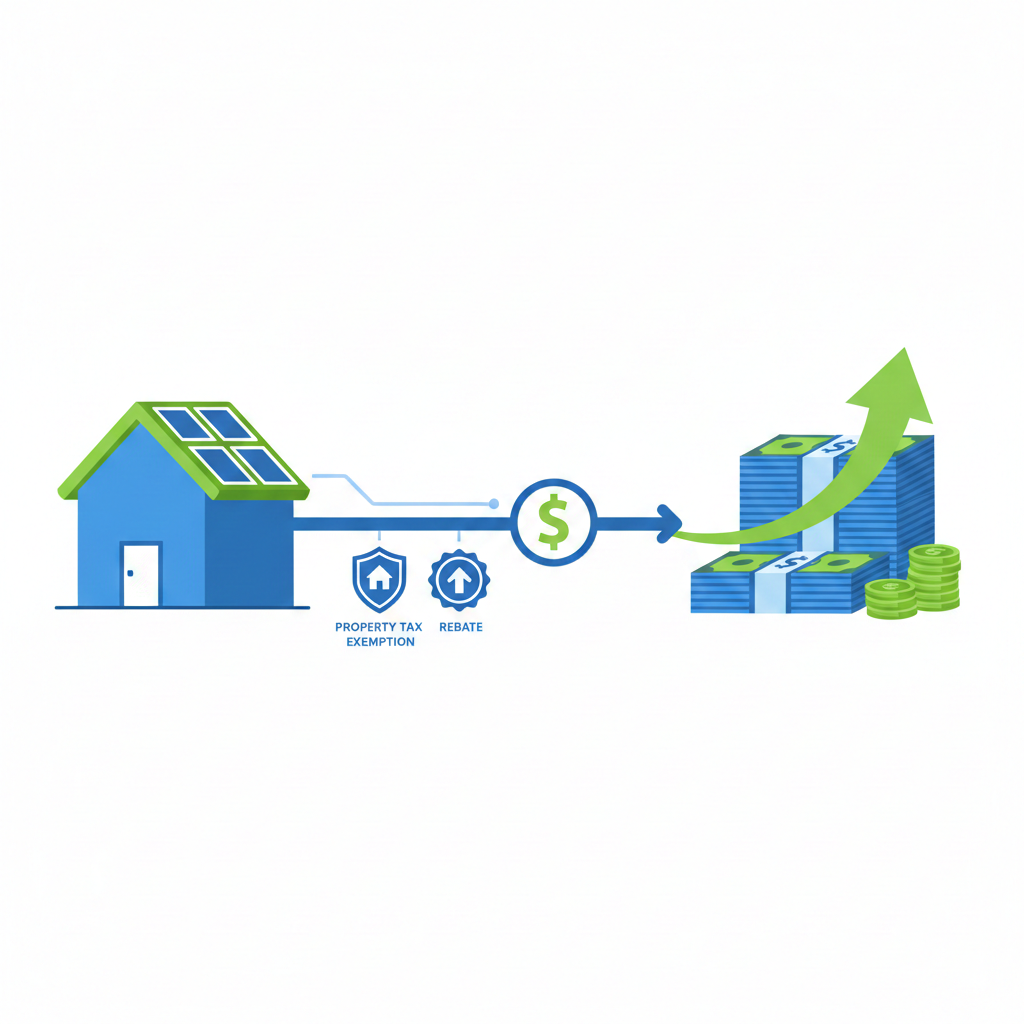
- Texas property tax exemption — 100% exemption on solar system appraised value, saving approximately $300–$450/year over the system lifetime, according to Solar Reviews
- Oncor residential solar rebate — Up to $9,000 per home (requires solar + battery pairing), according to Quick Electricity. Program closes November 2026 or when budget is depleted.
- Third-party ownership (TPO) — Solar leases and PPAs still qualify for the federal credit through 2027
For more on maximizing your solar energy credits in Texas, see our dedicated guide.
How to Choose the Right Solar Buyback Plan
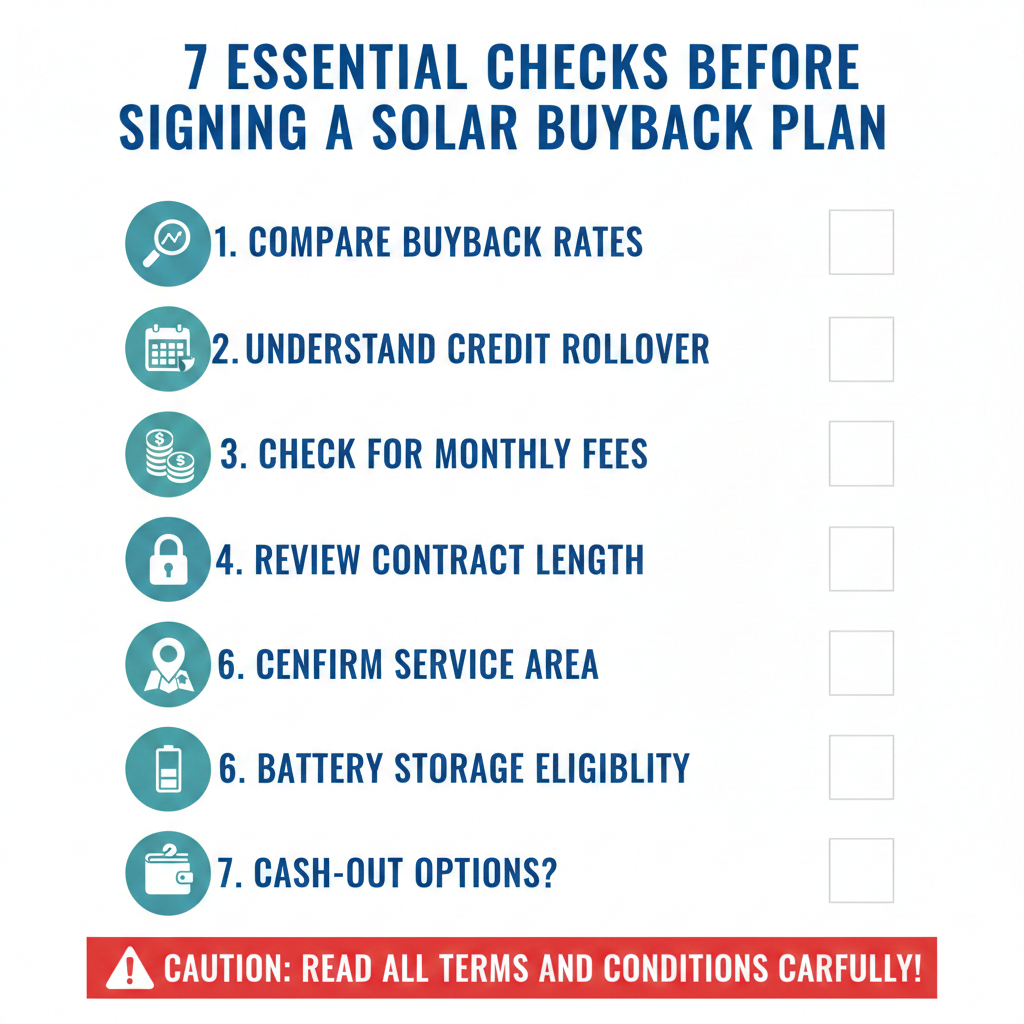
Not all solar buyback plans are created equal. When shopping for a texas solar buyback plan, evaluate these factors:
- Buyback rate vs. retail rate — A high buyback rate means less if the retail rate (what you pay for grid consumption) is also inflated. Compare both numbers.
- Credit rollover policy — Do credits roll over month-to-month indefinitely, or do they expire annually? Chariot, Champion, and Octopus offer indefinite rollover.
- Monthly fees — Some plans charge $9.95–$19.95 monthly fees that eat into credit value.
- Contract length — Longer contracts (24–36 months) may lock you into unfavorable rates as the market shifts.
- TDU service area — Your delivery charges differ by TDU. Oncor territory (5.58¢) is cheaper than CenterPoint (6.00¢).
- Battery eligibility — Some plans (Tesla Electric, David Energy) specifically reward battery owners who can export stored energy during peak hours.
- Cash-out option — Most plans are credit-only. David Energy and Tesla Electric may offer actual cash payouts.
Red flags to watch for: Use-it-or-lose-it credit expiration, low buyback rates paired with high monthly fees, rate riders buried in the EFL (Electricity Facts Label) that increase your cost during peak months, and “promotional” buyback rates that drop after 6 months.
Always read the EFL before signing. Look specifically for: the buyback credit rate, credit expiration terms, monthly service fees, and whether the plan charges different rates for imported vs. exported kWh. Texas net metering rules require these details in the EFL.
The Battery Bridge: When Buyback Isn’t Enough
If 20–40% of your solar generation goes to the grid at 3–6 cents/kWh, you’re selling low and buying high. That gap is why 85–90% of new solar installations in Texas now include battery storage, according to Energyscape Renewables.
A home battery stores surplus solar energy instead of exporting it at low buyback rates — then discharges during expensive peak hours when grid rates are highest. This “battery bridge” approach can capture significantly more value than buyback credits alone, especially for homeowners on plans with low fixed export rates.
Battery arbitrage also pairs well with RTW plans: charge the battery during off-peak (or with solar), then export during $2–$5/kWh spikes. Tesla Electric and David Energy are building their entire business model around this concept.
For a detailed breakdown of battery economics, see our cost of battery storage per kWh guide, or explore the available battery backup rebates in Texas.
Getting Started with Solar Buyback in Texas
Ambit Energy’s solar buyback plans offer a true 1:1 ratio at up to 12.5 cents per kWh — meaning every kWh you export earns the same credit as what you pay for grid consumption. Credits roll over indefinitely with no cap.
Ambit’s TLC Pledge (“Try it. Like it. or Change it!”) gives solar homeowners 60 days to test any plan. If it doesn’t fit your generation pattern, switch to a different Ambit plan at no cost — no early termination fee during the trial period.
Before choosing any plan, check your actual usage at Smart Meter Texas to understand your export potential. Then browse solar electricity plans to find the right fit for your home.
Ready to Maximize Your Solar Investment?
Compare Ambit Energy’s 1:1 solar buyback plans and start earning full value for your surplus energy.
Frequently Asked Questions
What is a solar buyback plan in Texas?
A solar buyback plan is an electricity plan from a Texas Retail Electric Provider (REP) that gives you bill credits for surplus energy your solar panels export to the grid. Texas has no statewide net metering law, so each REP sets its own buyback rates and terms. Credits typically offset only the energy supply portion of your bill — TDU delivery charges (5–6 cents/kWh) still apply.
How much can I earn from solar buyback credits?
Annual buyback credits for a typical Texas solar home range from approximately $86 to $900+ per year, depending on system size, export volume, and plan type. Fixed-credit plans at 3 cents/kWh earn less but predictably. Real-time wholesale plans can earn significantly more during summer peak demand but vary widely by season.
Do I need a battery for a solar buyback plan?
No — you can use a solar buyback plan without a battery. However, adding battery storage lets you capture more value from your solar investment by storing surplus energy for personal use during peak rates rather than exporting at lower buyback rates. In 2025–2026, approximately 85–90% of new solar installations in Texas include battery storage.
Sources: Solar Reviews, Quick Electricity, EnergySage, Texas Power Guide, Energyscape Renewables. Data reflects 2026 market conditions. Rates and incentives are subject to change. VIP Energy Service is an independent Ambit Energy consultant. This article is for educational purposes and does not constitute financial advice.


